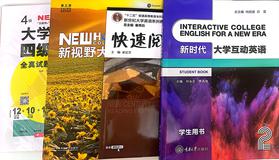
2023级线上线下混合式大学英语(二)

余潇潇,张远濛,邹琼,庾丹,何晓惠,刘诗琴

目录

  • 1 导学
    • 1.1 线上学习指南
    • 1.2 线下学习指南
  • 2 Unit 1 How to Approach Career Planning
    • 2.1 学习目标
    • 2.2 导言
    • 2.3 词汇模块
      • 2.3.1 Project 2 Word-attacking
      • 2.3.2 Project 3 Word-attacking
    • 2.4 课文模块
    • 2.5 听力模块
      • 2.5.1 Gap-filling& Inferring
      • 2.5.2 Unit 1 Video
    • 2.6 语法模块
    • 2.7 阅读模块
      • 2.7.1 拓展阅读练习
    • 2.8 对话与演讲模块
    • 2.9 写作模块
      • 2.9.1 How to write a good CV
      • 2.9.2 How to write a cover letter
  • 3 Unit4 How to Introduce a Company
    • 3.1 学习目标
    • 3.2 导言
    • 3.3 词汇模块
      • 3.3.1 Project 2 Word-attacking
      • 3.3.2 Project 3 Word-attacking
    • 3.4 课文模块
    • 3.5 听力模块
      • 3.5.1 Gap-filling& Inferring
      • 3.5.2 Retelling
    • 3.6 语法模块
    • 3.7 阅读模块
      • 3.7.1 拓展阅读练习
    • 3.8 对话与演讲练习
    • 3.9 写作模块
    • 3.10 阅读技巧拓展
  • 4 Unit 5 How to Establish Business Relations
    • 4.1 导言
    • 4.2 学习目标
    • 4.3 词汇模块
      • 4.3.1 Project 2 Word-attacking
      • 4.3.2 Project 3 Word-attacking
    • 4.4 课文模块
    • 4.5 听力模块
      • 4.5.1 Gap-filling& Inferring
        • 4.5.1.1 Retelling
    • 4.6 语法模块
    • 4.7 阅读模块
      • 4.7.1 阅读拓展练习
    • 4.8 对话与演讲练习
    • 4.9 写作模块
    • 4.10 阅读技巧拓展
  • 5 Unit 6 How to cater visitors
    • 5.1 导言
    • 5.2 学习目标
    • 5.3 词汇模块
      • 5.3.1 Project 2 Word-attacking
      • 5.3.2 Project 3 Word-attacking
    • 5.4 课文模块
    • 5.5 听力模块
      • 5.5.1 Gap-filling& Inferring
      • 5.5.2 Retelling
    • 5.6 语法模块
    • 5.7 阅读拓展练习
    • 5.8 对话与演讲练习
    • 5.9 写作模块
  • 6 大学英语语法(20讲)
    • 6.1 构词法
    • 6.2 介词
    • 6.3 连词
    • 6.4 助动词和情态动词
    • 6.5 非谓语动词
    • 6.6 动词短语和短语动词
    • 6.7 句子(按功能分类)
    • 6.8 句子(按结构分类)
    • 6.9 名词性从句
    • 6.10 定语从句
    • 6.11 状语从句
    • 6.12 时态1
    • 6.13 时态2
    • 6.14 时态3
    • 6.15 被动语态
    • 6.16 虚拟语气
    • 6.17 三种特殊结构
    • 6.18 语序与强调
    • 6.19 搭配
    • 6.20 主谓一致和时态一致
  • 7 英语阅读技巧微课(20讲)
    • 7.1 Skimming
    • 7.2 Scanning
    • 7.3 Finding the main idea
    • 7.4 Predicting
    • 7.5 Summarizing
    • 7.6 ​ Identifying topic sentences
    • 7.7 Identifying  key words
    • 7.8 Identifying Passage Organization
    • 7.9 Finding Supporting Details
    • 7.10 Making Use of Cue Words
    • 7.11 Guessing the Meaning of Words
    • 7.12 Understanding Conceptual Meaning
    • 7.13 Understanding propositional meaninig
    • 7.14 Understanding contextual meaning
    • 7.15 Understanding Pragmatic Meaning
    • 7.16 Distinguishing Facts from Opinions
    • 7.17 Identifying the author’s tone
    • 7.18 Making inferences-
    • 7.19 Drawing Conclusions
    • 7.20 Identifying author's purpose
  • 8 大学英语技能微课(30讲)
    • 8.1 目录
    • 8.2 Listening Skills SPOC(2讲)
      • 8.2.1 Improving your listening skills in English
      • 8.2.2 Getting high marks in Listening Comprehension
    • 8.3 Speaking Skills SPOC(6讲)
      • 8.3.1 Pronouncing like a native speaker
      • 8.3.2 Conducting a discussion
      • 8.3.3 Making yourself stand out
      • 8.3.4 Following a conversation
      • 8.3.5 Keeping a conservation going
      • 8.3.6 Dealing with a counter-argument
    • 8.4 Reading Skills SPOC(3讲)
      • 8.4.1 Enhancing your reading strategies
      • 8.4.2 Taking notes: Cornell Note-taking System
      • 8.4.3 Avoiding plagiarism
    • 8.5 Writing Skills SPOC(9讲)
      • 8.5.1 Supporting the topic sentence with details
      • 8.5.2 Writing a paragraph with problem-solution pattern
      • 8.5.3 Writing a paragraph with comparison and contrast
      • 8.5.4 Writing a paragraph with cause-effect pattern
      • 8.5.5 Writing a paragraph with question-example-conclusion pattern
      • 8.5.6 Writing a paragraph with time order
      • 8.5.7 Writing a paragraph with listing
      • 8.5.8 Writing a paragraph with examples
      • 8.5.9 Writing summaries for papers
    • 8.6 Presentation Skills SPOC(3讲)
      • 8.6.1 Confirming a topic for presentation
      • 8.6.2 Developing the content of the presentation
      • 8.6.3 Delivering your presentation effectively
    • 8.7 Career Skills SPOC(7讲)
      • 8.7.1 Writing a good personal letter
      • 8.7.2 Writing English emails
      • 8.7.3 Writing a report in English
      • 8.7.4 Writing practical letters
      • 8.7.5 Making questionnaires
      • 8.7.6 Writing a winning CV
      • 8.7.7 Writing your personal statement
学习目标

Introduction

In this unit, we are going to explore how to introduce a company and what a successful company means to a society. You may think that the business of a company is to provide people with goods and services they need to make a profit. But a successful company does a lot more than just sell products to satisfy its own needs. It is to satisfy in the long run the consumer demands to make our life comfortable. Besides it creates job opportunities to stimulate national economic growth. More importantly, it contributes to the national well-being by means of taxes it pays. Every one of us is ultimately a direct beneficiary of its business as employees, consumers, pensioners etc. Successful companies share some business principles in common to survive and thrive. Thus, after we finish this unit, you will understand what is crucial to their success in this competitive business world, and their success may benefit you when you decide to embark on a business enterprise.

In this unit, we will learn:

i. some words and expressions about company information and how to use them in specific context properly;

ii. language skills including: how to predict the content before listening and infer the meaning, how to identify topic sentences to outline and summarize a passage and how to write a company profile;

iii. how to complete various tasks. For instance, how to find out different types of company information and how to consolidate topic-relevant information; In addition, Project 6 is mainly designed for self-study. You need to study passage B and passage C by yourself to learn outlining and summarizing.

At the end of this unit, we will summarize the unit from three dimensions: language points, key language skills and intercultural reflection. We will have some language quizzes in class to assess your memorization and understanding. Then we will review the language skills in terms of listening, reading, speaking, writing and translation. Last but not the least, you need to critically think about some intercultural reflection questions, which is the important output to assess your learning as you need to analyze and evaluate what you have learned.


本章需要完成以下学习任务:

  1. 听力:新视野大学英语视听说Unit1的必修内容(自主学习+教师讲解难错点),任务链接https://u.unipus.cn/index.html/;新互动英语Unit4的project2的听力内容(自主学习+课堂讲授);

  2. 口语:新视野大学英语视听说Unit1的必修内容(自主学习+教师讲解难错点),任务链接https://u.unipus.cn/index.html/;Unit4的口语教学内容任务:Creating Conversation;小组任务口语展示;

  3. 阅读:阅读微课scanning、predicting、summarizing,完成 快速阅读3教材的Unit3&Unit4,每天一篇(自主学习);

  4. 写作:批改网,具体要求如下:

Directions:

For this writing task, you are required to introduce a successful company of your choice. You should include the following elements in your introduction:

  •  The name and industry of the company.

  • Its key achievements and milestones.

  • The vision and mission of the company.

  • A brief overview of the company's unique selling points.

  • The company's impact on the industry and society.

You should write at least 120 words but no more than 180 words. Remember to organize your ideas clearly and use appropriate language for a formal introduction.

5. 语法: 连词+助动词和情态动词

6. 小组PBL任务:以小组为单位,请结合Unit4所有的课文内容,以presentation的形式进行展示情景模拟,主题为“介绍一家公司”。