管理英语

张捷

目录

  • 1 Guide to this course
    • 1.1 About the course
    • 1.2 Textbook (PDF) and audio materials
    • 1.3 Getting ready for your group presentation
      • 1.3.1 How to make a presentation
      • 1.3.2 Oral Assignment: Who's who?
  • 2 Unit 1 Who is who?
    • 2.1 Textbook (Unit 1)
    • 2.2 The story so far
    • 2.3 Business focus
      • 2.3.1 Company organigrams
      • 2.3.2 Organigram of Bergerbild AG
    • 2.4 Business language
      • 2.4.1 Using the phone (Basic)
      • 2.4.2 Using the phone (Level-up)
    • 2.5 Cross-cultural focus
    • 2.6 Revision tasks
    • 2.7 Group presentation
    • 2.8 Design thinking
  • 3 Unit 2 Project finances
    • 3.1 Textbook (Unit 2)
    • 3.2 Prevision tasks
    • 3.3 The story so far and Episode 2
    • 3.4 Business language
      • 3.4.1 Tips on keeping talking
      • 3.4.2 Talking about the past
    • 3.5 Writing your resume
      • 3.5.1 Functional resume
      • 3.5.2 What else goes with resume
      • 3.5.3 Cross-cultural focus
      • 3.5.4 Action verbs used in CVs
      • 3.5.5 Examples of resumes
      • 3.5.6 Examples of cover letters and thank-you notes
      • 3.5.7 Assignment
    • 3.6 Group presentation
    • 3.7 Business Focus
    • 3.8 Revision
  • 4 Unit 3 Project management
    • 4.1 Textbook (Unit 3)
    • 4.2 Prevision tasks
      • 4.2.1 The story so far and Episode 3
      • 4.2.2 Prevision tasks on business vocabulary
      • 4.2.3 Managing a project
    • 4.3 Business language
      • 4.3.1 Vocabulary
      • 4.3.2 One PM skill:CPM
      • 4.3.3 Group presentation
    • 4.4 Cross-cultural focus: Meeting
      • 4.4.1 Templates for meeting minutes
      • 4.4.2 Video clips of meetings
      • 4.4.3 Link to TV program "The Shining Line"
    • 4.5 Assignments
      • 4.5.1 Assignments for meeting minutes
      • 4.5.2 Assignment 1
      • 4.5.3 Assignment 2
    • 4.6 Revision
    • 4.7 Group Presentation
  • 5 Unit 4 Email ego
    • 5.1 Textbook (Unit 4)
    • 5.2 Prevision: The story so far
    • 5.3 Business focus: Email
    • 5.4 Group presentation
    • 5.5 Giving feedback
    • 5.6 Apologising
    • 5.7 Simulation
    • 5.8 Revision
  • 6 Unit 5 Sorting it out
    • 6.1 Textbook (Unit 5)
    • 6.2 Prevision tasks (The story so far)
    • 6.3 Cross-cultural focus: attitudes to time
    • 6.4 Business focus: Writing reports
      • 6.4.1 Prevision tasks
      • 6.4.2 How to write a business report
      • 6.4.3 Feedback to the written practices
    • 6.5 Group presentation
    • 6.6 Self-study:How to use computer
    • 6.7 Revision
  • 7 Unit 6 Negotiations on site
    • 7.1 Textbook (Unit 6)
    • 7.2 Prevision tasks
    • 7.3 The story so far
    • 7.4 Cross-cultual focus
    • 7.5 Group presentation
    • 7.6 Business focus: Negotiation
    • 7.7 Revision
  • 8 Unit 7 Socializing
    • 8.1 Textbook (Unit 7)
    • 8.2 Prevision tasks
    • 8.3 The story so far
    • 8.4 Business focus: Menu ordering
    • 8.5 Cross-cultural focus: Small talk = big business
    • 8.6 Assignments
    • 8.7 Revision
    • 8.8 Group Presentation
  • 9 Unit 8 Dangerous assumptions
    • 9.1 Textbook (Unit 8)
    • 9.2 Prevision tasks
    • 9.3 The story so far
    • 9.4 Business focus: Assumptions
      • 9.4.1 Whistleblower
      • 9.4.2 Risk management:Solution 1
      • 9.4.3 Risk management:Solution 2
    • 9.5 Business language: How to express assumptions
    • 9.6 Advertising
      • 9.6.1 Group presentation
    • 9.7 Revision
  • 10 Unit 9 1 + 1 = ?
    • 10.1 Textbook for Unit 9
    • 10.2 Prevision tasks
    • 10.3 The story so far
    • 10.4 Language focus: Idiomatic expressions
    • 10.5 Revision
  • 11 Unit 10 Finale of the story
    • 11.1 Textbook for Unit 10
    • 11.2 The story so far
    • 11.3 Presentations
  • 12 Course revision
    • 12.1 Revision (Outline)
    • 12.2 Revision (Writing)
    • 12.3 Revision (Storyline)
Advertising

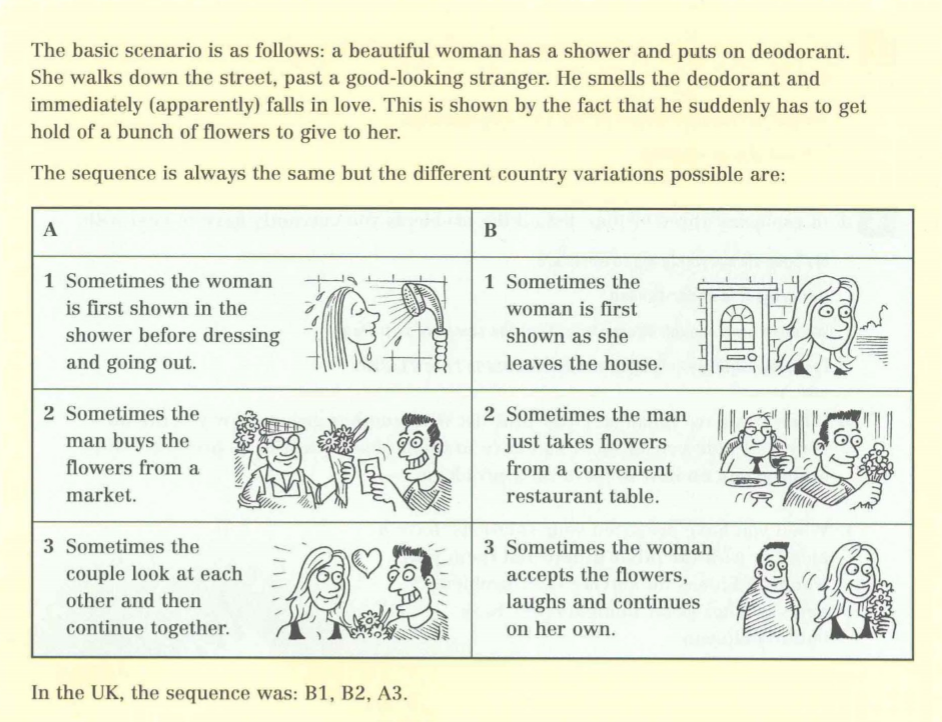
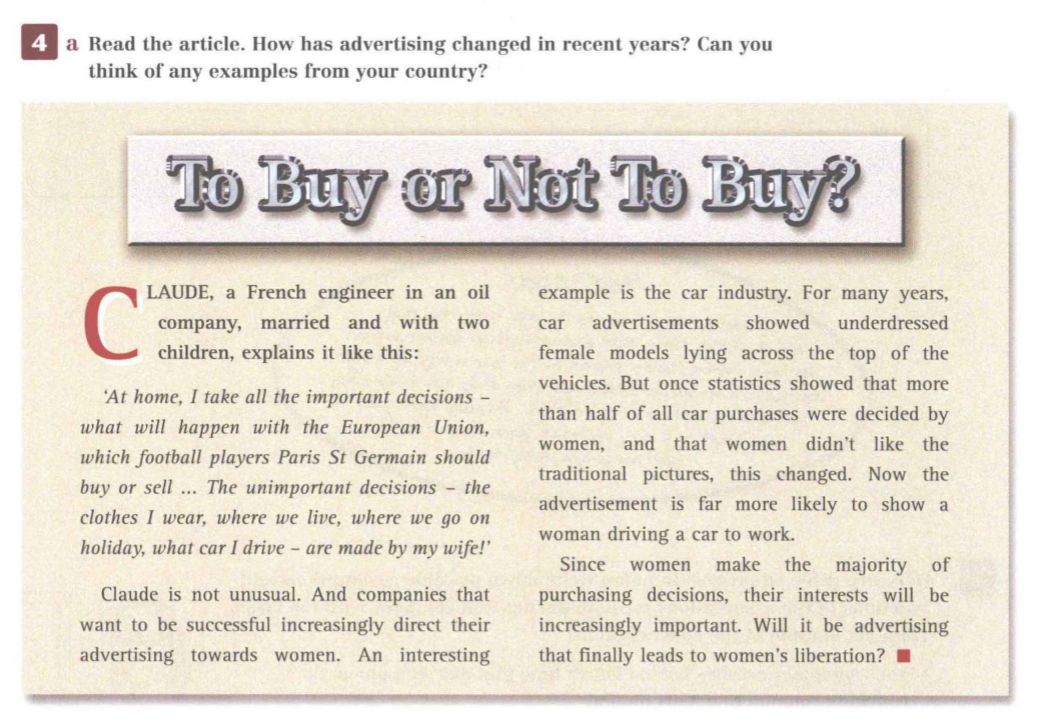
Advertising tends to have to vary enormously from culture to culture so as to cater for the different cultural expectations of the diverse target audiences. Some companies operating globally try to follow a one-size-fits-all strategy and run exactly the same advertisements throughout the world. The occasionally misfires, as the true examples on our book page 92 activity 3 illustrate. A more successful approach is to develop a core theme with slight local adaptations: this approach is analysed in this section with the aim of discussing why one approach might be more suitable than another for a particular culture. 
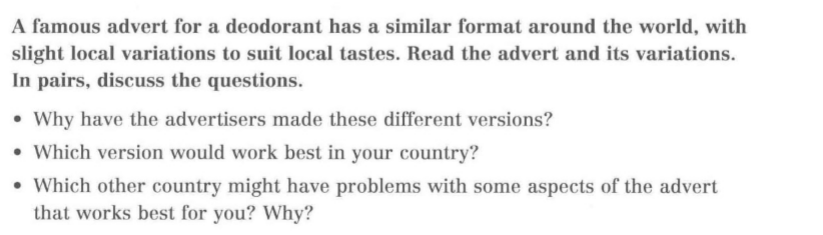
Video clips of advertisements:

What advantage does each advertisement have? Which one do you like personally?