
Unit 15
Toward a New Century
Change will not come if we wait for some other person or some other time. We are the ones we’ve been waiting for. We are the change that we seek.
---Barack Obama
如果我们等其他人或其他时间,改变是不会到来的。我们就是我们一直在等待的人。我们就是我们所寻求的改变。
---巴拉克·奥巴马
Unit Goals
* To be familiar with the important events in the 1980s.
* To gain a general understanding of the American culture in the 1990s.
* To learn the important words and expressions that describe U. S. -Soviet Relations and the Gulf War.
* To improve English language skills.
Before You Read
1. Make lists of major events and trends of America respectively in the 1970s, 1980s and
1990s. Put your answers in the following boxes. If you find it hard to accomplish the task, please start reading Text A.
2. Form groups of three or four students. Try to find, on the Internet or in the library, more information about America today which interests you most. Prepare a 5-minute classroom presentation.
Start to Read
Text A America Entering a New Century
1. For the United States, the 20th century ended on a note of triumph. As the 21st century began, the United States was without a doubt the strongest, wealthiest, most powerful nation on earth. It possessed the world’s most productive economy and the mightiest armed forces; it dominated global manufacturing and trade; it held an unchallenged lead in invention, science, and technology. Its popular culture was dominant across much of the globe.
2. Few would have imagined the United States' success decades ago. In the late 1960s, a third of the world had embraced communism and another third was non-aligned. The United States faced ideological challenges from the Cuban Revolution, China, and North Vietnam. The United States also confronted a new and unsettling set of cultural challenges: the youth revolt, the sexual revolution, women’s liberation, the civil rights struggles of African Americans, and the environmental and consumer movements.
3. During the 1970s, the country faced a severe crisis of confidence deepened by a sense of economic and military decline and political scandal. Watergate, economic stagnation, mounting inflation, energy crisis, foreign competition and the loss of industrial jobs, the defeat in Vietnam- all contributed to a sense of national decline.
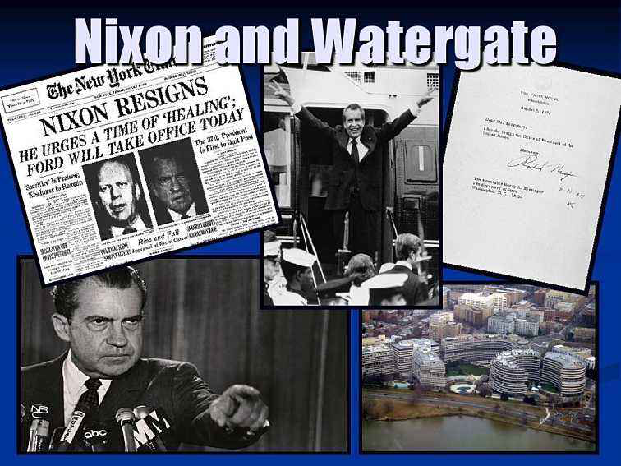
4. By 1980,the sense of American pre eminence had faded. Other countries saved more, invested more, worked harder, and increased the productivity of their industries faster than did America – a shocking recognition that American economic competitiveness had declined. In the U.S., real wages had fallen since 1973; families required two incomes, instead of one, to maintain a middle class standard of living.
5. Economic decline was accompanied by a deep sense of social decay. There was a mounting recognition that the United States’ level of crime and violence was the highest in the industrialized world. Not even the presidency was untouched by this epidemic of violence. Between 1963 and 1981, four presidents were the targets of assassins' bullets.
6. But as a result of the longest post war economic boom, the upsurge in stock prices, falling energy prices, a dramatic decline in unemployment, and the proliferation of new communication and computer technologies, Americans came to see themselves once again standing astride the world like a colossus.
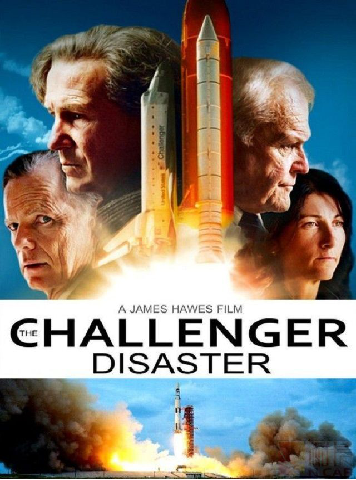
7. Science and technology made terrific strides in the eighties. Large numbers of Americans began using personal computers in their homes, offices, and schools. Columbia, America's first reusable spacecraft was launched in 1981. A sad day in world history was January 28, 1986, when space shuttle Challenger exploded 74 seconds after liftoff killing all seven astronauts. Research money allowed for studies and new treatments for heart, cancer, and other diseases. Major and advances in genetics research led to the 1988 funding of the Human Genome Project. This project will locate the estimated 80,000 genes contained in human DNA.
8. Families changed drastically during these years. The 1980s continued the trends of the1960s and 1970s --- more divorces, more unmarried people living together, more single parent families. The two-earner family was even more common than in previous decades, more women earned college and advanced degrees, married, and had fewer children.
9. In the 1990s, the United States played the role of world policeman, sometimes alone but more often in alliances. The decade began with Sadam Husein’s invasion of Kuwait and the resultant Gulf War. By September, 1994, the U.S. was once again sending troops to a foreign country to overthrow a military dictatorship, this time in Haiti. In1996,about 20,000 American troops were deployed to Bosnia as part of a NATO peace keeping force. In late March 1999, the U.S. joined NATO in air strikes against Yugoslavia in an effort to halt the Yugoslavian government’s policy of ethnic cleansing in its province of Kosovo. The decade was to end much as it began with U. S. forces deployed in many countries, and the U. S. playing arbitrator, enforcer, and peace keeper throughout the world.

10. On the domestic front of the 1990s, some big issues were health care, social security reform, and gun control unresolved and debated during the whole decade. Violence and sex scandals dominated the media. President Clinton kept the gossip flowing as several women accused him of sexual misconduct. The ten years ended with this president narrowly surviving a trial to remove him from office for obstruction of justice. The polls were reporting that 70% of the American people were saying that they were “tired of the Clintons”.
11. From its origins as a set of obscure colonies hugging the Atlantic coast, the United States has undergone a remarkable transformation into what political 8 analyst Ben Wattenberg has called “the first universal nation”, a population of almost 300 million people representing virtually every nationality and ethnic group on the globe. It is also a nation where the pace and extent of change --- economic, technological, cultural, demographic, and social---is unceasing. The United States is often the pioneer of the modernization and change that inevitably sweep up other nations and societies in an increasingly interdependent, interconnected world. 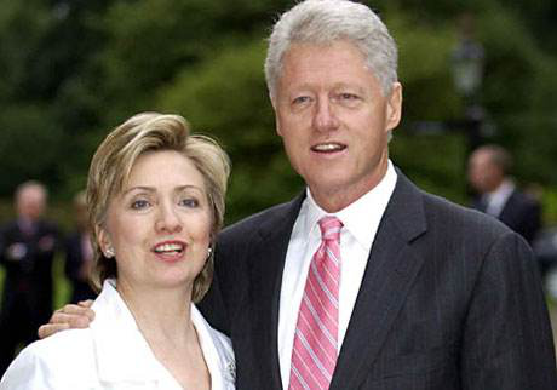

12. Yet the United States also maintains a sense of continuity, a set of core values that can be traced to its founding. They include a faith in individual freedom and democratic government, and a commitment to economic opportunity and progress for all. The continuing task of the United States will be to ensure that its values of freedom, democracy, and opportunity-- the legacy of a rich and turbulent history--are protected and flourish as the nation, and the world, move through the 21st century.
13. America faced the new millennium with an open, diversified society, a functioning democracy, a healthy economy, and the means and will, hopefully, to face and overcome its problems.
After You Read
Knowledge Focus
1. Pair Work: Discuss the following questions with your partner.
(1) What were the cultural challenges that America con fronted in the 1960s?
(2) Why do we say the country faced a national decline during the 1970s?
(3) Between 1963 and 1981, four presidents were the targets of assassins’ bullets. Can you figure out who they are?
(4) Can you name some scientific and technological breakthroughs in the 1980s?
(5) Why was two-earner family more common in the 1980s than in previous decades?
(6) Why was the U. S. considered world police by the international community?
(7) Can you name several wars that America was engaged in the 1990s?
(8) How do you comment on the role that America played as a world policeman? Share your views with your partner.
(9) What were the big issues on the domestic front?
(10) How do you understand “the first universal nation” that political analyst Ben Wattenberg has mentioned?
2. Solo Work: Tell whether the following are true or false according to the knowledge you have learned. Consider why.
(1) Watergate, mounting inflation, energy crisis, the loss of industrial jobs, and the defeat in Vietnam were all events in the 1980s that led to a sense of national decline. ( )
(2) It is generally believed that American economic competitiveness had declined by the 1980s. ( )
(3) Challenger, America’s first reusable spacecraft was launched in 1981. ( )
(4) Space shuttle Challenger exploded 74 seconds after its liftoff, killing all seven astronauts in 1986. ( )
(5) The 1980s did not follow the trends of the 1960s and the 1970s --- more divorces, more unmarried people living together, more single parent families. ( )
(6) More women earned college and advanced degrees, married, and had fewer children in the 1980s. ( )
(7) By September, 1994, the U. S. was once again sending troops to a foreign country to overthrow a government. ( )
(8) In late March 199,9 the U. S. joined NATO in air strikes against Yugoslavia. ( )
Language Focus
1. Solo Work: Fill in the blanks with the following words from the text.
mighty eminence epidemic assassin upsurge
stride proliferation colossus launch cleanse
(1) The sponsor itself is the __________ transnational corporation
(2) The seminar focuses on the topic of the ________ of global media networks.
(3) Doctors warn that a flu __________ may be on the way.
(4) The organization has ___________ a campaign to raise $350 ,000.
(5) His government blames the ___________ of violence on the record inflow of immigrants this year.
(6) The mayor was elected on a promise to _________ the city government of corruption.
(7) Although the _________ were never caught, it is commonly believed that they were working for the government.
(8) The merged bank will be a _____________.
(9) Anyone can quote the names of a few specialists who have attained local or even national _____________.
(10) The government has made great ___________ in reducing poverty.
2. Pair Work: Choose the appropriate word to complete each of the following sentences. Check your answers with your partner.
(1) The team seems to have lost its _________ (competition/ competitive) edge recently.
(2) Managers are always looking for ways to increase worker __________ ( product/ productivity).
(3) President Lincoln was __________ (assassin/ assassinated) by John Wilkes Booth.
(4) An old portrait shows her sitting ________ (stride/ astride) a horse.
(5) There was an upsurge __________ (in/ on) violence during June and July.
(6) New _________ (gene/ genetic) tests for other dread diseases are appearing almost every day.
(7) Advances _______ (in/on) medical science may make it possible for people to live for 150 years.
(8) The ________ (consultant/ resultant) changes in regional species composition have many consequences for human health.
(9) Employers cannot discriminate on the basis of racial or ________ (ethic/ ethnic) background.
(10) The style of these paintings can be traced _________ (in/ to) early medieval influences.
Comprehensive Work
Pair Work
Directions: When we recollect the history of America, some names cannot be forgotten. Please identify the faces of the most admired American presidents carved by Gutzon Borglum into the southeast face of Mount Rushmore in South Dakota. Can you briefly retell their contributions to the United States?
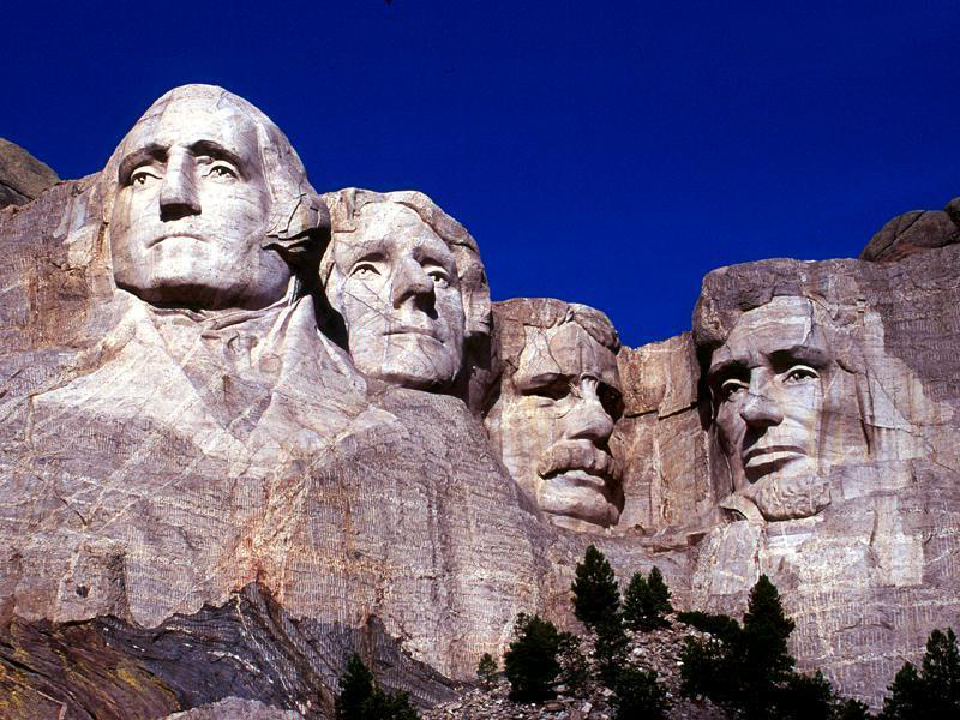
George Washington: _________________________________________________;
Thomas Jefferson: ___________________________________________________;
Theodore Roosevelt: _________________________________________________;
Abraham Lincoln: ___________________________________________________;
Team Work:
Directions: The study of history cannot help us foresee the future. But it can remind us how far we have come and how far we have to go. It can also help us understand that change is inevitable and the future is not preordained. History reminds us that we have got where we are, not through a chain of inevitabilities, but through a sequence of choices, actions, and struggles. History can never come to its end.
What is the use of learning American history or the history in general? What is the benefit of learning history? Summarize your points and share with your team members.
Learning history can ____________________________________________.
Learning history can ____________________________________________.
Learning history can ____________________________________________.
Solo Work
Which American president impressed you most? And what quality in him is worthy to be cherished? Write an essay within 300 words to describe the most memorable American president and his qualities and personalities that are worth learning.

