
Unit 10
The Roaring Twenties
The new generation of Americans was “dedicated more than the last to the fear of poverty and the worship of success; grown up to find all Gods dead, all wars fought, all faiths in man shaken.”
——F. Scott Fitzgerald
新一代美国人“比上一代更恐惧贫穷,更崇拜成功;长大后他们发现所有的神都已经死掉,所有的战争都已经打过,对人的所有信仰都已遭到破坏。”
—— F·斯科特·菲茨杰拉德
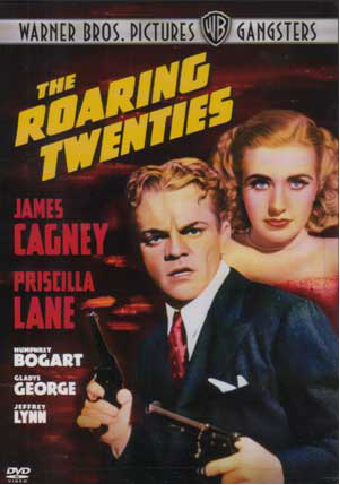

Roaring Twenties Men
“eat, drink, and be happy for tomorrow we shall die.”
(吃吧,喝吧,为明天我们将死去而快乐。)

Roaring Twenties Woman

Unit Goals
●To get a whole picture of the Roaring Twenties.
●To learn about the American mass culture in the 1920s.
●To have a deep understanding of the American society in the 1920s.
●To learn the useful words and expressions that describe America in the 1920s.
●To improve English language skills.
Before You Read
1. What was the situation like in America in the 1910s?
2. Why is the 1920s depicted as “the Roaring Twenties"?
3. What lessons should be learned from the Great Depression?
__________________________________
__________________________________
Lessons to learn __________________________________
__________________________________
_________________________________
4. Form groups of three or four students. Try to find, on the Internet or in the library, more information about American life in the 1920s which interests you most. Prepare a5-minute classroom presentation.
Start to Read
Text A The Roaring Twenties
The 1920s.MP4
1. As the world bid farewell to the 1910s, it was introduced to a decade that would be unlike any other. Separating two world wars, the 1920’s followed events such as the sinking of the Titanic (1912), the invention of stainless steel (1913), and the completion of the Panama Canal (1914). The Roaring Twenties would have their own share of excitement and wonders as well – the Treaty of Versailles ended World War I and penicillin was discovered. These events were and still are significant, but they reflect only a small portion of the full story. Unfortunately, this time period could not last forever. The 1930’s soon led to the beginning of the World War II.
2. In 1931, a journalist named Frederick Lewis Allen published a volume of informal history that did more to shape the popular image of the 1920s than any book ever written by a professional historian. The book, Only Yesterday, depicted the 1920s as an interlude between the Great War and the Great Depression. Allen argued that World War I shattered Americans’ faith in reform and moral crusades, leading the younger generation to rebel against traditional beliefs while their elders engaged in an orgy of consumption and speculation.
3. The 1920s era went by such names as the Jazz Age, the Age of Intolerance and the Roaring Twenties. The popular image of the 1920s, as a decade of prosperity and riotous living and of bootleggers and gangsters, flappers and hot jazz, is indelible memory for the Americans. But this image is also profoundly misleading. The 1920s was a decade of deep cultural conflict. The decade witnessed a titanic struggle between an old and a new America. Immigration, race, alcohol, evolution, gender politics, and sexual morality – all became major cultural battlefields during the 1920s.
4. The decade was an extraordinary and confusing time, when hedonism coexisted with puritanical conservatism. It was the age of Prohibition: in 1920 a constitutional amendment outlawed the sale of alcoholic beverages. Yet drinkers cheerfully evaded the law in thousands of “speakeasies” (illegal bars), and gangsters made illicit fortunes in liquor.
5. For big business, the 1920s were golden years. The United States was now a consumer society, with booming markets for radios, home appliances, synthetic textiles and plastics. One of the most admired men of the decade was Henry Ford, who had introduced the assembly line into automobile factories. Ford could pay high wages and still earn enormous profits by mass-producing the Model T, the car that millions of buyers could afford.
6. The 1920s were a decade of profound social changes. The most obvious signs of change were the rise of a consumer-oriented economy and of mass entertainment, which helped to bring about a “revolution in morals and manners.” Sexual mores, gender roles, hairstyles, and dress all changed profoundly during the 1920s. Many Americans regarded these changes as liberation from the country’s past. But for others, morals seemed to be decaying, and the United States seemed to be changing in undesirable ways.
7. The 1920s were a period of deep social tensions, aggravated by high wartime inflation. Food prices more than doubled between 1915 and 1920; clothing costs more than tripled. A steel strike that began in Chicago in 1919 became much more than a simple dispute between labor and management. Organized labor had grown in strength during the course of the war. Many unions won recognition, and the 12-hour workday was abolished. An 8-hour day was instituted, and by 1919, half the country’s workers had a 48-hour workweek.
8. With profits soaring and interest rate low, plenty of money was available for investment. Much of it, however, went into reckless speculation in the stock market. The bubble in the stock market burst in 1929, which triggered a world depression. The Great Depression that followed after the crash was the most devastating economic blow that the nation had ever suffered. It lasted for ten years, dominating every aspect of American life during the 1930s. The Depression loosened its grip on the nation only after the outbreak of World War II.
After You Read
Knowledge Focus
1. Pair Work: Discuss the following questions with your partner.
(1) What significant events took place in the 1920s?
(2) How were Americans influenced by World War I according to Frederick Lewis’ book?
(3) How does the writer of the text describe the image of the 1920s?
(4) Can you find several adjectives to describe the 1920s?
(5) Why was the 1920s confusing?
(6) What was “Prohibition"? Was it effective?
(7) Why was Henry Ford so successful in his business?
(8) How do you define a“consumer-oriented" economy?
(9) Why did some people think that the United States was changing in undesirable ways in the 1920s?
(10) What caused the Great Depression?
2. Tell whether the following are true or false according to the knowledge you have learned. Consider why.
(1) Among the significant events in the 1920s were the sinking of the Titanic, the invention of stainless steel, and the completion of the Panama Canal. ( )
(2) The book Only Yesterday by Henry Ford is an interlude between the Great War and the Great Depression. ( )
(3) The Jazz Age marked the Age of Intolerance and Roaring Twenties. And the images like gangsters, flappers and hot jazz, are unforgettable memory for Americans. ( )
(4) In the 1920s, the United States is a consumer society with booming markets for radios, home appliances, synthetic textiles and plastics. ( )
(5) All the Americans considered these changes like sexual mores, gender roles, hairstyles, and dress as liberation from the country's past. ( )
(6) A worldwide depression was triggered in 1939 by the collapse of burst in the stock market. ( )
(7) The Great Depression lasted for ten years, dominating almost all the aspects of the American life during the 1930s. ( )
(8) A steel strike that began in Chicago in 1919 became much more than a simple dispute between labor and management. Many unions won recognition, and the 12-hour workday was abolished. An 8-hour day was instituted, and by 1919, half the country's workers had a 48 hour workweek. ( )
(9) In the 1920s, America witnessed high wartime inflation which led the country to a deep social tension. Food prices more than doubled between 1915 and 1920. Clothing costs more than tripled. ( )
Language Focus
1. Fill in the blanks with the following words or expressions from the text.
extraordinary shatter undesirable crusade
misleading abolish coexist consumption
devastating illicit
(1) That would give them __________ power over the lives of other people.
(2) Marijuana remains the most commonly used _______ drug in the United States.
(3) Environmentalists claim that the development will have _________ effects on animal habitats in the area.
(4) The unpopular tax was finally _________ some ten years ago.
(5) These statistics give a ___________ impression of what is happening to the economy.
(6) All the windows in the farmhouse had been _________, and everything was in a mess.
(7) Each approach has its advantages, and these and other options may _________ in the network.
(8) He has begun a ___________ against crime.
(9) In 1980, the per capita __________ of cheese in the United States was 18 pounds. One-third was cottage cheese.
(10) The fear of revolution and innovation can have a ________ effect on a developing nation.
2. Match the words in the left column with the corresponding explanations in the right column.
(1) farewellA. engagement in risky business transactions on the chance of quick or considerable profit
(2) dispute
B. disagreement
C. good-bye
(3) mores
(4) hedonism
(5) speculationD. customs, social behavior or moral values of a particular group
E. pursuit of happiness
3. Find the appropriate prepositions or adverbs that collocate with the neighboring.
(1) Henry Ford, who had introduced the assembly line ___________ automobile factories, earned enormous profits by mass producing the Model T.
(2) The signing of the Treaty of Versailles and the discovery of penicillin reflected only a small portion __________ the advances in the period.
(3) Allen argued that World War I led the young generation to rebel _________ the traditional beliefs.
(4) The 1920s was a decade _________ deep cultural conflict.
(5) Many Americans regarded these changes __________ liberation from the country's past.
(6) It lasted __________ ten years, dominating every aspect of American life during the1930s.
(7) The 1920s went by such names _______ the Jazz Age, the Age of Intolerance and the Roaring Twenties.
(8) The popular image of the 1920s, as a decade of prosperity and riotous living and of bootleggers and gangsters, flappers and hot jazz, is indelible memory ___________ the Americans.
(9) The United States seemed to be changing ____________ undesirable ways.
(10) Organized labor had grown ___________ strength during the course of the war.
Comprehensive Work
Group Work
Directions: You are to create a magazine with the following components: Cover Page (Leading story, picture, title of magazine, editors, contributors, and date); Table of Contents; Four feature or news articles. Articles must be written as if they could be in your model magazine during the 1920s. Each group member is responsible for one. They can be about any significant event, trend or development in the 1920s. Your articles must correspond to the date of your magazine and have some perspective of time. For instance, if your magazine is written in 1927, you cannot write about the stock market crash of1929, and any articles about Babe Ruth must either be about the glorious 1927 season or retrospectives about his still vibrant career.

