
Unit 8
The Gilded Age (1877- 1917) 镀金时代
So long as all the increased wealth which modern progress brings goes to build up great fortunes, to increase luxury and make sharper the contrast between the House of Have and the House of Want, progress is not real and cannot be permanent. ——Henry George
只要现代进步所带来的一切增加的财富,都用来积累巨大的财富,增加奢侈品,使贫富人家的对比更加明显,进步就不是真实的,也不可能是永久的。
——亨利·乔治
Unit Goals
● To understand the significance of “the Gilded Age" as a transition period.
● To know the industrialization during this period.
● To learn the reasons for urbanization and mass immigration.
● To learn the useful words and expressions that describe “the Gilded Age”.
● To improve English language skills.
Before You Read
1. Who coined the phrase “the Gilded Age"? What does the Gilded Age refer to?
2. Do you see any element of "the Gilded Age” in contemporary society?
3. List the impacts of the technological advances in the 19th century on society and business.
Technological Advances | Impacts |
4. Form groups of three or four students. Try to find, on the Internet or in the
library, more information about the Gilded Age which interests you most.
Prepare a 5-minute classroom presentation.
Start to Read
Text A The Gilded Age

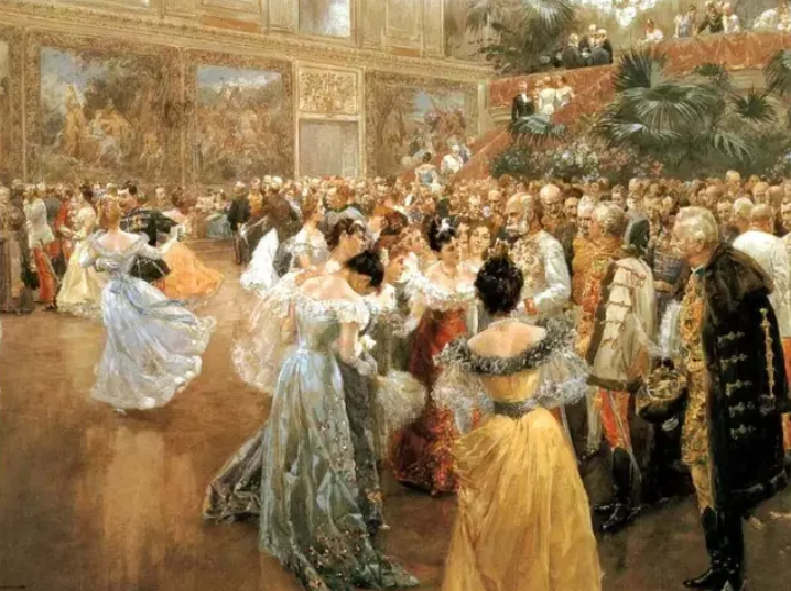
1. The term “Gilded Age” comes from a novel of the same name published in 1873 by Mark Twain, which, though fictional, is a critical examination of politics and corruption in the United States during the 19th century. By the “Gilded Age”, Mark Twain meant that the period was glittering on the surface but corrupt underneath.
(Mark Twain coined the term "The Gilded Age" to describe conditions in the late 1800s, when a class of very rich people reveled in ostentatious displays of wealth while downtrodden workers organized for fair wages and safe factory conditions.)
( 马克吐温新造出“镀金时代”一词来描述19世纪末的情况,当时一个非常富有的阶层陶醉于炫耀财富,而受压迫的工人则组织起来,要公平的工资和安全的工厂条件。)
2. The Gilded Age, a transition time from the late 19th century to the beginning of the 20th century, witnessed industrialization, urbanization, mass immigration, the construction of great transcontinental railroads, innovations in science and technology, and the rise of big business. Afterward, the first years of the new century that followed were dominated by progressivism, a forward-looking political movement that attempted to redress(矫正)some of the ills that had arisen during the Gilded Age. Progressives passed legislation to rein(掌管) in big business, fight against corruption, free the government from special interests, and protect the rights of consumers, workers, immigrants, and the poor.
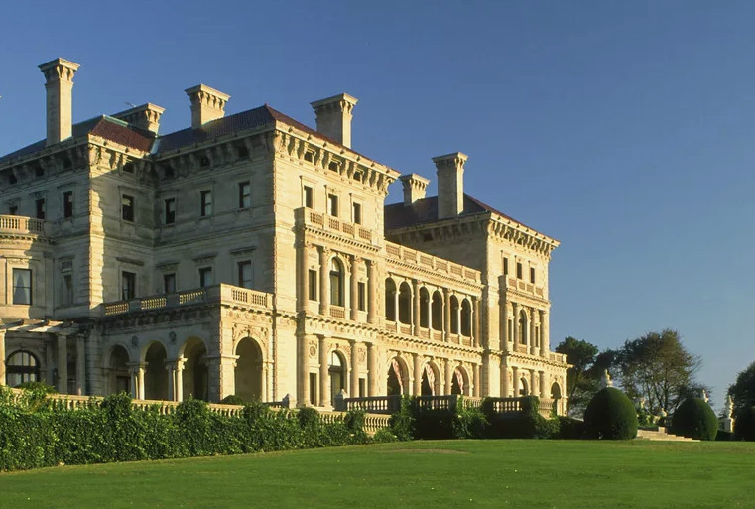
The Breakers Mansion, 1893, Newport
范德比尔特家族的文艺复兴风格听涛庄园(The Breakers)建造于1893年到1895年,位于美国罗德岛州的新港,是整个镀金时代最奢华的豪宅之一
3. Some historians have called the presidents of the Gilded Age the “forgotten presidents”, and indeed many Americans today have trouble remembering their names, what they did for the country, or even in which era they served. These six men – Ulysses S. Grant, Rutherford B. Hayes, James Garfield, Chester Arthur, Grover Cleveland, and Benjamin Harrison – had relatively unremarkable terms in office and faced few, if any major national crisis during their presidencies. Some historians have suggested that these Gilded Age presidents were unexciting for a reason – because Americans wanted to avoid bold politicians who might ruin the delicate peace after the Civil War.
4. This is not to say politics was unimportant in the Gilded Age. On the contrary, Americans paid more attention to politics and national elections during the post-Civil War period than at any other time in history, because each election had the potential to destroy the fragile balance and peace between North and South, Republican and Democrat. Voters turned out in record numbers for each presidential election in the late 19th century, with the number of voters sometimes reaching 80 percent or greater. The intensity of the elections also helps explain why Congress passed so little significant legislation after the Reconstruction era: control of the House of Representatives constantly changed hands between the Democrats and the Republicans with each election, marking an agreement on any major issue nearly impossible.
5. Driven by the North, which emerged from the Civil War an industrial powerhouse, the United States experienced unprecedented growth and industrialization during the Gilded Age, with a continent full of seemingly unlimited natural resources and driven by millions of immigrants ready to work. In fact, some historians have referred to this era as America’s second Industrial Revolution, because it completely changed American society, politics, and economy. Mechanization and marketing were the keys to success in this age: companies that could mass-produce products and convince people to buy them accumulated enormous amounts of wealth, while companies that could not were forced out of business by fierce competition.
6. Railroads were vital in the new industrialized economy. The railroad industry enabled raw materials, finished products, food, and people to travel cross-country in a matter of (大约)days, as opposed to the months or years that it took just prior to the Civil War. By the end of the war, the United States boasted some 35,000 miles of track, mostly in the industrialized North. By the turn of the century, that number had jumped to almost 200,000 miles, linking the North, South, and West. With these railroads making travel easier, millions of rural Americans flocked to the cities, and by 1900, nearly 40 percent of the population lived in urban areas.
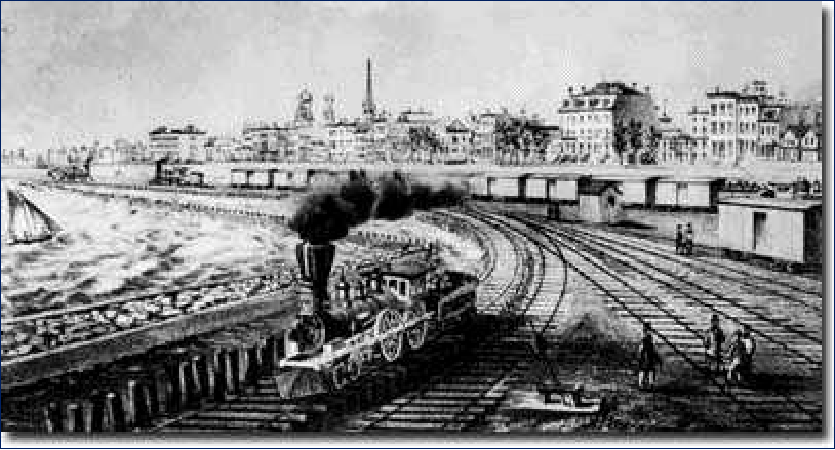
Early view of the Illinois Central Railroad
7. By the 20th century, the rise of big business and the large migration of Americans from the countryside to the cities caused a shift in political awareness, as elected officials saw the need to solve the growing economic and social problems that developed along with the urban boom, and so started the Progressive Movement. It was a movement at the turn of the 20th century which demanded government regulation of the economy and social conditions, spread quickly with the support of large number of people across the country. The Progressive Movement was not an organized campaign with clearly defined goals. Rather, it was a number of diverse efforts at political, social and economic reforms. Progressives believed that the government needed to take a strong and active role in the economy, regulating big business, immigration, and urban growth. These middle-class reformers hoped finally to regain control of the government from special interests like the railroads and trusts and pass effective legislation to protect consumers, organized labor, and minorities.
After You Read
Knowledge Focus
1. Pair Work: Discuss the following questions with your partner.
(1) Why did Mark Twain describe the time as “the Gilded Age"?
(2) Why was the Gilded Age considered a transition time in American
history?
(3) Why do many Americans have trouble remembering the names of
presidents in the Gilded Age?
(4) What was the situation in America after the Civil War?
(5) Why was presidential election so important during the post-Civil War
period in America?
(6) How could companies survive during the Gilded Age?
(7) What roles did railroads play at that time?
(8) Did the urban boom cause any problems?
(9) What was the government expected to do to solve the problems during
the post-Civil War period?
2. Solo Work: Tell whether the following are true or false according to the knowledge you have learned.
(1) The term “Gilded Age" comes from a novel of the same title published in 1873 by Mark Twain. ( )
(2) Progressives passed legislation to rein in big business, fight against corruption, free the government from special interests, and protect the rights of consumers, workers, immigrants, and the poor. ( )
(3) Ulysses S. Grant, Rutherford B. Hayes, James Garfield, Chester Arthur, Grover Cleveland, and Benjamin Harrison were the six presidents of the Gilded Age. ( )
(4) Americans paid more attention to politics and national elections during the post-Civil War period than at any other time in history. ( )
(5) Driven by the South, which emerged from the Civil War as an industrial powerhouse the United States experienced exceptional growth and industrialization during the Gilded Age. ( )
(6) Some historians have referred to Gilded Age as America’s first Industrial Revolution. ( )
(7) Mechanization, marketing and railroads were the key elements in the new industrialized economy. ( )
(8) The Progressive Movement was an organized campaign with clearly defined goals and was spread quickly with the support of large number of people across the country. ( )
(9) The large migration of Americans from the countryside to the cities started the Progressive movement. ( )
(10) Progressives finally freed the government from special interests like the railroads and trusts and pass effective legislation to protect consumers, organized labor, and minorities. ( )
Language Focus
1. Fill in the blanks with the following words or expressions from the text.
fierce critical accumulate seemingly
effective emerge vital redress
transition relatively
(1) The ___________ recent outbreak of street violence and protests largely reflect the frustration of young people unable to find jobs.
(2) I just don't know how we’ve managed to _________ so much junk!
(3) Regular exercise is _________ for your health.
(4) The government has just published a highly __________ report on the state of the education system.
(5) Congress has done little to __________ these injustices.
(6) Swans are always _________ in defense of their young.
(7) In my opinion, neither of these arguments is ________ in destroying its opponent.
(8) Mid-1945 was an important period of ___________ for him.
(9) Every year, in fact, _________ more celebrations, demonstrations and displays mark its passing.
(10) Hong Kong _________ as a dominant force in environmental and ecological protection.
2. Complete the following sentences with the proper forms of the words in the brackets.
(1) A ___________ (critical) is one who forms and expresses judgments of the merits, faults, value or truth of a matter.
(2) The ___________ (transition) sentence usually summarizes the previous paragraph and introduces the following topic.
(3) Anyone who has creative thinking is always ready to present ___________ (innovate) ideas to others.
(4) In such an embarrassing situation, Johnson phrased the apology with ______________ (delicate).
(5) As a state official, he was entitled to live in a ___________ (president) suite.
(6) The ____________ (intensity) sun of the tropics is barely tolerable to any of the visitors.
(7) The past two decades witnessed _________ (precede) economic growth in south-east Asia.
(8) As a career woman, she gives ___________ (prior) to her business.
(9) This program intends to raise the public __________ (aware) of animals in imminent danger.
(10) Samantha's straight A perfectly demonstrated she was both __________ (industry) and intelligent.
3. Find the appropriate prepositions or adverbs that collocate with the neighboring words.
(1) By the “Gilded Age", Mark Twain meant that the period was glittering ___________ the surface but corrupt ___________.
(2) Voters turned _____________ in record numbers for each presidential election in the late nineteenth century.
(3) Progressives passed legislation to rein ____________ big business, fight against corruption, free the government from special interests.
(4) The control of the House of Representatives constantly changed hands between the Democrats and the Republicans with each election, making an agreement __________ any major issue nearly impossible.
(5) Mechanization and marketing were the keys ____________ success in this age: companies that could mass- produce products and convince people to buy them accumulated enormous amounts __________ wealth.
(6) The railroad industry enabled raw materials, finished products, food, and people to travel cross country ____________ a matter of days, as opposed ___________ the months or years that it took just prior to the Civil War.
(7) By the turn of the century, the number had jumped _________ almost 200,000 miles, linking the North, South, and West.
(8) With these railroads making travel easier, millions of rural Americans flocked _________ the cities.
(9) Progressives believed that the government needed to take a strong and active role ______ the economy, regulating big business, immigration, and urban growth.
Comprehensive Work
Pair Work: Discuss the following questions with your partner.
1. Why were most large American cities in the late 1800s found in the Northeast?
2. What people moved to American cities in the late 1800s?
3. Why did the immigrants stay despite the hard time in getting use

