
Unit 7 Reconstruction (1865- 1877)
The people were generally impoverished. The farms had gone to waste; the fields were covered with weeds and bushes…Business was at a standstill; banks and commercial places had either been suspended or closed. And the disbanded soldiers returned to their homes to find desolation and starvation staring them in face.
---Garner, Reconstruction in Mississippi
人民普遍贫困。农场已荒废;田野上杂草丛生……生意停滞不前;银行和商业场所要么停业要么关闭。被遣散的士兵回到他们的家中,发现他们面对的是荒凉和饥饿。
---加纳,密西西比重建
Unit Goals
● To understand the situation in the U. S. after the Civil War.
● To learn about Reconstruction and its impacts .
● To learn the useful words and expressions that describe the Reconstruction
era of America.
● To improve English language skills.
Before You Read
1. What were the problems left unsolved after the Civil War?
_______________________________________
Problems _______________________________________
_______________________________________
________________________________________
2. What was the status of Southerners at the end of the Civil War?
3. What roles did the President and the Congress play in Reconstruction?
4. Put yourself in the shoes of the president confronted with the post-civil
war situation. Discuss with your partner how to solve the following
problems:
Problems
(1) What was the relationship between the former Confederate states and the
Union?
(2) How should the 11 seceded states be readmitted?
(3) Who should be punished for the Confederate rebellions, if anyone?
(4) What should be the position of the newly-freed slaves?
(5) How do you reintegrate the Southern States into the Union?
(6) How should the war-torn South be rebuilt?
5. Form groups of three or four students. Try to find, on the Internet or in the
library, more information about the Reconstruction which interests you
most. Prepare a 5-minute classroom presentation.
Start to Read
Text A Reconstruction after the Civil War
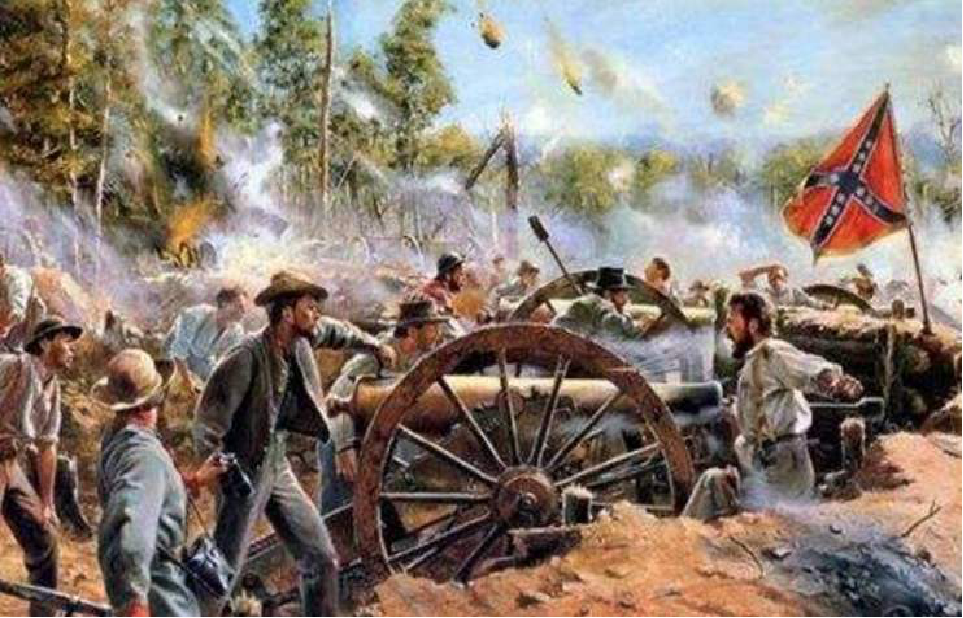

1. Reconstruction was the attempt from 1865 to 1877 in U.S. history to resolve the issues of the American Civil War, especially known as the process of rebuilding the seceded States.
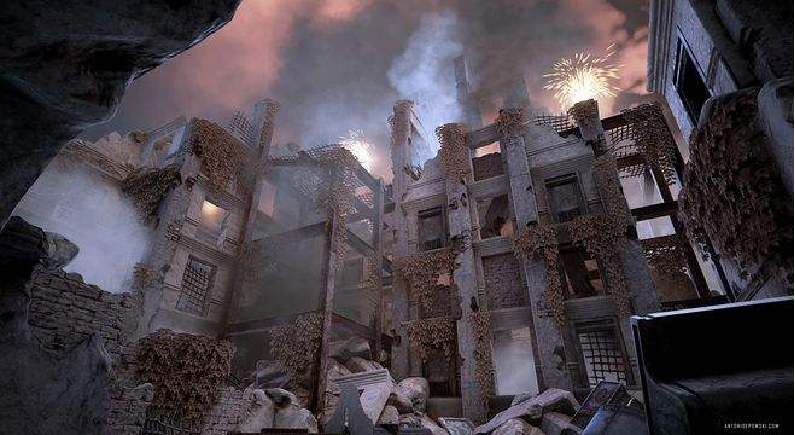
2. By the end of the Civil War, the South was in a state of political upheaval(剧变), social disorder and economic decay(衰退). The war destroyed southern crops, plantations, and entire cities. Inflation became so severe that by the end of the war a loaf of bread cost several hundred Confederate dollars. Thousands of southerners starved to death, and many who did not starve lost everything they owned: clothing, homes, land, and slaves. As a result, by 1865, policy makers in Washington had the nearly impossible task of southern Reconstruction.
3. Reconstruction encompassed (包含)three major aspects: restoration of the Union, transformation of southern society, and enactment of progressive laws favoring the rights of emancipated slaves.
4. President Abraham Lincoln mapped out(制定) his Ten-Percent Plan in hope of restoring the Union. Under the plan, each southern state would be readmitted to the Union after 10 percent of its voting population had pledged(宣誓) future loyalty to the United States, and all Confederates except high-ranking government and military officials would be pardoned. After Lincoln was assassinated in 1865, President Andrew Johnson adopted the Ten-Percent Plan and pardoned thousands of Confederate officials. Radical Republicans in Congress, however, denounced(谴责) the plan for being lenient(宽大的) on the South and for not securing any rights for the freed slaves. The Republicans called for harsher measures, demanding a loyalty pledge from 50 percent of each state's voting population rather than just 10 percent. Although such points of disagreement existed, both presidents and Congress agreed on one major point –– that the southern states needed to abolish slavery in the new constitutions before being readmitted to the Union.
5. The Radical Republicans also believed that southern society would have to be completely transformed to ensure that the South would not try to secede again. The Radicals, therefore, attempted to reshape the South by emancipating blacks. As some northerners streamed into the South, southerners denounced them as traitors and falsely accused many of corruption. However, the U.S. government did manage to distribute confiscated lands to former slaves and poor whites and help improve education and sanitation and foster industrial growth in southern cities.
6. Ultimately, the most important part of Reconstruction was the push to secure rights for former slaves. Radical Republicans, aware that newly freed slaves would face subtle racism, passed a series of progressive laws and amendments in Congress that protected blacks' rights under federal and constitutional law.
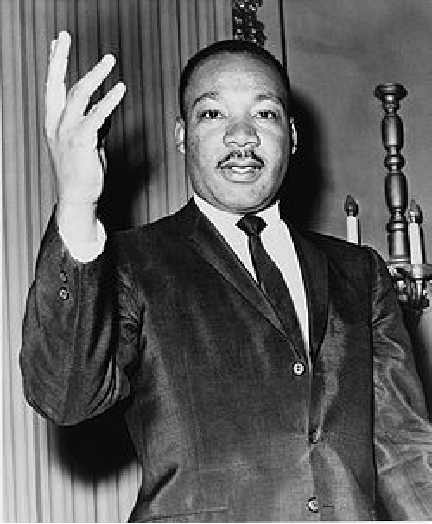
7. Historians do agree that reconstruction changed the United States in several important ways. One of the most important changes was in the Constitution. Congress passed three historic amendments to the Constitution during this period. The first was the Thirteenth Amendment. It ended slavery in the United States. The next was the Fourteenth Amendment. It said all persons born or naturalized(加入国籍的) in the United States were citizens of the United States and of the state in which they lived. It said no state could limit the rights of these citizens. Finally, there was the Fifteenth Amendment. It said a citizen of the United States could not be prevented from voting because of his color. These laws alone, however, did not succeed in doing this. It would take another century –– until Martin Luther King and other civil rights leaders –– to make these rights a reality.
8. Reconstruction was a mixed success. Historians have tended to judge Reconstruction severely as a period of political conflict, corruption, and regression(倒退) that failed to achieve its original goals. Slaves were granted freedom, but the North completely failed to satisfy their economic needs. The government was unable to provide former slaves with political and economic opportunity. Union military troops often could not protect them from violence. Indeed, without economic resources of their own, many Southern African Americans were forced to become tenant farmers on land owned by their former masters, caught in a cycle of poverty that would continue well into the 20th century.
9. Reconstruction-era governments did make achievements in rebuilding Southern states devastated by the war, and in expanding public services, notably in establishing free public schools for African Americans and whites. However, the failure of Reconstruction meant that the struggle of African Americans for equality and freedom was postponed until the 20th century – when it would become a national, not just a Southern issue.


