Demographic Analysis in the USA
Recent American census figures provide a glimpse into the shape of the changing U.s.population. In the 1990s, the growth in the Latino, African American, and Asian American
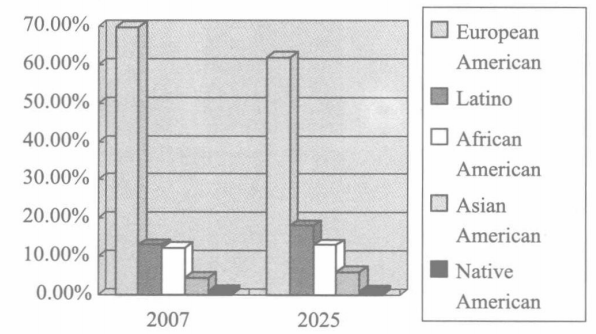
populations accounted for nearly two-thirds of the nation's increase.Currently, the U.S. population is 69.7% European American,13% Latino,12.3% African American,4.2% Asian American, and 0.8% Native American. Although all cultural groups residing within the United States are expected to increase in size during the next fifty years, the rates of growth are not uniform. By 2025, for example,the European American population is expected to be about 62% of the total, the Latino population should increase to 18%, the African American population will likely grow at the national average and will remain at about 13% of the total population, Asian American groups will increase to more than 6%of the U.S. population, and Native American groups are expected to maintain an estimated 1% of the U.S. population. If current trends continue, by 2050, European Americans will comprise about half of the U.S. population.Census figures also indicate that such cultural diversification is a nationwide phenomenon.
美国的人口统计分析
最近的美国人口普查数据让我们得以一窥不断变化的美国人口的形态。在20世纪90年代,拉丁裔、非裔和亚裔美国人的增长
人口占全国人口增长的近三分之二。目前,美国人口中有69.7%为欧洲裔美国人,13%为拉丁裔美国人,12.3%为非裔美国人,4.2%为亚裔美国人,0.8%为美洲原住民。尽管居住在美国的所有文化群体预计在未来五十年内规模都会增加,但增长率并不一致。例如,到2025年,欧洲裔美国人预计将占总人口的62%左右,拉丁裔人口将增加到18%,非裔美国人可能会以全国平均水平增长,并将保持在总人口的13%左右,亚裔美国人群体将增加到美国人口的6%以上,美洲原住民群体预计将保持美国人口的1%。如果目前的趋势继续下去,到2050年,欧洲裔美国人将占美国人口的一半左右。人口普查数据还表明,这种文化多样化是一种全国性现象。
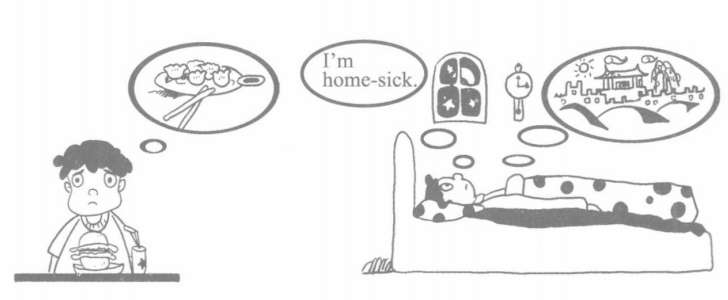
Have you ever experienced such symptoms when you come into anew environment? Discuss it with your group members.
Adapting to a new culture can be both exciting and challenging, It requires an open mind and a willingness to embrace new customs and traditions. It's important to remember that every culture has its own unique way of doing things, and being respectful and open-minded is key to adapting successfully.
One of the first things to do when adapting to a new culture is to observe and learn from the locals. Pay attention to how people interact with each other, what thev eat, how thev dress, and what their daily routines are like. Brobserving and learning from the locals, you can gain a better understanding of the culture and begin to adapt more easily.
Another important aspect of adapting to a new culture is to be open to trying new things. This can include trying new foods, participating in local customs and traditions, and engaging in activities that are popular in the culture. B. being open to new experiences, you can gain a deeper appreciation for the culture and feel more integrated into vour new environment.
Language is also a crucial part of adapting to a new culture, Learning the local language can help you communicate more effectively with the locals and feel more connected to the culture. It's important to practice speaking and listening to the language as much as possible, and to not be afraid of making mistakes. Embracing the language can help you feel more at home in your new cultural environment.
Finally, it's important to be patient with vourself as you adapt to a new culture. It takes time to fully understand and feel comfortable in a new cultural environment, and it's okav to feel overwhelmed at times. By being patient and open-minded, vou can graduallv adapt to the new culture and feel more at ease in your new surroundings In conclusion, adapting to a new culture requires an open mind, a willingness to try new things, and a patient attitude. Bv observing and learning from the locals, being open to new experiences, embracing the language, and being patient with yourself, you can successfully adapt to a new culture and feel more at home in vout new environment.