目录

  • 1 Introduction
    • 1.1 Coursr Introduction
    • 1.2 warm up
    • 1.3 course work
    • 1.4 期末
  • 2 C1. Overview of the Meetings Profession
    • 2.1 课程内容
    • 2.2 讨论题
    • 2.3 章节总结
    • 2.4 章节测试
    • 2.5 阅读
    • 2.6 第一章学习笔记上传
  • 3 C2. Strategic Meetings: Aligning with the Organization
    • 3.1 课程内容
    • 3.2 讨论题
    • 3.3 章节总结
    • 3.4 章节测试
    • 3.5 阅读
    • 3.6 本章节笔记上传
  • 4 C3. Blending Project and Meeting Management
    • 4.1 课程内容
    • 4.2 讨论题
    • 4.3 章节总结
    • 4.4 章节测试
    • 4.5 小组作业
    • 4.6 阅读
    • 4.7 第三章学习笔记上传
  • 5 C4. Designing the Meeting Experience
    • 5.1 课程内容
    • 5.2 讨论题
    • 5.3 章节总结
    • 5.4 章节测试
    • 5.5 作业
    • 5.6 阅读
    • 5.7 请上传第四章笔记
  • 6 C5. Budgeting Basics for Meeting Professionals
    • 6.1 课程内容
    • 6.2 讨论题
    • 6.3 章节总结
    • 6.4 章节测试
    • 6.5 作业
    • 6.6 阅读
    • 6.7 第五章课堂笔记上传
  • 7 C6. Site and Venue Selection
    • 7.1 课程内容
    • 7.2 讨论题
    • 7.3 章节总结
    • 7.4 章节测试
    • 7.5 作业
    • 7.6 阅读
    • 7.7 第六章学习笔记上传
  • 8 C7. Risk Management: Meeting Saftey and Security
    • 8.1 课程内容
    • 8.2 章节总结
    • 8.3 章节测试
    • 8.4 案例讨论题
    • 8.5 作业
    • 8.6 阅读
    • 8.7 第七章学习笔记上传
  • 9 C8. Negotiations, Contracts, adn Liability
    • 9.1 课程内容
    • 9.2 章节总结
    • 9.3 阅读
    • 9.4 章节测试
    • 9.5 讨论题
    • 9.6 作业
    • 9.7 第八章学习笔记上传
  • 10 C9. Marketing the Meeting
    • 10.1 课程内容
    • 10.2 讨论题
    • 10.3 章节总结
    • 10.4 章节测试
    • 10.5 作业
    • 10.6 阅读
    • 10.7 第九章学习笔记上传
  • 11 C10. Registration and Housing
    • 11.1 课程内容
    • 11.2 讨论题
    • 11.3 章节总结
    • 11.4 章节测试
    • 11.5 作业
    • 11.6 阅读
    • 11.7 第十章学习笔记上传
  • 12 C11. Exhibitions and the Role of Face-to-face Marketing
    • 12.1 课程内容
    • 12.2 讨论题
    • 12.3 章节总结
    • 12.4 章节测试
    • 12.5 作业
    • 12.6 阅读
    • 12.7 第十一章学习笔记上传
  • 13 C12. Bring Meetings to Life: Event Technology
    • 13.1 课程内容
    • 13.2 讨论题
    • 13.3 章节总结
    • 13.4 章节测试
    • 13.5 作业
    • 13.6 阅读
    • 13.7 第十二章笔记上传
  • 14 C13. Food and Beverage Fundamentals
    • 14.1 课程内容
    • 14.2 讨论题
    • 14.3 章节总结
    • 14.4 章节测试
    • 14.5 作业
    • 14.6 阅读
    • 14.7 第十三章笔记上传
  • 15 C14. Onstie Management
    • 15.1 课程内容
    • 15.2 讨论题
    • 15.3 章节总结
    • 15.4 章节测试
    • 15.5 作业
    • 15.6 阅读
    • 15.7 第十四章笔记上传
  • 16 C15. Post-Meeting Follow-up
    • 16.1 课程内容
    • 16.2 讨论题
    • 16.3 章节总结
    • 16.4 章节测试
    • 16.5 作业
    • 16.6 阅读
    • 16.7 笔记上传
章节总结

CHAPTER 9

§ 

Marketing for Planners


CONTENTS

§ 


A. Identify the traditional Ps of marketing.

B. Distinguish target audiences and relevant demographics/psychographics.

C. Create a comprehensive meeting marketing plan.

D. Recognize the pros and cons of meeting marketing distribution channels.

E. Craft a multi-prong marketing strategy.

F. Utilize traditional and cutting-edge marketing mediums and technology.
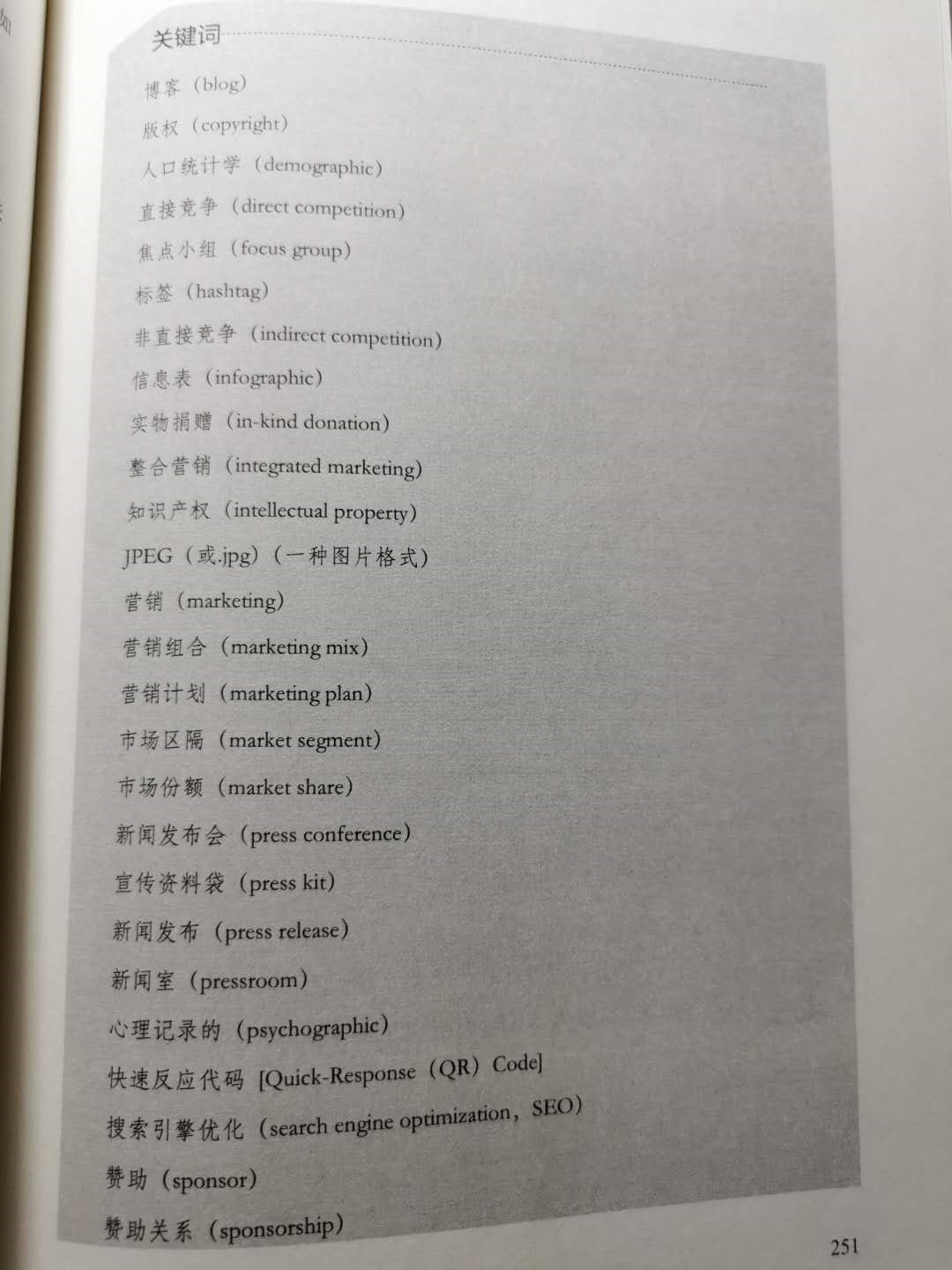


Chapter Summary

An overview of basic marketing is provided in this chapter and includes the traditional ‘Ps’ of product, place, price, promotion, and people. Student’s will gain information on market research, marketing plan management, and marketing distribution cycles.


Defining the importance of marketing management is key to the success of any meeting and event. Marketing management includes: communication of meeting message; the marketing mix that determines marketing strategy, and the integration of marketing elements for the ultimate success of conclave.


Marketing management aids in the creation of a marketing plan. Enable meeting professionals to conduct research on attendees for future organization use. Using marketing management helps meeting professionals understand their competition and foresee organizational needs.


In-depth discussion is provided in making all aspects of marketing communications work together as a unified force; and a framework on market research is given to understanding target markets.


A. Chapter Competencies

Suggestion: You may want to give a copy of the list of competencies for each chapter to the students so they can use it as a study guide.

After studying Chapter , the student should be able to

1. define “marketing” and “integrated marketing.”

2. identify and explain all of the five “P’s” of marketing.

3. identify and explain “S.W.O.T.”

4. identify and explain “S.M.A.R.T.” and be able to come up with marketing plans that use “S.M.A.R.T.”

5. know the twenty reasons for using email marketing.

6. list at least six strategies for effectiveness.

7. know and understand the importance of using social media for marketing.

8. be able to explain a few different tools of offline and online public relations.

9. identify some of the different forms of sponsorship.

10. identify and explain the AIDA-formula.