
5.4 Value chain
Key Takeaways
A value chain is a concept describing the full chain of a business's activities in the creation of a product or service -- from the initial reception of materials all the way through its delivery to market, and everything in between.
The value chain framework is made up of five primary activities -- inbound operations, operations, outbound logistics, marketing and sales, service -- and four secondary activities -- procurement and purchasing, human resource management, technological development and company infrastructure.
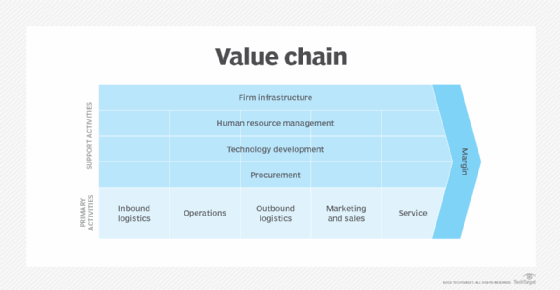
Primary activities
Primary activities contribute to a product or service's physical creation, sale, maintenance and support. These activities include the following:
Inbound operations. The internal handling and management of resources coming from outside sources -- such as external vendors and other supply chain sources. These outside resources flowing in are called "inputs" and may include raw materials.
Operations. Activities and processes that transform inputs into "outputs" -- the product or service being sold by the business that flow out to customers. These "outputs" are the core products that can be sold for a higher price than the cost of materials and production to create a profit.
Outbound logistics. The delivery of outputs to customers. Processes involve systems for storage, collection and distribution to customers. This includes managing a company's internal systems and external systems from customer organizations.
Marketing and sales. Activities such as advertising and brand-building, which seek to increase visibility, reach a marketing audience and communicate why a consumer should purchase a product or service.
Service. Activities such as customer service and product support, which reinforce a long-term relationship with the customers who have purchased a product or service.
Secondary activities
The following secondary activities support the various primary activities:
Procurement and purchasing. Finding new external vendors, maintaining vendor relationships, and negotiating prices and other activities related to bringing in the necessary materials and resources used to build a product or service.
Human resource management. The management of human capital. This includes functions such as hiring, training, building and maintaining an organizational culture; and maintaining positive employee relationships.
Technology development. Activities such as research and development, IT management and cybersecurity that build and maintain an organization's use of technology.
Company infrastructure. Necessary company activities such as legal, general management, administrative, accounting, finance, public relations and quality assurance.
视频 1: Value chain
视频 2:Core competence
阅读材料:‘Value Chain’ Definitions and Characteristics
课件分享:Value chain analysis

