
目录

  • 1 课程介绍
    • 1.1 课程介绍文档
    • 1.2 课程思政优秀案例
  • 2 教学大纲
    • 2.1 中文教学大纲
    • 2.2 最近一学期教案
  • 3 Chapter 1 Multinational Management in a Changing World
    • 3.1 Covid-19 and Globalization
    • 3.2 Chinese Multinational Company
  • 4 Chapter 2 Culture and Multinational Management
    • 4.1 What is culture?
    • 4.2 Levels of culture
      • 4.2.1 Hofstede model of national culture
      • 4.2.2 Caveats and cautions
  • 5 Chapter 3 Strategic Management in the Multinational Company
    • 5.1 Generic Strategy
    • 5.2 IKEA case study and low-cost leadership
    • 5.3 Airbus-Boeing Case study and differentiation
    • 5.4 Value chain analysis
  • 6 Chapter 4 Multinational and Entry-mode Strategies
    • 6.1 Multinational strategies
    • 6.2 Entry mode strategies: content and formulation
  • 7 Chapter 5 Business  Ethics and Social Responsibility
    • 7.1 International business ethics
    • 7.2 Social responsibility
    • 7.3 National differences in business ethics and social responsibility
  • 8 Chapter 6 Organizational Designs for Multinational Companies
    • 8.1 The nature of organizational design
    • 8.2 Critical decision points in global marketing
    • 8.3 Global Production and Supply-Chain Management
    • 8.4 Knowledge management
  • 9 Chapter 7 Global Entrepreneurship and Intrapreneurship
    • 9.1 Business Entrepreneurship across Borders
    • 9.2 From Entrepreneurship to Born-Global Firms
    • 9.3 Regional Economic Integration
  • 10 Chapter 8 International Human Resource Management
    • 10.1 Multinational managers
    • 10.2 The Global War for Talent
    • 10.3 Effective Selection and Placement Strategies
  • 11 Chapter 9 International Negotiation and Cross-cultural Communication
    • 11.1 The basics of cross-cultural communication
    • 11.2 International negotiation
      • 11.2.1 Types of negotiation
      • 11.2.2 Basic guidelines to negotiation
  • 12 Exercise
    • 12.1 作业(见图表指示)
    • 12.2 考查试题
Social responsibility

                                 7.2  Corporate social responsibility

Key Takeaways

  1.  Social responsibility means that besides maximizing shareholder value, businesses should operate in a way that benefitssociety.

  2.  Socially responsible companies should adoptpolicies that promote the well-being of society and the environment whilelessening negative impacts on them.

  3.  Companies can act responsibly in many ways,such as by promoting volunteering, making changes that benefit the environment,engaging in ethical labor practices, and engaging in charitable giving.

  4. Consumers are more actively looking to buygoods and services from socially responsible companies, hence impacting theirprofitability.
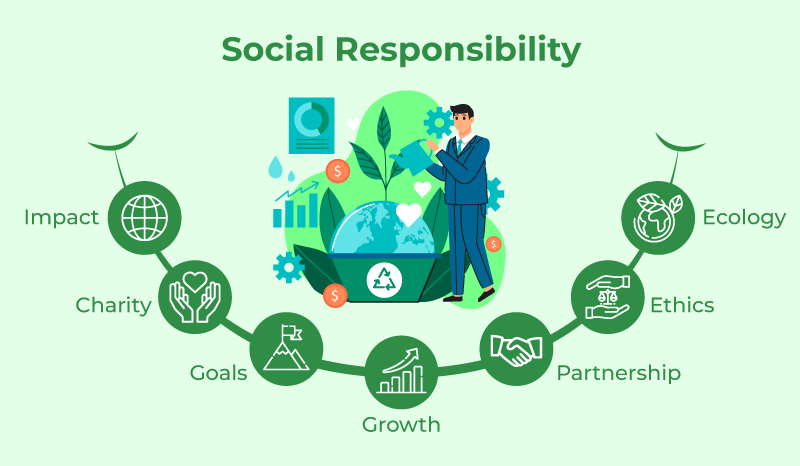
Social Responsibilities of a Business - Meaning, Need and Types -  GeeksforGeeks


材料阅读: Corporate social responsibility


视频 1:What is Corporate social responsibility (CSR)?


视频 2:CSR explained with examples


课件分享: Corporate social responsibility


课后思考:FOOD FOR THOUGHT

  1. How does social responsibility benefitcompanies?

  2. How do you understand the "bottom line"