

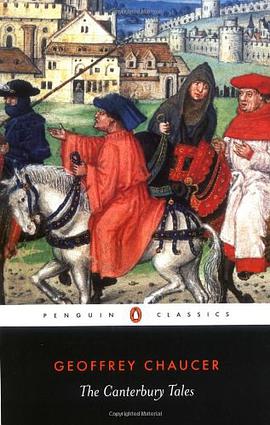
The Canterbury Tales
The General Prologue
(An Excerpt)
Here bygynneth the Book of the Tales of Caunterbury
Whan that Aprill, with his shoures soote
The droghte of March hath perced to the roote
And bathed every veyne in swich licour,
Of which vertu engendred is the flour;
5Whan Zephirus eek with his sweete breeth
Inspired hath in every holt and heeth
The tendre croppes, and the yonge sonne
Hath in the Ram his halfe cours yronne,
And smale foweles maken melodye,
10That slepen al the nyght with open eye-
(So priketh hem Nature in hir corages);
Thanne longen folk to goon on pilgrimages
And palmeres for to seken straunge strondes
To ferne halwes, kowthe in sondry londes;
15And specially from every shires ende
Of Engelond, to Caunterbury they wende,
The hooly blisful martir for to seke
That hem hath holpen, whan that they were seeke.
Bifil that in that seson, on a day,
20In Southwerk at the Tabard as I lay
Redy to wenden on my pilgrymage
To Caunterbury with ful devout corage,
At nyght was come into that hostelrye
Wel nyne and twenty in a compaignye
25Of sondry folk, by aventure yfalle
In felaweshipe, and pilgrimes were they alle,
That toward Caunterbury wolden ryde.
The chambres and the stables weren wyde,
And wel we weren esed atte beste;
30And shortly, whan the sonne was to reste,
So hadde I spoken with hem everichon
That I was of hir felaweshipe anon,
And made forward erly for to ryse
To take our wey, ther as I yow devyse.
35 But nathelees, whil I have tyme and space,
Er that I ferther in this tale pace,
Me thynketh it acordaunt to resoun
To telle yow al the condicioun
Of ech of hem, so as it semed me,
40And whiche they weren, and of what degree,
And eek in what array that they were inne;
And at a knyght than wol I first bigynne.
A KNYGHT ther was, and that a worthy man,
That fro the tyme that he first bigan
45To riden out, he loved chivalrie,
Trouthe and honour, fredom and curteisie.
Ful worthy was he in his lordes werre,
And therto hadde he riden, no man ferre,
As wel in cristendom as in hethenesse,
50And evere honoured for his worthynesse.
At Alisaundre he was, whan it was wonne.
Ful ofte tyme he hadde the bord bigonne
Aboven alle nacions in Pruce;
In Lettow hadde he reysed, and in Ruce,
55No Cristen man so ofte of his degree.
In Gernade at the seege eek hadde he be
Of Algezir, and riden in Belmarye.
At Lyeys was he and at Satalye,
Whan they were wonne; and in the Grete See
60At many a noble armee hadde he be.
At mortal batailles hadde he been fiftene,
And foughten for oure feith at Tramyssene
In lystes thries, and ay slayn his foo.
This ilke worthy knyght hadde been also
65Somtyme with the lord of Palatye
Agayn another hethen in Turkye.
And everemoore he hadde a sovereyn prys;
And though that he were worthy, he was wys,
And of his port as meeke as is a mayde.
70He nevere yet no vileynye ne sayde
In al his lyf unto no maner wight.
He was a verray, parfit gentil knyght.
But, for to tellen yow of his array,
His hors were goode, but he was nat gay.
75Of fustian he wered a gypon
Al bismotered with his habergeoun,
For he was late ycome from his viage,
And wente for to doon his pilgrymage.
With hym ther was his sone, a yong SQUIER,
Reference: http://www.librarius.com/cantales.htm

A modern English version of The Canterbury Tales
The General Prologue
(An Excerpt)
When in April the sweet showers fall
And pierce the drought of March to the root,
And all the veins are bathed in liquor of such power
As brings about the engendering of the flower,
When also Zephyrus with his sweet breath
Exhales an air in every grove and heath
Upon the tender shoots, and the young sun
His half-course in the sign of the Ram has run,
And the small fowl are making melody
That sleep away the night with open eye
(so nature pricks them and their heart engages)
Then people long to go on pilgrimages
And palmers long to seek the stranger strands
Of far-off saints, hallowed in sundry lands,
And specially, from every shire’s end
Of England, down to Canterbury they wend
To seek the holy blissful martyr, quick
To give his help to them when they were sick,
It happened in that season that one day
In Southwark, at the Tabard, as I lay
Ready to go on pilgrimages and start
For Canterbury, most devout at heart,
At night there came into that hostelry
Some nine and twenty in a company
Of sundry folk happening then to fall
In fellowship, and they were pilgrims all
That towards Canterbury meant to ride,
The rooms and stables of the inn were wide;
They made us easy, all was of the best,
And, briefly, when the sun had gone to rest,
I’d spoken to them all upon the trip
And was soon one with them in fellowship,
Pledged to rise early and to take the way
To Canterbury, as you heard me say.
But none the less, while I have time and space,
Before my story takes a further pace,
It seems a reasonable thing to say
What their condition was, the full array
Of each of them, as it appeared to me,
According to profession and degree,
And what apparel they were riding in;
And at a Knight I therefore will begin.
There was a Knight, a most distinguished man,
Who from the day on which he first began
To ride abroad had followed chivalry,
Truth, honour, freedom and all courtesy.
He had done nobly in his sovereign’s war,
And ridden into battle, none more far
As well in Christendom as in heathen places,
And ever honoured for his noble graces.
When we took Alexandria, he was there.
He often sat at tale in the chair
of honour, above all nations, when in Prussia.
In Lithuania he had ridden, and Russia,
No Christian man so often, of his degree.
In far Granada at the siege was he
Of Algeciras, and in Benamarin.
At Ayas and Attalia was he when
they were won; and in the Mediterranean Sea
He had been with many a noble army.
In fifteen mortal battles he had been
And fought for our faith at Tlemcen
Three times in the lists, and always killed his foe.
This same distinguished knight had been also
At one time with the lord of Palatia
Against another heathen in Turkey;
He was of sovereign value in all eyes.
And thought so distinguished, he was wise
And in his bearing modest as a maid.
He never yet a boorish thing had said
In all his life to any, come what might;
He was a truly perfect gentle-knight.
Speaking of his equipment, he possessed
Fine horses, but he was not gaily dressed.
He wore a fustian tunic stained and dark
With smudges where his armour had left mark;
He had just come back from his voyage,
And now was going on this pilgrimage.
The Faerie Queene: Book I.
contayning
The Legende of
the Knight of the Red Crosse,
or Holinesse
CANTO IV
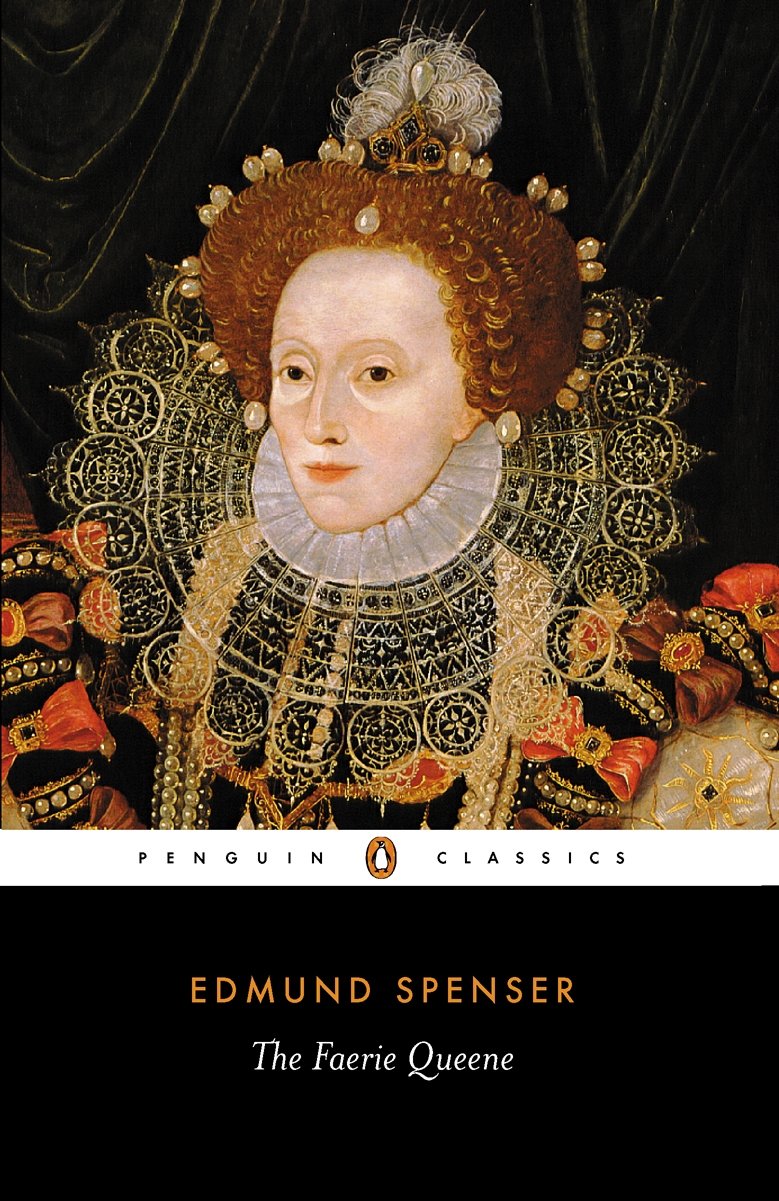
Suddein vpriseth from her stately place
The royall Dame, and for her coche doth call:
All hurtlen forth, and she with Princely pace,
As faire Aurora in her purple pall,
Out of the East the dawning day doth call:
So forth she comes: her brightnesse brode doth blaze;
The heapes of people thronging in the hall,
Do ride each other, vpon her to gaze:
Her glorious glitterand light doth all mens eyes amaze.
So forth she comes, and to her coche does clyme,
Adorned all with gold, and girlonds gay,
That seemd as fresh as Flora in her prime,
And stroue to match, in royall rich array,
Great Iunoes golden chaire, the which they say
The Gods stand gazing on, when she does ride
To Ioues high house through heauens bras-paued way
Drawne of faire Pecocks, that excell in pride,
And full of Argus eyes their tailes dispredden wide.
But this was drawne of six vnequall beasts,
On which her six sage Counsellours did ryde,
Taught to obay their bestiall beheasts,
With like conditions to their kinds applyde:
Of which the first, that all the rest did guyde,
Was sluggish Idlenesse the nourse of sin;
Vpon a slouthfull Asse he chose to ryde,
Arayd in habit blacke, and amis thin,
Like to an holy Monck, the seruice to begin.
And in his hand his Portesse still he bare,
That much was worne, but therein little red,
For of deuotion he had little care,
Still drownd in sleepe, and most of his dayes ded;
Scarse could he once vphold his heauie hed,
To looken, whether it were night or day:
May seeme the wayne was very euill led,
When such an one had guiding of the way,
That knew not, whether right he went, or else astray.
From worldy cares himselfe he did esloyne,
And greatly shunned manly exercise,
From euery worke he chalenged essoyne,
For contemplation sake: yet otherwise,
His life he led in lawlesse riotise;
By which he grew to grieuous malady;
For in his lustlesse limbs through euill guise
A shaking feuer raignd continually:
Such one was Idlenesse, first of this company.
And by his side rode loathsome Gluttony,
Deformed creature, on a filthie swyne,
His belly was vp-blowne with luxury,
And eke with fatnesse swollen were his eyne,
And like a Crane his necke was long and fyne,
With which he swallowd vp excessiue feast,
For want whereof poore people oft did pyne;
And all the way, most like a brutish beast,
He spued vp his gorge, that all did him deteast.
In greene vine leaues he was right fitly clad;
For other clothes he could not weare for heat,
And on his head an yuie girland had,
From vnder which fast trickled downe the sweat:
Still as he rode, he somewhat still did eat,
And in his hand did beare a bouzing can,
Of which he supt so oft, that on his seat
His dronken corse he scarse vpholden can,
In shape and life more like a monster, then a man.
Vnfit he was for any worldy thing,
And eke vnhable once to stirre or go,
Not meet to be of counsell to a king,
Whose mind in meat and drinke was drowned so,
That from his friend he seldome knew his fo:
Full of diseases was his carcas blew,
And a dry dropsie through his flesh did flow:
Which by misdiet daily greater grew:
Such one was Gluttony, the second of that crew.
And next to him rode lustfull Lechery,
Vpon a bearded Goat, whose rugged haire,
And whally eyes (the signe of gelosy,)
Was like the person selfe, whom he did beare:
Who rough, and blacke, and filthy did appeare,
Vnseemely man to please faire Ladies eye;
Yet he of Ladies oft was loued deare,
When fairer faces were bid standen by:
O who does know the bent of womens fantasy?
In a greene gowne he clothed was full faire,
Which vnderneath did hide his filthinesse,
And in his hand a burning hart he bare,
Full of vaine follies, and new fanglenesse:
For he was false, and fraught with ficklenesse,
And learned had to loue with secret lookes,
And well could daunce, and sing with ruefulnesse,
And fortunes tell, and read in louing bookes,
And thousand other wayes, to bait his fleshly hookes.
Inconstant man, that loued all he saw,
And lusted after all, that he did loue,
Ne would his looser life be tide to law,
But ioyd weake wemens hearts to tempt, and proue
If from their loyall loues he might then moue;
Which lewdnesse fild him with reprochfull paine
Of that fowle euill, which all men reproue,
That rots the marrow, and consumes the braine:
Such one was Lecherie, the third of all this traine.
And greedy Auarice by him did ride,
Vpon a Camell loaden all with gold;
Two iron coffers hong on either side,
With precious mettall full, as they might hold,
And in his lap an heape of coine he told;
For of his wicked pelfe his God he made,
And vnto hell him selfe for money sold;
Accursed vsurie was all his trade,
And right and wrong ylike in equall ballaunce waide.
His life was nigh vnto deaths doore yplast,
And thred-bare cote, and cobled shoes he ware,
Ne scarse good morsell all his life did tast,
But both from backe and belly still did spare,
To fill his bags, and richesse to compare;
Yet chylde ne kinsman liuing had he none
To leaue them to; but thorough daily care
To get, and nightly feare to lose his owne,
He led a wretched life vnto him selfe vnknowne.
Most wretched wight, whom nothing might suffise,
Whose greedy lust did lacke in greatest store,
Whose need had end, but no end couetise,
Whose wealth was want, whose ple[n]ty made him pore,
Who had enough, yet wished euer more;
A vile disease, and eke in foote and hand
A grieuous gout tormented him full sore,
That well he could not touch, nor go, nor stand:
Such one was Auarice, the fourth of this faire band.
And next to him malicious Enuie rode,
Vpon a rauenous wolfe, and still did chaw
Betweene his cankred teeth a venemous tode,
That all the poison ran about his chaw;
But inwardly he chawed his owne maw
At neighbours wealth, that made him euer sad;
For death it was, when any good he saw,
And wept, that cause of weeping none he had,
But when he heard of harme, he wexed wondrous glad.
All in a kirtle of discolourd say
He clothed was, ypainted full of eyes;
And in his bosome secretly there lay
An hatefull Snake, the which his taile vptyes
In many folds, and mortall sting implyes.
Still as he rode, he gnasht his teeth, to see
Those heapes of gold with griple Couetyse,
And grudged at the great felicitie
Of proud Lucifera, and his owne companie.
He hated all good workes and vertuous deeds,
And him no lesse, that any like did vse,
And who with gracious bread the hungry feeds,
His almes for want of faith he doth accuse;
So euery good to bad he doth abuse:
And eke the verse of famous Poets witt
He does backebite, and spightfull poison spues
From leprous mouth on all, that euer writt:
Such one vile Enuie was, that fift in row did sitt.
And him beside rides fierce reuenging VVrath,
Vpon a Lion, loth for to be led;
And in his hand a burning brond he hath,
The which he brandisheth about his hed;
His eyes did hurle forth sparkles fiery red,
And stared sterne on all, that him beheld,
As ashes pale of hew and seeming ded;
And on his dagger still his hand he held,
Trembling through hasty rage, whe[n] choler in him sweld.
His ruffin raiment all was staind with blood,
Which he had spilt, and all to rags yrent,
Through vnaduized rashnesse woxen wood;
For of his hands he had no gouernement,
Ne car'd for bloud in his auengement:
But when the furious fit was ouerpast,
His cruell facts he often would repent;
Yet wilfull man he neuer would forecast,
How many mischieues should ensue his heedlesse hast.
Full many mischiefes follow cruell VVrath;
Abhorred bloudshed, and tumultuous strife,
Vnmanly murder, and vnthrifty scath,
Bitter despight, with rancours rusty knife,
And fretting griefe the enemy of life;
All these, and many euils moe haunt ire,
The swelling Splene, and Frenzy raging rife,
The shaking Palsey, and Saint Fraunces fire:
Such one was VVrath, the last of this vngodly tire.
And after all, vpon the wagon beame
Rode Sathan, with a smarting whip in hand,
With which he forward lasht the laesie teme,
So oft as Slowth still in the mire did stand.
Huge routs of people did about them band,
Showting for ioy, and still before their way
A foggy mist had couered all the land;
And vnderneath their feet, all scattered lay
Dead sculs & bones of men, whose life had gone astray.
So forth they marchen in this goodly sort,
To take the solace of the open aire,
And in fresh flowring fields themselues to sport;
Emongst the rest rode that false Lady faire,
The fowle Duessa, next vnto the chaire
Of proud Lucifer', as one of the traine:
But that good knight would not so nigh repaire,
Him selfe estraunging from their ioyaunce vaine,
Whose fellowship seemd far vnfit for warlike swaine.