英语课程与教学论-2023秋

曾必好,鲍秀梅,叶潇潇,高瑞阔,王京京

目录

  • 1 Course introduction
    • 1.1 Course introduction
    • 1.2 Your expectation
  • 2 Unit 1 language and language learning
    • 2.1 Course PPT
    • 2.2 Views of language
    • 2.3 Behaviorist theory- video checking
    • 2.4 Audiolingual method and cognitive method
    • 2.5 Constructivist theory and socio-contructivist theory
    • 2.6 What can make a good language teacher?
    • 2.7 Summary of Unit 1
    • 2.8 单元测验
  • 3 Unit 2 Communicative Principles and Task-based Language Teaching
    • 3.1 For preview and review: course PPT
    • 3.2 Communicative competence
    • 3.3 For autonomous study: principles of CLT and the teaching of language skills
    • 3.4 Communicative activities
    • 3.5 Task, exercise, exercise-task
    • 3.6 For review and consolidation: PPP and TBL
    • 3.7 Extra reading: about TBLT
    • 3.8 Summary of Unit 2
    • 3.9 单元测验
  • 4 Unit 3 The national English Curriculum
    • 4.1 For preview and review: Course PPT
    • 4.2 For autonomous study: 核心素养
    • 4.3 Extra reading: 新老课程标准对比解读
    • 4.4 Summary of Unit 3
    • 4.5 单元测验
  • 5 Unit 4 Lesson plan
    • 5.1 For review: course PPT
    • 5.2 For autonomous study: lesson plan
    • 5.3 For consolidation: sample lesson plans
    • 5.4 For extra reading: recommended book
    • 5.5 Summary of Unit 4
    • 5.6 单元测验
  • 6 Unit 5 Classroom management
    • 6.1 course PPT
    • 6.2 autonomous learning
    • 6.3 Students' presentation--- how to deal with errors
    • 6.4 Summary of Unit 5
    • 6.5 单元测验
  • 7 Unit 6 Teaching pronunciation
    • 7.1 course PPT
    • 7.2 Principles for teaching pronunciation
    • 7.3 Design tasks for teaching pronunciation
    • 7.4 Summary of Unit 6
    • 7.5 单元测验
  • 8 Unit 7 Teaching grammar
    • 8.1 course PPT
    • 8.2 Grammar presentation method
    • 8.3 Grammar practice
    • 8.4 Students' presentation-grammar mini lesson
    • 8.5 Summary of Unit 7
    • 8.6 单元测验
  • 9 Unit 8 Teaching vocabulary
    • 9.1 course PPT
    • 9.2 Teaching procedure of a vocabulary lesson
    • 9.3 Students' presentation of teaching vocabulary
    • 9.4 Summary of Unit 8
    • 9.5 单元测验
  • 10 Unit 9 Teaching listening
    • 10.1 course PPT
    • 10.2 Pre-learning: Introduction to listening
    • 10.3 Pre-learning: What do we listen to in everyday life?
    • 10.4 Pre-learning: Characteristics of the listening process
    • 10.5 Teaching procedures
    • 10.6 Summary of Unit 9
    • 10.7 单元测验
  • 11 Unit 10 Teaching speakIng
    • 11.1 course PPT
    • 11.2 characteristics of spoken language
    • 11.3 features of successful speaking activities
    • 11.4 Type of speaking activities
    • 11.5 课后讨论
    • 11.6 Summary of Unit 10
    • 11.7 单元测验
  • 12 Unit 11 Teaching reading
    • 12.1 course PPT
    • 12.2 Three models
    • 12.3 pre-reading activities
    • 12.4 while-reading and post-reading
    • 12.5 课后讨论
    • 12.6 Summary of Unit 11
    • 12.7 单元测验
  • 13 问卷调查
Constructivist theory and socio-contructivist theory
  1. What is Constructivist Theory?

The constructivist theory believes that learning is a process in which the learner constructs meaning based on his/her own experiences and what he/she already knows.

John Dewey(杜威) (1859-1952)believed that teaching should be built based on what learners already knew and engage learners in learning activities. Teachers should balance an understanding of the habits, characteristics as well as personalities of individual learners with an understanding of the means of arousing learners’ interests and curiosity for learning (Archambault, 1964).

If you would like to read more about the constructivist theory, please click the link for more information:

建构主义理论

2. What is Socio-constructivist theory?

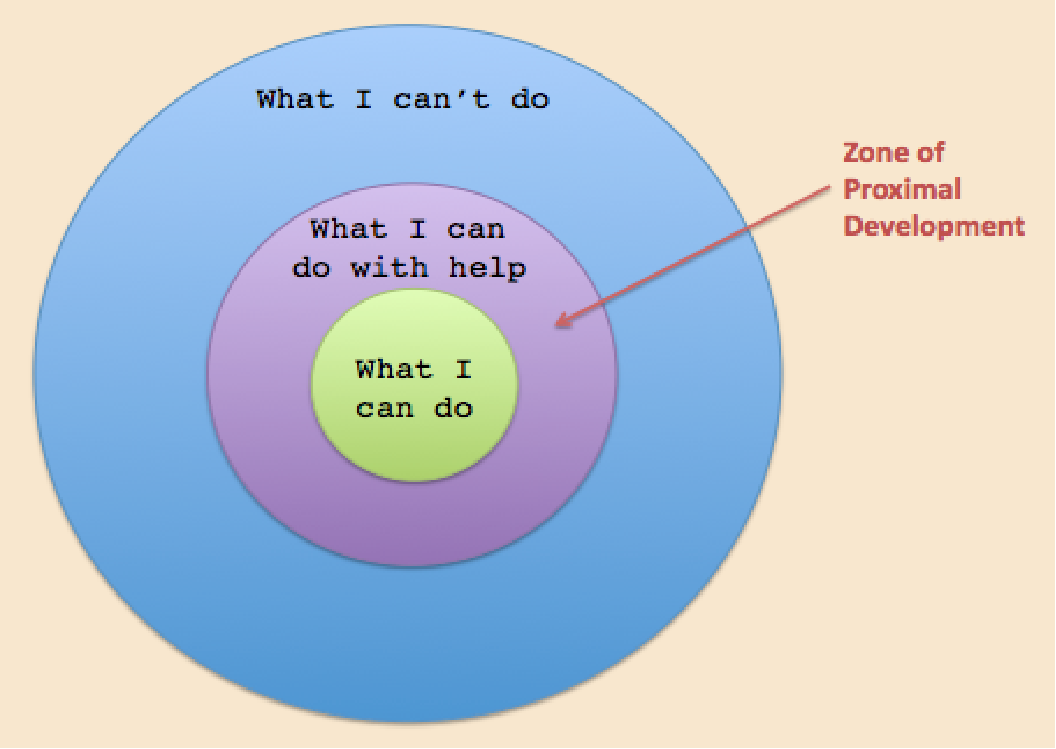
  This theory represented by Vygotsky emphasizes interaction and engagement with the target language in a social context based on the concept of ‘Zone of Proximal Development’ (ZPD) and scaffolding.

  • ZPD


       The zone of proximal development is "the distance between the actual developmental level as determined by independent problem solving and the level of potential development as determined through problem solving under adult guidance, or in collaboration with more capable peers.”

  • Scaffolding


          所谓「鹰架」/「脚手架」(Scaffolding)是指提供符合学习者认知层次的支持、导引和协助,以帮助学习者由需要协助而逐渐能够独立完成某一任务,进而使其由低阶的能力水准发展到高阶的能力水准。鹰架观念源自于维果茨基(Vygotsky)的潜在发展区域 (the Zone of Proximal Development, 或ZPD)概念, 他认为孩童的能力有实际能力(“现实发展水平”level of actual development)和潜在能力(“潜在发展水平”level of potential development)两种。

  •     If you would like to read more about the Socio-constructivist theory, please click the link for more information:

社会建构主义理论