目录

  • 1 课程介绍
    • 1.1 课程简介
    • 1.2 教学大纲
    • 1.3 教学计划
    • 1.4 考核方式及分数构成
  • 2 Unit 9 International Markets
    • 2.1 Starting up
    • 2.2 Lectures
    • 2.3 Vocabulary
    • 2.4 Competence -- Listening
    • 2.5 Competence -- Reading
    • 2.6 Business Skill Training -- Negotiation
    • 2.7 key to
    • 2.8 Case study -- 价值引领
    • 2.9 ppt for Unit 9
    • 2.10 PBL任务
    • 2.11 学生作品展示
    • 2.12 时事 (思政)
    • 2.13 Quiz of Unit 9
      • 2.13.1 quiz 答案解析
    • 2.14 Unit 9 Trade(补充)
      • 2.14.1 Vocabulary Learning
      • 2.14.2 Text analysis
  • 3 Unit 10 Ethics
    • 3.1 Starting-up
    • 3.2 Lectures
    • 3.3 Vocabulary
    • 3.4 Competence -- Listening
    • 3.5 Competence -- Reading
    • 3.6 Business Skill Training --
    • 3.7 时事(思政)
    • 3.8 PPT for Unit 10
    • 3.9 PBL任务
    • 3.10 Quiz of Unit 10
    • 3.11 Unit 10 Business Ethics (补充)
      • 3.11.1 Introduction to business ethics
      • 3.11.2 Inspiring-business ethics
      • 3.11.3 Expanded reading
      • 3.11.4 students ‘ videos
  • 4 Unit 11 Leadership
    • 4.1 Starting-up
    • 4.2 Lectures
    • 4.3 Vocabulary
    • 4.4 Competence -- Listening
    • 4.5 Competence -- Reading
    • 4.6 Business Skill Training -- Decision-making
    • 4.7 Case study -- 价值引领
    • 4.8 PPT for Unit 11
    • 4.9 PBL任务
    • 4.10 学生作品展示
    • 4.11 Quiz of Unit 11
    • 4.12 Unit 11  Leadership(补充)
      • 4.12.1 Vocabulary Learning
      • 4.12.2 Qualities/personality of good leaders
      • 4.12.3 skills for decision making
      • 4.12.4 Types of leadership
  • 5 Unit 12 Competition
    • 5.1 Starting-up
    • 5.2 Lectures
    • 5.3 Vocabulary
    • 5.4 Competence -- Listening
    • 5.5 Competence --Reading
    • 5.6 Business Skill Training -- Negotiation
    • 5.7 Case study -- 思政融合
    • 5.8 PPT for Unit 12
    • 5.9 PBL 任务
    • 5.10 Quiz of Unit 12
    • 5.11 Unit 12 Competition(补充)
      • 5.11.1 Vocabulary Learning
      • 5.11.2 Competitiveness
      • 5.11.3 第三届产品英文推介大赛
      • 5.11.4 第四届创意产品英文推介大赛
      • 5.11.5 Sample of business negotiation
      • 5.11.6 Students' negotiation videos
  • 6 Introduction to Business Translation
    • 6.1 Course overview
  • 7 Translation of Public Signs
    • 7.1 video-watching
    • 7.2 Public Signs
  • 8 Translation of Company Profile
    • 8.1 video-watching
    • 8.2 Company Profile
  • 9 Translation of company Websites
    • 9.1 company Websites
  • 10 Translation of Advertising
    • 10.1 video-watching
    • 10.2 Advertising
  • 11 Translation of Public Materials
    • 11.1 video-watching
    • 11.2 Public Materials
  • 12 Find a job
    • 12.1 how to find a job?
    • 12.2 how to prepare for  a job interview?
      • 12.2.1 how to write self-introduction for a job interview
      • 12.2.2 what questions to be asked during a job interview
    • 12.3 how to win a job interview
    • 12.4 Expanded reading
    • 12.5 Unit 8.2 Simulation of job-interview
      • 12.5.1 practice & show
      • 12.5.2 how to adapt to a new job
      • 12.5.3 Expanded reading
  • 13 At work
    • 13.1 Meetings
      • 13.1.1 Business Vocabulary
      • 13.1.2 qualities and job roles of Assitants or secretaries
        • 13.1.2.1 Qualites of assistants
        • 13.1.2.2 Job roles of assistants
      • 13.1.3 How to arrange meetings?
      • 13.1.4 how to run meetings
      • 13.1.5 how to take mintues
      • 13.1.6 expanded reading
    • 13.2 Entertaining visitors
      • 13.2.1 how to pick up vistors at the airport
      • 13.2.2 how to entertain visitors appropriately
      • 13.2.3 how to make a welcome speech
      • 13.2.4 Expanded reading
      • 13.2.5 Case: entertaining US visitors
  • 14 期末调研
    • 14.1 课程教学质量调查
  • 15 复习拓展训练
    • 15.1 案例分析-乐视
    • 15.2 挽救公司方法
  • 16 Unit 8 Leadership
    • 16.1 Starting-up
    • 16.2 Lectures
  • 17 Unit 10 Ethics
    • 17.1 Starting-up
    • 17.2 Lectures
    • 17.3 Vocabulary
    • 17.4 Competence -- Listening
    • 17.5 Competence -- Reading
    • 17.6 Business Skill Training --
    • 17.7 Case Study  — 思政渗透
    • 17.8 Homework
    • 17.9 Quiz of Unit 10
  • 18 课程概述
    • 18.1 课程简介
    • 18.2 教学大纲
    • 18.3 教学计划
    • 18.4 考核方式及分数构成
    • 18.5 开放课程证书获取说明
    • 18.6 课程版权说明
  • 19 Unit 8 Human Resources(补充)
    • 19.1 Starting-up
    • 19.2 Lectures
    • 19.3 Vocabulary
    • 19.4 Competence -- Listening
    • 19.5 Competence -- Reading
    • 19.6 Business Skill Training -- Managing Meetings
    • 19.7 Case Study -- 价值引领
    • 19.8 PBL任务
    • 19.9 Quiz of Unit 8
  • 20 Unit 13 Innovation
    • 20.1 Starting-up
    • 20.2 Lectures
    • 20.3 Vocabulary
    • 20.4 Competence --  Listening
    • 20.5 Competence--Reading
    • 20.6 Case study -- 思政融合
    • 20.7 PBL 任务
    • 20.8 Quiz of Unit 13
    • 20.9 Quiz of Unit 13 *
时事 (思政)
  • 1 US control
  • 2 Globalization&nbs...
  • 3 deluded abou...


Ministry: US control on investment a 'decoupling' move

By Zhong Nan | chinadaily.com.cn | Updated: 2023-08-17 23:53


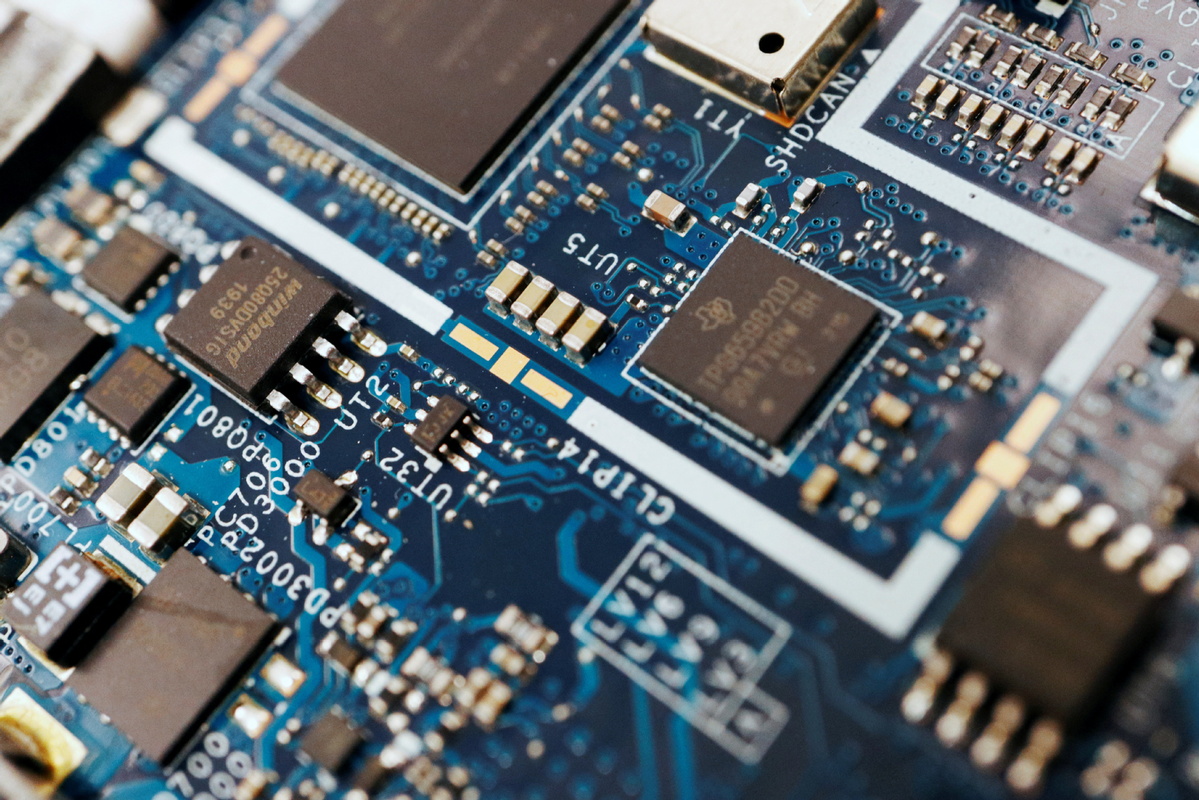
Semiconductor chips are seen on a circuit board of a computer in this illustration picture. [Photo/Agencies]


China has engaged in dialogue with businesses to evaluate the tangible implications of the United States executive order restricting high-tech, US-based investment going to China, and the Chinese government will take necessary measures based on the findings of this assessment, the Ministry of Commerce said on Thursday.

Signed by US President Joe Biden in early August, the order authorizes the US Treasury Department to regulate the flow of US investment and expertise into three sectors in China — semiconductors and microelectronics, quantum computing and artificial intelligence.


Addressing a regular news conference in Beijing, Commerce Ministry spokeswoman Shu Jueting said the US executive order authorizing investment restrictions toward China is counterproductive and can have detrimental effects.   

Chen Wenling, chief economist at the China Center for International Economic Exchanges in Beijing, said the US should stop its "decoupling" and "de-risking" approach with regard to the high-tech sector, because such an approach endangers the integrity of the global industrial chain.  While initially directed at China, this policy could potentially have far-reaching repercussions on the global stage, Chen said.


China-US trade amounted to 2.64 trillion yuan ($364 billion) in the first seven months of 2023, down 9.6 percent year-on-year. The volume accounts for 11.2 percent of China's total foreign trade, making the US the third-largest trading partner of China, following the Association of Southeast Asian Nations and the European Union, data from the General Administration of Customs showed.


   "Mergers and acquisitions aimed at acquiring technology and intellectual property rights are ordinary business cooperation practices," she said, adding that mandatory technology transfers are in violation of China's Foreign Investment Law and run counter to the nation's economic principles. Shu urged the US to treat Chinese companies fairly and justly, providing them with equal opportunities for their trade and investment cooperation activities in its market.


In light of China recently implementing export restrictions on industrial products and materials containing gallium and germanium (镓和锗zhé, Shu said the country's export controls are cautious and moderate, with the goal to effectively safeguard national security and fulfill international obligations.


KEY TAKEAWAYS

  • A merger occurs when two separate entities combine forces to create a new, joint organization.

  • An acquisition refers to the takeover of one entity by another.

  • The two terms have become increasingly blended and used in conjunction with one another.