Chapter XI Endocrine System
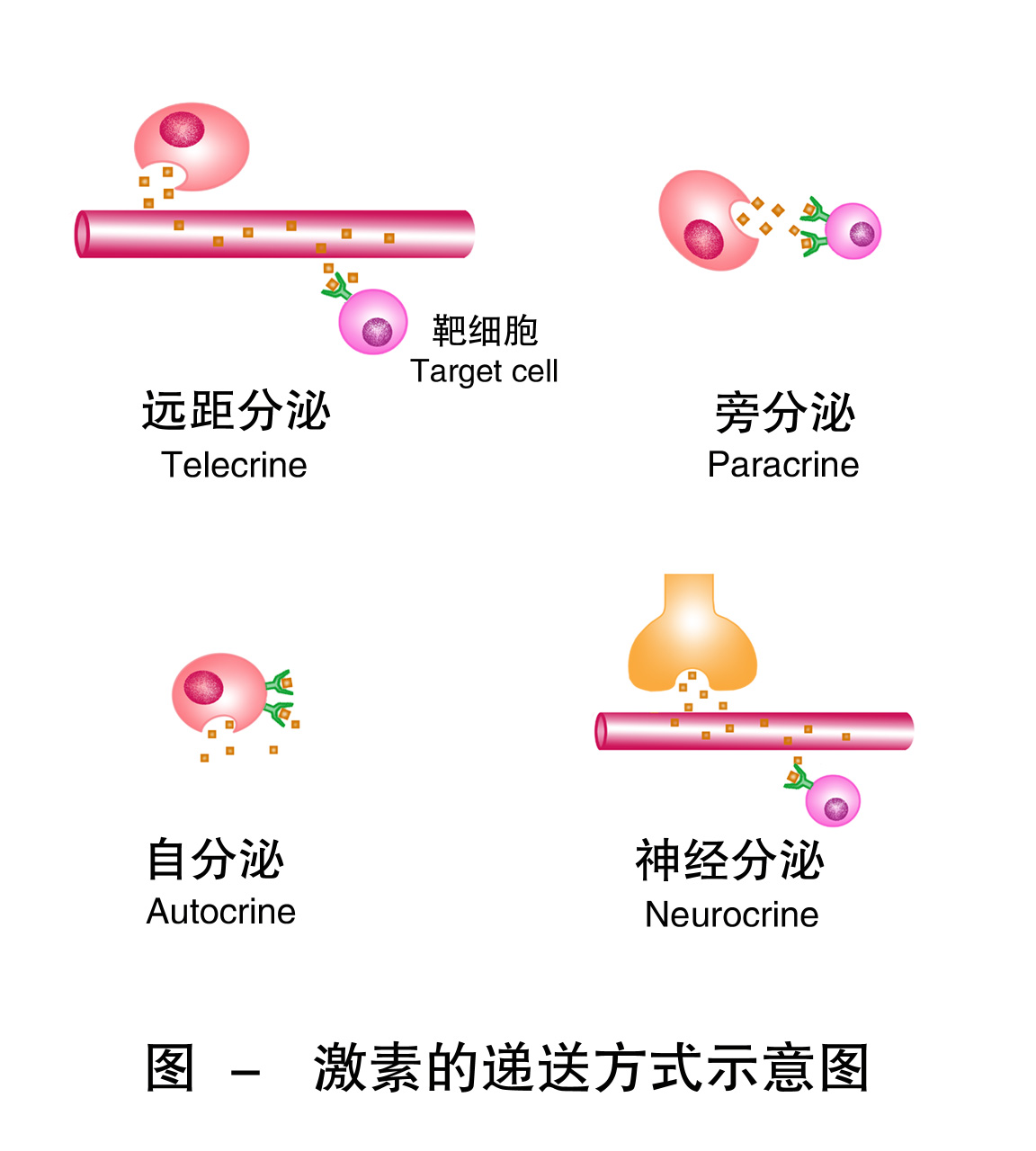
The endocrine system is one of the body's two major communications systems. It consists of all those glands that secrete hormones, which are chemical messengers carried by the blood from the endocrine glands to target cells elsewhere in the body.
Fundamental Characteristics of Hormone
Chemical structures and synthesis The amine hormones are the iodine containing thyroid hormones-thyroxin and triiodothyronine and the catecholamines (mainly epinephrine) secreted by the adrenal medulla. Most hormones are peptides and are synthesized as larger molecules that are then cleaved. Steroid hormones are produced from cholesterol by the adrenal cortex and the gonads, and by the placenta during pregnancy. The most important steroid hormones produced by the adrenal cortex are the mineralocorticoid aldosterone, the glucocorticoid cortisol, and two androgens. The ovaries produce mainly estradiol and progesterone, and the testes produce mainly testosterone.
Transport of hormones in the blood Peptide hormones and catecholamines dissolve in the plasma water, but steroid and thyroid hormones, being water-insoluble, circulate mainly bound to plasma proteins.
Hormone metabolism and excretion The liver and kidneys are the major organs that remove hormones from the plasma by metabolizing or excreting them. The peptide hormones and catecholamines are rapidly removed from the blood, whereas the steroid and thyroid hormones are removed more slowly. After their secretion, some hormones are metabolized to more active molecules in their target cells or other organs.
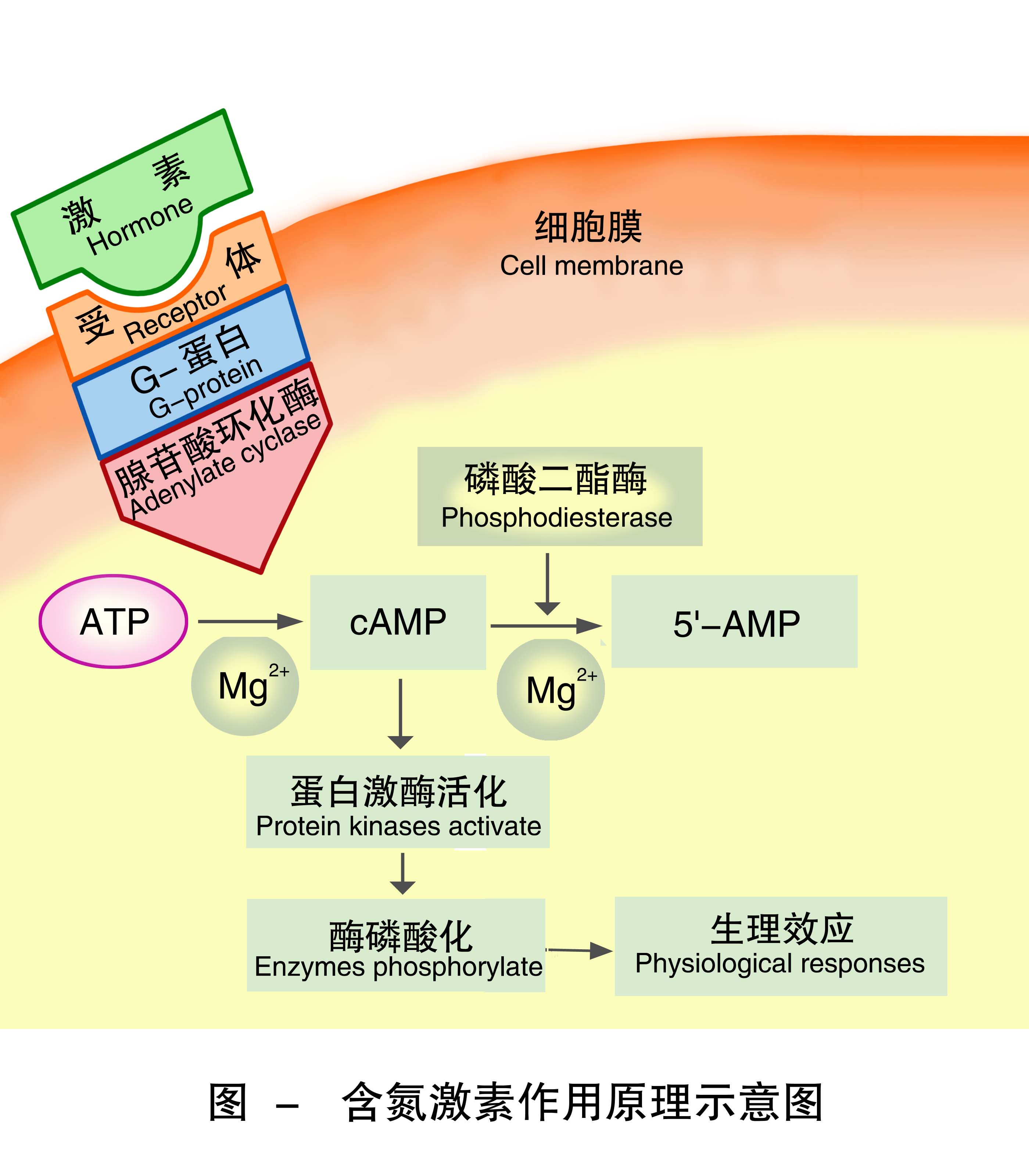
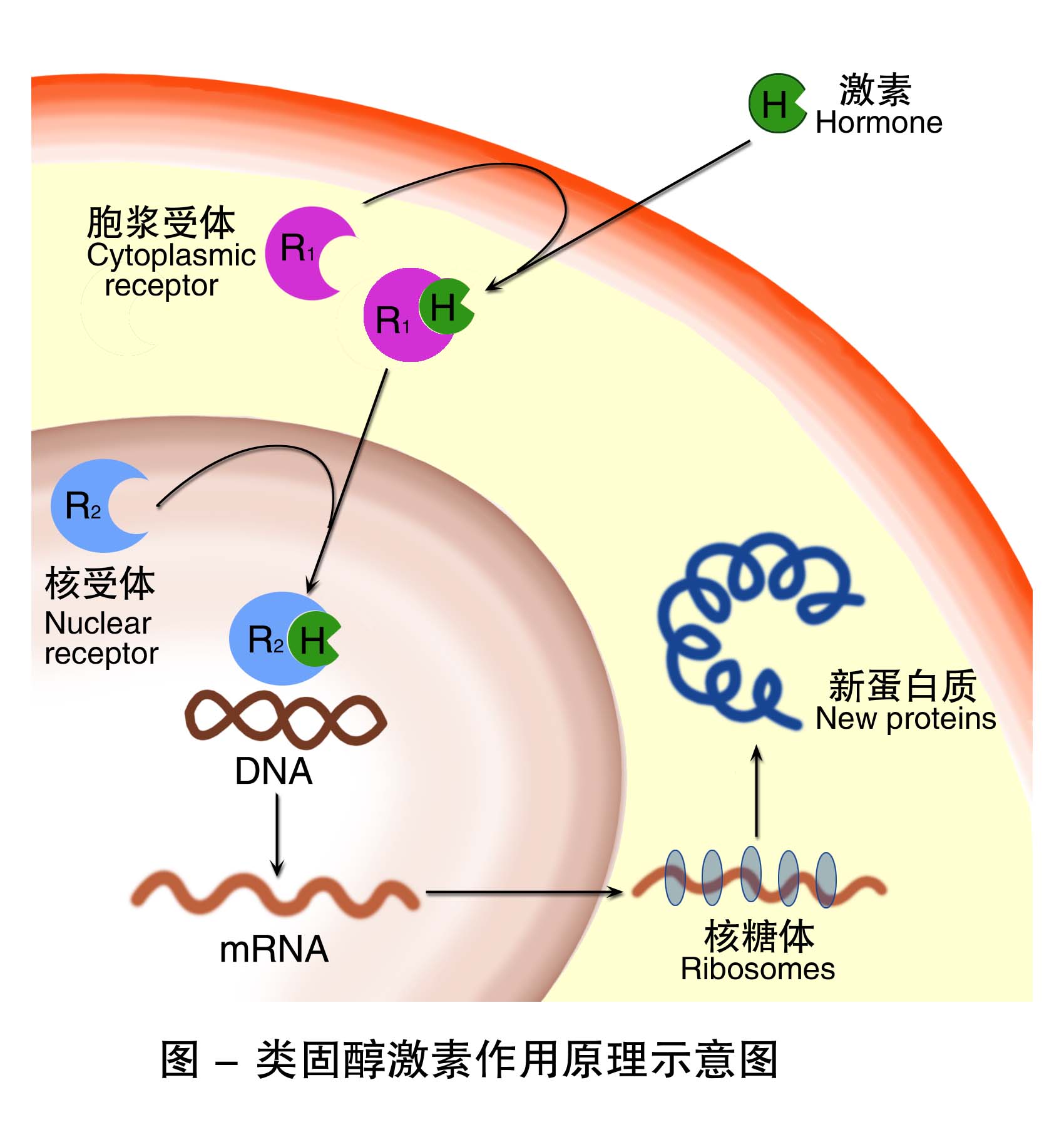
Mechanisms of hormone action The receptors for steroid and thyroid hormones are inside the target cells; those for the peptide hormones and catecholamines are on the plasma membrane. Hormones can cause up-regulation and down-regulation of their own receptors and those of other hormones. The induction of one hormone's receptors by another hormone increases the first hormone's effectiveness and may be essential to permiting the first hormone to exert its effects. Intracellular receptors activated by steroid and thyroid hormones combine with DNA in the nucleus and induce the transcription of DNA into mRNA; the result is increased synthesis of particular proteins. Receptors activated by peptide hormones and catecholamines utilize one or more of the signal transduction mechanisms available to plasma membrane receptors; the result is altered activity of proteins in the cell.
Control of Hormone Secretion
Types of inputs that control hormone secretion The secretion of a hormone may be controlled by the plasma concentration of an ion or nutrient that the hormone regulates, by neural input to the endocrine cells, and by a tropic hormone. The autonomic nervous system is the neural input controlling many hormones, but the hypothalamic and posterior-pituitary hormones are controlled by neurons in the brain.
Control systems involving the hypothalamus and pituitary The pituitary gland, comprising the anterior pituitary and the posterior pituitary, is connected to the hypothalamus by a stalk containing nerve fibers and blood vessels. The nerve fibers, which originate in the hypothalamus and terminate in the posterior pituitary, secrete oxytocin and vasopressin. The anterior pituitary secretes growth hormone (GH), thyroid-stimulating hormone (TSH), adrenocorticotropic hormone (ACTH), prolactin, and two gonadotropic hormones-follicle-stimulating hormone (FSH) and luteinizing hormone (LH). The anterior pituitary also produces B-lipotropin and B-endorphin along with ACTH, all being portions of the parent pro-opiomelanocortin molecule. Secretion of the anterior pituitary hormones is controlled mainly by hypothalamic releasing hormones secreted into capillaries in the median eminence and reaching the anterior pituitary via the portal vessels connecting the hypothalamus and anterior pituitary. The secretion of each releasing hormone is controlled by neuronal and hormonal input to the hypothalamic neurons producing it. In each of the three-hormone sequences beginning with a hypothalamic-releasing hormone, the third hormone exerts a long-loop negative-feedback effect on the secretion of the hypothalamic and/or anterior-pituitary hormone. The anterior-pituitary hormone may exert a short-loop negative-feedback inhibition of the hypothalamic releasing hormone(s) controlling it. Hormones not in a sequence can also influence secretion of the hypothalamic and/or anterior-pituitary hormones in the sequence.
Hormonal Influences on Growth
Growth hormone is the major stimulus of postnatal growth. It stimulates the release of IGF-I from the liver and many other cells, and IGF-I then acts locally or as a hormone to stimulate mitosis. Growth hormone also acts directly on cells to stimulate protein synthesis. Growth hormone secretion occurs mainly during sleep and is highest during adolescence. The thyroid hormones stimulate brain development during infancy and bone growth during childhood and adolescence. Insulin stimulates growth mainly during in utero life. Testosterone and estrogen stimulate bone growth during adolescence but also cause epiphyseal closure. Testosterone also stimulates protein synthesis. Cortisol, in high concentration, inhibits growth and stimulates protein catabolism.
Hormonal Influences on Blood Glucose
Hormones secreted by the pancreas regulate blood glucose; insulin promotes uptake of glucose when the supply in the blood is high; glucagon increases the level of glucose in the blood by promoting glycogenolysis, gluconeogenesis, and glucose sparing. The postabsorptive state is defined by the drop in glucose and therefore in the insulin concentration in the blood. This drop in insulin removes catabolic pathway inhibition, and glucagon secretion stimulates catabolic pathways. Stimulation of catabolic pathways begins even before food is ingested or absorbed.