今日导读
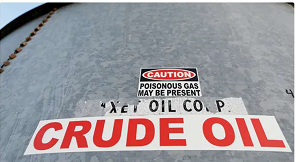
Why oil is still most important price in the world
Whether you like it or not, oil is still the most important commodity in the world.
Its price can tell us not only what's really going on in the world economy right now, but has a great influence on what could happen in the future.
There was worldwide shock last week at the freakish reading of a price of MINUS-$40 for a barrel of US oil.
Is cheap oil a good or bad thing? This is not a straightforward question.
A massive fall in the oil price is like a global tax cut on businesses big and small, and it can aid recoveries. If airlines can survive the COVID-19 pandemic, and the travelling public return, then they could lock in low prices for their biggest single outlay — fuel.
Likewise hauliers, florists, supermarkets will all benefit from lower transport costs and more money in their customers' pockets, thanks to lower prices at the pump.
However, it's bad news for savers. Oil companies are some of the greatest cash spewing machines on the planet and a lot of that cash goes directly into our pension schemes. BP and Shell between them contribute nearly a fifth of all dividend income generated by UK companies.
Bad news for them can threaten the security of retirement income. And then there are the environmental concerns. When oil is cheap, there is less economic incentive to look for alternatives.
That is why the global oil price is such a delicate balance of interests and why oil companies and governments like a stable price of somewhere between $40 and $60 a barrel. Not too cheap to threaten dividends, tax revenue and discourage greener alternatives, not too expensive to place a burden on the economy.
Part 3 Practical Reading
In this part, you will read some practical texts such as a Memo, a Conference Invitation and a Conference Programme Template,which may show you further information about business conference or help you to reinforce your scanning skill.
Task 3:Knowing about the Memo
Read the following memo about teamwork guidelines and answer the questions below. Read the following memo and fill in the blanks.
Memo
A memo is intended to inform a group of people about a specific issue, and the word “memorandum” means something that should be remembered or kept in mind. Business memos are written to an entire office. When writing business memos make sure to clearly mark for whom the memo is intended, the reason for writing the memo and who is writing the memo. Memos tend to inform colleagues of office and procedural changes that apply to a large group of people.
The following is an example of a Memo.
TO: Kelly Anderson, Marketing Executive FROM: Jonathon Fitzgerald, Market Research Assistant DATE: June 14, 2014 SUBJECT: Fall Clothes Line Promotion Market research and analysis show that the proposed advertising media for the new fall lines need to be reprioritized and changed. Findings from focus groups and surveys have made it apparent that we need to update our advertising efforts to keep up with the styles and trends of young adults today. No longer are young adults interested in sitcoms as they watch reality televisions shows. Also, it has become increasingly important to use the Internet as a tool to communicate with our target audience to show our dominance in the clothing industry. Internet Advertising Blue Incorporated Company needs to focus advertising on internet sites that appeal to young people. According to surveys, 72% of our target market uses the internet for five hours or more per week. The following list shows in order of popularity the most frequented sites: · Google · Facebook · Myspace · EBay Shifting our efforts from our other media sources such as radio and magazine to these popular internet sites will more effectively promote our product sales. As the trend for cultural icons to go digital, so must our marketing plans. |
Task 4:Scanning for Specific Information
Scan the following Conference Invitation and find some sentences in this passage to complete the statements below it.
Dear Mr./Ms. : We would like to invite you to attend the 2017 Asia Business Conference. It is our great honor to have you as our guest. We are hoping that we will get the same support from you. The event is prepared in the intention to show our acknowledgment to our most important. Therefore this will be an outstanding opportunity for us to show appreciation of your business, but it the precious time to strengthen our cooperation. Please come early so that we can find a comfortable seat for you. We would appreciate if you can attend this event as you are one of our top. Please let us know if you are attending the event or not by July 23th. Hoping for your presence on that day. We look forward meeting you. Regards, Yours Linda. |
1. The event is prepared in the intention to show ________to our most important.
2 Therefore this will be an outstanding opportunity for us to ________, but it the precious time to __________________.
3. We would appreciate if you can attend this event___________________.
Task 5:Identifying Specific Words
Scan the following Conference Programme Template as soon as possible and then finish the timing and words identifying tasks below.
Conference Programme Template
|
|
| MONDAY | 9:00 – 10:30 | Opening Session – Wlcome and keynote speech |
| 10:30 – 11:00 | Refreshments |
| 11:00 – 12:30 | IASA General Assembly – Part 1 (members only) |
| 12:30 – 14:00 | Session One |
| 14:00 – 15:30 | Lunch |
| 15:30 – 16:00 | Refreshments |
|
|
| TUESDAY | 9:00 – 10:30 | Session Two |
| 10:30 – 11:00 | Refreshments |
| 11:00 – 12:30 | Session Three |
| 12:30 – 14:00 | Lunch |
| 14:00 – 15:30 | Session Four |
| 14:00 – 15:30 | Tutorials and workshops (parallel session) |
| 15:30 – 16:00 | Refreshments |
|
|
| WEDNESDAY | 9:00 – 10:30 | Session Five (local papers) |
| 10:30 – 11:00 | Refreshments |
| 11:00 – 12:30 | Session Six (local papers) |
| 12:30 – 13:30 | Lunch |
| 13:30 – 15:00 15:00 – 16:00 16:15 – 17:30 17:30 | IASA General Assembly Part 2 (members only) IASA Exchange Forum (Open) IASA meeting with officers of sections, committees, and branches (closed) Farewell Dinner |
|
FAST READING TIMING
Read the passage as fast as you can. How long did it take?
____________ minutes _____________ seconds
Words Identifying
1. How many sessions of IASA conference?
A. six B. eight C. five D. four
2. Who can attend the IASA General Assembly?
A. officers of sections, committees, and branches
B. members only
3. Find and circle the words, which may appear more than four times in this passage.
A. IASA B. Session C. Refreshments D. General Assembly