-
1 课前导入
-
2 Dialogue 对...
-
3 微课教学
-
4 随堂练习
课前学习:
Learning objectives 学习目标

Keys and difficulties 重点、难点
重点:能够听懂关于环保问题对话的基本语言表达。
难点:能运用所学通过分析判断对于不同废弃物处理方式的进行解答。
Step 1 Warming Up
单元词汇录音
1. Brainstorm.
激活词汇储备:请学生观察本单元第一张图片,请学生思考问题“What can you see from this picture?” “Do you like green living? Please brainstorm the examples of green living”。鼓励学生说出已知的环境保护相关词汇,教师可适当提供图片作为提示以激活学生思维
2. Think and match.
教师展示图片,学生两人一组讨论图片提供的信息并将活动1中的图片与环境保护相关表述进行匹配。
3.Look and act.
学生两人一组讨论该场景描述的内容,发生的地点,运用Brainstorm中出现的词汇,在相关的情境中进行对话,教师通引导学生思考并交流图片背后隐含的环境问题。教师呈现表格引导学生根据关键信息描述图片信息并思考原因及解决方案
Step 2 Listening A 文本
A: I just read an article on the Internet. It’s about the disappearing Arctic.
B: What does it say?
A: It says the Arctic ice cover is becoming smaller and smaller every year, and there will be no ice in summer in a few years.
B: Is it because of the global warming?
A: You’re right. When the ice cover melts, polar bears will have to move on land, but they can’t find enough food there.
B: Then the numbers will fall.
A: Yes. And so will the numbers of some other wild animals.
B: We must do something to protect the earth. I don’t want to live in a world where polar bears only exit in movies and books.
Activities:
1. Listen and tick.
2. Listen and decide.
3. Listen and complete.
Step 3 Speaking B 文本
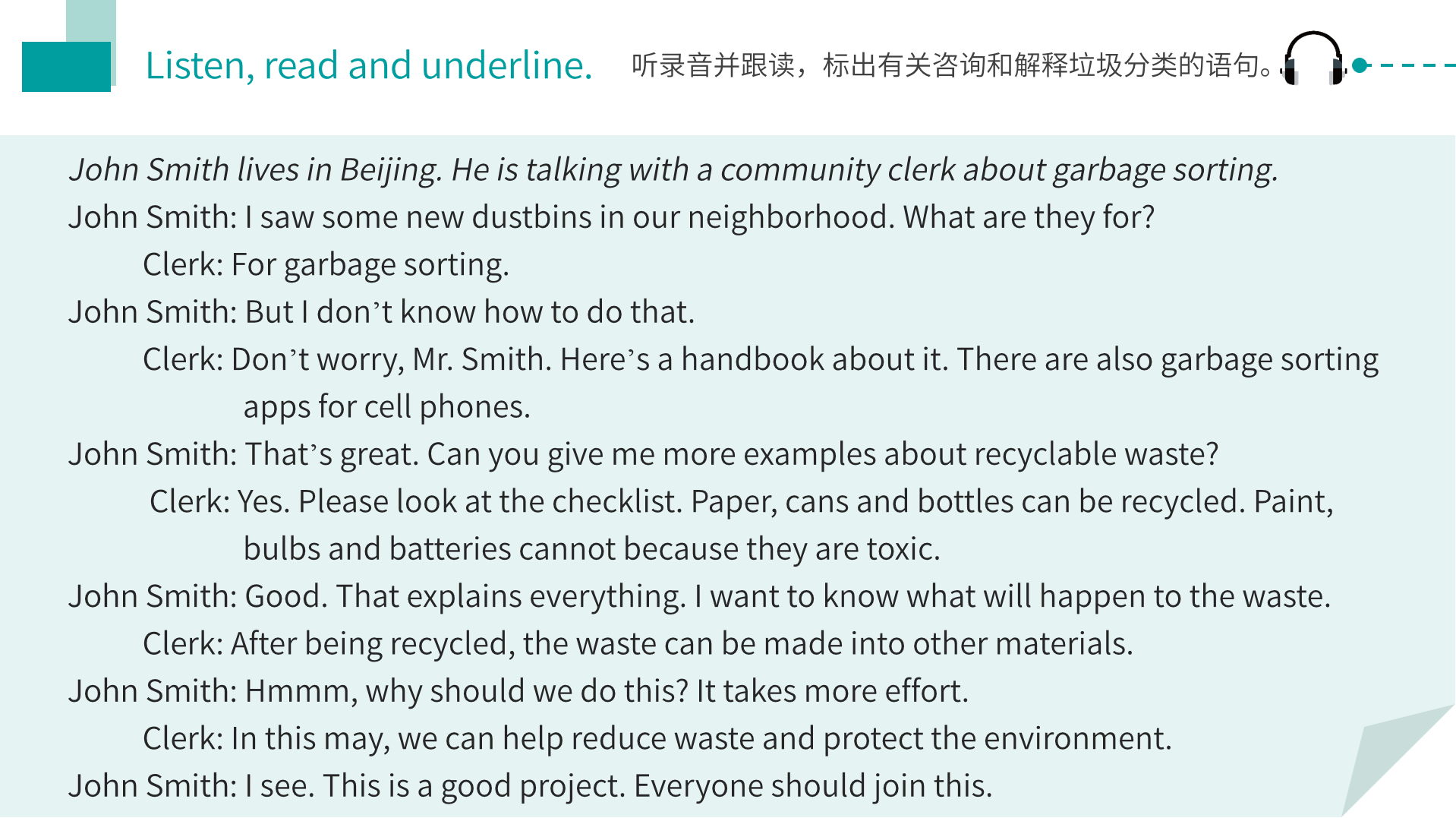
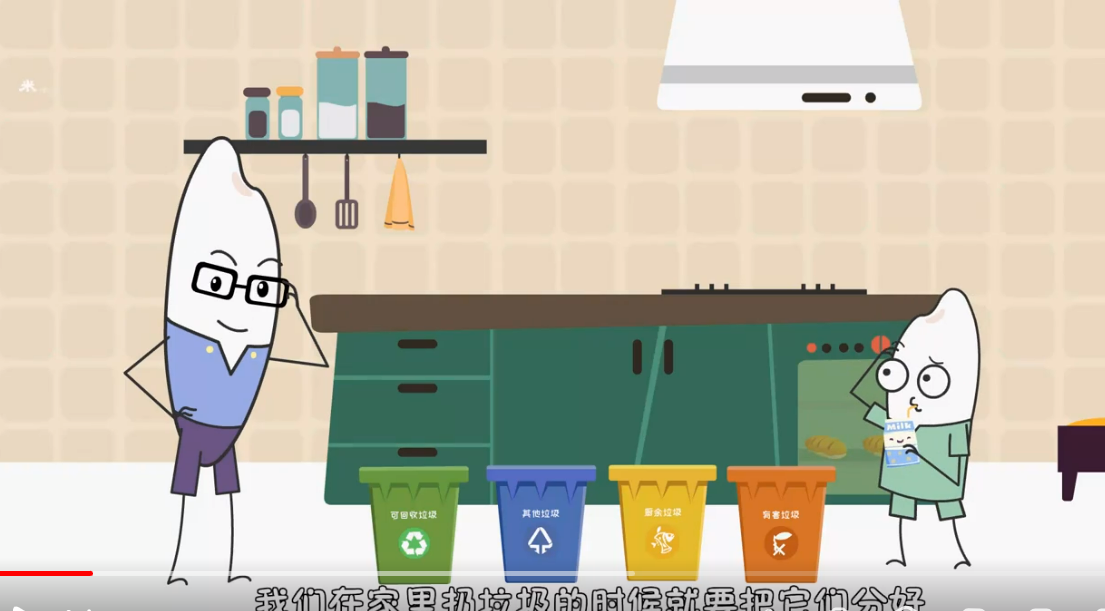
John Smith lives in Beijing. He is talking with a community clerk about garbage sorting.
John Smith: I saw some new dustbins in our neighborhood. What are they for?
Clerk: For garbage sorting.
John Smith: But I don’t know how to do that.
Clerk: Don’t worry, Mr. Smith. Here’s a handbook about it. There are also garbage sorting
apps for cell phones.
John Smith: That’s great. Can you give me more examples about recyclable waste?
Clerk: Yes. Please look at the checklist. Paper, cans and bottles can be recycled. Paint,
bulbs and batteries cannot because they are toxic.
John Smith: Good. That explains everything. I want to know what will happen to the waste.
Clerk: After being recycled, the waste can be made into other materials.
John Smith: Hmmm, why should we do this? It takes more effort.
Clerk: In this may, we can help reduce waste and protect the environment.
John Smith: I see. This is a good project. Everyone should join this.
Important words and expressions:
recycle toxic waste
I want to know what happen to the waste.
After being recycled, the waste can be made into other materials.
Why should we do this?
Activities:
1. Listen, read and underline.
2. Imitate and practice.
3. Role play.
Step 4 Conclusion
引导学生围绕以下三个问题,结合第一单元教材听说部分的配套微课,总结本课所学:
What is global warming?
How does global warming affect us?
What can we do to protect the world?
Step 5 Homework