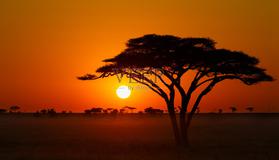
Death: a Compulsory Lesson for the Initiation
---An Interpretation of Doris Lessing's “A Sunrise on the Veld”
Abstract: “A Sunrise on the Veld” is a moving story of a fifteen- year-old boy who witnesses a wounded buck being devoured by a swarm of ants, feels shocked and sad, and finally reaches an understanding that death is a part of life beyond his control---a kind of epiphany marking the boy’s transition from innocence to experience and knowledge or initiation from childhood to adulthood.
Key words: life, death, epiphany, law of nature, initiation
Different from Doris Lessing’s usual theme ---feminism, “A Sunrise on the Veld” focuses on an individual child in search of his personal wholeness. The story is set on an African veld, and its structure based on the boy’s epiphany which results from his watching a wounded young buck being eaten by ants. By confronting with death, the boy has come to realize that he can’t control everything, and most importantly, he can’t control death. Consequently, the boy has accomplished his journey of initiation from innocence to knowledge and experience although it is a distressful one. To get her theme across, Doris Lessing gives a vivid description of the boy’s psychological workings in his particular situation and creates a sharp contrast of his states of mind before and after watching the dying buck.
Joy of Living and Superfluity of Youth
It is very humane that a child, being innocent of life’s hardness, often finds himself living in a fantasy world, and tends to believe that he is the sovereign of the world and that death sounds meaningless to him. At the outset of the story, the reader can see the boy in such a state of mind. He is very excited about life, thinking that he is in control of absolutely every aspect of life. He wakes up every morning before the alarm clock rings just to prove that he can. Never has he felt tired, and “sleep seemed to him a servant to be commanded and refused”. In his eyes, everything in nature seems to be sharing his joy of living and superfluity of youth: flocks of birds and guinea fowl woke into song; dogs bulk happily and invisibly ranging the lower travelways of the bush; long pale grass sent back a hollowing gleam of light to a satiny sky... all kinds of lives, and nothing has more enthusiasm than just waking creature in the morning. Even the rising sun, which is a personification, clearly indicates a fresh child in the boy’s mind. In Lessing’s words, all of these are the joy of living. Overwhelmed by this ocean of being alive and young, the boy firmly believed that he has a great and wonderful life ahead of him, exclaiming “... there is nothing I can’t become, nothing I can’t do, there is no country in the world I cannot make part of myself, if I choose. I contain the world. I can make of it what I want. If I choose, I can change everything that is going to happen; it depends on me, and what I decide now.” This illustrates the height of the boy’s self-exultation and how much control he thinks he is.
Pains of Dying and Gains of Initiation
It is also very usual that a child’s initiation is brought froth when an unexpected disaster happens to him, or especially when he is confronted with death. Evidently, the incident provides him a new perspective to see life and nature. In “A Sunrise on the Veld” the boy is standing over a cliff and shouting out at the world about how much control he is in when he hears a pain filled scream and his whole outlook on how much control he is in totally changes. The screaming thing turns out to be a buck with a broken leg, with a swarm of ants eating it alive. He can’t believe such a proud and swift surefooted thing could be trapped by a swarm of ants. “That morning, perhaps an hour ago, this small creature had been stepping proudly and free through the bush, feeling the chill on its hide even as he himself had done, exhilarated by it. Proudly stepping the earth… Walking like kings and conquerors it had moved through this fee-held bush…” Here the writer’s imagination of the buck’s situation and comparison with that of the boy is very effective in revealing the state of the boy’s mind. Both of them are young and full of life and vigor, and actually the buck has assumed the ego of the boy in his own consciousness. Therefore, he fears that the same thing (death) may happen to him.
Overcome by a feeling of rage, misery and terror, the boy knows that he can do nothing about the buck. Actually, he has the chance to end the buck’s misery by shooting, but immediately he lowers his gun, realizing it is the law of nature and it is how life goes on. The buck would have died this way, if he had not come along there, and his being there to witness it can’t and won’t change anything. This realization bothers the boy more than the death of the buck, and the fact that he can do nothing bothers him it proves to him just how little control he actually has over the world. In the end of the story, the boy decides to go home, but he promises himself that “he would get clear of everybody and go to the bush and think about it”. Anyway, the sun will also rise on the veld tomorrow, and the title of the story suggests that the boy is learning about mortality when he is still young at heart.
To sum up, “A Sunrise on the Veld” is an individual initiation oriented short story, in which Doris Lessing gives a vivid description of the beautiful veld full of vigorous lives and awful death. The protagonist, a fifteen-year-old boy, showcases his innocence of childhood and vigor of youth, but appears a little excessive. However, the epiphany obtained from witnessing the death of a bulk is sufficient enough to prepare him to understand what life entails and what is expected of it. His realization that nothing can be done about the dying buck suggests that he has learned to obey the law of nature. Also, he has become aware of his obligations to the nature--- respecting and protecting other living creature. And this change marks his initiation from innocence to experience and knowledge.
References:
1. 郑博仁:从天真到经验的脱变, 《小说评论》,2010年第4期。
2. 王燕萍:对生命的哲学解读--评多丽斯·莱辛的小说《草原上的日出》,《武汉科技学院学报》,2005年第12期。
3. 尹雅莉:生态视野下《草原日出》的成长主题研究,《甘肃联合大学学报》,2011年第4期。

