


The name "
cheongsam,” meaning
simply
"long dress," entered the English vocabulary from the
dialect (
方言
) of
China's Guangdong Province.. In other parts of the country including Beijing,
however, it is known as "
qipao
", which has a history behind it.
In the past, the collar of the costume was made high and tight fitting to keep warm. Qipao
has incorporated this feature, not just for preventing coldness but also for beauty. The
collar of Qipao generally takes the shape of a semicircle, its right and left sides being
symmetrical, flattering the soft and slender neck of a woman. The collar of Qipao is
meticulously made, especially the buttonhole loop on the collar, which serves as the
finishing touch. We can't help but admire the designers' artistic originality. The design of
the front of Qipao depicts the maturity of women properly; reminding people of the line of a
Chinese poem 'A garden full of the beauty of spring can not be prevented from being
enjoyed.'
Qipao generally has two big slits at either side of the hem for convenient movement and
display of the slender legs of women. Unlike a short-length skirt,
Qipaos can display Chinese women's modesty, softness and beauty. Like Chinese
women's temperament, Qipaos are elegant and gentle.
Like other costumes, the beauty of Qipao comes first. Simplicity is one of its features from
the collar, loop, chest, waist and hips to the lower hem, and a Qipao almost varies with a
woman's figure. It not only lays stress on the natural beauty of a female figure, but also
makes women's legs appear more slender. Mature women in Qipaos can display their
graceful refined manner.
The name "
cheongsam,” meaning
simply
"long dress," entered the English vocabulary from the
dialect (
方言
) of
China's Guangdong Province.. In other parts of the country including Beijing,
however, it is known as "
qipao
", which has a history behind it.
In the past, the collar of the costume was made high and tight fitting to keep warm. Qipao
has incorporated this feature, not just for preventing coldness but also for beauty. The
collar of Qipao generally takes the shape of a semicircle, its right and left sides being
symmetrical, flattering the soft and slender neck of a woman. The collar of Qipao is
meticulously made, especially the buttonhole loop on the collar, which serves as the
finishing touch. We can't help but admire the designers' artistic originality. The design of
the front of Qipao depicts the maturity of women properly; reminding people of the line of a
Chinese poem 'A garden full of the beauty of spring can not be prevented from being
enjoyed.'
Qipao generally has two big slits at either side of the hem for convenient movement and
display of the slender legs of women. Unlike a short-length skirt,
Qipaos can display Chinese women's modesty, softness and beauty. Like Chinese
women's temperament, Qipaos are elegant and gentle.
Like other costumes, the beauty of Qipao comes first. Simplicity is one of its features from
the collar, loop, chest, waist and hips to the lower hem, and a Qipao almost varies with a
woman's figure. It not only lays stress on the natural beauty of a female figure, but also
makes women's legs appear more slender. Mature women in Qipaos can display their
graceful refined manner.
Qipao (Ch'ipau) is one of the most typical, traditional costumes for Chinese women. Also known as cheongsam, it is like a wonderful flower in the Chinese colorful fashion scene because of its particular charm.
In the early 17th century in North China, Nurhachi, a great political and military strategist, unified the various Nuzhen tribes and set up the Eight Banner System. Later he led his troops into Beijing and overthrew the Ming Dynasty. Over the years, a collarless tube-shaped gown was developed, which was worn by men and women. This is the embryo of the Qipao. It became popular among the royal palace of the Qing Dynasty and the mansions of the Manchu nobility. At that time, it was loosely fitted and long enough to reach the insteps. Usually it was made of silk, and embroidered, with broad laces trimmed at the collar, sleeves and edges. The dress empresses of past dynasties wore them. Their style of dress was regarded as the highest of standards for Chinese women for several thousand years.
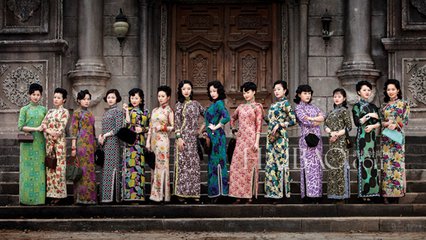 The only medium to display the elegance of a human body is an elegant costume. Whatever costume a woman wears, in addition to magnificence and nobility, she must have a thirst for elegance or beauty. Perhaps that's the reason why Qipao was born.
In the past, the collar of the costume was made high and tight-fitting to keep warm. Qipao has incorporated this feature, not just for preventing coldness but also for beauty. The collar of Qipao generally takes the shape of a semicircle, its right and left sides being symmetrical, flattering the soft and slender neck of a woman. The collar of Qipao is meticulously made, especially the buttonhole loop on the collar, which serves as the finishing touch. We can't help but admire the designers' artistic originality. The design of the front of Qipao depicts the maturity of women properly, reminding people of the line of a Chinese poem 'A garden full of the beauty of spring can not be prevented from being enjoyed.'
The only medium to display the elegance of a human body is an elegant costume. Whatever costume a woman wears, in addition to magnificence and nobility, she must have a thirst for elegance or beauty. Perhaps that's the reason why Qipao was born.
In the past, the collar of the costume was made high and tight-fitting to keep warm. Qipao has incorporated this feature, not just for preventing coldness but also for beauty. The collar of Qipao generally takes the shape of a semicircle, its right and left sides being symmetrical, flattering the soft and slender neck of a woman. The collar of Qipao is meticulously made, especially the buttonhole loop on the collar, which serves as the finishing touch. We can't help but admire the designers' artistic originality. The design of the front of Qipao depicts the maturity of women properly, reminding people of the line of a Chinese poem 'A garden full of the beauty of spring can not be prevented from being enjoyed.'
 Qipao generally has two big slits at either side of the hem for convenient movement and display of the slender legs of women. Unlike a short-length skirt, the slits of Qipao expose a woman's legs indistinctly when she walks, as if there was a blurred emotional appeal of 'enjoying flowers in mist.'
Qipaos can display Chinese women's modesty, softness and beauty. Like Chinese women's temperament, Qipaos are elegant and gentle.
Like other costumes, the beauty of Qipao comes first. Simplicity is one of its features from the collar, loop, chest, waist and hips to the lower hem, and a Qipao almost varies with a woman's figure. It not only lays stress on the natural beauty of a female figure, but also makes women's legs appear more slender. Mature women in Qipaos can display their graceful refined manner.
Besides its simplicity, Qipao provides designers with vast, creative space: some short, some long, with low, high, or even no collars at all.
Qipao generally has two big slits at either side of the hem for convenient movement and display of the slender legs of women. Unlike a short-length skirt, the slits of Qipao expose a woman's legs indistinctly when she walks, as if there was a blurred emotional appeal of 'enjoying flowers in mist.'
Qipaos can display Chinese women's modesty, softness and beauty. Like Chinese women's temperament, Qipaos are elegant and gentle.
Like other costumes, the beauty of Qipao comes first. Simplicity is one of its features from the collar, loop, chest, waist and hips to the lower hem, and a Qipao almost varies with a woman's figure. It not only lays stress on the natural beauty of a female figure, but also makes women's legs appear more slender. Mature women in Qipaos can display their graceful refined manner.
Besides its simplicity, Qipao provides designers with vast, creative space: some short, some long, with low, high, or even no collars at all.  Practicality always goes with beauty. Qipaos are worn in both urban and rural areas, its long-standing elegance and serenity making wearers fascinating.
When wearing Qipao, women should pay attention to the match as a whole; particularly middle-aged or elderly women should do so. Hairstyles, jewelry, socks and shoes should match Qipaos properly in color and design.
Today, with the development of the market economy in China, designs or styles of fashions are so dazzling as the stars that the eye cannot take them all in. As a result, people are often at a loss what to choose when facing the vast sea of fashions. On the other hand, it is just a golden opportunity for Chinese national costumes to regain their popularity. Fashion culture has become a point of intersection of social culture, reflecting economic developments, social progress and educational level. It represents people's spirit, living standards and aspirations towards beauty.
Practicality always goes with beauty. Qipaos are worn in both urban and rural areas, its long-standing elegance and serenity making wearers fascinating.
When wearing Qipao, women should pay attention to the match as a whole; particularly middle-aged or elderly women should do so. Hairstyles, jewelry, socks and shoes should match Qipaos properly in color and design.
Today, with the development of the market economy in China, designs or styles of fashions are so dazzling as the stars that the eye cannot take them all in. As a result, people are often at a loss what to choose when facing the vast sea of fashions. On the other hand, it is just a golden opportunity for Chinese national costumes to regain their popularity. Fashion culture has become a point of intersection of social culture, reflecting economic developments, social progress and educational level. It represents people's spirit, living standards and aspirations towards beauty.

