目录

  • 1 Unit1  Personal and Family Life
    • 1.1 Ideological and political education课程思政
    • 1.2 Learning Objectives 学习目标
    • 1.3 Listening and speaking对话听说
    • 1.4 Reading and writing 课文读写
    • 1.5 Language Practice 语法专项
    • 1.6 Unit Testing 单元测试
  • 2 Unit2 Transportation
    • 2.1 Ideological and political education课程思政
    • 2.2 Learning Objectives 学习目标
    • 2.3 Listening and Speaking对话听说
    • 2.4 Reading and Writing 课文读写
    • 2.5 Language Practice 语法专项
    • 2.6 Unit Testing 单元测验
  • 3 Unit 3 Shopping
    • 3.1 Ideological and political education课程思政
    • 3.2 Learning Objectives 学习目标
    • 3.3 Listening and Speaking对话听说
    • 3.4 Reading and Writing课文读写
    • 3.5 Language Practice语法专项
    • 3.6 Unit Testing 单元测验
  • 4 Unit 4 School Life
    • 4.1 Ideological and political education课程思政
    • 4.2 Learning Objectives学习目标
    • 4.3 Listening and Speaking对话听说
    • 4.4 Reading and Writing课文读写
    • 4.5 Language Practice 语法专项
    • 4.6 Unit Testing 单元测验
  • 5 Unit 5 Celebrations
    • 5.1 Ideological and political education课程思政
    • 5.2 Learning Objectives学习目标
    • 5.3 Listening and Speaking对话听说
    • 5.4 Reading and Speaking 课文读写
    • 5.5 Language Practice 语法专项
    • 5.6 Unit Testing 单元测验
  • 6 Unit 6 Food and Drinks
    • 6.1 Ideological and political education课程思政
    • 6.2 Learning Objectives学习目标
    • 6.3 Listening and Speaking 对话听说
    • 6.4 Reading and Writing 课文读写
    • 6.5 Language Practice语法专项
    • 6.6 Unit Testing 单元测验
  • 7 Unit 7 The Internet
    • 7.1 Ideological and political education课程思政
    • 7.2 Learning Objectives学习目标
    • 7.3 Listening and Speaking对话听说
    • 7.4 Reading and Writing 课文读写
    • 7.5 Language Practice语法专项
    • 7.6 Unit Testing 单元测验
  • 8 Unit 8 People and Events
    • 8.1 Ideological and political education课程思政
    • 8.2 Learning Objectives学习目标
    • 8.3 Listening and Speaking 对话听说
    • 8.4 Reading and Writng课文读写
    • 8.5 Language Practice语法专项
    • 8.6 Unit Testing 单元测验
Reading and Writing 课文读写
  • 1 课前导入
  • 2 微课教学
  • 3 随堂练习
  • 4 mp3
  • 5 课后检测

1. Think and discuss.Brainstorm利用互联网能做什么?


2.     预测移动互联网的有关内容,练习网络活动、手机的英文表达:

重点单词:

• mobile adj. 可移动的

mobile phone 手机、mobile library 流动图书馆、mobile device 移动设备、mobilehome 旅游房车

e.g. Please make sure all mobile phones are switched off during theperformance.

请确保演出时所有手机处于关闭状态。

• typical adj. 典型的;有代表性的

e.g. This meal is a typical local specialty. 这是当地典型的特色菜。

• favorite adj. 最喜欢的

e.g. It’s one of my favorite movies. 这是我最喜欢的电影之一。

• click v. 点击

e.g. Click the OK button to start. 单击“OK”按钮启动。

• fresh adj. 新鲜的

e.g. Eat plenty of fresh fruit and vegetables. 多吃新鲜水果和蔬菜。

• share v. 分享

e.g. There isn’t any empty table available. Would you mind sharing?

没有空桌子了。您愿不愿意与别人拼桌?

重点词组:

• smart phone 智能手机

e.g. A smart phone is a mobile phone that also has some of the functions ofa computer.

智能手机是一种兼有某些计算机功能的手机。

• log onto 登录;进入

e.g. You need a password to log onto the website. 登录网站需要密码。

• put on 穿上

e.g. Hurry up! Put your coat on! 快点!把外衣穿上!

重点语句:

• With smart phones, the Internet becomes mobile, and we can do most of thethings we do on a typical day without moving around much. 有了智能手机,互联网变得可以移动,我们不用四处奔走就可以做日常生活中的大部分事情。

“with + 名词表示同、和、具有、带着、使用……”

e.g. With your help, I succeed. 在你的帮助下,我成功了。

• It is sent to you at your desired time. 它在你期望的时间送达。

“be sent”意为被送达。注意此处为一般现在时的被动语态,基本结构为“am / is / are + 动词过去分词

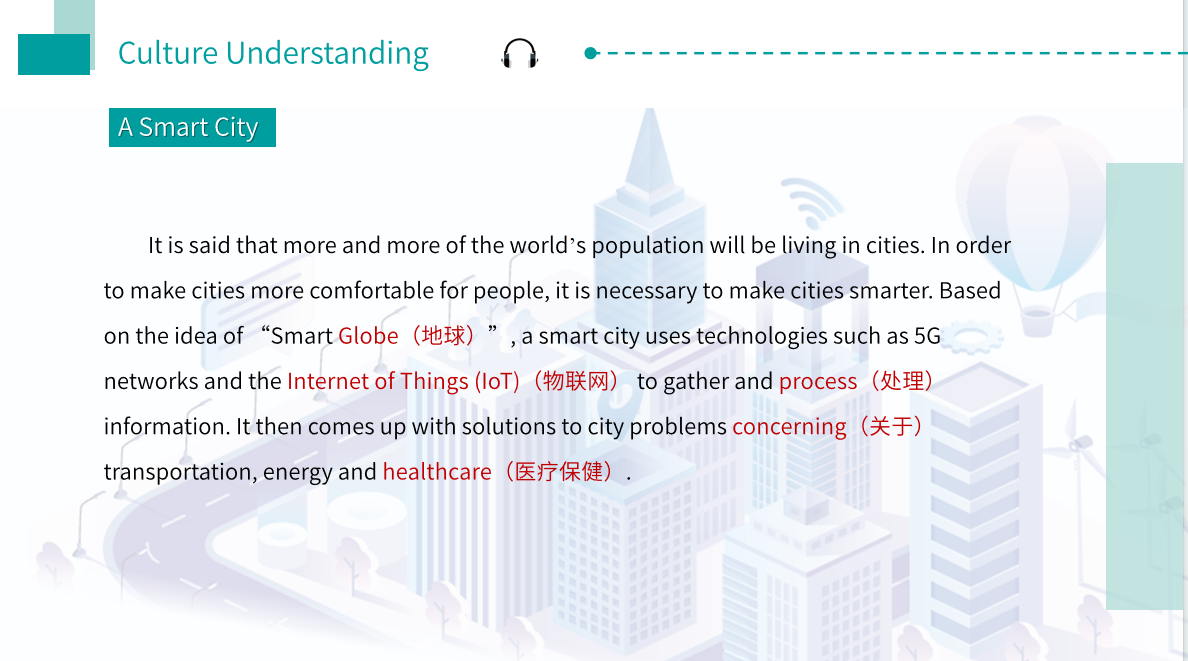
e.g. 5G network and the Internet of Things (IoT) are used widely. 5G网络和物联网被广泛使用。

• At 7:50, the phone is ringing for morning hobby classes.

早上7:50,为上午兴趣班设定的闹铃响了。

The teacher is talking about poems. 老师正在谈论诗歌。

以上两个句子都是现在进行时,表示现在或现阶段正在进行的动作。

现在进行时的基本结构为:主语 + am / is / are + doing”

e.g. I’m having online classes with my classmates now. 我正在和我的同学们上网课。

He is chatting with his friend online. 他正在和朋友网上聊天。

We are doing a survey about the smart city. 我们正在做一个关于智慧城市的调研。