-
1 Article
-
2 Words and&nb...
-
3 Notes on&nbs...
-
4 Reading Aloud



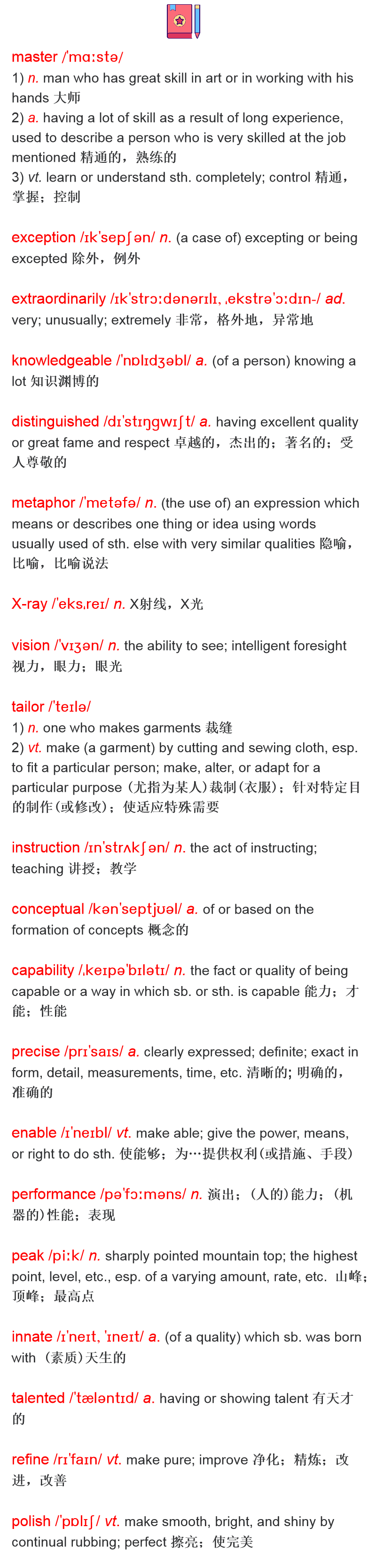
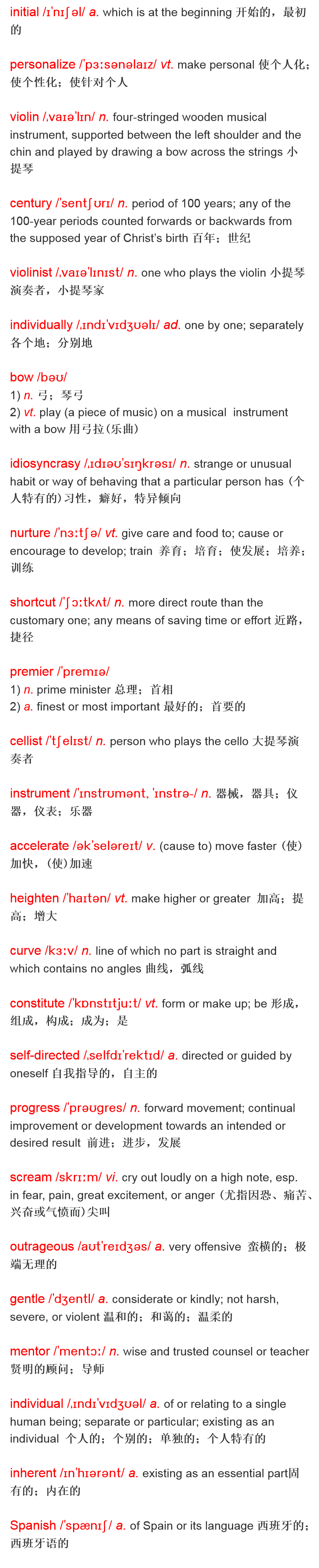
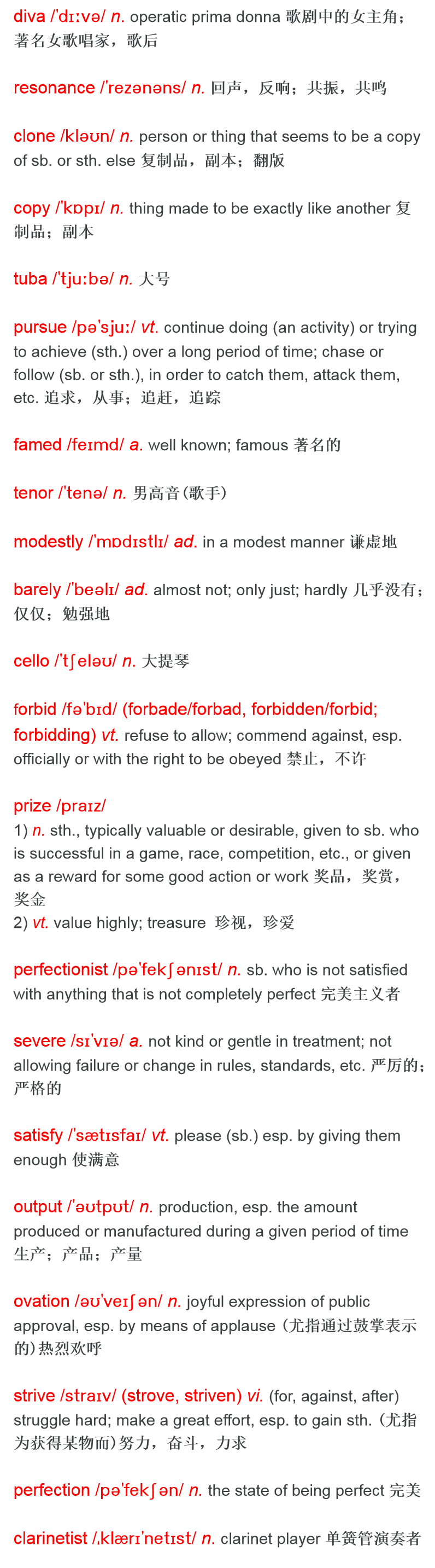
1 Without exception, master teachers and coaches are extraordinarily knowledgeable about their particular field. In many cases, master teachers themselves have had distinguished careers as performers before becoming educators.
2 The metaphors students use to describe these teachers include “X-ray vision,” “tailoring instruction,” and providing “short cuts.” Based on years of experience, master teachers and coaches can immediately detect students’ technical and conceptual problems. These teachers know their students’ capabilities, and they provide the precise challenges or tasks that will enable their students to reach the next level of performance. These teachers also can break complex problems into specific steps and provide the tools to accomplish those tasks, eventually leading to peak performance. No matter how innately talented or practiced the student may be, the master teacher refines and polishes initial capabilities.
3 Personalizing Instruction. Josef Gingold was considered one of the greatest violin teachers of the second half of the 20th century. Violinist Jean Piguet said Gingold “taught every student individually. He knew what to say to such and such student, and what not to say. He would give completely different fingering and bowing instructions according to the idiosyncrasies of pupils he had. And he sort of nurtured the students as you would nurture a plant.”
4 Providing Shortcuts. Janos Starker, one of the premier cellists and teachers of the instrument, is able to accelerate and heighten the learning curve. “I give them all the shortcuts so they can reach their understanding of the things which took me 35 or 40 years to reach. They can have it all at the age of 24,” he said. Providing short cuts and opening doors constitute the first steps in enabling students to begin the long journey toward being self-directed problem solvers who critically reflect on their progress.
5 Caring and Loving. In a few cases, master teachers may shout, scream, and do outrageous things. But mostly, they’re gentle, kind, and loving mentors.
6 Attending to individual differences is inherent in Spanish diva Teresa Berganza’s approach to teaching. “I like to discover each voice, human being, and personality, color of voice, and spirit, because the voice has a spirit. Each voice has a body, a resonance. … Within each person there is something more, but they may not be capable of drawing it out,” she said. This is the challenge to her as an educator following her career as a performer.
7 Not Creating Clones. These master teachers don’t want students to be carbon copies of themselves. Harvey Phillips, described as the Paganini of the tuba, said, “I’m one of those people who feel that it’s not good teaching if all your students sound like you. … I want them to be free to pursue their interests, not just my interests.” Famed tenor James McCracken modestly told students, “Don’t do what I do, because what I do worked for me, and just barely.” And cellist Starker said, “I want every student to play the cello as well as I do, but God forbid that they sound like me.”
8 Being Self-Critical. Master teachers, like their prized pupils, are perfectionists, their own most severe critics. Harvey Phillips, for example, tells students, “They have only one musician to compete with the rest of their days — themselves.” According to Starker: “There is a responsibility which has nothing to do with success. If I am satisfied with my output, that’s the only thing that matters. … As recently as Saturday, I received a standing ovation, and I felt like — well, I’m not going to use four-letter words, but certain things didn’t work the way I wanted.”
9 The striving for perfection is never-ending. For example, when clarinetist John Banman asked Pablo Casals why he continued to practice cello four or five hours a day when he was in his mid-80s, Casals said, “Because I have a notion that I am making some progress.”
(635 words)