-
1 Article
-
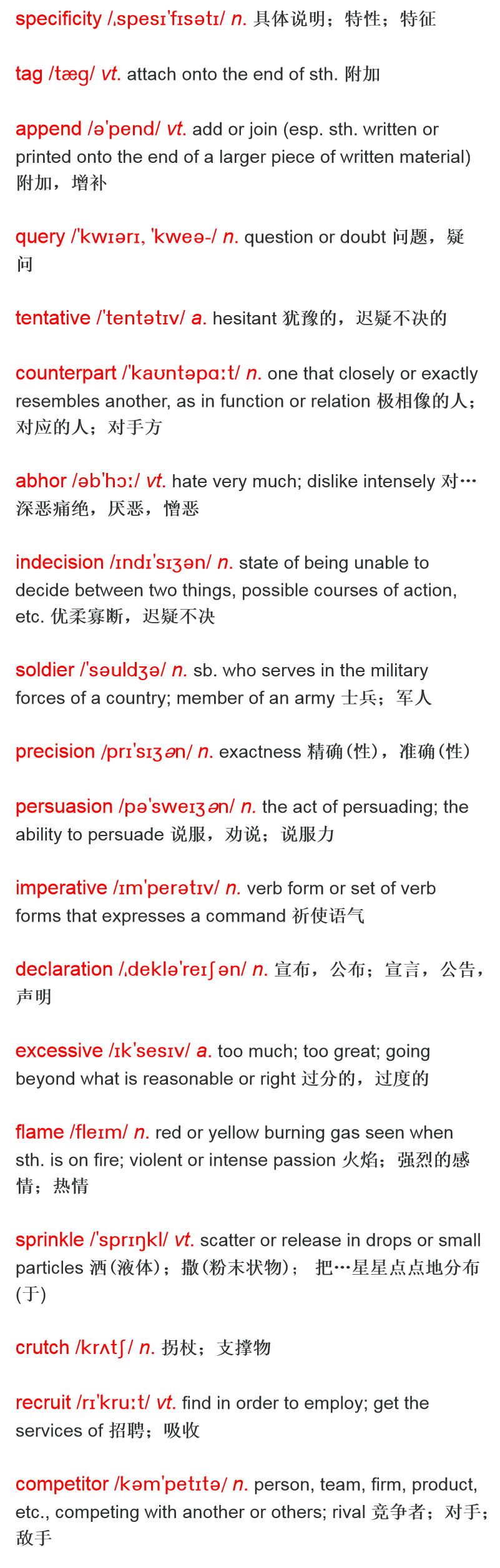
2 Words and&nb...
-
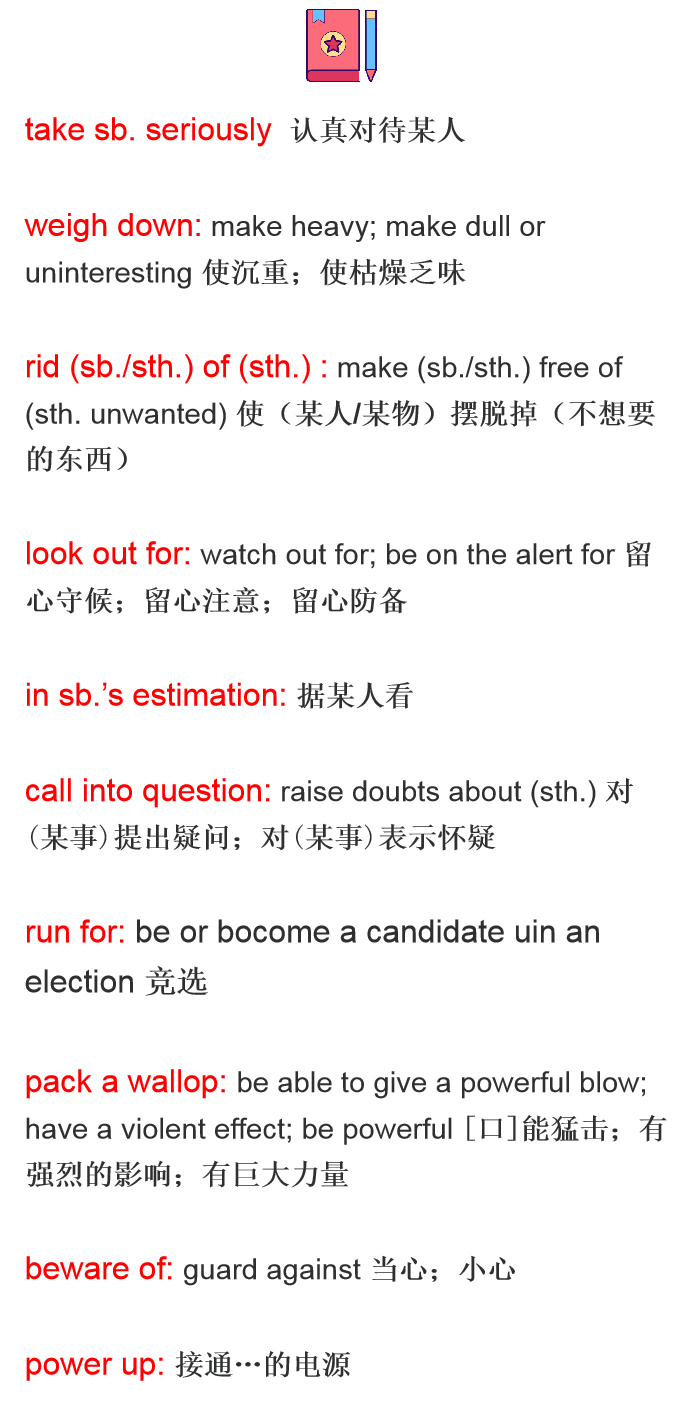
3 Notes on&nbs...



1 Want to be more hirable? Are you ready to be taken more seriously? Would you like to be seen as someone who gets results? One way to accomplish all those things is to take a closer look at your language and communication style.
2 Whether you want to become a mean, lean, selling machine or a results-oriented manager, it’s time you trim the linguistic fat that weighs down your words. Rid yourself of language that diminishes your power. Avoid qualifiers, hedges and other figures of speech that dilute your message and diminish your impact. Speak the language of success... without qualification!
Look Out for the Hedge
3 Are you using words that weaken the impact of your statements? Review your written and spoken words to audit your use of qualifiers: words that limit or qualify a word or phrase. Qualifiers minimize your words’ impact and undermine the strength of your message.
4 Consider these two statements by competing salespeople:
1. We’ll deliver it by Wednesday.
2. We’ll try to deliver it by Wednesday.
Which would you buy from? Obviously the first one inspires more confidence.
5 Consider these assertions about similar products made by competing sales reps:
1. It’s the best product on the market!
2. I believe it’s the best product on the market.
3. It’s the best product on the market, in my estimation.
Who are you more likely to buy from? Unequivocally, the one who sounds most confident.
6 The following words, inserted before or after a claim or statement, weaken your point and should be avoided whenever possible:
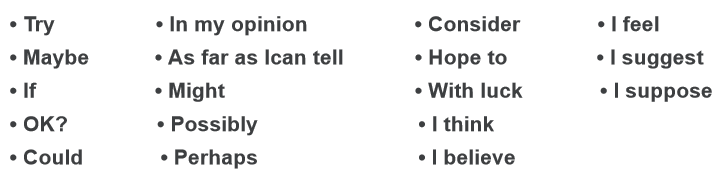
7 Too many qualifiers in a sentence call into question the veracity of your statements. Remember, you’re not running for office, you are selling! In job interviews, you’re selling your skills and experience, style and potential. On the job, your reputation is either being enhanced or diminished by your language. Speak with authority, assuredness and confidence. Weak language interdicts your power. Banish weak words and the language of doubt from your lexicon.
Check Your Power Source
8 Another way you weaken your writing and speaking occurs when you ascribe facts and statements to unspecified sources. Be bold in your statements. Take ownership of facts, statements and opinions. Every time you ascribe a statement to “people” or “others” it weakens the message. Consider these statements:
• “I’ve heard this product saves money and time.”
• “Some say this product saves both money and time.”
• “Prevailing wisdom suggests this product saves both time and money.”
• “People say this product saves both time and money.”
• “Sources suggest this product saves both time and money.”
• “The August edition of Technology Review concluded that downsized HP employees make the best new hires.”
The last example packs a wallop. There is power in specificity! Vague is weak. Specific sells!
Don’t Get Tagged Out
9 Beware of weakening your spoken message through the use of tag questions. Tag questions occur when you turn a statement into a question by appending a query to the end of it. Sales leaders speak in bold statements, without qualification. Their tentative counterparts qualify their assertions by appending a question to the end of their statements.
10 Below are several examples. In each case the first instance contains a bold statement; the second sentence becomes a tag question.
• This is terrible!
• This is terrible, isn’t it?
• People abhor indecision!
• People abhor indecision, don’t you think?
11 Soldiers won’t follow a leader who says: We’re going to take that hill, aren’t we? And customers will respond best to the sales leader who speaks with power, precision and persuasion. Weak language diminishes all three. Speak in imperatives! Make declarations!! Beware the excessive use of tag questions.
Power to the Speaker!
12 Presentation, passion and purpose all fuel your power of persuasion. You dampen the flames when you sprinkle qualifiers into your language, use tag questions and hedge statements excessively. Power up your communications. Trim your language of those crutches and get hired, promoted, and even recruited by your competitors!