


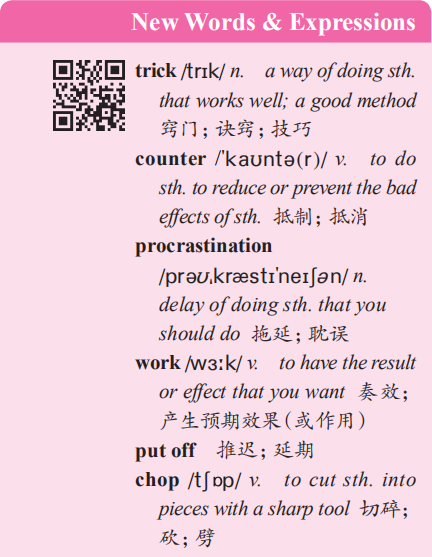
Two Tricks to Counter Procrastination
Procrastination is really a beast to overcome. We have all struggled with the beast, but I have found a couple of tricks that really work well.
1. Break big tasks into small pieces
When you are facing a difficult task, it's usually because the task will take lots of the hours to complete. Unfortunately, it's all too natural to put it off. The trick is to chop these big tasks into smaller pieces — but sometimes, the chopping itself is not obvious and seems impossible.
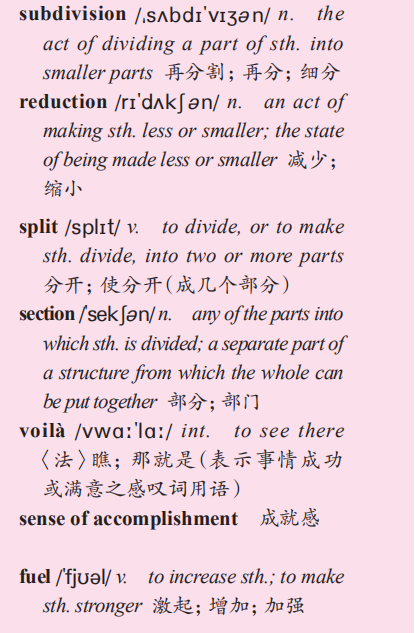
Perhaps you have a 30-page paper due the day after tomorrow. The task is huge, guaranteed to take 20 or more hours to complete. The task itself seems to be broken to its smallest part — write the paper — what more subdivision is possible?
That's the trick. Put a smaller measure and little milestones on the task that seems to refuse reduction. Change your thinking from "write the paper" to "write page 1", "write page 2", "write page 3" and so forth. As soon as the work is split into smaller sections, take that first step ― start on page one!
Voilà! The task becomes easier right away.
Your brain plays tricks. With the tiny steps in mind, you have a sense of accomplishment as soon as you get pages 1 and 2 done before lunch. It becomes easy to write page 3 before you meet someone for dinner, and page 4 later that evening. Accomplishment fuels more motivation.
2. Break your time into focused small periods.
Recently, I found the Pomodoro Technique, a simple method to make progress and reduce procrastination. The key is to use a countdown timer to put everything else aside and work on only the task at hand for 25 minutes at a time. It's easier to get distracted if the timer is silent, but the tick-tick-tick helps keep you focused.
Beat the nasty procrastination habit and you will become more optimistic and productive.

Notes on the Text
1.voilà:法语感叹词,表示一种满足感。在法国人的口语中,这个词出现的频率非常高,在不同的语境中,它还有不同的意思。
2.Pomodoro Technique: 番茄时间管理法,是弗朗西斯科·西里洛(Francesco Cirillo)于1992年创立的一种时间管理方法。其操作方法为:
(1)每天规划当天要完成的几项任务,将任务逐项写在列表里(或记在软件的清单里);
(2)设定你的番茄钟(定时器、软件、闹钟等),时间是25分钟;
(3)开始完成第一项任务,直到番茄钟响铃或提醒(25分钟到);
(4)停止工作,并在列表的该项任务后画个×;
(5)休息3—5分钟,活动、喝水、方便等;
(6)开始下一个番茄钟,继续该任务,一直循环下去,直到任务完成,并在列表里将该任务划掉;
(7)每4个番茄钟后,休息25分钟。

