
Construction project closeout(工程收尾)
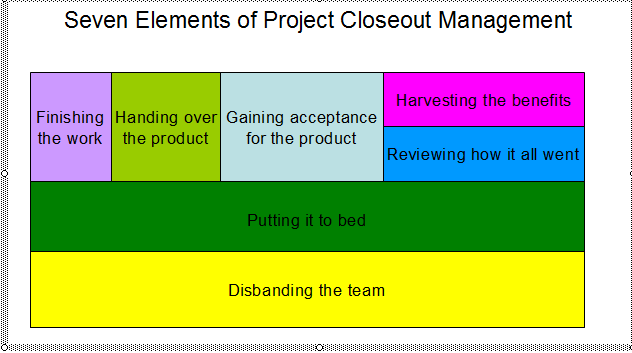
1. Finish the Work(完成工作)
Checklists(核检清单) and other simple control devices give an important element of structure to these final tasks, reminding the project team that although the majority of the work has been finished, the project is not yet done. Using punch lists(剩余工作清单) also demonstrates that even in the best projects, there is always an element of modification or adjustment that may be necessary before the project is acceptable to the client.
2. Handing over the Project (移交项目)
Transferring the project to its intended user can be a straightforward(直接了当的) process or it can be one that is highly complex, depending upon contractual terms, client, environmental conditions, and other mediating(中介) factors. The process itself usually involves a formal transfer of ownership of the project to the customer.

3. Gaining the Acceptance of the Project(获得项目认可)
Client acceptance represents the recognition(认知) that simply transferring the project to the customer is not sufficient to ensure their happiness with it, use of it, and recognition of its benefits to them. What objections could the client make to this project when completed? How can we remove their concerns regarding the project’s commercial or technical value? These are the issuses related to acceptance of the project.
4.Harvesting the Benefits (收获利润)
The bottom line for harvesting the benefits suggests that the project organization should begin to realize a positive outcome from the completion of the project. The key to begin harvesting the benefits of a project is to first develop an effective and meaningful measurement system that identifies the goals, time frame, and responsibilities involved in project use and value assessment: The criteria by which benefits of the produce or service will be measured; The points in time at which the measurement or assessment will be carried out; The individual who has accepted responsibility for carrying out the measurement or assessment in the agreed way at the agreed points in time

5. Reviewing How It Went (回顾总结)
One of the most important elements in the project closeout involves conducting an in-depth(深刻的) “lessons learned” analysis based on a realistic and critical review of the project. Misidentifying(错误识别) systematic errors: it is common in human nature to attribute failures or mistake to external causes, rather than internal reasons; Misapplying(误用) or misinterpreting(曲解) appropriate lessons based on events: a related error of misinterpretation occurs when project team members or those reviewing the project wrongfully perceive the source of an encountered problem; Failing to pass along lessons learned conclusions: although it is true that an organization’s projects are characterized as discrete(不连续的), one-time processes, they do retain significant areas of overlap(重叠), particularly within a single firm’s sphere(范围), to make the application of lessons learned programs extremely useful; Three important guidelines for gaining benefits from lessons learned meetings; Establish clear rules of behavior for all parties to the meeting: everyone must understand that effective communication is the key to deriving lasting benefits from a lessons learned meeting; Describe, as objectively as, what occurred: it is common for people to attempt to put a particular “spin” (急转弯)on events that occurred on a project, particularly when the actions could reflect badly on themselves; Fix the problem, not the blame: lessons learned lessons only work when the focus is on problem-solving, not attaching blame for mistakes.

Pondering on mistake
6. Putting It to Bed (归档)
Documentation: all pertinent records of the project must be archived in a central repository to make them easy for others to access; Legal: all contractual documents must be recorded and archived; Cost: all accounting records must be carefully closed out, including cost accounting records, lists of materials or other resources used, any major purchases, rebates, or other budgetary items; Personnel: the costs and other charges for all project team personnel must be accounted for, their time charged against project accounts, and any company overhead in the form of benefits identified
7. Disbanding the Team(解散团队)
The close of a project represents the ending of the project team’s relationship. Research clearly demonstrates that when team members have experienced positive “psychological” outcomes from the project, they are more inclined to work collaboratively in the future, have more positive feelings toward future projects, and enter them with greater enthusiasm. These team members can no longer positively affect the just-completed project but, depending upon how their accomplishments are celebrated, they can be a strong force of positive motivation for future projects.

Summary:
▷The completion of the project is actually more complex that it seems. A poorly planned, understaffed project closeout can have an adverse effect on a company's reputation.
▷By the end of the job everyone is tired. Huge efforts have been expended to get a job physically complete, but the job does not end there. The last phase of the project begins---- turning the project to the owner. This is also startup time for the owner.
▷It is often difficult for the contractor to switch gears to organize the effort at the end of the job, a problem that unfortunately can lead to bad effect feelings with the owner.
▷Usually at the end of the job, the contractor's focus is on the next job, (mean there are not enough construction people on the job at end); subcontractors have left the site with their trailers(拖车) and work force, so every piece of work that needs to be completed or changed is difficult to schedule.)
▷The most important and the most visible aspect of closeout is closeout of the construction and the subcontracts, which involves the following:
Prepare the closeout schedule(准备工程收尾时间表)
Terminating temporary utilities(拆除临时设施)
Issuing contractors' certificate of completion(签发承包商完工证书)
Prepare a punch list with the architect(准备一份检查清单)
Completing a punch list(完成检查清单)
Performing the final inspection(进行最终检查)
Receiving a certificate of completion or substantial completion(收到竣工验收凭证)
Requesting final payment(要求支付尾款)
Issuing a lien waiver and consent of surety of payment(签发留置权弃权书以及同意担保人付款方式)
Receiving final payment(收到最终付款)
Owner startup(业主试车)
The main components of a startup program include:
▷Scheduling activities, determining construction completion, and putting together an action plan that outlines who will oversees testing.(安排活动,确定施工完成,制定谁将监督测试的行动计划)
▷Determining that each component of the project is in working orderly and can be operated as planned(确定项目每个组成部分都在有序工作且能按计划运行)
▷Providing a training program for O&M (operation and maintenance) personnel(为运维人员提供培训计划)
▷Confirming O&M manuals(确认运营维护手册)
This program is developed and carried out conjunctionally by the contractor's construction forces, the manufactures and the owner's operating staff.
Conclusion
The construction period is the most exciting part of the design/build cycle. With every day's conditions changing, there are plenty of problems to solve, logistical(后勤的,逻辑的) challenges to meet, new people to work with, daily satisfactions in getting specific tasks accomplished. But it also can be the worst part of the cycle. If the project gets out of control from a cost, schedule, or logistical standpoint, it is very hard to get it back on track. The only way to avoid this negative cycle is to ensure that the job is planned well and that contingencies are built in.These contingencies can be money, time , or alternate methods of accomplishing the work. In any case, the construction project manager must be quick enough to recognize when the project is getting off track and be prepared to act decisively to get it back on track.
How the job is staffed, relationship between the home and field offices, and the specific form of the company will all contribute to the success of the construction phase.

