
-
1 Reading
-
2 Translation

Dear Diary,
Yesterday was a very special and exciting day. I want to record everything we saw and did so I will remember it in the years to come.
Mum, Dad, Ken and I all went to see the Eden Project Dad drove the car. It was quite a long journey from London. We left home at 7 o’clock in the morning and took the motorway to the West country. The Eden Project is about 30 miles away from Plymouth in Cornwall and it was almost midday by the time we reached there.
The Eden Project opened in 2001 and covers an area of 14 hectares. I did not know what to expect before I got there. Ken thought we were going to an adventure playground but Dad laughed and said, “No, not unless you think Eden is one huge natural playground.”
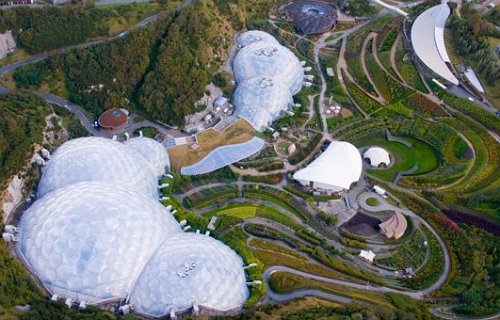
After Mum had bought the tickets we went first to the visitor centre where our guide met us to tell us what the Eden Project was all about. He told us that in this giant crater, once a china clay mine in Cornwall, science and art meet in a living theatre of plants and people.
He told us there were over 100,000 plants from more than 5,000 species in Eden. Many of these plants could grow outside in the mild climate of Cornwall. But other plants demand different climatic conditions and that is why two gigantic greenhouses are needed — the two vast football-shaped domes, called “biomes”. The largest of these, the Humid Tropics Biome, is 200 metres long, 100 metres wide and 57 metres high. It is the largest greenhouse in the world. The biomes are made of steel in the shape of hexagons and so look like enormous honeycombs made by giant bees. Inside each of these biomes a carefully controlled climate is reproduced to allow plants to grow.
“So now,” said our guide, “let’s explore the worlds of Eden.”
The first greenhouse that we went to was called the “Warm Temperate Biome”. Growing in this world were plants from the Mediterranean, South Africa and California. Plants from this climate need to live in very dry conditions and on thin soils.
Inside this biome I found a wonderful range of plants. I saw citrus fruits such as oranges and lemons, olive groves with trees from which olive oil comes, vines heavy with grapes for making wine and also corks used to close up bottles once the wine is inside them.
The exhibition showed us a lot about the traditional culture of the Mediterranean but also revealed the richness of life in the Californian desert and the colourful beauty of South Africa’s gardens.
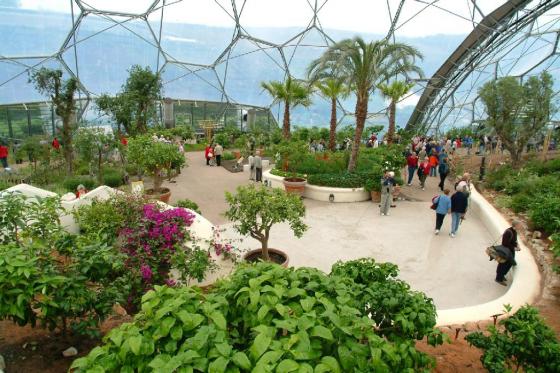
The next greenhouse was called the “Humid Tropics Biome”. This was really enormous. Immediately inside this greenhouse I began to feel hot and sticky in the moist air. There was a heavy rich smell in the air of tropical plants. As we walked around I discovered different areas of the world — West Africa, Malaysia, the Amazon jungle and the Oceanic islands. In each area we could see how the people living there use the land to meet their needs while at the same time trying to conserve the environment.
Inside this biome I came across many exotic plants such as bananas, coffee, cocoa and rubber and hardwood trees such as teak and mahogany. I had to nudge Ken and show him a lizard hiding behind a tree. Butterflies flew all around us. In the centre of the dome a large waterfall kept the air very wet and humid.
It felt pleasantly cool outside the biome. We walked around the crescent-shaped terraces to look at plants growing in the open air that we use every day for food and drink, clothes and shoes. We saw tall yellow sunflowers and tea bushes growing in tidy green rows. In this area plants came from such diverse places as China, India, North America and Europe.
After walking around for an hour, we went to sit down in the café. So what had I learned in this second Garden of Eden? I had realized that we all depend in so many ways upon plants. Much of our food, our clothes, our shelter and our medicines come from the plant world.
I realized that we need to treat plants properly and work with them to safeguard the future for us all on Earth.
As Dad drove us back to the big city, and Ken slept in the seat beside me, I thought about all the wonderful sights and sounds I had seen in Eden. In just five hours I had travelled from the dry dusty desert of California to the wet tropical jungle of the Cameroons. The variety of the plants I had seen was amazing. I hope that we can all learn from places like Eden so that our children and our grandchildren can also enjoy such splendid nature. The Eden Project really was a true adventure playground!