
Learning objectives:
After completing this lesson, students should be able to:
talk about topics related to stress;
comrehend basic vocabulary and sentence patterns related to stress;
know ways to reduce their stress in daily life.

Stress is a natural feeling of not being able to cope with
specific demands and events. However, stress can become a chronic condition if
a person does not take steps to manage it.
These demands can come from work, relationships, financial
pressures, and other situations, but anything that poses a real or perceived
challenge or threat to a person’s well-being can cause stress.
Stress can be a motivator, and it can even be essential to
survival. The body’s fight-or-flight mechanism tells a person when and how to
respond to danger. However, when the body becomes triggered too easily, or
there are too many stressors at one time, it can undermine a person’s mental
and physical health and become harmful.
The NIMH also identify three examples of types of stressor:
routine stress, such as childcare, homework, or financial responsibilities;
sudden, disruptive changes, such as a family bereavement orfinding out about a job loss;
traumatic stress, which can occur due to extreme trauma as aresult of a severe accident, an assault, an environmental disaster, or war.
There are some common stressful situations in our daily life and at work.
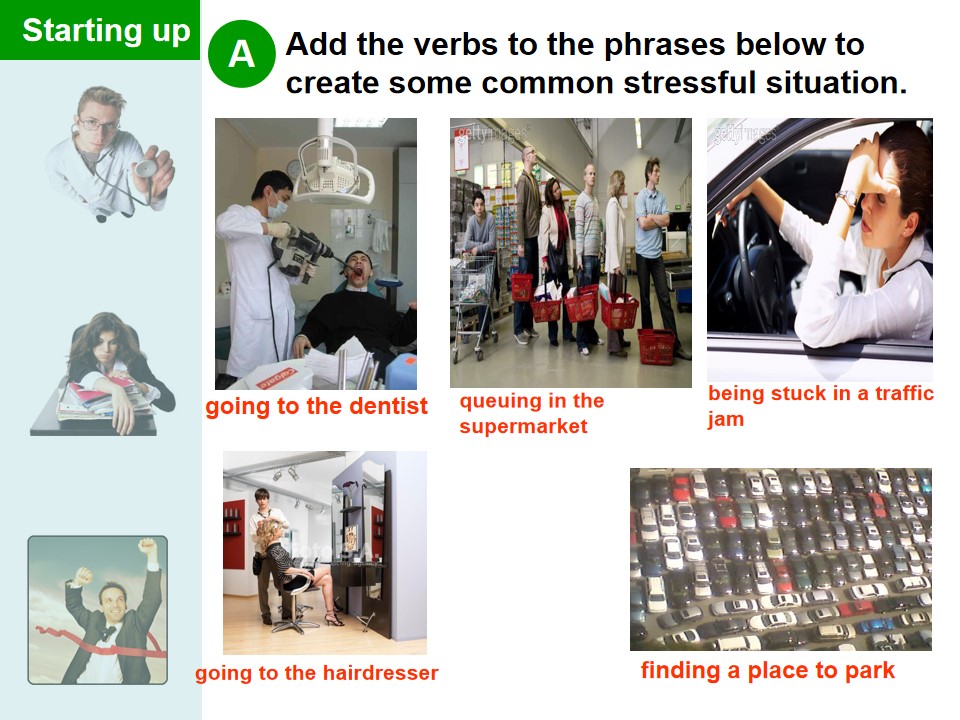
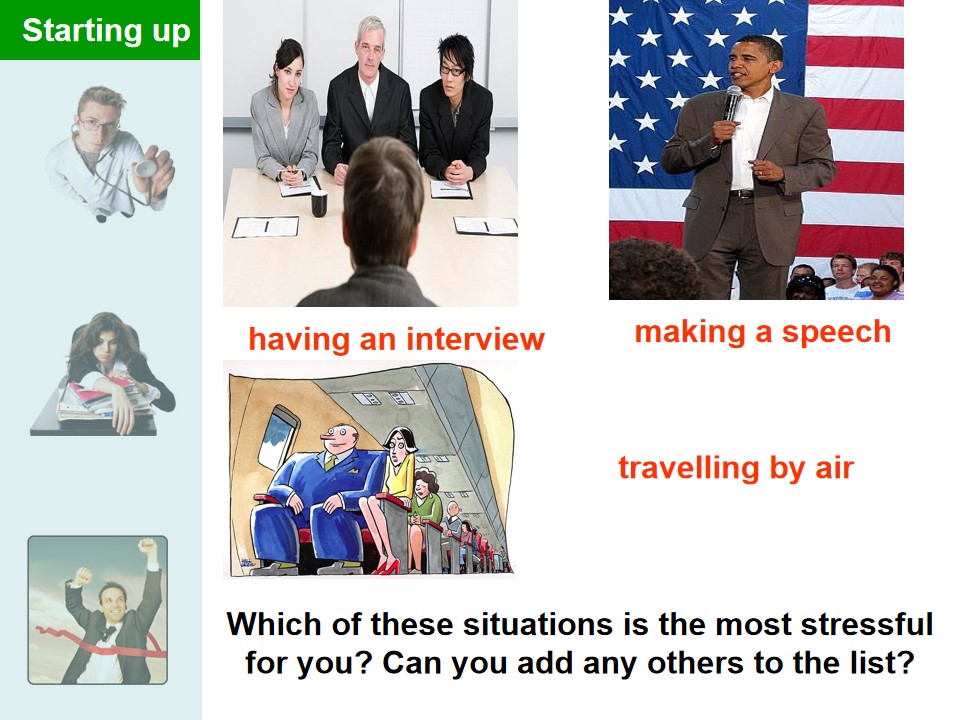
making a presentation to senior executives leading a formal meeting;
telephoning in English;
writing a report with a tight deadline;
negotiating a very valuable contract;
meeting important visitors from abroad for the first time;
asking your boss for a pay ris;
dealing with a customer who has a major complaint;
being afraid of losing your job.
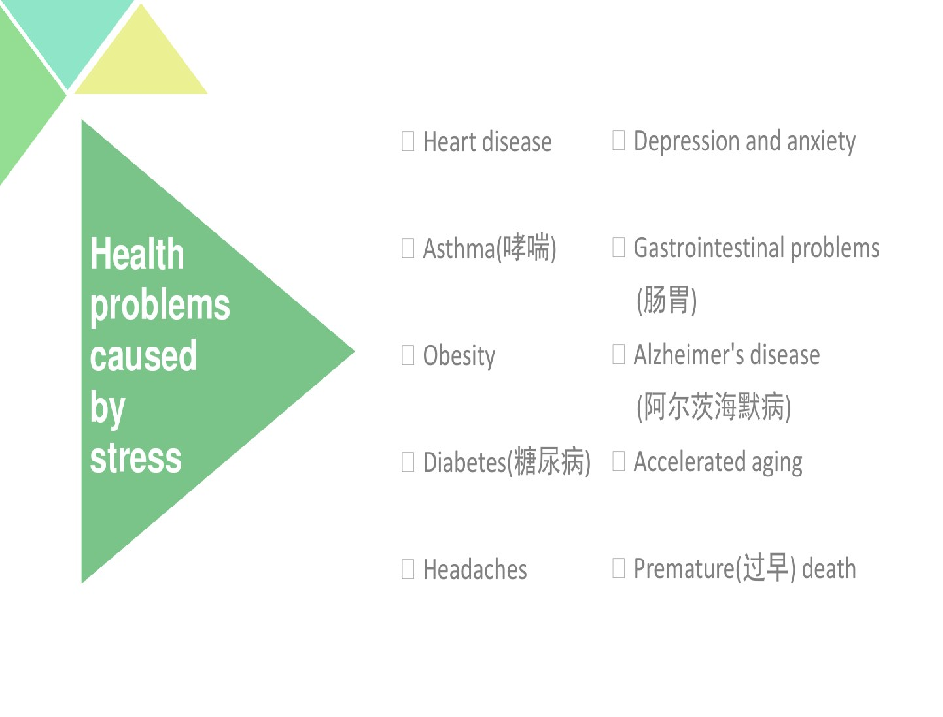
Stress can cause various health problems, for example:
Persistent stress is bad for health because it can cause
physical symptoms such as headache, high blood pressure and problems with sex
and sleep. Moreover, experts in this report by SADE OGUNTOLA also warn that
uncontrolled stress can cause poor vision.
Individuals that have ever felt stressed already know that it can affect the body either by causing muscle tightness, flutters in the chest, a nagging headache, frequent insomnia or even a decreased productivity at work.
But these stress symptoms are merely the signals of the deeper
impact that chronic stress can have on every organ and system in the body, from
the nervous and circulatory systems to the digestive and immune systems.
It’s one thing to feel occasional stress. But when under constant living a
stressed life and there is no way to cope, the risk of developing serious
illnesses increase.
Aside from increased risk for diseases like stroke, high blood
pressure, heart disease, depression and anxiety, in a new study, experts warn
that persistent stress may lead to a range of eye health issues, as well as
worsen existing ones.
In one word, stress is harmful physically as well as psychologically. Watch the videos to know how to reduce stress in life and at work.

