-
1 Academic Wri...
-
2 Academic Style
-
3 Formality
-
4 objectivity
-
5
Academic WritingSeven features of academic writing
Academic writing is arguably the most important skill in academic contexts, since writing is the main method of academic communication. It is also the most difficult skill for most students to master. This page considers what academic writing is, looking in detail at the main features of academic writing, as well as suggesting ways to develop academic writing. There is a checklist at the end for you to check your understanding.
What is academic writing?
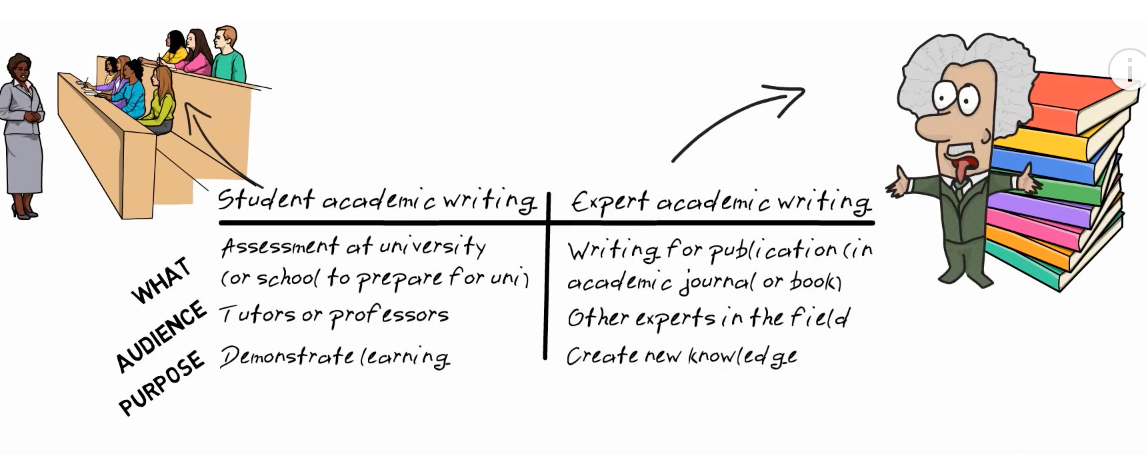
Academic writing is writing which communicates ideas, information and research to the wider academic community.
It can be divided into two types: student academic writing, which is used as a form of assessment at university, as well as at schools as preparation for university study; and expert academic writing, which is writing that is intended for publication in an academic journal or book. Both types of academic writing (student and expert) are expected to adhere to the same standards, which can be difficult for students to master.
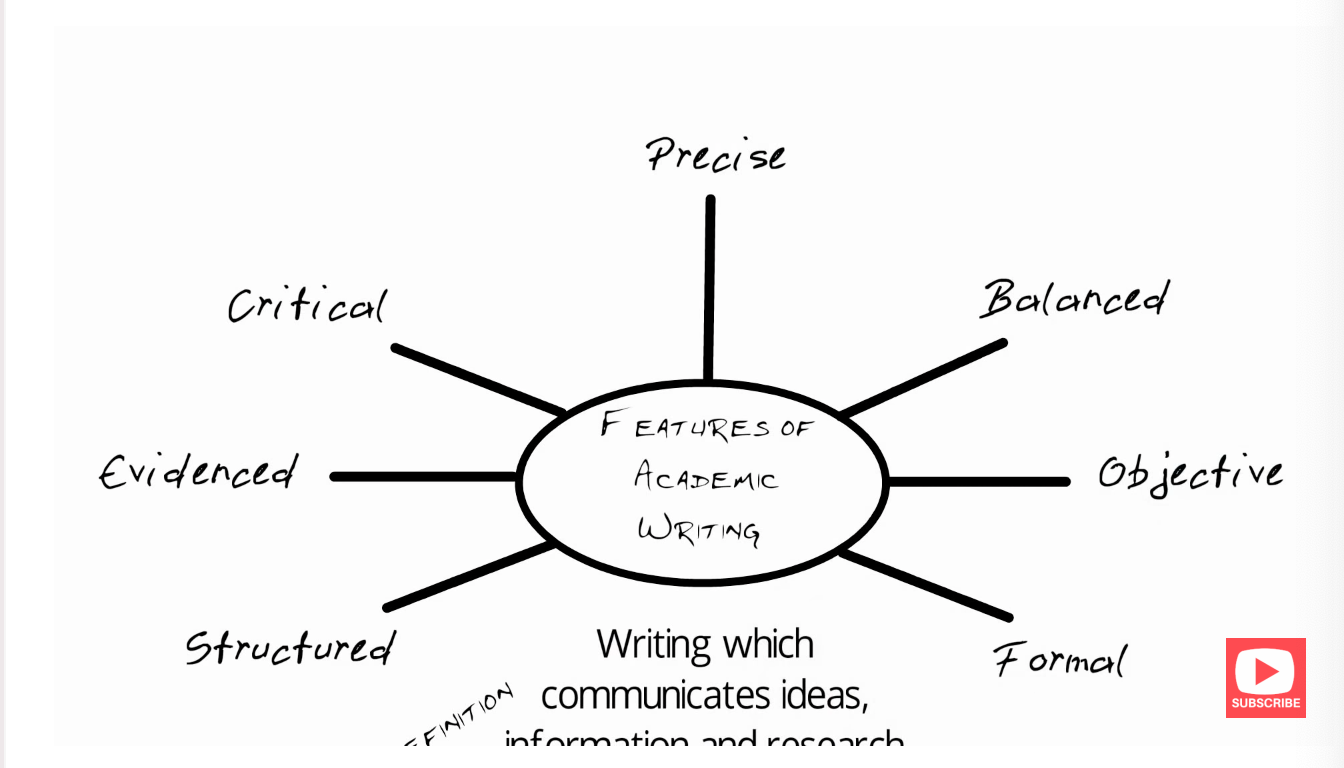
The characteristics of academic writing which together distinguish it from other forms of writing are that it is:
Features of academic writing
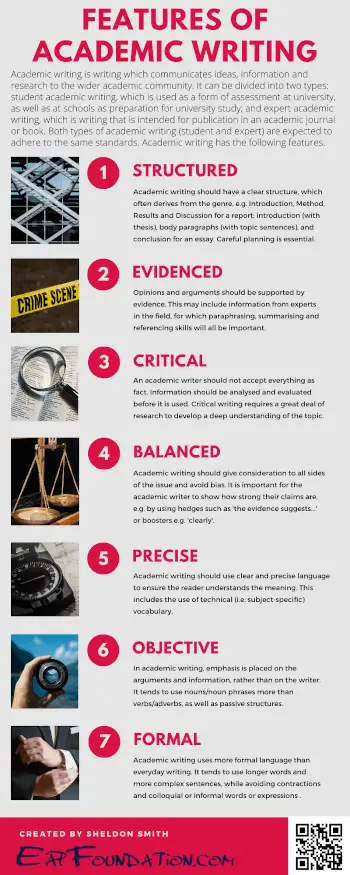
Check out the features of academic writing infographic »
Structured
Academic writing should have a clear structure. The structure will often derive from the genre of writing. For example, a report will have an introduction (including the aim or aims), a method section, a discussion section and so on, while an essay will have an introduction (including a thesis statement), clear body paragraphs with topic sentences, and a conclusion. The writing should be coherent, with logical progression throughout, and cohesive, with the different parts of the writing clearly connected. Careful planning before writing is essential to ensure that the final product will be well structured, with a clear focus and logical progression of ideas.
Evidenced
Opinions and arguments in academic writing should be supported by evidence. Often the writing will be based on information from experts in the field, and as such, it will be important to reference the information appropriately, for example via the use of in-text citations and a reference section.
Critical
Academic writing does more than just describe. As an academic writer, you should not simply accept everything you read as fact. You need to analyse and evaluate the information you are writing about, in other words make judgements about it, before you decide whether and how to integrate it into your own writing. This is known as critical writing. Critical writing requires a great deal of research in order for the writer to develop a deep enough understanding of the topic to be truly critical about it.
Balanced
Academic writing should be balanced. This means giving consideration to all sides of the issue and avoiding bias. As noted above, all research, evidence and arguments can be challenged, and it is important for the academic writer to show their stance on a particular topic, in other words how strong their claims are. This can be done using hedges, for example phases such as the evidence suggests... or this could be caused by..., or boosters, that is, phrases such as clearly or the research indicates.
Precise
Academic writing should use clear and precise language to ensure the reader understands the meaning. This includes the use of technical (i.e. subject-specific) vocabulary, which should be used when it conveys the meaning more precisely than a similar non-technical term. Sometimes such technical vocabulary may need defining, though only if the term is not commonly used by others in the same discipline and will therefore not be readily understood by the reader.
Objective
Academic writing is objective. In other words, the emphasis is placed on the arguments and information, rather than on the writer. As a result, academic writing tends to use nouns and noun phrases more than verbs and adverbs. It also tends to use more passive structures, rather than active voice, for example The water was heated rather than I heated the water.
Formal
Finally, academic writing is more formal than everyday writing. It tends to use longer words and more complex sentences, while avoiding contractions and colloquial or informal words or expressions that might be common in spoken English. There are words and collocations which are used in academic writing more frequently than in non-academic writing, and researchers have developed lists of these words and phrases to help students of academic English, such as the Academic Word List, the Academic Vocabulary List, and the Academic Collocation List.
Developing your academic writing
Given the relatively specialist nature of academic writing, it can seem daunting when you first begin. You can develop your academic writing by paying attention to feedback from tutors or peers and seeking specific areas to improve. Another way to develop your academic writing is to read more. By reading academic journals or texts, you can develop a better understanding of the features that make academic writing different from other forms of writing.
References
Alexander, O., Argent, S. and Spencer, J. (2008) EAP Essentials: A teacher's guide to principles and practice. Reading: Garnet Publishing Ltd.
Cardiff Metropolitan University (n.d.) Academic Writing: Principles and Practice. Available at: https://study.cardiffmet.ac.uk/AcSkills/Documents/Guides/AS_Guide_Academic_Writing.pdf (Access date: 4/2/21).
Gillett, A. (n.d.) Features of academic writing. Available at: http://www.uefap.com/writing/feature/featfram.htm (Access date: 4/2/21).
Staffordshire University (2020) Academic writing. https://libguides.staffs.ac.uk/ld.php?content_id=33103104 (Access date: 4/2/21).
Staffordshire University (2021) Academic writing. https://libguides.staffs.ac.uk/academic_writing/explained (Access date: 4/2/21).
University of Leeds (2021) Academic writing. https://library.leeds.ac.uk/info/14011/writing/106/academic_writing (Access date: 4/2/21).

Quiz