-
1 Reading
-
2 Translation

Inspired by a love of music, a student at Quarry Bank School in the English city of Liverpool named John Lennon decided to form a pop group in 1957. In doing so, he took the first step in creating what was to become the most famous pop group of all time, The Beatles. The name John first came up with for the group was “The Blackjacks.” This name only lasted a week and in March 1957 John used the school name as the inspiration for the new name for the group, “The Quarrymen.” John sang and played guitar, Colin Hanton played drums, Eric Griffiths played guitar, PeteShotton was on washboard, Rod Davis on banjo and Bill Smith on bass. Bill was soon replaced by Ivan Vaughan.
Background Information:
The Beatles
The story of The Beatles, as told in the text, can be analyzed as a problem-solution narrative. In this example there are a series of changing situations with problems and solutions and there are some evaluations of The Beatles’ success at several points. However, the story ends with a problem — or, as some people might say, a sad or tragic ending — with the break-up of the group. Remind students that the problem-solution narrative can be written in different ways, and this is just one example.
Key words:
washboard: a board with a rough metal surface used in the past for rubbing clothes on to help make them clean, but also used in the 1950s and 60s to help create the rhythm of pop music
banjo: a musical instrument like a guitar but with a smaller round body
bass: an electric guitar that produces very low notes
John was inspired by the early Elvis Presley song, "Heartbreak Hotel" and became a fan of American rock 'n' roll music. He introduced into The Quarrymen's repertoire songs by Buddy Holly, The Coasters, Jerry Lee Lewis and Gene Vincent. On 6 July 1957, Ivan Vaughan invited Paul McCartney to see their gig at a small suburban festival. The 15-year-old McCartney was introduced to the 16-year-old Lennon and a unique songwriting partnership began. The line-up of The Quarrymen increased to seven with Paul on guitar and vocals, John Lowe on piano and the rather quiet and reserved George Harrison on guitar and vocals. Soon Griffiths and another member, Len Garry resigned, leaving a five-piece group. The group turned up at several local talent contests but had very few gigs. By January 1959, the group wasn’t operating and, although John and Paul kept in touch, George joined a rival group called The Les Stewart Quartet.
Key Words:
rival: a person, team, or business that competes with another
gig: a public performance especially of jazz or popular music
That might have been the end of The Quarrymen but they had a stroke of luck. The Les Stewart Quartet had been booked as a resident band at a new club called "The Casbah." It was run by Mrs Mona Best with the support of her sons Pete and Rory. Stewart, upset because his guitarist Ken Brown helped to decorate the club, refused to play there. Ken and George walked out of the group and George contacted John and Paul. The result of this altercation was that The Quarrymen were reunited — this time as a quartet. After about seven gigs at the Casbah Club, Ken Brown left over a disagreement about money. From October 1959 to January 1960 John, Paul and George continued as a trio with Paul on drums. They renamed themselves “Johnny & the Moondogs.”
Key Words:
altercation: a noisy argument
By this time John was enrolled in The Liverpool College of Art. John knew that they needed a bass player so he asked two students if they would like the position. The two were Stuart Sutcliffe and Rod Murray. Neither could afford a guitar and so Rod, showing great initiative, started to make one by hand. However, Stuart was able to sell one of his paintings to an exhibition and this allowed him to buy a bass guitar and join the group in January 1960. At this time the group changed its name to "The Silver Beetles." They also began having problems with drummers. The main problem was getting one to stay. Their first drummer was Tommy Moore, who toured with them through Scotland and then left. The next was Norman Chapman, but he left after only a few weeks. Finally, George suggested that Pete Best, the son of club owner Mrs Mona Best, become the group's drummer.
Paul contacted Pete and offered him the job and he took it. The group had finally settled on the name which was to become so famous, "The Beatles," just before their first trip to Hamburg in Germany in August 1960. Now John, Paul, George, Stuart and Pete headed off to Hamburg. At that time The Beatles weren't considered to be the leading group in Liverpool and were looked down on by other groups. In Hamburg they pulled their act together musically. They did so because they had to play very long hours and were pushed hard by the club owner Bruno Koschimider to "make a show." It wasn't just Hamburg that made them special. The fact that Liverpool had so many venues for local acts to play at, coupled with the rivalry between more than 300 Liverpool-based groups, helped the music and stagecraft of The Beatles to continue to forge ahead, until they came to be regarded as Liverpool's best group.
Key Words:
stagecraft: all the skills used in the theatre
forge: to develop a successful relationship
At the time, Pete Best was regarded as the person with the strongest personal image in the band. After Hamburg, Stuart Sutcliffe left and so now The Beatles were a four-piece band and Paul took over as bass guitarist. John, Paul and George were the three front-line guitarists and they alternated as lead singers and also performed vocal harmony with each other. Pete Best played drums and occasionally sang, but he was best known for his drumming skills — he had developed a distinctive drum sound called "the atom beat" which many other drummers tried to copy. But following a series of disputes, the intense Pete Best was replaced by the funny and relaxed Ringo Starr in August 1962.
Key Words:
intense: feeling and showing emotions in a very strong way
By this time, The Beatles had hired Brian Epstein as their manager and he signed them up for an audition with Decca Records. The head of Decca Records told The Beatles manager that guitar groups were on their way out. The Beatles were devastated by their failed audition but Epstein, showing his great belief in the ability of The Beatles, secured them a contract with Parlophone Records. The Beatles could bank on Epstein. His contribution to the success of The Beatles was not limited to persistence, however. He also created a public image of The Beatles as neat, clean and cheerful young men. This was an image acceptable to all — from grandmothers to pre-adolescents.
At Parlophone, the group met a man who was to be a guide and mentor to them, George Martin. Martin took control of the arrangement and recording of The Beatles' music. He was not only a superb sound engineer but also a gifted pianist and was able to help The Beatles develop their musical knowledge and skills. The group, now with its permanent membership complete, recorded their song, "Love Me Do," which was released on 5 October 1962, and was a modest hit. The years 1963 and 1964 proved to be the most important years in their careers. In 1963 the "Beatlemania" craze started in Britain and The Beatles were no longer support acts at concerts. Now they were starring in the Royal Variety Show and in the TV show that had the highest ratings at the time, Sunday Night At The London Palladium.
Key Words:
mentor: an experienced person who helps someone who has less experience
gifted: with an impressive natural ability
Beatlemania: the special name for the great popularity of The Beatles in the mid-1960s
At this time, John and Paul were working hard on their songwriting craftsmanship. They composed songs together and nearly always in a studio. Typically, they would agree on a time to meet in a studio and then work out the basic melody of the song — first on guitar and then on piano. But melody is only one-third of the total composition of a pop song — rhythm and lyrics are also important, and the second step was for John and Paul to decide on the rhythm of the song; whether it was to be fast, medium or slow in pace. Most fans agree that Paul had the greater melodic powers and John the better sense of rhythm. Their talents reflected perhaps their respective characters: the one romantic and sensitive and the other quick to voice his opinions and apparently argumentative. After deciding the rhythm of a song, John and Paul then wrote the lyrics — normally very quickly, and finally the song was written down in musical notation. The songwriting partnership was extremely successful and songs such as "Yesterday" (with its sad, regretful lyrics), "Lucy in the Sky with Diamonds" (a classic song of the hippie era) and the romantic “The Long and Winding Road” have become accepted as standards in the pop music repertoire.
The Beatles' biggest year was, without doubt, 1964, when they conquered the biggest record market in the world — America. The group became symbols. America was mourning the death of President John F. Kennedy and The Beatles appeared on the scene to bring fun and excitement, and end the mourning. Ed Sullivan, the host of America's most influential TV programme of the time, had been at London airport when The Beatles returned from Sweden and saw all the girls screaming, the boys cheering and the media taking pictures. He knew they were something special and he booked them on his TV show, The Ed Sullivan Show. The show featuring The Beatles received the highest ratings in the history of television up to that time. That same year The Beatles toured America for the first time and starred in their first motion picture, A Hard Day’s Night. In 1965, The Beatles' second motion picture, Help appeared and later that year the group performed at Shea Stadium in New York to a crowd of 55,000 screaming fans — the largest live audience for any event in recorded history.
Key Words:
mourning: to feel extremely sad because someone has died
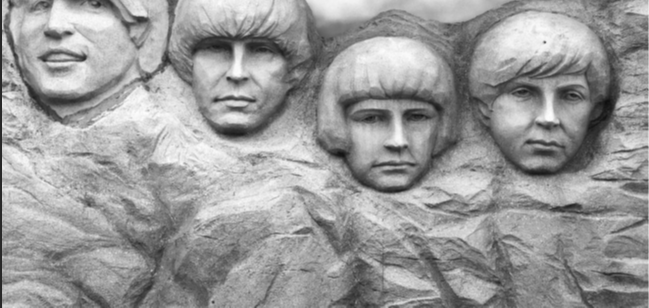
During the sixties, The Beatles not only became a musical phenomenon; they affected the styles and fashions of the decade. They transformed the record industry as well. They brought in royalties (a percentage payment for each record sold) for artists and producers, revolutionized music tours, and started the pop promotion film or what we know today as the music video. Every one of their albums, from Please Please Me to Abbey Road was popular and each was unique in its own way. But after the death of their long-time manager Brian Epstein, things would start to fall apart for The Beatles.
Key Words:
phenomenon: an event or situation which can be seen to happen or exist
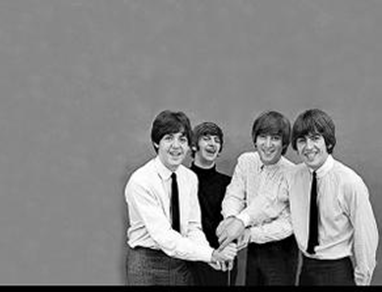
The Beatles gave their last public appearance on top of the Apple building on 30 January 1969. However, their Let It Be album was deemed unreleasable and so it was handed over to the producer Phil Spector who added lush orchestrations to such songs as “The Long and Winding Road,” infuriating Paul. Despite all this, The Beatles decided to get together to make one final album, Abbey Road, which would go on to become their biggest-selling record.
Key Words:
lush: very comfortable and expensive
infuriating: to make someone extremely angry
It was mainly Paul who kept the group together this long, encouraging them to make Magical Mystery Tour back in 1967 after Brian's death and trying to get them excited about recording and performing. Recording proved to be successful, performing less so. From Sgt. Peppers through to Abbey Road these were considered to be their studio years, where they rarely got together except to record. The Let It Be album was finally released on 8 May 1970, less than a month after Paul publicly announced he was no longer a member of the group.