-
1 课前
-
2 课中
-
3 课后
TEXT
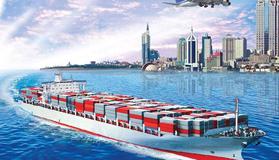
Multimodal transport involves the use of more than one means of transport such as a combination(联合,组合) of truck, railcar, aeroplaneor ship in succession to(继…之后) each other, e.g. acontainer line which operates both a ship and a rail system of double stack trains(双层集装箱列车).
PartA International Multimodal Transport
The term"International multimodal transport”, defined by United Nations Convention on International Multimodal Transport of Goods(联合国国际货物多式联运公约), means“the carriage of goods by at least two different modes of transport on the basis of a multimodal transport contract from a place in one country at which the goods are taken in charge(接管) by the multimodal transport operator to a place designated (指定的) for delivery in a different country. The operations of pick-up(收取,提取) and delivery of goods carried out in the performance of an unimodal(单一方式) transport contract, as defined in such contract, shall not be considered as international multimodal transport.” Therefore,multimodal transport, or intermodal transport, as understood by many, refers to a transport system usually operated by one carrier with more than one mode of transport under the control or ownership of one operator(MTO).
Four “1”=
One Multimodal Transport contract
One Multimodal Transport Document (MTD)
One Multimodal Transport Operator (MTO)
A flat through rate 全程统一运价(运费率)
Two “2”=
2 or more than 2 means of transport
Between two nations
The Advantages of International Multimodal Transport
Minimizing time loss at transshipment points(转运点): international multimodal transport, which is planned and coordinated(协调) as a single operation, minimizes the loss of time and the risk of loss, pilferage(偷盗), and damage to cargo at transshipment points. An international multimodal transport operator maintains his own communication links and coordinates(协调) interchange(交换,交接)and onward(向前的,后续的)carriage smoothly at transshipment points.
Providing faster transit of goods:the faster transit of goods made possible under multimodal transport reduces(降低) the disadvantages of distance from markets(远离市场) and the tying-upof capital(资金紧张). In an era (时代)globalization(全球化) the distance between origin or source materials and consumer is increasing thanks to(由于)the development of multimodal transport.
Reducing the burden(负担) of documentation and formalities: the burden of documentation and other formalities connected with segmented transport(分段运输) is reduced to minimum.
Saving costs: the savings in costs resulting from these advantages are usually reflected(反映) in the through freight rates(联运费率) charged by the multimodal transport operator and also in the cost of cargo insurance. as savings are passed onto(传递给)the consumer demand increases(增长).
Establishing (建立)only one agency(机构)to deal with: the consignor has to deal with(与…打交道) only the multimodal transport operator in all matters(事务) relating to the transportation of his goods, including the settlement(理赔,结算) for loss of goods, or damage to them, or delay in delivery(延迟交付)at destination.
Reducing cost of exports: the inherent(固有的,本质的) advantages of a multimodal transport system will help to reduce the cost of exports and improve their competition position in the international market.(e.g.CIF)
Forms of Multimodal Transport Operations
Road/air/road(陆-海-陆)
A combination ofair carriage with truck transport is a frequent method of multimodal service. Undoubtedly,picking up and delivering services by road transport are usually incidental to(附带的) air transport. But apart from this, road transport is being increasinglyused,particularly inEurope, U.S.A.and China, fortrucking air freight over long distances, sometimes across national boundaries(国界),to connect with the main bases of airlines(航空公司的干线机场) operating long haul(长距离运输) services such as trans-Pacific(跨太平洋的), trans-Atlantic(跨大西洋的) andinter-continental(洲际间的). //
Several airlinesare building up(建立) a number oftrucking hubs(枢纽)in Europe to act as focal(焦点的) points forroad-based feeder(支线) operations.
This roadtransportation is often effected with theirown vehicles,and to and fromtheir own facilities(设施),but on occasion(有时,偶尔)they do also usehighway common carriers(公共承运人).
Sea/air/sea(海/空/海)
This combines theeconomy of seatransport and the speed of air transportand is becoming increasingly popular in severalinternational trades.Theeconomics of this combination mode favor(对…有利)high value items likeelectronics,electrical goods,computers and photographic equipment as well asgoods with high seasonal demand such as fashionwear and toys.
This multimodal operation is particularlyapplicable where the route to be coveredcombines large distances via land and water,and wheretransit time (运输时间)is important.When you want the speed of air freight with thelower cost of ocean freight then the answer is a combination of both.
Rail/road/inland waterways-sea-rail/road/inland waterway mode
Rail/road/inlandwaterways-sea-rail/road/inland waterway mode is incommon use(普遍使用)whengoods have to be moved by sea from one countryto another and one or more inland modes oftransport such as rail,road or inland waterways have to be used formoving goods from an inland center to the seaport (Loading port)in the country oforiginor from the seaport(Discharging Port) to an inland center in the country of destination.
Mini-bridge&Land-bridge(小陆桥和大陆桥)
A mini-bridge(Sea/Land)involves the movement of containers,under a through bill of lading(联运提单)issued by an ocean carrier,by a vesselfrom a port in one country to a port in anothercountry and then by rail to a second portin the second country,terminating(终止,结束)at the rail carrier`s terminal in the second port city.
A land-bridge(sea/land/sea) system concernsitself with shipment of containers overland aspart of a sea-land or a sea-land-sea route.In this case,the railways are paid aflat rate(统一费率)bythe ocean carrier who issues the through bill of lading.This system is in operation for the movement of containers on certain importantinternational routes.
Shanghai---Losangeles----Houston, TX
Busan- nansha-zhanjiang
(GUANGZHOU-SEATTLE-NEWYORK)
MLB=Minilandbridge (小路桥 ) vs . All water(全水运)
IPI=InteriorPoint Intermodal 微型桥
Piggyback (驮背运输)
Piggyback is a system of unitizing(统一) multimodal landtransportation,a combination of transport by road and rail.It combines initself(本质上) the speed and reliability(可靠性) of rail on long trunk hauls(长途干线运输)with door-to-doorflexibility(灵活性) of road transport for collection and delivery.//
Sea-train(火车车厢运输船,火车滚装系统)& Ro-Ro(滚装运输,汽车滚装系统)
特点:火车运输或公路运输为主,船运为辅
Sea-train is another innovation(创举) in the multimodal transport system involvingthe use of rail and ocean transport. It is similar to the roll-on(滚装), roll-off(滚卸) system.The Ro-Ro mode combines different means oftransportation(seaand road),and is usedmost often with new automobiles, whichare shipped by sea and then simply driven off(驶离)the vessel to the importer’s warehouse.
Lift on/lift off= 吊装/吊卸
LO/LO