Reading the introduction (textbook P97)
The introduction section of a research article not only introduces the background information of the topic it will discuss, but also summaries and outlines the main points of the article . The most important sentences in the introduction are towards the end where the thesis statement is often expressed by using such phrases as "The thesis of this article is " , "This article will argue that " or "The objective of the introduction is ... " In addition to the thesis , the introduction section outlines methods and structures of the article . This paves the way for a better understanding of the article .
What should your introduction include ?
Introduction presents a proposal the writer makes to the reader .An introduction for a research paper should announce your paper's topic and purpose .
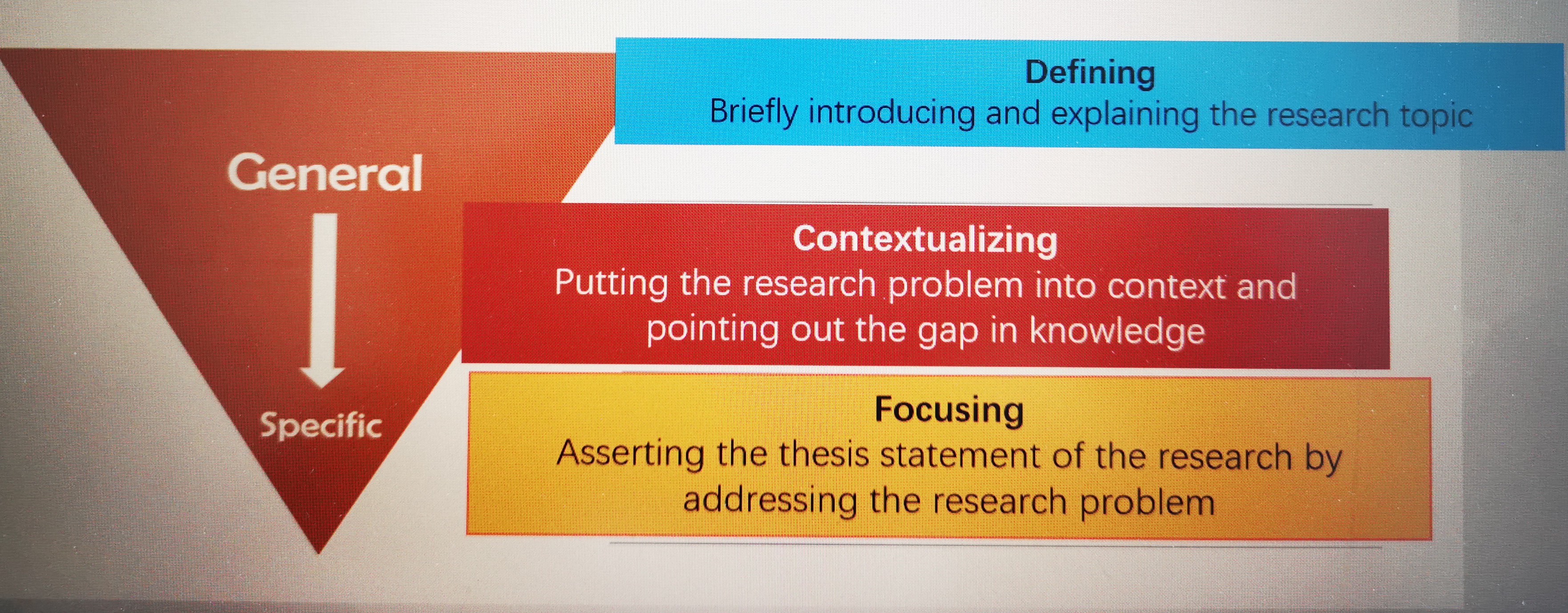
Step one : address the topic (definition)
Step two : contextualize the topic
Step three: identify the gap in the existing literatures regarding the paticular context and topic
Step four: thesis statement --- a promise your paper is going to make , not just cover a topic . The thesis statement should excite and engage your readers ' curiosity .
An introduction should engage readers , so they will become interested in your writing.
When should you write the introduction?
You do not write introduction first .Some writers prefer to write introduction in the middile of the drafting process , while others decide to write introduction last .
Model of introduction.
In an article the contextualization of the research problem is always featured in the introduction. In academic writing , a simplified structure of introduction section resembles an inverted triangle from top to bottom. The writer starts from the most general background information and narrows down to address the particular aspect being focused on in the article.