Activity One Discussion: How much do you know from this unit about the American Indian culture? You may refer to the following information.
American Indian Culture
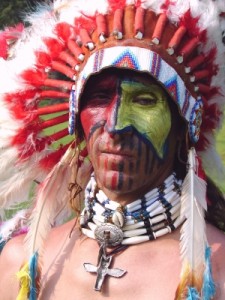 American Indian culture is complex and diverse and many traditions stretch back thousands of years. Until relatively recently, stories of creation and legends were passed through generations by word-of-mouth.
Today, American Indian culture remains strong, despite a history of fighting against overwhelming odds. From the Eastern shores to the west, American settlers worked to drive Native Americans from their homelands and build a new, unified country where there was once tribes and clans.
Before settlers arrived, the country was a broad mix of cultures, traditions and beliefs. American Indian culture varied greatly, even among neighboring tribes. The Navajo, for instance, have their own story of creation that is far different than the religious beliefs of the Hopi people, who have lived in the same region for generations.
Despite the one-sided view of American Indian culture portrayed in movies and books – American Indian culture is actually anything but simple. Important traditions are still practiced today just as they were hundreds, even thousands of years ago.
Northeast American Indian Culture
American Indians in the Northeast were among the first to come in contact with European explorers and settlers. In fact, if it were not for the tribes of what is now known as the northeastern United States, the early settlers likely would never have survived the winter. Tribes like the Algonquians were adept at hunting, fishing, planting and storing food for the long winter.
Southwestern American Indian Culture
In the Southwest, Native Americans learned to survive in an arid, desert climate and built expansive villages and managed to grow and harvest corn in dry, unforgiving environments. As a result, corn came to play an important role in the American Indian culture of the Southwest.
Puebloan tribes held the plant sacred and some believed the spirit world had to be pleased to ensure a good harvest and the survival of the tribe. To the Aztecs, keeping the gods appeased meant sacrificing humans, which played a role in their American Indian culture for many generations.
American Indian culture is an important part of history as well as the shaping of today’s culture.
Native American Activities
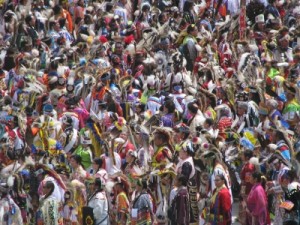 Native American activities encompass everything from hunting and art-making to singing and dancing. While some Native American activities are out of necessity, as well as for religious and sacred reasons, others are solely for fun and entertainment purposes. The history of Native American activities is a fascinating tale of living off the land, overcoming obstacles and the odds, and expressing gratitude and respect for what nature has provided.
Traditional Native American Activities
Traditional and sacred ceremonies are an enormous part of Native American activities. Many of these ceremonies include breathtaking and elaborate masks or head dresses, as well as spiritual song and dance. Chanting, drumming, centering, rattling and praying are some of the various other forms of traditional Native American activities.
Hunting is perhaps the biggest of the Native American activities that was born out of necessity. Animals were not only used for food, but also to provide clothing. Growing and harvesting crops was also essential for Native Americans to survive.
Other Native American Activities
Art is perhaps the most well-known and most recognizable form of Native American activities. Art has always been a way to express thanks for what nature has provided. For several centuries, Native American oil and sand paintings, pottery and other forms of art have been a large part of the landscape of the country.
Baggataway, otherwise known as Stickball, was one of the most popular Native American team sports. The game was often played to settle disputes and to avoid conflict and potentially, even war. As many as 300 people or as little as 20 could be involved in the game. In the 20th century, Native American Jim Thorpe would go on to become one of the greatest athletes in American history.
Various forms of Native American activities are still a very important part of the culture today.
Native American Folklore
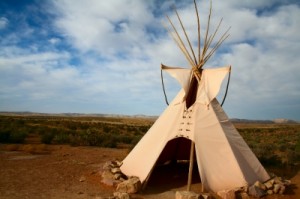 Native American folklore is rich in powerful music, spiritual stories, emotional legends and tall tales. Sacred song, traditional dance and mythical lessons are just some of the aspects that make Native American folklore so fascinating.
Today, Native American folklore provides the opportunity to learn about important traditions that are respected and revered by so many. It also reminds us of the struggles and hardships endured by those so many years ago.
Native American Folklore Music
One of the most compelling components of Native American folklore is music. The sacred history and beliefs of individual tribes is often told through awe-inspiring ceremonial performances. Traditional song and dance also plays a large part in telling the incredible and storied history of a tribe. Additionally, there are songs that celebrate important periods during the year, such as planting season or harvest season. Music plays an incredibly critical role in Native American folklore. Through special song and dance, the important history of tribes can be preserved and passed on for the many generations to come.
Native American Folklore Myths
Creation myths are another important aspect of Native American folklore. Beautifully-woven tales describing the origin of the Earth, the universe, animals and the seasons keep the traditions of individual tribes alive and thriving from generation to generation. Other stories and myths explain certain beliefs and ways of life. Some tales are also told to provide a moral compass and guidance, while others are used to give important warnings in life. The history of Native American folklore would be incomplete without tales of iconic, immortal heroes and deceptive, dastardly tricksters. Even among neighboring tribes, each tale is wonderfully specific, important and unique.
Native American folklore is a critical part of the history and fabric of the nation. It continues to play an enormous role in shaping the culture of today.
Native American Stories
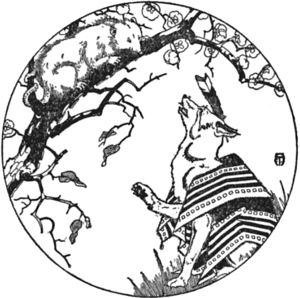 Each word spoken in Native American stories has a purpose and has been carefully thought out. Native American stories are used at times to teach lessons about love and life. Native American stories can also be about hunting, seasons, agriculture, death and more. Unlike Greek mythology, very few Native American stories and myths were written down prior to the starts of the late 19th century.
Native American Stories
For centuries, Native American stories have been used to pass on the values, heritage and culture of tribes. The stories were crucial to preserving the sacred history of a people prior to the invention of written language. Traditional Native American stories tend to focus on honoring life, plants, animals and ancestors. They also are used to teach valuable lessons to younger people.
Native American Myths
Native American myths typically deal with either stories of heroes, tricksters or creation. Some form of nature will nearly always play a role in these myths. These Native American stories have also been passed down from generation to generation to explain the history of their tribes. Another common theme is how difficulty lies in the journey from one world to another, and that without great effort nothing of great value can be attained. Some actually consider Native American myths to be more like folktales because they involve regular people as opposed to gods.Some famous Native American myths include the “Maid of the Mist,” the “King of Sharks” the story of “The Three Sisters” and the “Rainbow Crow.”
https://baijiahao.baidu.com/s?id=1647110010269487195&wfr=spider&for=pc
https://wenku.baidu.com/view/626ebc71a76e58fafbb00300.html
Activity Two Discussion:
Whatis mythology? What is folklore? What is legend? Can you give examples of eachof the three?
https://www.ancient.eu/mythology/
Activity Three Fill in the blanks with appropriate words based on this unit (Refer to Quiz for Unit 6)

