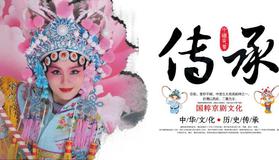
目录

  • 1 文化渊源 Origin of Chinese Culture
    • 1.1 中国概况 China Overview
    • 1.2 中国历史要略 An Outline of Chinese Culture History
    • 1.3 远古神话 Chinese Ancient Mythology
    • 1.4 文化标志 Cultural Symbols
    • 1.5 章节测验
  • 2 汉语 Chinese Language and Character
    • 2.1 汉字 Chinese Characters
    • 2.2 中国方言 Chinese Dialects
    • 2.3 拼音 Pinyin
    • 2.4 章节测验
  • 3 第三章 古代哲学宗教 A ncient Philosophy and Religions
    • 3.1 道家和道教
    • 3.2 儒家
    • 3.3 佛教
    • 3.4 伊斯兰教
    • 3.5 单元测验 儒家
    • 3.6 单元测试 道家
    • 3.7 单元测试 佛教
  • 4 古代文学 Ancient Literature
    • 4.1 典籍
    • 4.2 史书和百科全书
    • 4.3 古诗词
    • 4.4 四大名著
    • 4.5 单元测试
  • 5 书法与绘画  Calligraphy and Painting
    • 5.1 书法
    • 5.2 印章
    • 5.3 绘画
    • 5.4 单元测试
  • 6 戏曲 Chinese Opera
    • 6.1 戏曲
    • 6.2 京剧
    • 6.3 昆曲
    • 6.4 曲艺
    • 6.5 单元测试
  • 7 服饰文化  Chinese Clothing Culture
    • 7.1 典型中国服装类型 Typical Chinese Costumes
    • 7.2 少数民族服饰 Costumes of Ethnic Minorities in China
    • 7.3 丝绸 Silk
    • 7.4 汉服 Hanfu
    • 7.5 单元测试
  • 8 饮食文化 Food and Drinks Culture
    • 8.1 中餐文化
    • 8.2 茶文化
    • 8.3 酒文化
    • 8.4 餐桌礼仪
    • 8.5 单元测试
  • 9 建筑文化 Architecture Culture
    • 9.1 古代建筑史 Ancient Chinese Architecture History
    • 9.2 北京四合院 Beijing’s Siheyuan
    • 9.3 园林 Chinese Gardens
    • 9.4 徽派建筑 Huizhou Architecture
    • 9.5 胡同 Hutong
    • 9.6 单元测试
  • 10 传统体育 Traditional Sports
    • 10.1 中国传统运动
    • 10.2 武术 Chinese Martial Arts
    • 10.3 太极拳 Taijiquan
    • 10.4 蹴鞠 Cuju
    • 10.5 单元测试
  • 11 民俗文化 Folk Customs
    • 11.1 阴历 Chinese Lunar Calendar
    • 11.2 节气 Chinese Solar Terms
    • 11.3 生肖文化 Chinese Zodiac Culture
    • 11.4 风水文化 Chinese fengshui
    • 11.5 单元测试
  • 12 传统节日  Traditional Festivals
    • 12.1 传统节日 Chinese Traditional Festivals
    • 12.2 端午节 Dragon Boat Festival
    • 12.3 七夕节 Double Seventh Festival
    • 12.4 重阳节 Double Ninth Festival
    • 12.5 春节 Spring Festival
    • 12.6 单元测试
  • 13 古代科技 Ancient Science and Technology
    • 13.1 古代四大发明 Four Great Inventions of Ancient China
    • 13.2 算盘 The Abacus
    • 13.3 候风地动仪 Hou Feng Di Dong Yi
    • 13.4 古代科技的发展与衰败 Advancement and Stagnation of Ancient Chinese Science and Technology
    • 13.5 单元测试
  • 14 中医文化  Traditional Chinese Medicine
    • 14.1 中医 Traditional Chinese Medicine
    • 14.2 针灸 Acupuncture
    • 14.3 中药学 ​Chinese Herbology
    • 14.4 中医基础理论 Basic Theory of Chinese Medicine
    • 14.5 单元测试
  • 15 传统工艺文化 Crafts
    • 15.1 手工艺 Chinese Handicraft
    • 15.2 陶瓷  Chinese Porcelain
    • 15.3 灯笼 Chinese Lanterns
    • 15.4 刺绣 Chinese Embroidery
    • 15.5 单元测试
  • 16 中国的世界文化遗产 World Heritage Sites in China
    • 16.1 中国世界遗产的保护 World Heritage Preservation in China
    • 16.2 秦始皇兵马俑 Terracotta Warriors and Horses
    • 16.3 三清山国家公园 Mount Sanqingshan National Park
    • 16.4 泰山 Mount Taishan
    • 16.5 峨眉山 Mount Emei
    • 16.6 单元测试
算盘 The Abacus


The Abacus 算盘

    The abacus, also called a counting frame, is a calculating tool that was in use centuries before the adoption of the modern numeral written system. 

While the first documentation of a Chinese abacus has been dated around the 14th century, some forms of the abacus or counting rods have appeared in history as early as 2700 BC in ancient Samaria (Sumar,苏美尔). Mentioned in ancient Roman texts, as well as among Egyptian hieroglyphics①(象形文字), one example of archaeological evidence of the Roman abacus dates to the first century AD and Greek artifacts dated as early as 500 BC. The abacus has survived the centuries with its purpose intact. Most often constructed of a wood frame with beads sliding on wire or wooden pegs, it is still widely used by merchants, traders and clerks in Asia, Africa, and elsewhere.

The Chinese abacus was created by a famous mathematician Cheng Dawei② of the Ming Dynasty, known worldwide as “the great master of zhu suan”. In Japan, he is worshipped as “the God of Arithmetic”, and August 8th was established as the “abacus festival” in commemoration of him.  

Known as the fifth great Invention of ancient China, the abacus can perform addition, subtraction, division, and multiplication; it can also be used to take square roots and cubic roots. 

The Chinese abacus divides the frame with a horizontal bar. The area above the horizontal bar, heaven, contains two beads per vertical rod; each has a value of five. In the lower area or earth, each vertical rod contains five beads, each with a value of one. Each vertical rod represents a unit of ten. Calculating is accomplished by moving beads toward or away from the horizontal divider. In the mid-1800s, the 2/5 abacus was replaced by the 1/5 abacus, and, by the 1930s, the most widely used form of abacus was the Japanese-made soroban(日式算盘), or 1/4 abacus.

The abacus remains a teaching tool in China and elsewhere in Asia. It is provided to school children as a method of simple calculation. Blind students, in particular, find the abacus to be a useful and more easily managed way to perform mathematics. Merchants and vendors in many locations throughout Asia also use the abacus to perform day-to-day sales and purchase calculations quickly and efficiently. Its cheap construction from everyday materials and manual operation makes it ideal for rural areas where batteries and electronics may not be readily available.    

Abridged and revised from

http://www.chinaculture.org/gb/en_chinaway/2004-03/31/content_46515.htm

Notes:

① Egyptian hieroglyphics:象形文字,距今5000多年前于古埃及出现,后来被欧洲人称作 “神的文字”。古埃及人认为他们的文字是月神、计算与学问之神图特造的,和中国人“仓颉造字”的传说很相似。

② Cheng Dawei: 程大伟,中国明朝珠算大师,珠算鼻祖,著有《算法统宗》。