目录

  • 1 Course Profile
    • 1.1 Introduction &  Syllabus
    • 1.2 Teaching Schedule
    • 1.3 Lesson Sample
    • 1.4 Survey
    • 1.5 Medical English Pretest
    • 1.6 Introduction to Medical Terminology
    • 1.7 Introduction to Medical English
    • 1.8 Resources
    • 1.9 Topics for Discussion & PBL
  • 2 Unit 1  Human Anatomy
    • 2.1 Lead-in
    • 2.2 Preparation
    • 2.3 Text A Muscle
      • 2.3.1 Questions for Global Reading
      • 2.3.2 Text A  Part I
      • 2.3.3 Quiz for Part I
      • 2.3.4 Text A Part II
      • 2.3.5 Quiz for Part II
      • 2.3.6 Language Practice
      • 2.3.7 Quiz for Unit 1
    • 2.4 Text B Anatomy of Breathing
    • 2.5 Autonomous Learning
      • 2.5.1 Vocabulary Development
      • 2.5.2 Supplementary Reading
    • 2.6 Reference
  • 3 Unit 2 Histology and Embryology
    • 3.1 Lead-in
    • 3.2 Preparation
    • 3.3 Text A Integumentary System
      • 3.3.1 Questions for Global Reading
      • 3.3.2 Text A Part I
      • 3.3.3 Quiz for Part I
      • 3.3.4 Text A Part II
      • 3.3.5 Quiz for Part II
      • 3.3.6 Language Practice
      • 3.3.7 Quiz for Unit 2
    • 3.4 Text B Introduction to the Developing Human​
    • 3.5 Autonomous Learning
      • 3.5.1 Vocabulary Development
      • 3.5.2 Supplementary Reading
    • 3.6 Reference
  • 4 Unit 3 Biochemistry and Molecular Biology
    • 4.1 Lead-in
    • 4.2 Preparation
    • 4.3 Text A Enzymes: Regulation of Activities
      • 4.3.1 Questions for Global Reading
      • 4.3.2 Text A Part I
      • 4.3.3 Quiz for Part I
      • 4.3.4 Text A Part II
      • 4.3.5 Quiz for Part II
      • 4.3.6 Language Practice
      • 4.3.7 Quiz for Unit 3
    • 4.4 Text B Recombinant DNA Technology Involves Isolation & Manipulation of DNA to Make Chimeric Molecules
    • 4.5 Autonomous Learning
      • 4.5.1 Vocabulary Development
      • 4.5.2 Supplementary Reading
    • 4.6 Reference
  • 5 Unit 4 Physiology
    • 5.1 Lead-in
    • 5.2 Preparation
    • 5.3 Text A A Society of Cells
      • 5.3.1 Questions for Global Reading
      • 5.3.2 Text A Part I
      • 5.3.3 Quiz for Part I
      • 5.3.4 Text A Part II
      • 5.3.5 Quiz for Part II
      • 5.3.6 Language Practice
      • 5.3.7 Quiz for Unit 4
    • 5.4 Text B
    • 5.5 Autonomous Learning
      • 5.5.1 Vocabulary Development
      • 5.5.2 Supplementary Reading
    • 5.6 Reference
  • 6 Unit 5 Medical Immunology
    • 6.1 Lead-in
    • 6.2 Preparation
    • 6.3 Text A Cells Involved in the Immune Response
      • 6.3.1 Questions for Global Reading
      • 6.3.2 Text A Part I
      • 6.3.3 Quiz for Part I
      • 6.3.4 Text A Part II
      • 6.3.5 Quiz for Part II
      • 6.3.6 Language Practice
      • 6.3.7 Quiz for Unit 5
    • 6.4 Text B
    • 6.5 Autonomous Learning
      • 6.5.1 Vocabulary Development
      • 6.5.2 Supplementary Reading
    • 6.6 Reference
Lead-in
  • 1 How was ...
  • 2 Fast Reading

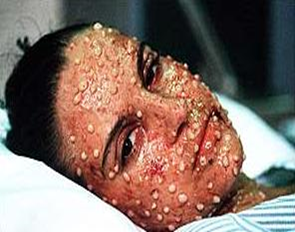
How was the function of the immune system discovered? 

Smallpox (天花):Caused by the variola [və'raiələ] (天花) virus. It enters the body through the lungs and is carried in the blood to the internal organs and the skin where it multiplies. 

More details on smallpox, check the following website:

https://www.medicinenet.com/smallpox/article.htm#smallpox_facts
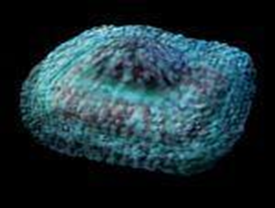

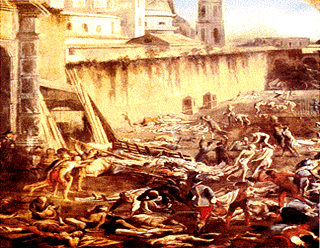
The greatest killer in human history:

It was responsible for estimated 300–500 million deaths during the 20th century 

It causes blood poisoning, secondary (继发性) infections or internal bleeding in severe cases

The earliest disease found to induce life-long immunity.
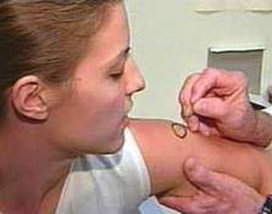


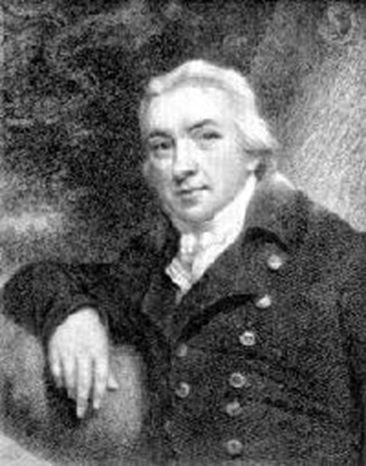
Edward Jenner  爱德华·詹纳  (1749-1823)

Hedeveloped a safe vaccine for smallpox: cowpox (牛痘)


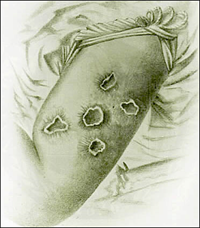
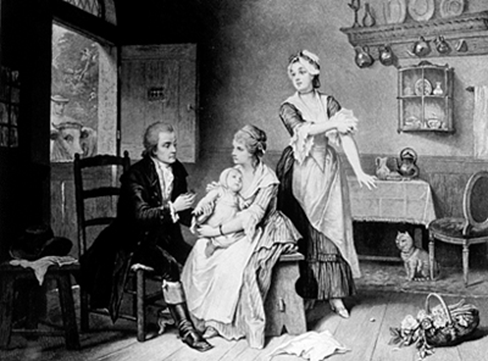
Edward Jenner tested vaccination against smallpox on various patients.

Etymology on Vaccination:

1800, used by British physician Edward Jenner (1749-1823) for the technique he devised of preventing smallpox by injecting people with the cowpox virus (variolae vaccinae), from vaccine (adj.) "pertaining to cows, from cows" (1798), from Latin vaccinus "from cows," from vacca "cow," a word of uncertain origin. "The use of the term for diseases other than smallpox is due to Pasteur" [OED].


Check the History of Vaccinations and Vaccines:

https://www.verywellfamily.com/information-and-history-about-vaccination-and-vaccines-2633706

The History Of Vaccines And Immunization: Familiar Patterns, New Challenges  By Alexandra Minna Stern and Howard Markel

https://www.healthaffairs.org/doi/full/10.1377/hlthaff.24.3.611