Writing a resume
Typed of resumes
There is no single way to write a resume. There are two main types: chronological resumes, in which we list our educational qualifications and work experiences in chronological order (with the most recent experiences at the top), and functional resumes, which are more like a summary of our life so far. This type allows us to "forget" any negative experiences, which are harder to omit in chronological resumes. However, chronological resumes are the most common, and most employers prefer them. Resumes should be structured in sections, such as educational qualifications, work experience , interests and achievements, and skills. Do not forget to include personal details.
English Resume
一般来说,根据个人经历的不同侧重点,可以选用以下三种形式:
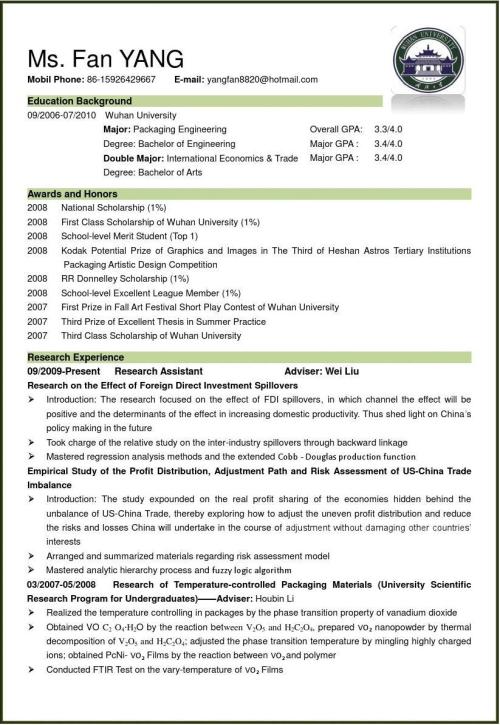
⑴以学历为主的简历 basic resume 这种形式适应于应届毕业生或中学毕业后仍在待业的求职人员,因为没有工作经历,所以把重点放在学业上,从最高学历往下写。
在basic resume中,一般包括下列元素:
a. personal data/Information(个人资料/信息):name(姓名)、address(通讯地址)、postal code(邮政编码)、phone number(电话号码)、birthdate(出生日期)、birthplace(出生地点)、Gender(性别)、height(身高)、weight(体重)、health(健康状况)、date of availability(可到职日期)、number of identification card(身份证号码)。因为是应届毕业生或中学毕业不久,一般没有结婚,因而可省略marital status(婚姻状况)和children(儿女情况)两项。当然,如果是研究生毕业已婚,则应写明。
b. job/career objective(应聘职位)。
c. education(学历):就读学校及系科的名称、学位、始止时间和应聘职位相关的课程与成绩、社会实践、课外活动、奖励等都应一一列出。
d. special skill(特别技能)。
e. hobbies/interests(业余爱好)。如果在学历项目的课外活动中已经注明,此项则不必重复。
⑵以经历为主的简历 chronological resume
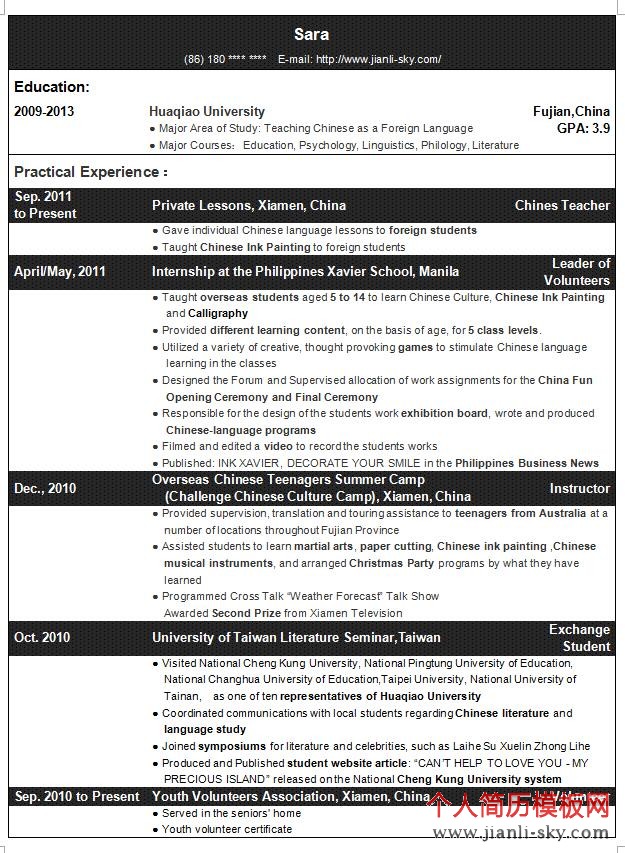
以这种形式出现的英语简历,往往侧重于工作经历,把同应聘职位有关的经历和业绩按时间顺序书写出来,把工作经历放在学历之前。经历和学历的时间顺序均是由近至远。
毫无疑问,这种形式的英语简历适合于有工作经验的求职人员。
在chronological resume中,通常包括以下元素:
a. personal data(个人资料)。具体内容同以学历为主的简历相同,不过,因为你参加工作多年,已进入结婚年龄,所以不管你是否结婚,都应注明婚姻状况和儿女情况。
b. job/career objective 。
c. work experience(工作经历)。务必写明自己在每个工作单位的职位、职责和业绩以及工作起止时间。
d. education(学历):因为你已工作多年,雇主重点考虑你的工作经验是否能胜任你所应聘的职位,所以学历只是一个参考的因素,因而不必象以学历为主的简历那样写得详细,只需注明你就读的校系名称、始止时间和学位即可。
e. technical qualifications and special skills(技术资格和特别技能)。
f. scientific research achievements(科研成果)。
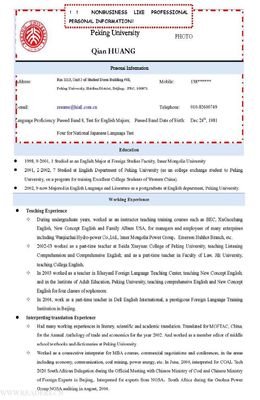
⑶以职能为主的简历 functional resume
这种形式的英语简历,也是突出工作经历,因而所含元素和以经历为主的简历相同。以经历为主的简历和以职能为主的简历的根本差别在于:以经历为主的简历是按时间顺序来排列工作经历,而以职能为主的简历则按工作职能或性质来概括工作经历,并无时间上的连贯性,旨在强调某些特定的工作能力和适应程度。比方说,你曾经在两个不同的工作单位担任相同的职务或负责相同的业务,便可归纳在一个项目之中。
折叠编辑本段写作技巧
首先,英文简历要写清楚自己的姓名,地址,联系方式-比如电话或者电子邮箱等等的基本信息。一般采用居中的方式,其他的则居左就可以了。如下:
Name
Address
Phone No. home
Cell Phone No.
E-mail Add
接着,要写objective(求职 意向)。这一栏是最重要的一项了。很多公司主要看这一项的内容是否跟他们所要求的一致或者接近。比如:
objective:
a sales management or business development position where my strategic and consultative selling,cross-cultural relationship building,team facilitation,business management,organizational insight,and advanced technical skills will be continually challenged. i aspire to senior management responsibility and seek a company that embraces growth and change,where compensation is performance-based and increased levels of responsibility offered those with demonstrated potential. (销售经理职位或者和企业发展有关的职位,可以使我的战略头脑、销售能力、建立跨文化关系的能力、团队能力、商务管理能力、组织能力和先进的技术能力都能够进一步的发挥和进步。……)
上面这个例子是老外的简历中的原句,当然对中国人来说比较复杂,如果对 英语 要求不高的话,其实也不需写这么多。一般来说可以直接 翻译 中文 个人简历 中的句子,但是也有很多比较好大家普遍接受的表达方法,由于各行各业不同,而应聘职位也不同,要根据情况而不同,具体请点击查看 英文简历 中各行各业应聘职位用语。但是如果你想要应聘外企或者所应聘的公司对 英语 要求比较高的话就可以把使用的句子修饰一下,当然要在自己的能力范围内哦。
另外要注意的是,如果工作经验很多,也没有必要完全列举出来,可以挑几项自己感觉最得意的或者对自己提升最大的来写。
下面要写summary了,也就是(个人简介)。这可是展现自己能力的一个好机会,既要赞美自己,又不能使对方觉得自己在自夸。有很多自我赞美的句子,具体请查看 个人简历 中如何用 英语 自我赞美。
experience工作经验。这一点,别人可帮不了你,得自己写。不过以什么样的形式写,我可以给大家一个建议,比如:
2005 - present company
sales executive - financial services
just started an exciting new position selling data integration solutions to the insurance and financial services vertical for pervasive. will try to soon.
上面这个例子中体现的方式是外国人普遍采用的方式。因为外国人从很小的时候就开始独立,那么他们可能从事过很多工作,这种方式即使是罗列很多条也比较清晰,而且还把时间和当时的职位用一种比较明显的方式标注,也能突出重点。职位下面的那句话就是对你所担任的那个职位简单描述了。
再接着要写education(教育背景)。一般从大学开始写起,时间,学校,专业,所获得的学位,还有awards也就是所获的奖项,尤其是特殊奖项等。(注意:如果教育经历不多的话一般教育和背景写在一起,但是如果教育背景或者奖项很突出的话,则可以另列一栏。)
以上这些是必写的内容。还有一些可以有选择性的写,比如:associations(参加的社团组织),一般公司对计算机或者外语能力都有一定的要求,所以还可以写自己的computer background(计算机能力)和language skills,最后还可以写一栏personal profile(个人评价),比如:
a dynamic,articulate,talented leader,manager and sales professional who inspires confidence and respect,grasps ideas and concepts quickly,is adept at organizing complex projects,recognizes or s solutions to problems,believes in setting and achieving goals,and possesses the integrity and commitment to high quality performance that produces outstanding results of lasting value.
除此之外,还可以加上一些个人情况,像婚姻情况,身体状况,业余爱好等等。
折叠编辑本段数字写法
One billion thirty-seven million three hundred and seventy-one thousand five hundred and eighty-four
除此之外,数字的写法也能让您的简历更加丰富
折叠编辑本段写作原则
英文简历和一般中文简历的表现方式稍有不同,就整体来说,一份能够积极展现个人特色、优点以及潜力的英文履历是比较容易得到主试者青睐的。那么,英文简历的书写有哪些基本原则呢?
1. 勇于表现个人风格,不要拘泥形式
英文简历没有所谓的固定形式,你必须衡量自身以及职务需求,打造最能凸显优势的内容呈现方式,并且格式要自行设计。往往履历本身的整体独创性也会是列入评分的项目之一。以所附的模板为例,有时候你可能不一定要写出"professional Qualities"(技能以及专长)这个项目,或甚至"Summary"(经历概要)来加以代替,这些都完全取决于你自己的弹性。
2. 文章以条列编排为最高原则
主试者可能每天要看的履历不只上百封,停留在一份履历的时间顶多不超过10~20秒的时间。因此建议将文章内容以条列方式呈现,让主试者在短短的时间内能马上抓住这份履历的重点。
3.尽量控制在一张以内的份量
一份厚厚的简历对忙碌的人事主管来说会是个可怕的梦魇。因此即使有再辉煌的事迹值得陈述,还不如多费一点心思设计你的版面,务必以不超过两张纸为原则。
4.搭配求职信(coverletter)
求职信兼任着自我推荐的角色,是英文履历不可或缺的搭档。有了她,你的履历将威力倍增喔。另外下表说明在撰写履历以及求职信时,建议可以参考你个人工作经历的长短以及是否有职业上的转型等来做一些重点调整。
5.英文简历并不需要附上照片
除非应征的公司有所要求,否则一般并不需要贴上照片。

