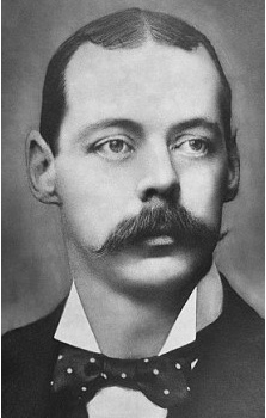
1. Winston Churchill 温斯顿·丘吉尔(1874–1965,于1940–1945及1951–1955期间两度任英国首相)
Winston Churchill was a British politician and statesman known for his leadership of the United Kingdom during the Second World War. He is widely regarded as one of the great wartime leaders and served as Prime Minister twice. A noted statesman and orator, Churchill was also an officer in the British Army, a historian, a writer, and an artist. To date, he is the only British prime minister to have received the Nobel Prize in Literature, and he was the first person to be made an honorary citizen of the United States.
2. Randolph Churchill
伦道夫·丘吉尔(1849–1895,英国政治家,温斯顿·丘吉尔的父亲)
Lord Randolph Churchill was a British statesman. He was the third son of the 7th Duke of Marlborough. He was the father of the future wartime Prime Minister of the United Kingdom, Sir Winston Churchill, who wrote the first major biography of Lord Randolph.
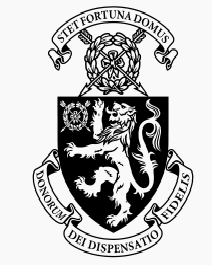
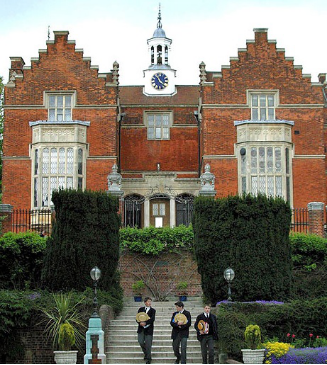
3. Harrow (Harrow school) 哈罗公学(英国一所著名的男生寄宿学校,创建于1572年)
Harrow School, known simply as “Harrow”, is an English independent school for boys situated in the town of Harrow, in north-west London. There is some evidence that there has been a school on the site since 1243 but the Harrow School we know today was officially founded by John Lyon under a Royal Charter of Elizabeth I in 1572. The school invented football and squash.
The school has an enrollment of approximately 850 boys spread across twelve boarding houses, all of whom board full time.
Harrow has many traditions and rich history, which include the use of boaters, morning suits, top hats and canes as uniform.
Its long line of famous alumni include eight former Prime Ministers (including Churchill, Baldwin, Peel, and Palmerston), numerous foreign statesmen, former and current members of both houses of the UK Parliament, two Kings and several other members of various royal families, 19 Victoria Cross holders, and a great many notable figures in both the arts and the sciences.
It is one of the original nine English public schools as defined by the Public Schools Act 1868. It is widely considered one of the best secondary schools in the world along with its famous rival Eton. Good Schools Guide said the school “Does well, does the boys well, couldn’t do better”.
4.Sandhurst 桑赫斯特(英国陆军军官学校所在地)
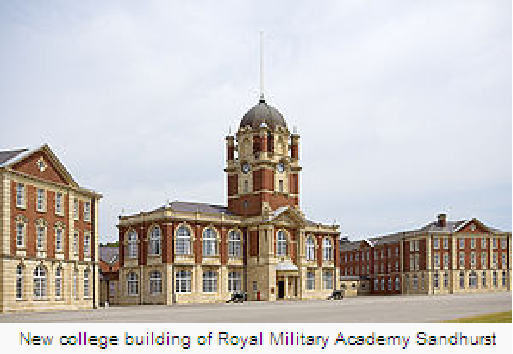
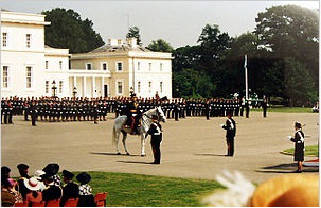
The Royal Military Academy Sandhurst (RMAS), commonly known simply as Sandhurst, is a British Army officer initial training centre located in Sandhurst, Berkshire, England. The Academy’s stated aim is to be “the national centre of excellence for leadership”. All British Army officers, including late entry officers who were previously Warrant Officers, as well as many from elsewhere in the world, are trained at Sandhurst.
The Academy is the British Army equivalent of the Britannia Royal Naval College Dartmouth, Royal Air Force College Cranwell and the Commando Training Centre Royal Marines.
5. the Boer War 布尔战争
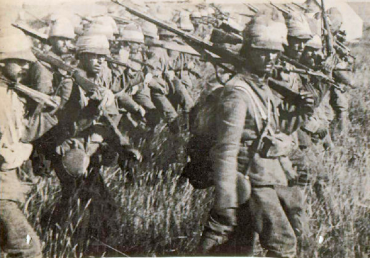
The Boer Wars were two wars (1880-1 and 1899-1902) fought between the British Empire and the two independent Boer republics, the Orange Free State and the South African Republic (the descendants of the Dutch settlers [Boers] in Africa). The British won the war in the end.
The Boer War in our text means the second one.
6. MP (Member of Parliament) 议员;下院议员
A Member of Parliament is a representative of the voters to a parliament. In many countries with bicameral parliaments, the term applies specifically to members of the lower house, as upper houses often have a different title, such as senate, and thus also have different titles for its members, such as senators. Members of parliament tend to form parliamentary groups (also called parliamentary parties) with members of the same political party. In everyday use, the term Member of Parliament is almost always shortened to the initialism “MP”, and this is also common in the media.
7. Tory (英国的)保守党党员;保守党支持者
Tory (another name for the Conservative Party), Liberal, and Labour are the three main British political parties.
8. Oldham 奥尔德姆市(英国西北部城市)
The city is named after its largest town, Oldham. Since the council’s formation it has generally been under the control of the Labour Party. Since 2011, the Labour Party has had overall control and now holds 45 of the 60 seats on the council, the largest share of seats for the party since the borough was formed in 1974.
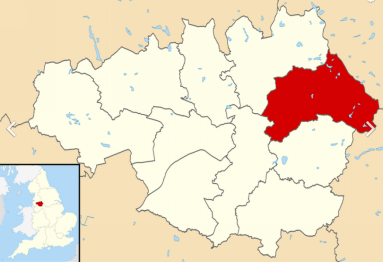
Oldham shown within Greater Manchester and England
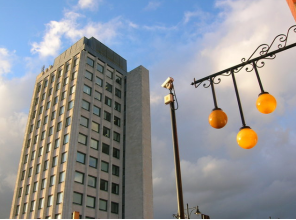
9.Blenheim Palace 布莱尼姆宫
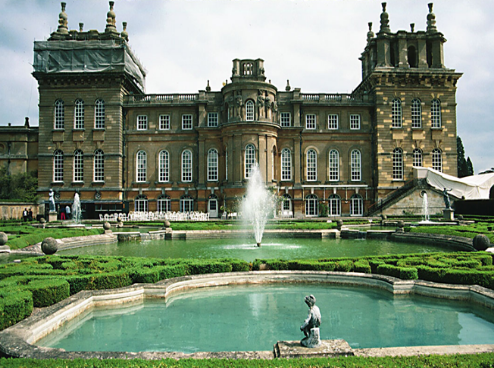
Blenheim Palace was built for John Churchill, Duke of Marlborough as a reward for winning the battle of Blenheim in 1704. It is also the birthplace of Sir Winston Churchill.
10. First Lord of the Admiralty 海军大臣
The earlier Lords High Admiral were mostly members of the Royal family. The first such First Lord of the Admiralty was Richard Weston who was appointed in 1628. In 1964, the office of First Lord of the Admiralty was abolished and the functions of the Sea Lords were then transferred to the Admiralty Board, which forms part of the tri-service Defence Council of the United Kingdom.
11. Gallipoli 加利波利(位于土耳其北部)
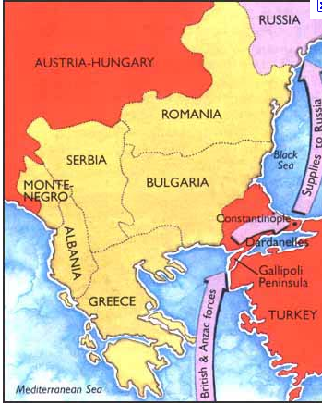
Gallipoli is a village in Northern Turkey. It was a scene of a major campaign of the First World War which took place on the Gallipoli peninsula, on the European side of the Dardanelles, in 1915–1916. The Allies (with heavy involvement of troops from Australia and New Zealand) hoped to gain control of the strait, but the campaign reached stalemate after each side suffered heavy casualties.
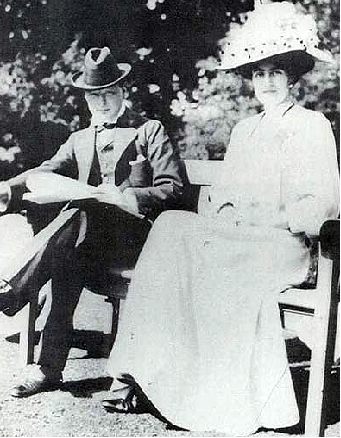
12. Clementine (Clementine Churchill)克莱门泰因·丘吉尔 (1885–1977,温斯顿·丘吉尔的妻子)
Clementine Churchill was the wife of Sir Winston Churchill and a life peeress in her own right. She did charity work, but mainly devoted herself to looking after her husband and bringing up their five children.
13. Chancellor of the Exchequer (英国)财政大臣
The Chancellor of the Exchequer is the title held by the British Cabinet minister who is responsible for all economic and financial matters. Often simply called the Chancellor, the office-holder controls HM Treasury and plays a role akin to the posts of Minister of Finance or Secretary of the Treasury in other nations. The position is considered one of the four Great Offices of State and in recent times has come to be the most powerful office in British politics after the Prime Minister. It is the only office of the four Great Offices not to have been occupied by a woman.
14. Chartwell 查特威尔(丘吉尔静养居所,位于英国东南部)
Chartwell is the name of Churchill’s grand country house in Kent, south-east England. Churchill and his wife Clementine bought the property in 1922. Extensive renovations simplifying and modernizing the home were undertaken directly, completely transforming it when it is complete.
When it became clear to the Churchills in 1946 that they could not afford to run the property, a consortium of wealthy businessmen organized by Lord Camrose purchased the estate. The arrangement was that for payment of nominal rent both Sir Winston and Lady Churchill would have the right to live there until their deaths, when the property would be presented to the National Trust. When Sir Winston died in 1965, Clementine decided to present Chartwell to the National Trust immediately.
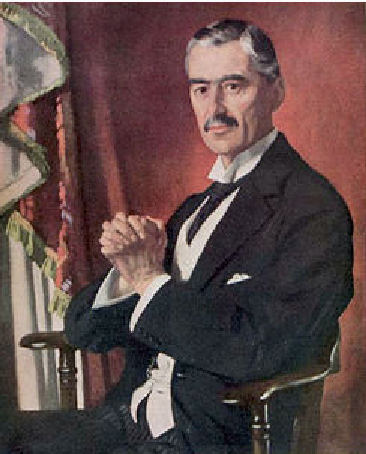
15. Neville Chamberlain 内维尔·张伯伦(1869-1940,1937–1940任英国首相)
Arthur Neville Chamberlain was a British politician who served as Prime Minister of the United Kingdom from 1937 to 1940.
Chamberlain was best known for his appeasement foreign policy. When Adolf Hitler continued his aggression, Britain declared war on Germany on 3 September 1939, and Chamberlain led Britain through the first eight months of World War II.
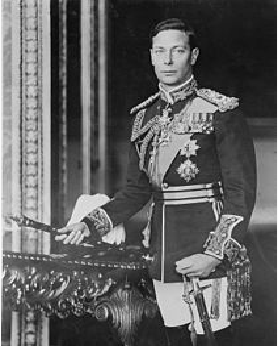
16.King George VI 乔治六世(1895–1952,英国国王,1936–1952在位)
George VI was King of the United Kingdom and the Dominions of the British Commonwealth from 11 December 1936 until his death. He was the last Emperor of India, and the first Head of the Commonwealth.
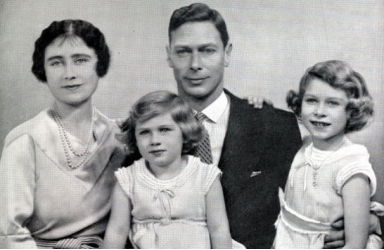
King George VI, his wife and children
(the right: Queen Elizabeth II )
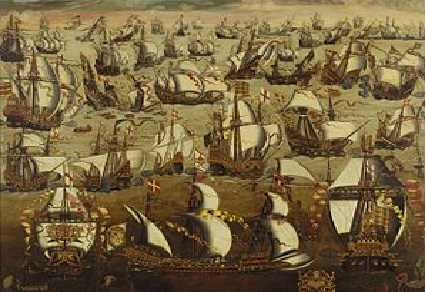
17.Armada (16世纪西班牙的)无敌舰队
The Spanish Armada was the Spanish fleet that sailed against England under the command of the Duke of Medina Sidonia in 1588, with the intention of overthrowing Elizabeth I of England to stop English involvement in the Spanish Netherlands and English privateering in the Atlantic and the Pacific ocean.
18. Trafalgar 特拉法尔加(西班牙西南部港口城市)
Trafalgar is a seaport in south-west Spain, but also the site of a naval battle in 1805, won by Admiral Lord Nelson.
19. Dunkirk 敦刻尔克(法国东北部港口城市)
Dunkirk is a French channel port. When the British force had to retreat from Dunkirk in 1940, all the soldiers were rescued, many by small fishing boats, and this was seen as a triumph.
20. the Battle of Britain 不列颠之战
The Battle of Britain was a series of air battles in the Second World War, which fought over Britain from August to October 1940. The British defeated the German air force, and stopped Hitler’s plan to invade the UK.
21. the Blitz 德国对英国的空袭(指第二次世界大战期间德国对伦敦及英国其他城市的空袭)
The Blitz (from German, “lightning”) was the sustained strategic bombing of Britain by Nazi Germany between 7 September 1940 and 10 May 1941, during the Second World War. The city of London was bombed by the Luftwaffe for 76 consecutive nights and many towns and cities across the country followed. More than one million London houses were destroyed or damaged, and more than 40,000 civilians were killed, half of them in London.
22. Agincourt 阿金库尔战役
Agincourt was the scene of a great victory by Henry V of England in 1415, against a much larger French army.


