目录

  • 1 课程资料
    • 1.1 教学大纲
    • 1.2 授课计划
  • 2 开学第一课
    • 2.1 Aims 目标
    • 2.2 Content 内容
    • 2.3 Action 行动
    • 2.4 Task 今日任务
  • 3 项目一 武汉二日游
    • 3.1 团前业务提升: Incidents while Escorting Tour Group
    • 3.2 团前业务提升2:Introduction  with a Focus on Key Events  突出重点法
    • 3.3 突出重点的几个方面
    • 3.4 突出重点的运用技巧及三孔景区导游讲解训练
    • 3.5 Day 1 Yellow Crane Tower
    • 3.6 Day 2 East Lake
  • 4 项目二 安徽二日游
    • 4.1 团前业务提升1:Documents and Luggage Lost
    • 4.2 团前业务提升2:Yi Culture
    • 4.3 Day 1 Tunxi Ancient Street
    • 4.4 Day 2 Tangyue Memorial Archways
  • 5 项目三 四川二日游
    • 5.1 团前业务提升:Suspense-Creating Introduction
    • 5.2 制造悬念法的场景运用技巧及三孔景区导游讲解训练
    • 5.3 Day 1 (morning) Wuhou Temple
    • 5.4 Day 1(afternoon) Sanxingdui Museum
    • 5.5 途中问题处理:Tourist Missing
  • 6 项目四 山西二日游
    • 6.1 团前业务提升2:Qiang Culture
    • 6.2 团前业务提升1:Illness and Care
    • 6.3 Day 1 Rishengchang Exchange Shop
    • 6.4 Day 2 Wang'  s Compound
  • 7 项目五 重庆二日游
    • 7.1 团前业务提升1:First Aid
    • 7.2 First Aid
    • 7.3 团前业务提升2:Giving a Crucial Touch to the Picture
    • 7.4 画龙点睛法的运用技巧
    • 7.5 画龙点睛法的场景运用
    • 7.6 画龙点睛法的运用技巧及兖州兴隆文化园景区导游词讲解训练
    • 7.7 Day 1 Ciqikou
    • 7.8 Day 2 White Emperor City
  • 8 项目六 三亚二日游
    • 8.1 团前业务提升:Traffic Accidents
    • 8.2 团前业务提升:Li Culture
    • 8.3 Day 1 Tianya Haijao
    • 8.4 Day 2 Yalong Bay
  • 9 项目七 山东二日游
    • 9.1 团前业务提升:Section-by-Section Introduction
    • 9.2 分段讲解法的运用技巧
    • 9.3 Day 1 Mount Taishan
    • 9.4 Day 2 Qufu
  • 10 项目八 西安一日游
    • 10.1 团前业务提升:Regulations
    • 10.2 Day 1 (morning) Da Ci en Temple
    • 10.3 Day 1(afternoon) Big Wild Goose Pagoda
  • 11 项目九 西藏之旅
    • 11.1 Tibet 资源
    • 11.2 团前业务提升1:Quitting Tour and Extending Travel Time
    • 11.3 团前业务提升2:Descriptive Introduction
    • 11.4 概述法的场景运用技巧
    • 11.5 团前业务提升3:Tibetan Culture
    • 11.6 Day 1 Lhasa - Potala Palace
  • 12 项目十 走进客家文化
    • 12.1 团前业务提升1:Complaints
    • 12.2 Handling Complaints
    • 12.3 团前业务提升2:Farewell Speech
    • 12.4 Farewell
    • 12.5 The Hakka Culture
    • 12.6 Farewell Speech 课本原文
    • 12.7 Wolong Nature Reserve
    • 12.8 引人入胜讲解方法
  • 13 英文讲解范例
    • 13.1 英文讲解
  • 14 讲解方法(复习上学期内容)
    • 14.1 制造悬念法(分段讲解法、设疑法、问答法)运用技巧
    • 14.2 突出重点法的运用技巧
    • 14.3 虚实结合法的运用技巧
    • 14.4 类比法的运用技巧
    • 14.5 导游词创作技巧
    • 14.6 问答法的场景运用技巧
    • 14.7 虚实结合法的使用方法
    • 14.8 虚实结合法的运用技巧及汶上宝相寺导游讲解训练
    • 14.9 类比法的使用方法
    • 14.10 类比法的运用技巧及学院天工园导游讲解训练
    • 14.11 常见旅游团团型特点
    • 14.12 自然风光类(风景名胜区)导游词讲解训练
    • 14.13 宗教类(佛教、道观)导游词撰写讲解训练
    • 14.14 建筑类(故宫、孔府、孔庙)导游词讲解训练
    • 14.15 非遗技艺技能类(山东非遗景点)导游词讲解训练
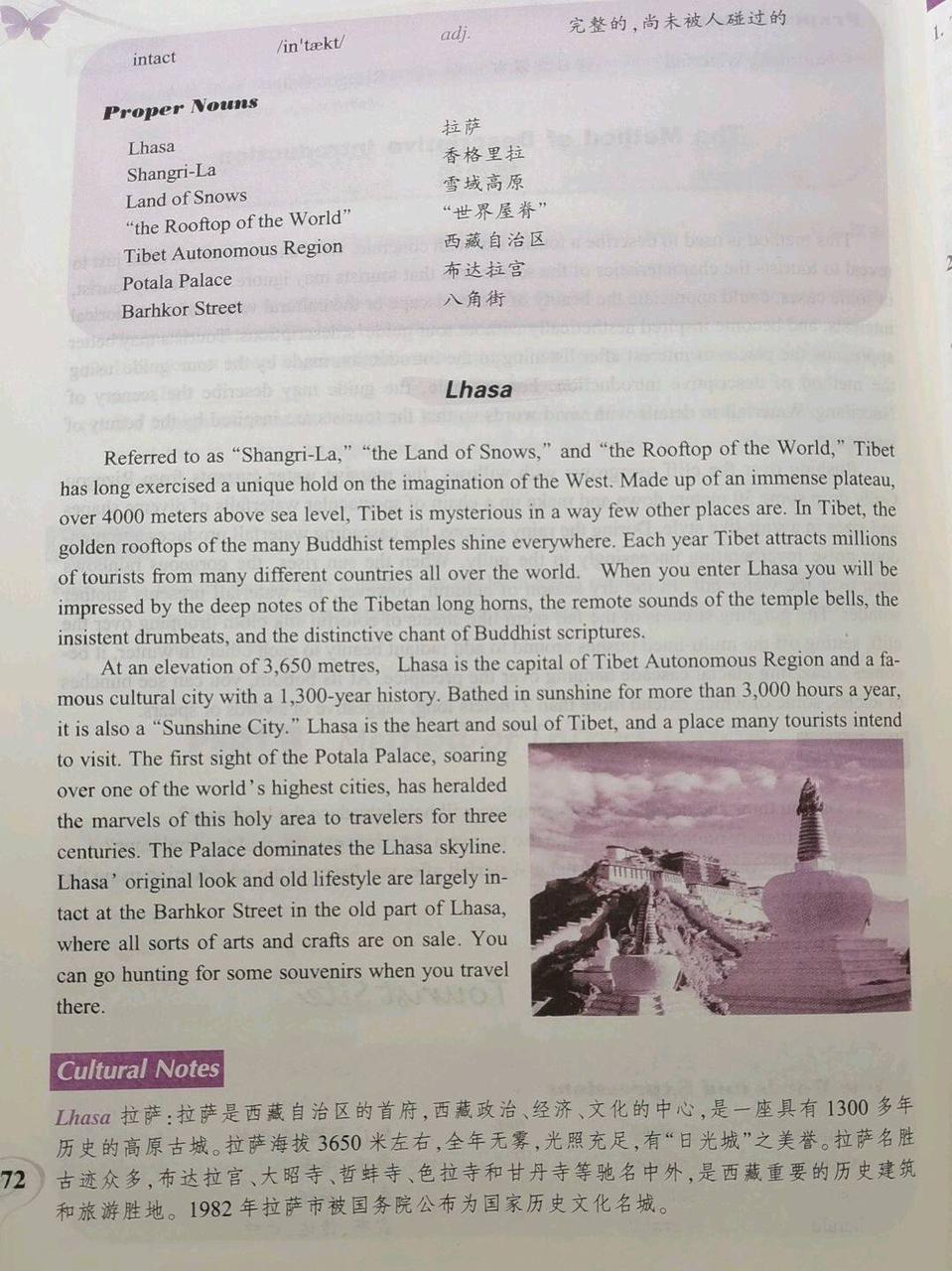
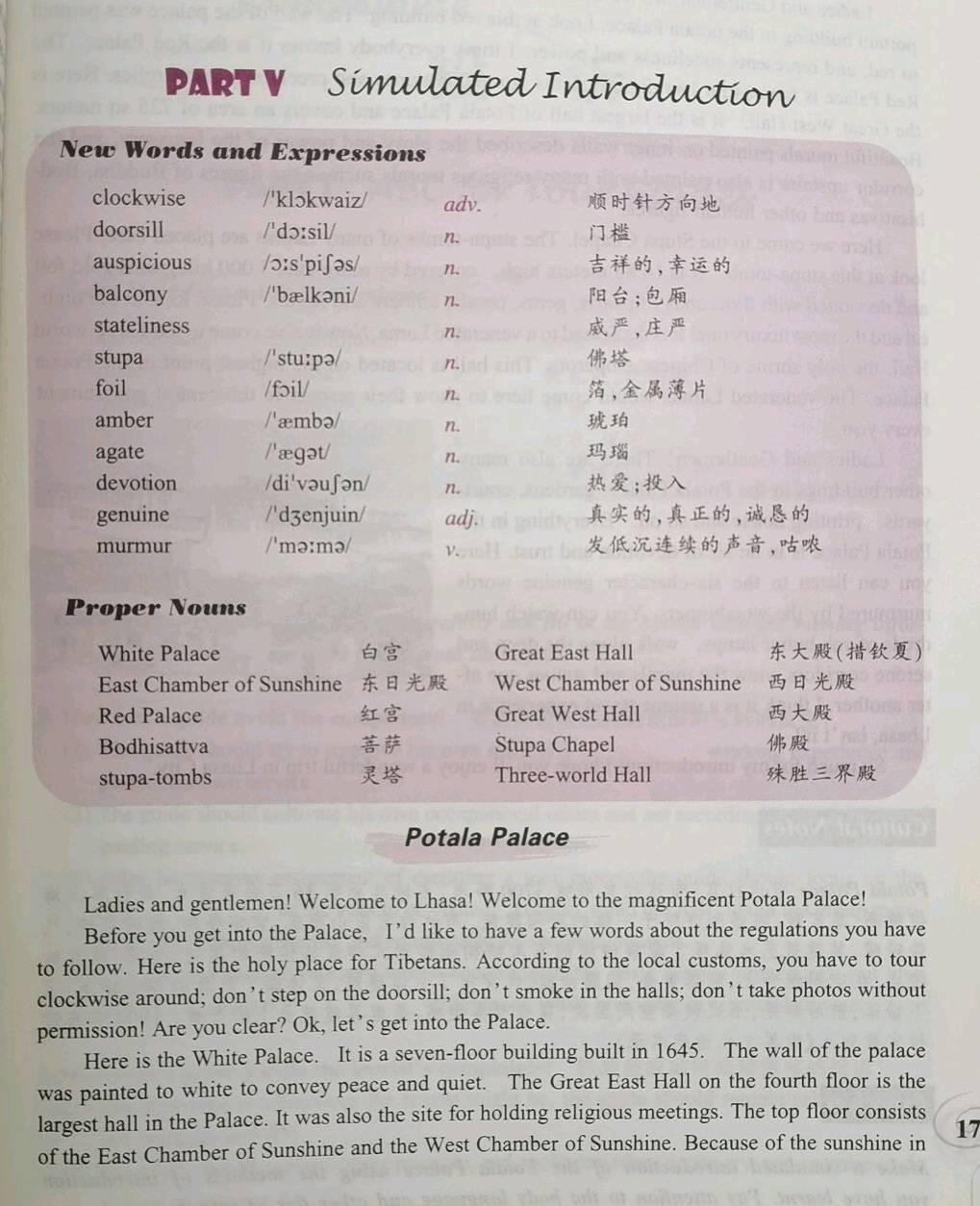
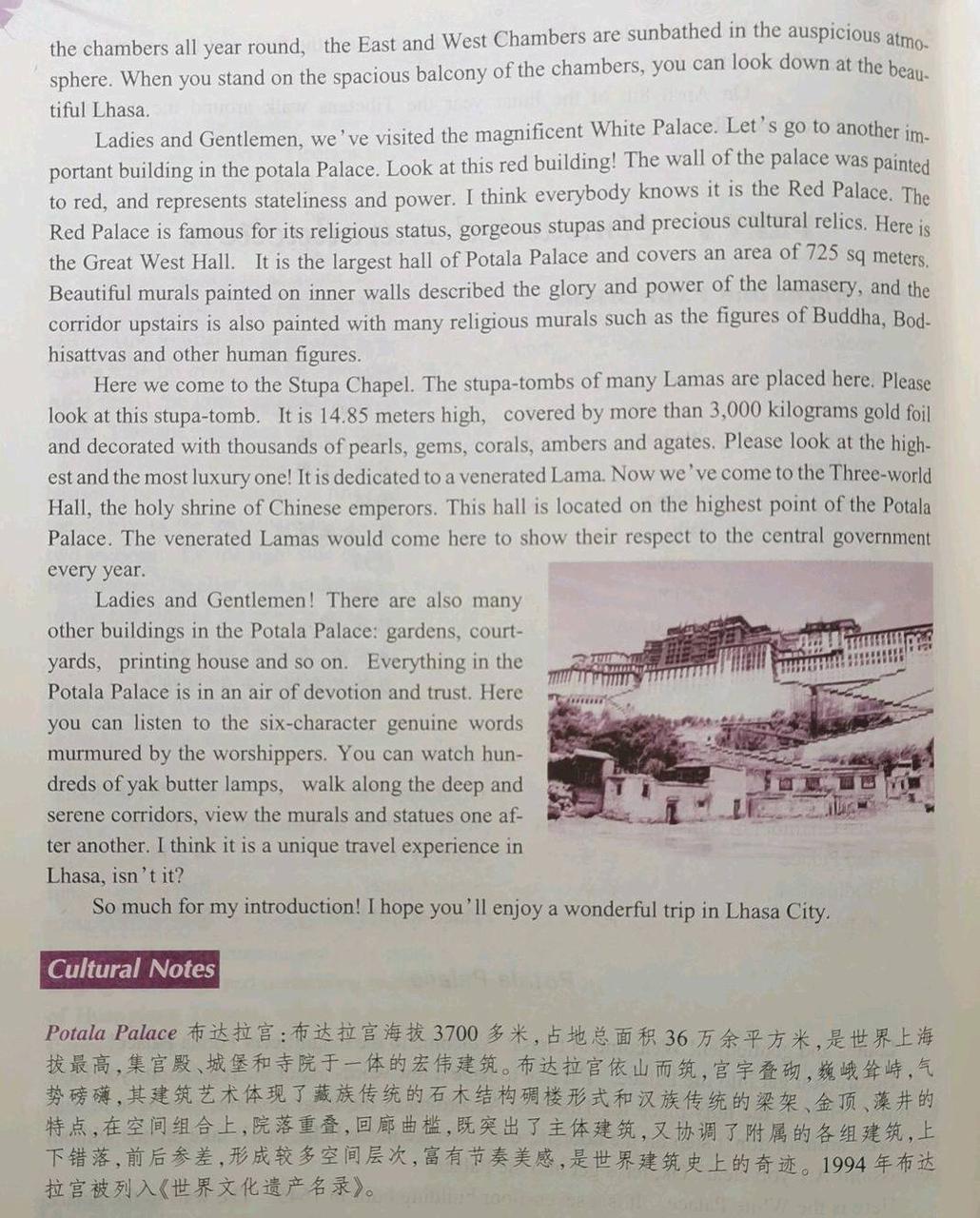
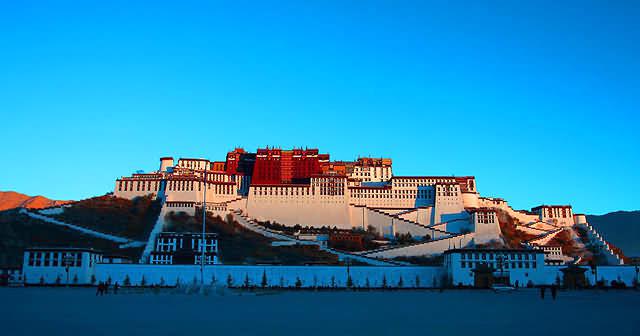
Day 1 Lhasa - Potala Palace


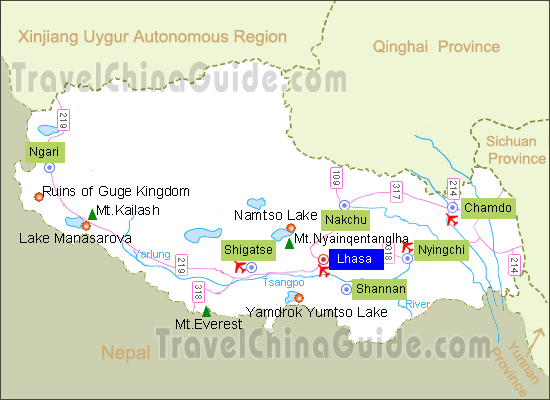
The  Potala Palace is located in Lhasa, Tibet. It was named after Mount Potala, an important mountain in Buddhist traditions. The Potala Palace was the chief residence of all Dalai Lamas until the 14th Dalai Lama fled to Dharamsala, India after an invasion and failed uprising in 1959. Today the Potala Palace has been converted into a museum by Chinese authorities.


The Palace buildings stand 13 stories high and contain over 1,000 rooms, 10,000 shrines and 200,000 statues. These tower 117 meters (384 ft) above Marpo Ri, means "Red Hill", and more than 300 meters (1,000 ft) above the valley floor. Tradition says that the three main hills of Lhasa represent the "Three Protectors of Tibet."


The site was used as a meditation retreat by King Songtsen Gampo, who in 637 built the first palace there in order to greet his bride, Princess Wencheng of China's Tang Dynasty. Lozang Gyatso, the Great Fifth Dalai Lama, started construction of the Potala Palace in 1645 after one of his spiritual advisers, Konchog Chophel, pointed out that the site was ideal as a seat of government, situated as it is between Drepung and Sera monasteries and the old city of Lhasa.


The Dalai Lama and his government moved into Potala's Potrang Karpo ('White Palace') in 1649. Construction lasted until 1694, some twelve years after his death. The Potala was used as a winter palace and the chief residence of the Dalai Lama from that time on. The Potrang Marpo ('Red Palace') was added between 1690 and 1694 and got its name from a hill on Cape Comorin at the southern tip of India. This is a rocky point sacred to the God of Mercy, whom the Indians call Avalokitesvara and the Tibetans worship as Chenrezi. The Tibetans themselves rarely speak of the sacred place as the "Potala", but rather as "Peak Potala" (Tse Potala), or usually as "The Peak."