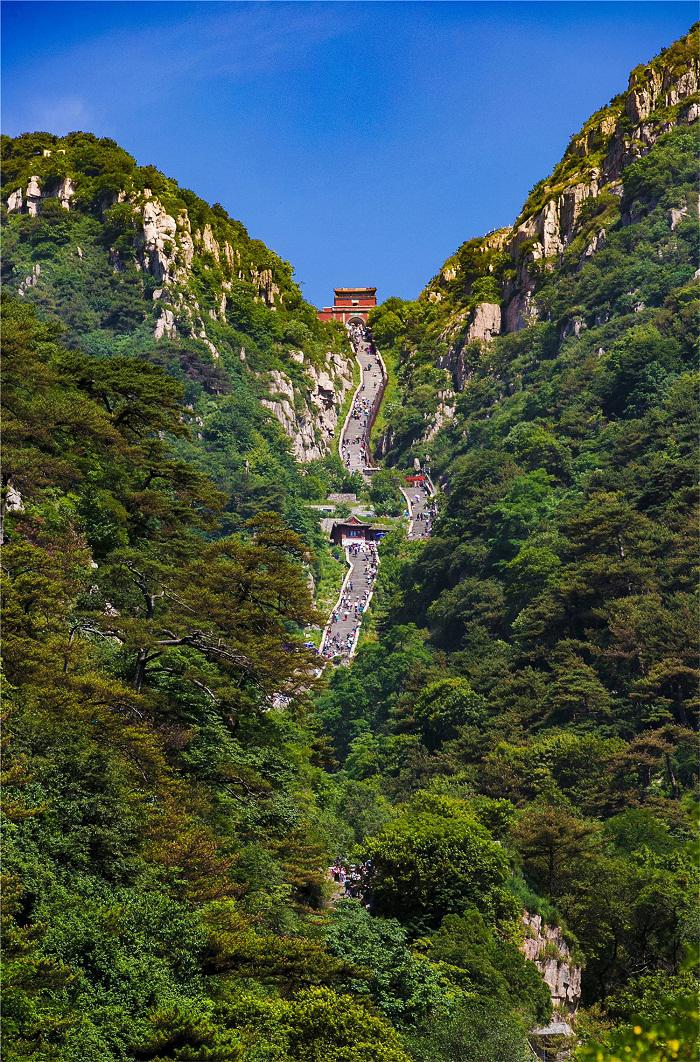
Mount Tai, located in Tai'an, East China's Shandong province.
As one of the five most famous mountains in China, Mount Tai occupies a special place in the country's long history, and it has been described as a symbol of the enduring Chinese spirit.
泰山(Mount Tai),世界文化与自然双重遗产,世界地质公园,全国重点文物保护单位,国家重点风景名胜区,国家AAAAA级旅游景区。
Mount Taishan, the leader of the 'Five Sacred Mountains', Taishan Mountain is located in the center of Shandong Province, lying across the cities of Tai'an, Jinan and Zibo. Its main peak, Jade Emperor Summit, which is within Tai'an City, is about 1532.7 meters (5,029 feet) high.
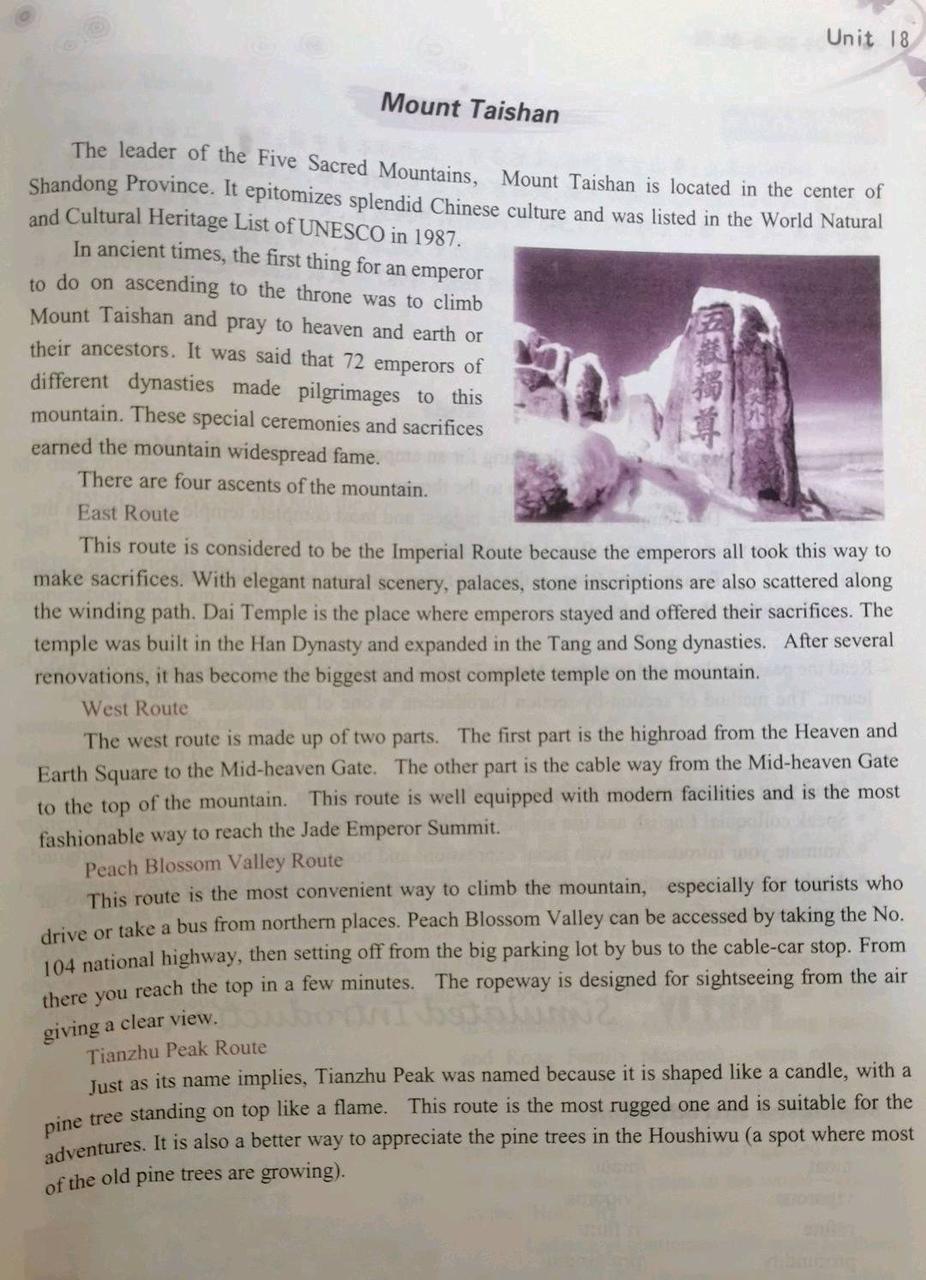
The mountain was once called Mt. Daishan, Mt. Daizong or Mt. Taiyue and was renamed Mt. Taishan in the Spring and Autumn Period (770BC-476BC). It epitomizes splendid Chinese culture and was listed in the World Natural and Cultural Heritage List of UNESCO in 1987.
In ancient times, the first thing for an emperor to do on ascending to the throne was to climb Taishan and pray to heaven and earth or their ancestors. It was said that 72 emperors of different dynasties made pilgrimages here. These special ceremonies and sacrifices earned the mountain widespread fame. In addition, many poets and literary scholars also visited the mountain to gain inspiration. The grandiose temples, the numerous stone inscriptions and stone tablets are the best testaments to these visits. Mount Tai also played an important role in the development of Buddhism and Taoism.
The stone carvings on Mount Taishanmuseum abounding with cultural relics and artworks. Heavenly Queen Pool, Red Gate Palace, Mid-Heaven Gate, Azure Cloud Temple are powerful examples. Stone carvings include the Buddhist Diamond Sutra in Jing Shi Valley, the Scripture of Taishan Mountain and the Mo Ya Tablet.
Besides historic relics, this mountain boasts unique natural scenery too. The lofty peaks, deep valleys, spectacular waterfalls, enchanting rocks and the centuries-old pines and cypresses will undoubtedly encourage you linger with no thought of leaving. The four wonders here are Sunrises from the East, the Sunset Glow, the Sea of Clouds and the Golden Belt along the Yellow River. It would be a great pity to miss the four wonders.
There are four ascents here.
East Route
This route is considered to be the ImperialThe steep stairs, Mount Taishan Route because the emperors all took this way to make sacrifices. With elegant natural scenery, palaces, stone inscriptions are also scattered along the winding path. You set off from Dai Temple, and then you will see Dai Zong Archway, Red Gate Palace, Jing Shi Valley, Hu Tian Pavilion and Eighteen Bends, etc. Dai Temple is the place where emperors stayed and offered their sacrifices. The temple was built in the Han Dynasty and expanded in the Tang and Song Dynasties. After several renovations, it has become the biggest and most complete temple on the Mount Tai.
There are 6000-plus steps along this route and it takes about four hours at an average to reach the peak. This classical route is an ideal choice for most people.
West Route
The west route is made up of two parts. The first part is the highroad from the Heaven and Earth Square to Mid-heaven Gate. The other part is the cable way from Mid-heaven Gate to the top of the mountain. This route is well equipped with modern facilities and is the most fashionable way to reach Jade Emperor Summit. Attractions concentrated on this route are Heaven and Earth Square, Black Dragon Pool, Tomb of General Feng Yuxiang and Longevity Bridge, etc.
Peach Blossom Ravine Route
This route is the most convenThe peak of Mount Taiient way to climb the mountain, especially for tourists who drive or take a bus from northern places. Peach Blossom Ravine can be accessed by taking the No.104 national highway, then setting off from the big parking lot by bus to the cable-car stop. From there you reach the top in a few minutes. The ropeway is designed for sightseeing from the air giving a clear view.
The best time to take this route is in spring and summer. The flourishing peach blossom, falling petals and limpid steams will make you feel like you are in heaven.
Tianzhu Peak Route
Just as its name implies, Tianzhu Peak was named because it is shaped like a candle, with a pine tree standing on top like a flame. This route is the most rugged one and is suitable for the adventurous. You will enjoy General Peak, Eight Immortals Cave, Big Tianzhu Peak and Small Tianzhu Peak, etc. It is also a better way to appreciate the pine trees in Hou Shi Wu (a spot where most of the old pine trees are growing).
Taishan Mountain is a perfect combination of natural scenery and cultural relics and is well worth visiting.
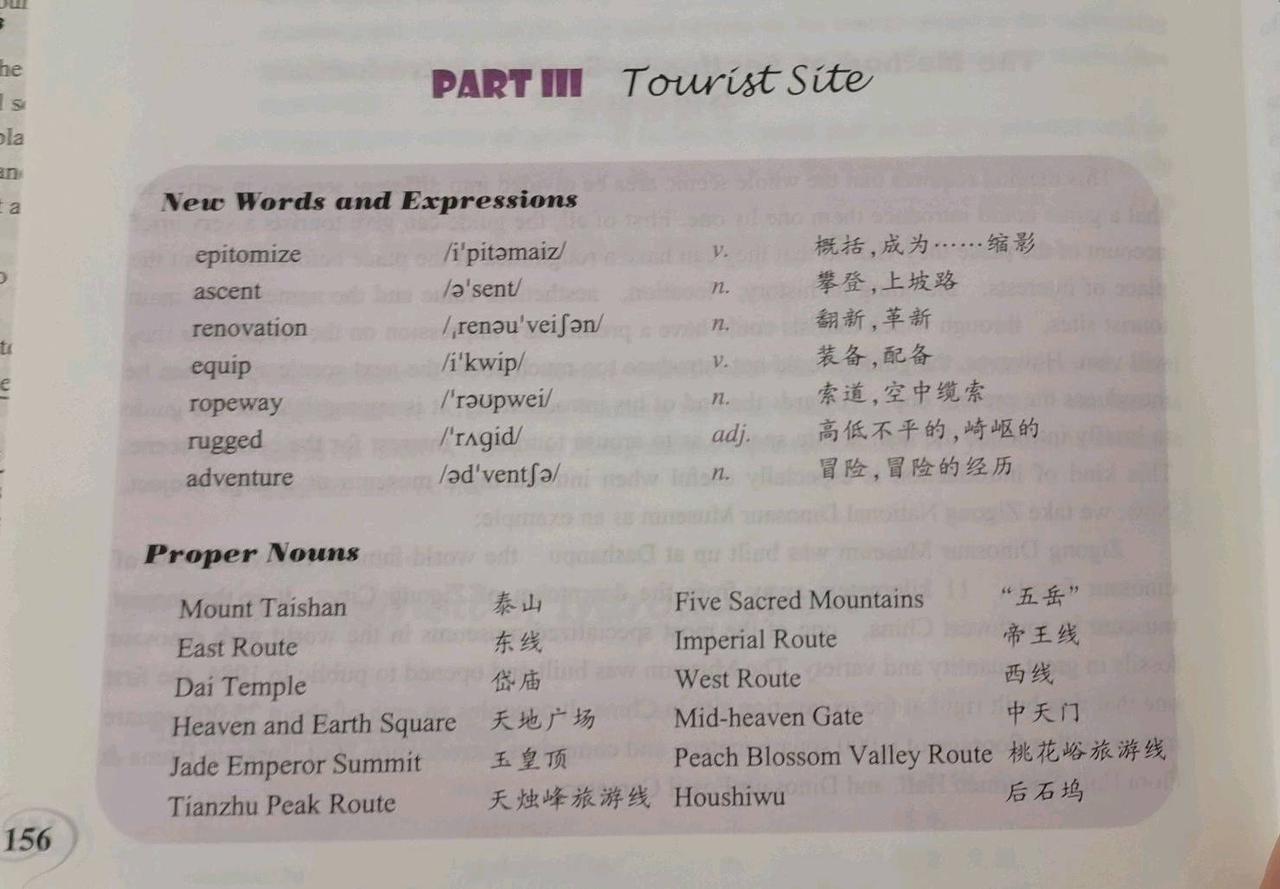
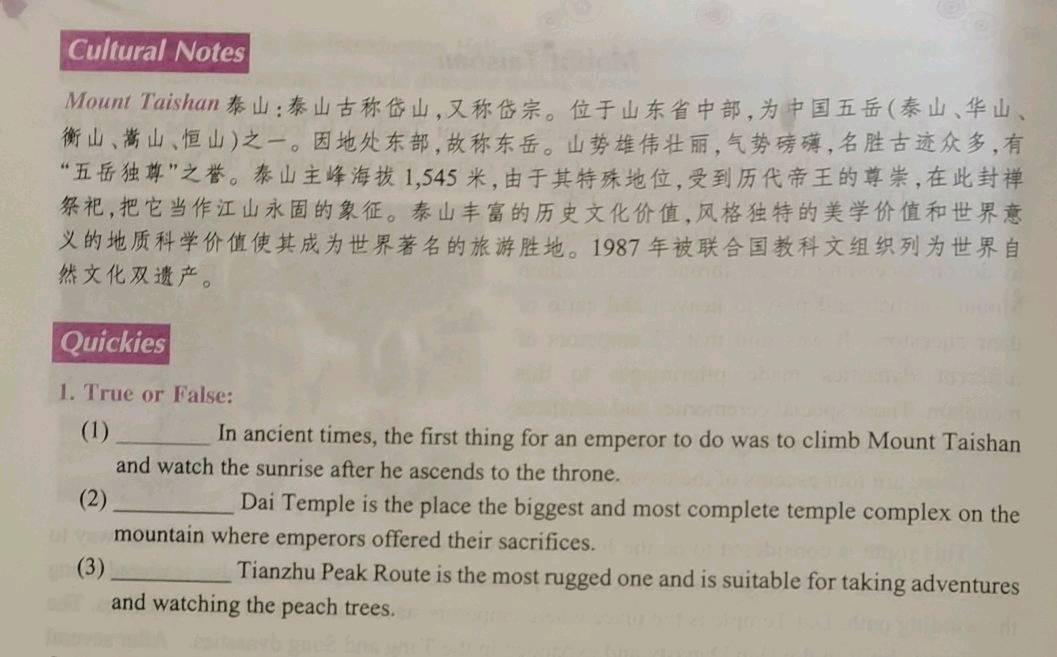
泰山位于山东省泰安市中部,主峰玉皇顶海拔1545米,气势雄伟磅礴,有“五岳之首”、“天下第一山”之称。在汉族传统文化中,泰山一直有“五岳独尊”的美誉。自秦始皇封禅泰山后,历朝历代帝王不断在泰山封禅和祭祀,并且在泰山上下建庙塑神,刻石题字。
泰山风景以壮丽著称,重叠的山势,厚重的形体,苍松巨石的烘托,云烟的变化,使它在雄浑中兼有明丽,静穆中透着神奇。最为有名的是“泰山四大奇观”。
泰山位于山东省泰安市中部,素有“五岳之首”之称。传说泰山为盘古开天辟地后其头颅幻化而成,因此中国人自古崇拜泰山,有“泰山安,四海皆安”的说法。历代帝王君主多在泰山进行封禅和祭祀,各朝文人雅士亦喜好来此游历,并留下许多诗文佳作。
泰山拥有交横重叠的山势,堆叠厚重的形体,辅以苍松、巨石和环绕的烟云,形成了肃穆与奇秀交织的雄壮景象。这里出产的灵芝、何首乌、板栗及核桃等特产享誉全国。而分布于山体各处的20余处古建筑群和2200余处碑碣石刻,使泰山成为世界少有的历史文化与自然相结合的游览胜地。