-
1 知识储备——拔丝...
-
2 实训示例——拔丝...
-
3 拓展学习资料(&nb...
知识储备——拔丝
Knowledge reserve——Wire drawing technique
【技法介绍】/Introduction to techniques
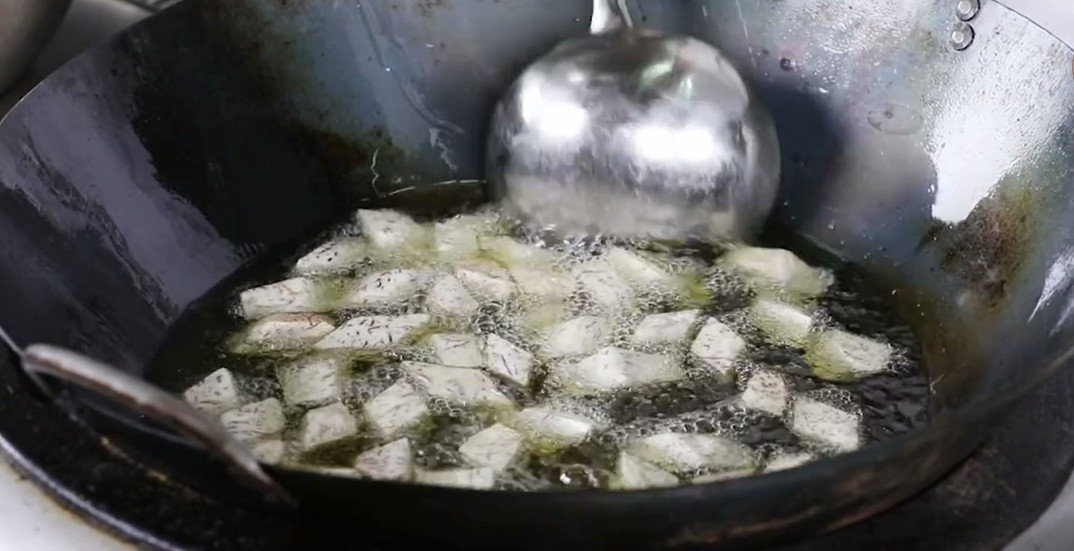
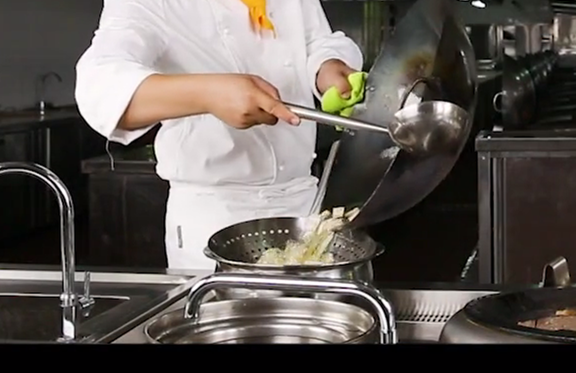
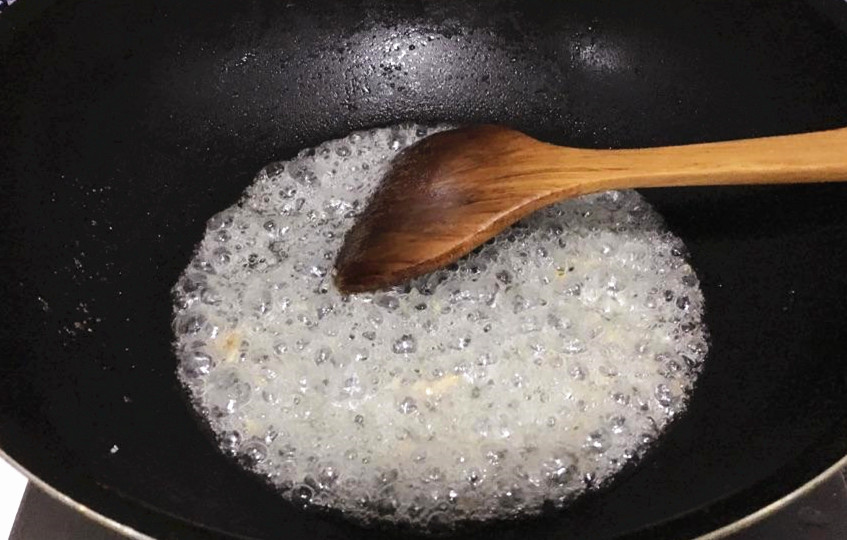
主料先经油炸香脆后,捞起沥干油,然后将白糖炒溶至适当程度,放主料入糖液中粘裹均匀后装碟,稍冷即能拔出长长细细的糖丝,称为拔丝法。拔丝是中国甜菜制作的基本方法之一,它的制作关键是制糖浆。
After the main ingredients are fried and crisp, pick up and drain the oil, then fry and dissolve the white sugar to an appropriate degree, put the main ingredients into the sugar solution, stick and wrap them evenly, and then put them on a plate. When it is slightly cold, you can pull out the long and thin sugar filaments, which is called wire drawing method. Wire drawing is one of the basic methods of sugar beet production in China. The key to its production is syrup.
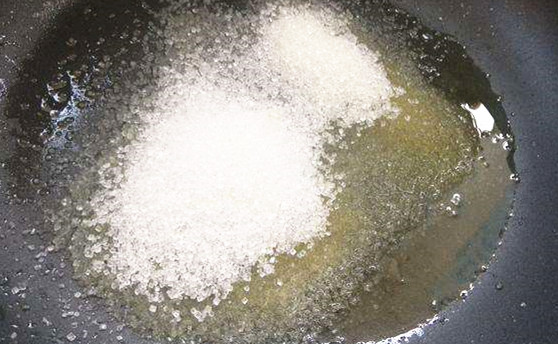
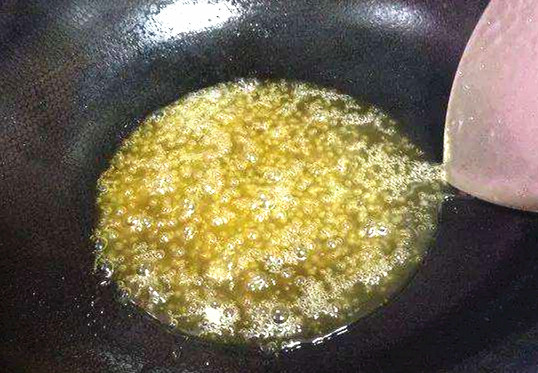
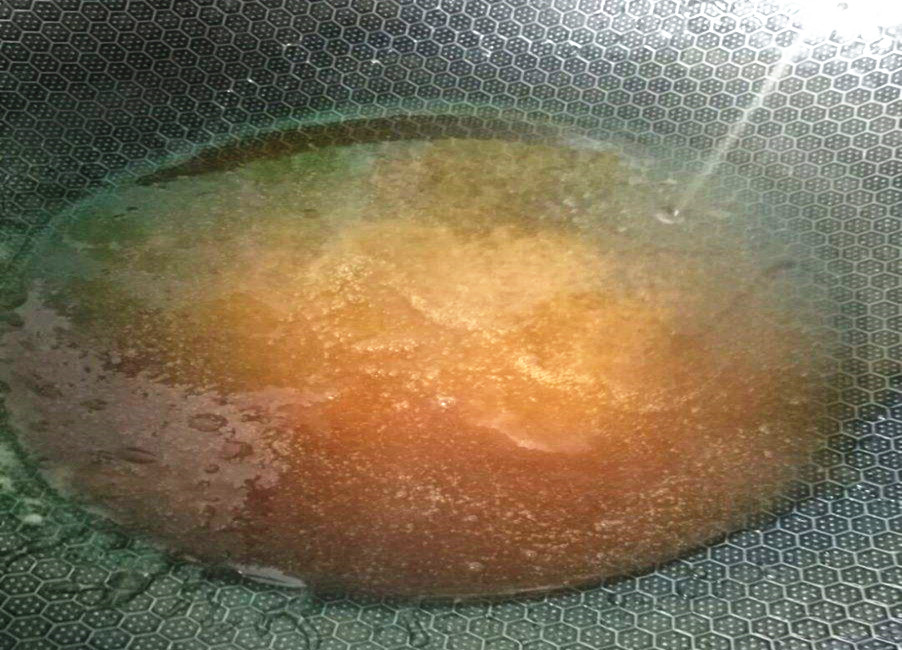
拔丝糖浆熬制有油拔法、水拔法、水油混合拔法和干拔法4种。油拔法是以油为传热介质,使糖溶化出丝的一种方法。这种方法的特点是传热快,温度高,加热时间短,拔出的丝明光油亮,丝细而长。水拔法就是以水为传热介质熬制糖液的一种方法。由于水的沸点为100℃,糖液不易上色,因此,水拔出来的糖液颜色较浅,挂糖后的菜肴成品显得晶莹透亮,丝长且脆。水油混合拔法就是爱炒锅内先放入少量油花锅,再加入适量的水,待水沸腾后加入糖,用中小火进行熬制,水起到溶解糖的作用,油起到保温和光泽的作用。这种方法的特点是糖丝明光油亮,口感酥脆,速度比水拔法快,比油拔法慢。干拔法就是不放水、不放油,锅中只放糖直接炒糖的方法。这种方法的特点是花费时间稍,上菜快,丝颜色较深。
There are four ways to boil silk drawing syrup: oil drawing method, water drawing method, water oil mixed drawing method and dry drawing method. Oil drawing method is a method that takes oil as the heat transfer medium to melt sugar into silk. This method is characterized by fast heat transfer, high temperature, short heating time, bright and bright wire, thin and long wire. Water drawing method is a method of boiling sugar liquid with water as heat transfer medium. Since the boiling point of water is 100 ℃, the sugar liquid is not easy to color. Therefore, the color of the sugar liquid pulled out by water is relatively light, and the finished dishes after hanging sugar appear crystal clear, long and crisp. The mixing method of water and oil is to put a small amount of oil flower pot into the frying pan, then add an appropriate amount of water, add sugar after the water boils, and boil it with medium and small fire. The water plays the role of dissolving sugar, and the oil plays the role of heat preservation and luster. The characteristic of this method is that the sugar silk is bright and oily, the taste is crisp, and the speed is faster than the water extraction method and slower than the oil extraction method. Dry pulling method is a method of directly frying sugar without water or oil and only sugar in the pot. This method is characterized by a little time-consuming, fast serving and dark silk color.
【技法要求】/Technical requirements
1.熬制时要正确掌握好水、油、糖的比例,如果掌握不好会造成不出丝或拔丝的效果不好的现象。
1. The proportion of water, oil and sugar should be properly controlled during boiling. If it is not well controlled, it will lead to the phenomenon of no silk or poor effect of wire drawing.
2.掌握好火候。如果蔗糖达到溶点温度时继续加热,当温度升至190℃至220℃时,蔗糖就会失水形成粘稠的黑褐色焦糖,使拔丝失败。
2. Master the heat. If the sucrose reaches the melting point temperature and continues to be heated, when the temperature rises to 190 ℃ to 220 ℃, the sucrose will lose water and form viscous dark brown caramel, making the wire drawing fail.
3.油炸好的主料在入锅前必须净油分,否则会使糖液难以均匀地包裹在原料上。
3. The fried main ingredients must be separated from the oil before being put into the pot, otherwise it will be difficult for the sugar liquid to wrap evenly on the raw materials.
4.糖液炒好倒入炸好的主料后,要将锅端离火口炒拌,因为此时糖液温度较高,粘性很小,不能裹上原料,锅离开炒拌糖液温度就会下降,温度下降后糖液粘性就会增加,这样才能均匀地包裹在原料上。
4. After the sugar liquid is fried and poured into the fried main material, the end of the pot should be fried and mixed away from the fire, because at this time, the sugar liquid temperature is high and the viscosity is very small, so it can not be wrapped with the raw material. When the pot leaves the frying and mixing, the sugar liquid temperature will drop, and the viscosity of the sugar liquid will increase after the temperature drops, so that it can be evenly wrapped on the raw material.
5.盛装拔丝菜肴的盘子要事先抹油或用菜叶垫在盘子中,以避免糖液粘上盘子。
5. The plates containing silk drawing dishes should be greased or padded with vegetable leaves in advance to avoid sugar sticking to the plates.
6.拔丝菜肴上桌速度要快。在冬天制作时可在菜肴盘子底部垫上一碗开水一起上桌,以起到保温作用,这样可以防止糖液冷却过快,保证上桌后能拔出丝来。
6. The speed of silk drawing dishes should be fast. When making in winter, a bowl of boiled water can be padded at the bottom of the dishes and served together to keep warm, which can prevent the sugar liquid from cooling too fast and ensure that the silk can be pulled out after serving.
【代表菜品】/Representative dishes
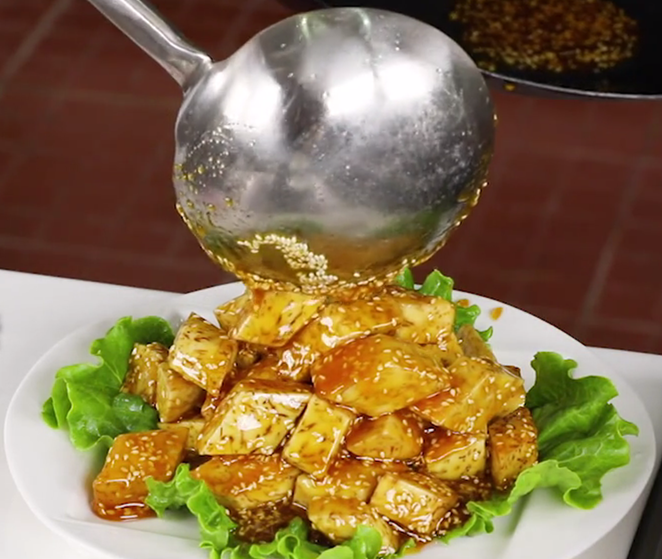
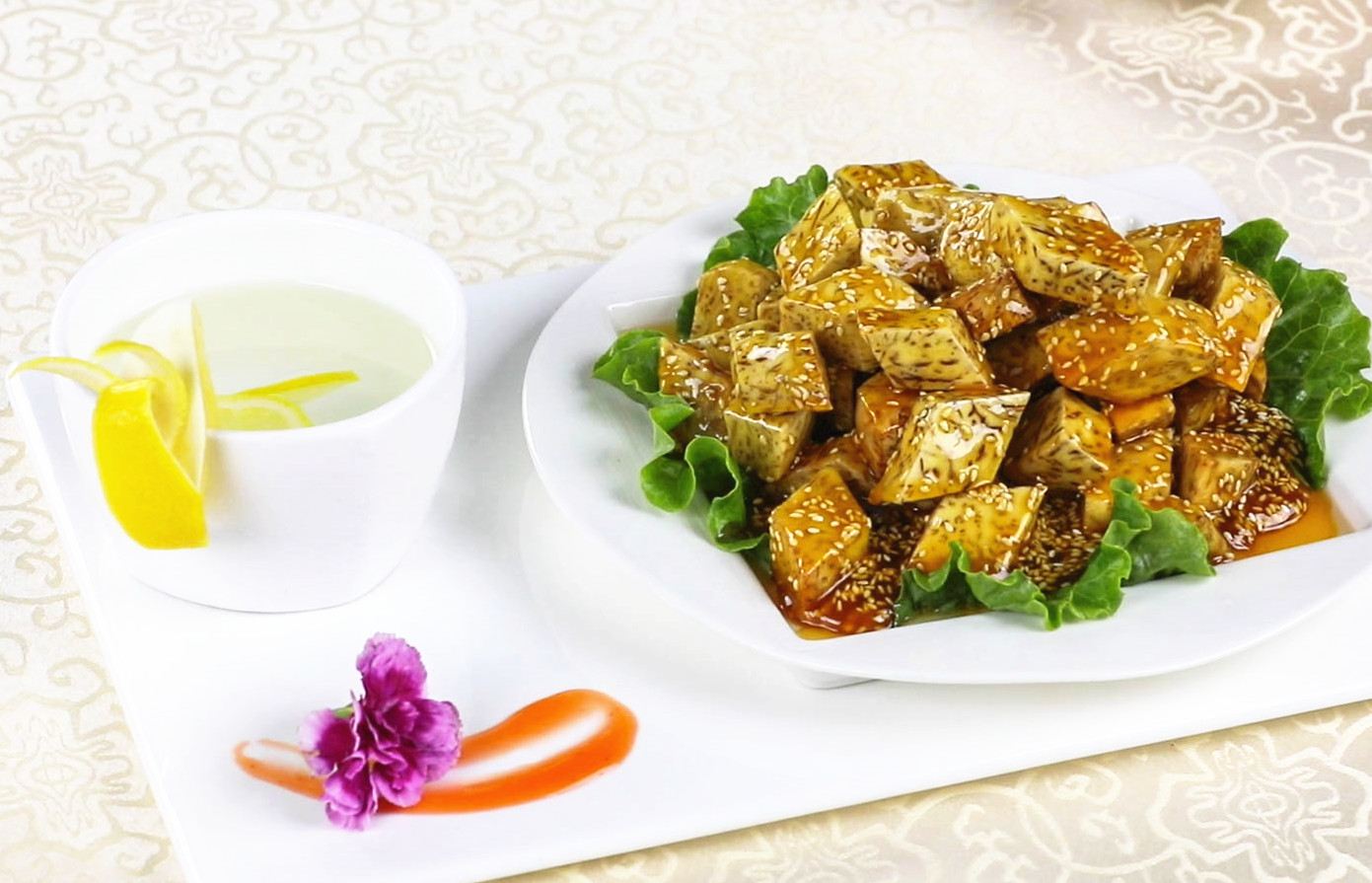
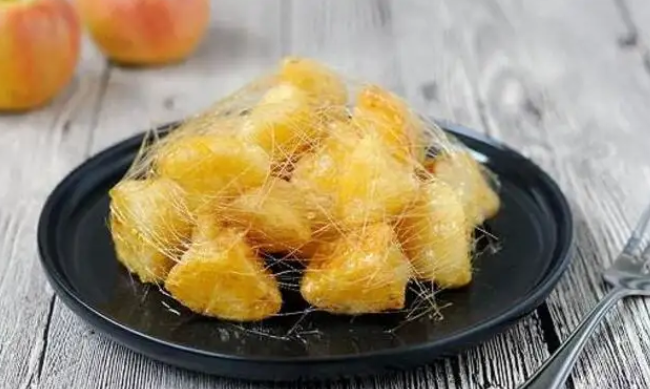
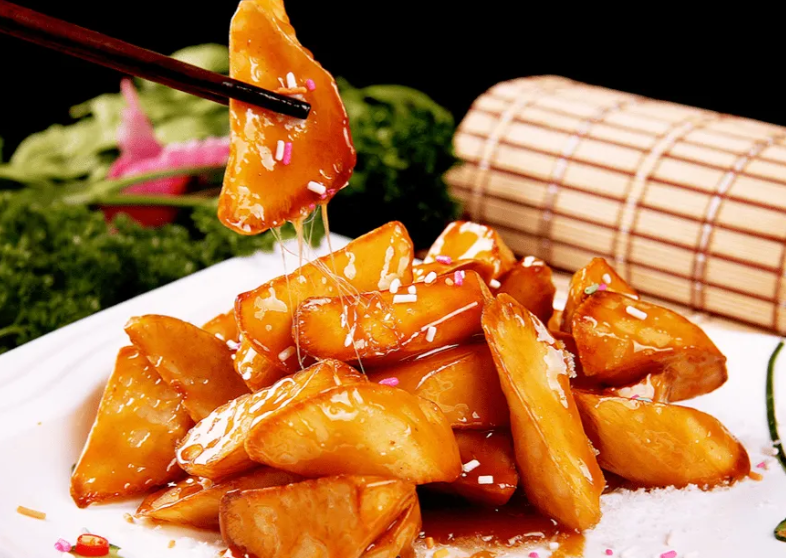
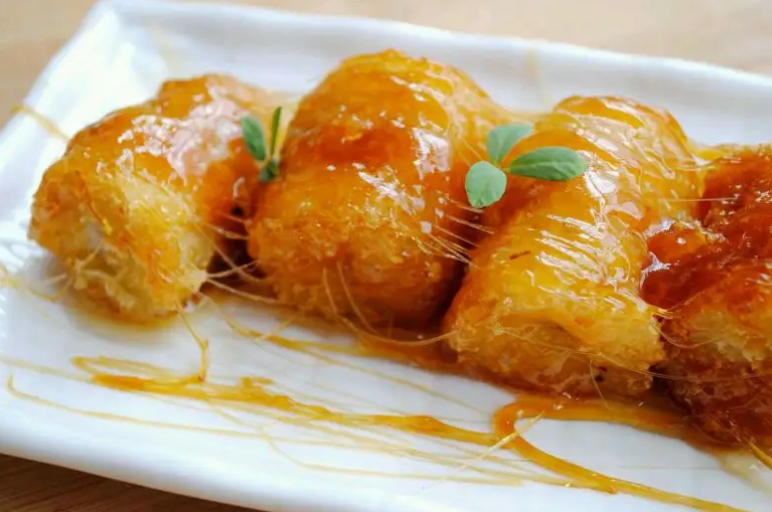
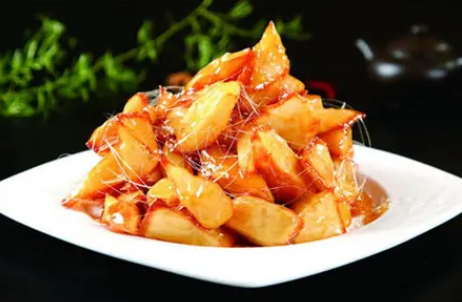
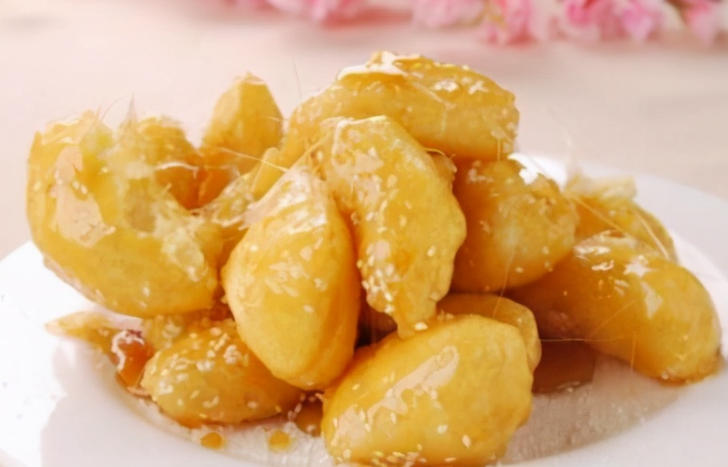
山东菜“拔丝苹果”、“拔丝金枣”、“拔丝香蕉”,北京菜“拔丝山药”,四川菜“拔丝红薯”,广西菜“拔丝马蹄”等。
Shandong cuisine "Silk apple", "Silk golden jujube", "Silk banana", Beijing cuisine "Silk yam", Sichuan cuisine "Silk sweet potato", Guangxi cuisine "Silk horseshoe", etc.
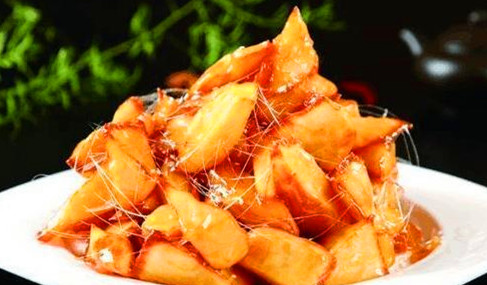 图 6-5-1 拔丝红薯 Fig. 6-5-1 sweet potato with wire drawing