目录

  • 1 绪论(Introduction)
    • 1.1 中式烹调工艺概述(Overview of Chinese cooking technology)
  • 2 锅烹类技法实训(Pot cooking skills training)
    • 2.1 学习目标(Learning objectives)
    • 2.2 锅烹类技法导读(Introduction to pot cooking techniques)
    • 2.3 项目一:滑炒技法(Item 1: Slippery frying technique)
    • 2.4 项目二:爆炒技法(Item 2: Stir fry technique)
    • 2.5 项目三:清炒技法(Item 3: Clear frying technique)
    • 2.6 项目四:生炒技法(Item 4:Raw frying technique)
    • 2.7 项目五:熟炒技法(Item 5:Cooked frying technique)
    • 2.8 项目六:煸炒技法(Item 6:Stir-fry technique)
    • 2.9 项目七:贴制技法(Item 7:Paste technique)
    • 2.10 项目八:煎制技法(Item 8:Decocting technique)
    • 2.11 项目九:盐焗技法(Item 9:Salt baking technique)
    • 2.12 本章小结(Summary of this chapter)
    • 2.13 本章检测题(Test questions in this chapter)
  • 3 油烹类技法实训(Oil cooking skills training)
    • 3.1 学习目标(Learning objectives)
    • 3.2 油烹类技法导读(Introduction to oil cooking techniques)
    • 3.3 项目一:清炸技法(Item 1:Blasting technique)
    • 3.4 项目二:干炸技法(Item 2:Dry frying technique)
    • 3.5 项目三:纸包炸技法(Item 3:Paper fried technique)
    • 3.6 项目四:卷炸技法(Item 4:Roll blasting technique)
    • 3.7 项目五:碎屑料炸技法(Item 5:Chip blasting technique)
    • 3.8 项目六:泡油炒技法(Item 6:Oil soaking frying technique)
    • 3.9 项目七:红烧技法(Item 7:Braised technique)
    • 3.10 项目八:红扣技法(Item 8:Red button technique)
    • 3.11 项目九:脆熘技法(Item 9:Crispy frying technique)
    • 3.12 本章小结(Summary of this chapter)
    • 3.13 本章检测题(Test questions in this chapter)
  • 4 水烹类技法实训(Practical training of water cooking techniques)
    • 4.1 学习目标(Learning objectives)
    • 4.2 水烹类技法导读(Introduction to water cooking techniques)
    • 4.3 项目一:煮制技法(Item 1:Boiling technique)
    • 4.4 项目二:浸制技法(Item 2:Soaking technique)
    • 4.5 项目三:灼制技法(Item 3:Poaching technique)
    • 4.6 项目四:烩制技法(Item 4:Decocting technique)
    • 4.7 项目五:煲制技法(Item 5:Stewing technique)
    • 4.8 项目六:煨制技法(Item 6:Simmering technique)
    • 4.9 项目七:焖制技法(Item 7:Braiseing technique )
    • 4.10 本章小结(Summary of this chapter)
    • 4.11 本章检测题(Test questions in this chapter)
  • 5 汽烹类技法实训(Steam cooking skills training)
    • 5.1 学习目标(Learning objectives)
    • 5.2 汽烹类技法导读(Introduction to steam cooking techniques)
    • 5.3 项目一:清蒸技法(Item 1:Steaming technique)
    • 5.4 项目二:干蒸技法(Item 2:Dry steaming technique)
    • 5.5 项目三:粉蒸技法(Item 3:Dteaming with flour technique)
    • 5.6 项目四:蒸扣技法(Item 4:Bowl steaming technique)
    • 5.7 项目五:蒸瓤技法(Item 5:Stuffing steaming technique)
    • 5.8 项目六:蒸炖技法(Item 6:Steaming and Stewing technique)
    • 5.9 本章小结(Summary of this chapter)
    • 5.10 本章检测题(Test questions in this chapter)
  • 6 辐射类技法实训(Training of Radiation Cooking Techniques)
    • 6.1 学习目标(Learning objectives)
    • 6.2 辐射类技法导读(Introduction to Radiation Cooking Techniques)
    • 6.3 项目一:明炉烤技法(Item 1:Open-oven roasting technique)
    • 6.4 项目二:暗炉烤技法(Item 2:Closed-oven roasting technique)
    • 6.5 项目三:泥烤技法(Item 3:Mud roasting technique)
    • 6.6 项目四:烘烤技法(Item 4:Baking roasting technique)
    • 6.7 本章小结(Summary of this chapter)
    • 6.8 本章检测题(Test questions in this chapter)
  • 7 特殊类技法实训(Training of Special Cooking Techniques)
    • 7.1 学习目标(Learning objectives)
    • 7.2 特殊类技法导读(Introduction to special techniques Techniques)
    • 7.3 项目一:凉拌技法(Item 1:Cold mixing technique)
    • 7.4 项目二:制冻技法(Item 2:Cold jelly technique)
    • 7.5 项目三:生醉技法(Item 3:live alcohol-saturating technique)
    • 7.6 项目四:熟醉技法(Item 4:Alcohol-cooking technique)
    • 7.7 项目五:拔丝技法(Item 5:Wire drawing technique)
    • 7.8 项目六:制羹技法(Item 6:Thick soup making technique)
    • 7.9 项目七:铁扒技法(Item 7:Grilling technique)
    • 7.10 项目八:熏制技法(Item 8:Smoking technique)
    • 7.11 本章小结(Summary of this chapter)
    • 7.12 本章检测题(Test questions in this chapter)
项目二:制冻技法(Item 2:Cold jelly technique)
  • 1 知识储备——制冻...
  • 2 实训示例——凉冻...
  • 3 拓展学习资料(&nb...

知识储备——制冻

Knowledge reserve——Cold jelly technique

技法介绍/Introduction to techniques

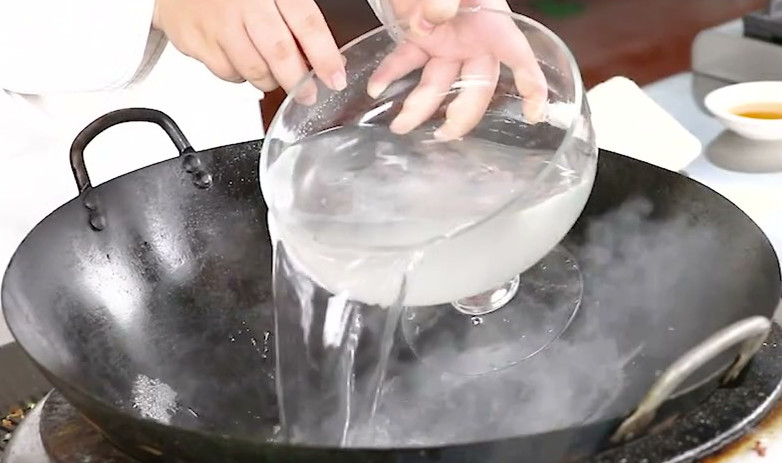
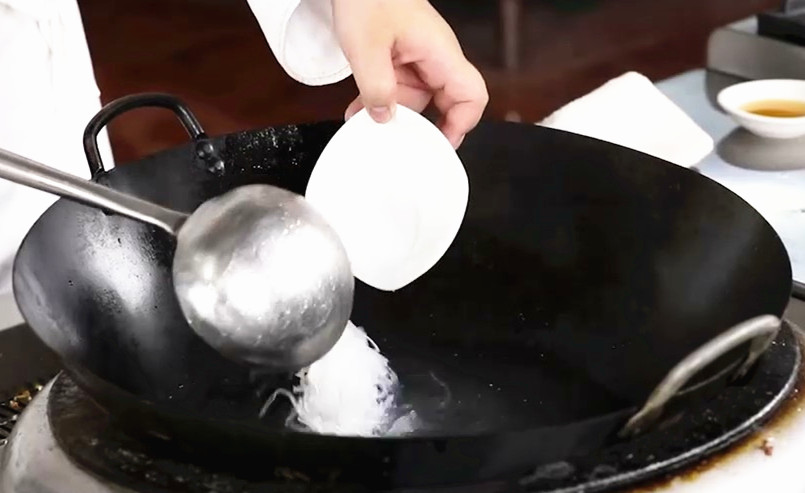
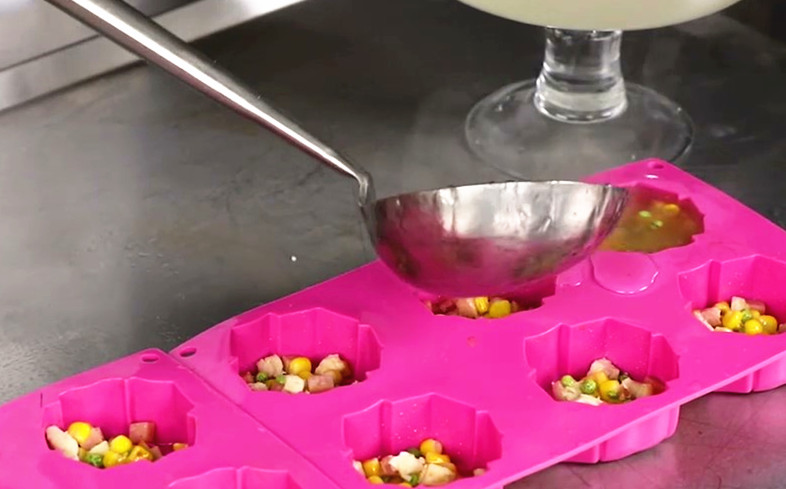
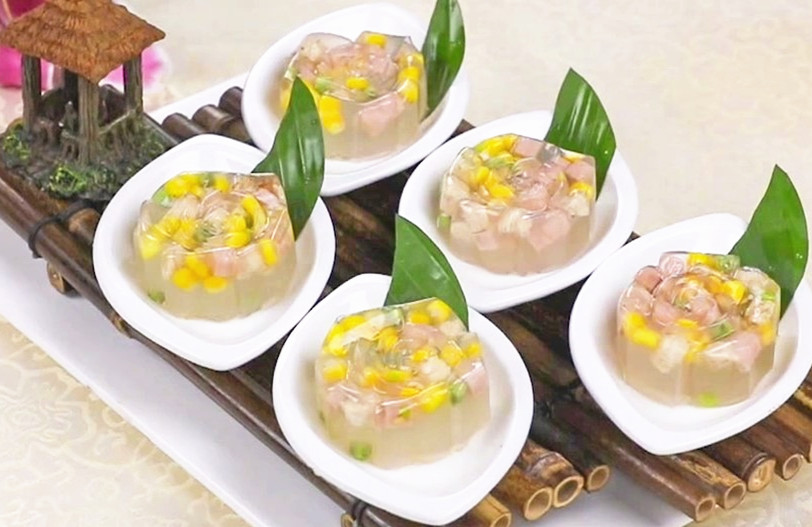
将富含胶原蛋白的原料放入锅中加水慢慢煮烂,使其充分溶解成为较稠的汤汁,经过滤后浇入已加工成熟的原料中,待冷却后形成凝固状态的一种烹调加工方法叫做制冻法。

Put the raw materials rich in collagen into the pot, add water and cook them slowly, so that they can be fully dissolved into thick soup. After filtering, pour them into the processed and mature raw materials, and form a solidified state after cooling. A cooking and processing method is called freezing method.

冻汁多用猪皮、琼脂、明胶、食用果胶或其他带有胶质类的原料制成。冻制菜肴具有晶莹透明,软嫩滑韧,清凉爽口,造型美观的特点。制作胶冻类菜肴主要是利用了蛋白质凝胶作用的原理,尤其是肉皮和含有结缔组织较多的原料中含有大量的胶原蛋白,经加热水煮后产生变性而溶于水中成为胶体溶液,随着温度的降低而凝固成明胶。

Frozen juice is mostly made of pig skin, agar, gelatin, edible pectin or other raw materials with colloid. Frozen dishes have the characteristics of crystal clear, soft, tender, smooth and tough, cool and refreshing, and beautiful appearance. Gelatin dishes are mainly made of the principle of protein gel, especially in meat skin and raw materials containing many connective tissue. They contain large amounts of collagen. After being boiled, they are denatured and dissolved in water, forming colloidal solution.

冻的成品按口味分为咸、甜两种;按色泽分为清冻、混冻两种。咸的多用于以猪肘、鸡、鸭、虾、蛋等原料为主制成的冷菜;甜的多用于干果、鲜果为主制成的冷菜。清冻不使用酱油等有色调味品,而且在冻汁熬成后,过滤掉料渣后再行冷却。混冻是在制冻时使用酱油等有色调料,一般保留肉皮,因其色重汁混,故称为混冻。

Frozen finished products are divided into salty and sweet according to taste; It can be divided into clear freezing and mixed freezing according to color. Salty is mainly used for cold dishes made of pig elbow, chicken, duck, shrimp, egg and other raw materials; Sweet is mainly used for cold dishes made of dried and fresh fruits. No colored condiments such as soy sauce are used for clear freezing, and after the frozen juice is boiled, the residue is filtered out and then cooled. In the process of freezing, soy sauce and other colored condiments are used. Generally, the meat skin is retained. Because its color is heavy and the juice is mixed, it is called freezing.

技法要求/Technical requirements

1.掌要根据菜肴的需要调节好冻汁的稠度,以保证凝胶的成型性。

1. The palm should adjust the consistency of the frozen juice according to the needs of the dishes, so as to ensure the formability of the gel.

2.内皮与琼脂的性质是不同,熬制琼脂冻汁,若水不足可中加水而肉皮冻不宜加水,量好次性将水加足

2. The properties of endothelium and agar are different. Boil agar frozen juice. If the water is insufficient, add water halfway; The meat skin frozen juice should not be added with water in the middle of the way. If it is measured well, add enough water at one time.

3.恰当控制好火候,以小火慢熬为宜,熬制好后方可下调味料;熬制好后是否去掉冻汁中的杂质,这也需要根据菜肴的需要来决定。

3. Properly control the heat. It is better to boil slowly with a low fire. The flavor can be reduced after boiling; Whether to remove the impurities in the frozen juice after boiling also needs to be determined according to the needs of the dishes.

4.选用炊具要干净无油,熬制过程中不要接触酸性物质和蛋白酶含量丰富的原料,因为明胶对酸和酶都很敏感。

4. Cooking utensils should be clean and oil-free. Do not touch raw materials rich in acid and protease during boiling, because gelatin is very sensitive to acid and enzyme.

代表菜品/Representative dishes

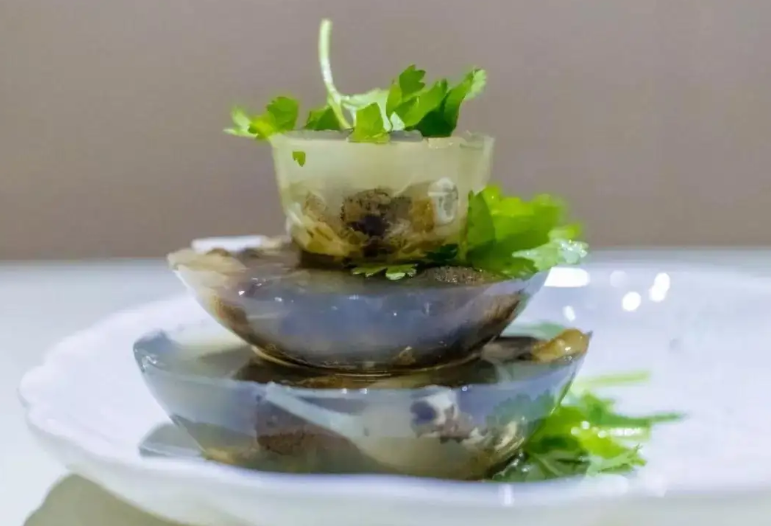
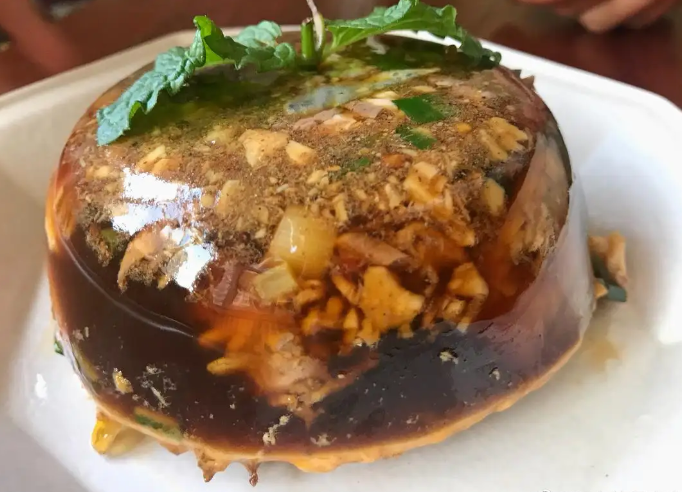
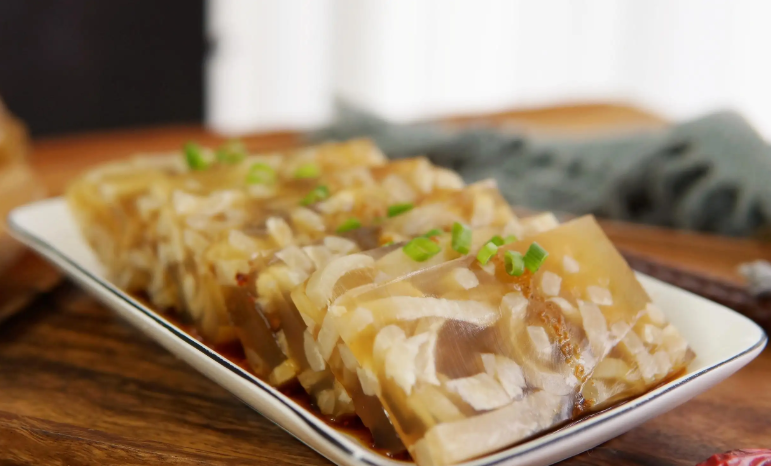
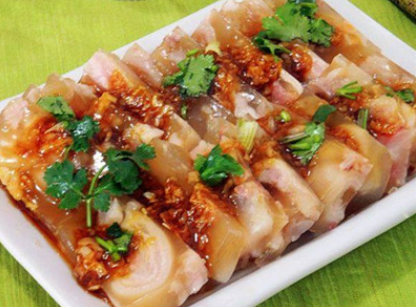
山东菜“水晶肘子”见图6-2-1,江苏菜“水晶肴蹄”,福建菜“土笋冻”见图6-2-2,浙江菜“鱼胶冻”,广东菜“潮州冻肉”等。

Shandong cuisine "crystal elbow" (see figure 6-2-1), Jiangsu cuisine "crystal food hoof", Fujian cuisine "soil bamboo shoot jelly" (see figure 6-2-2), Zhejiang cuisine "fish jelly", Guangdong cuisine "Chaozhou frozen meat", etc.
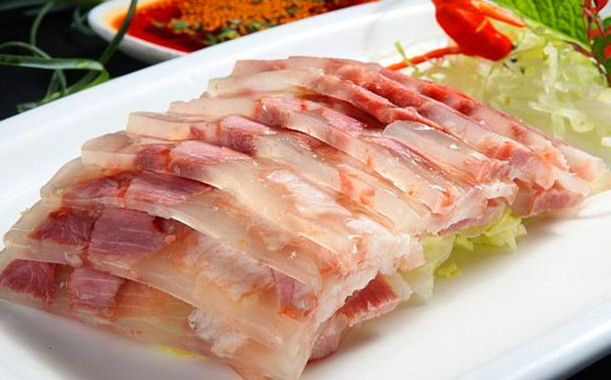
                      图 6-2-1 水晶肘子 Fig. 6-2-1 crystal elbow
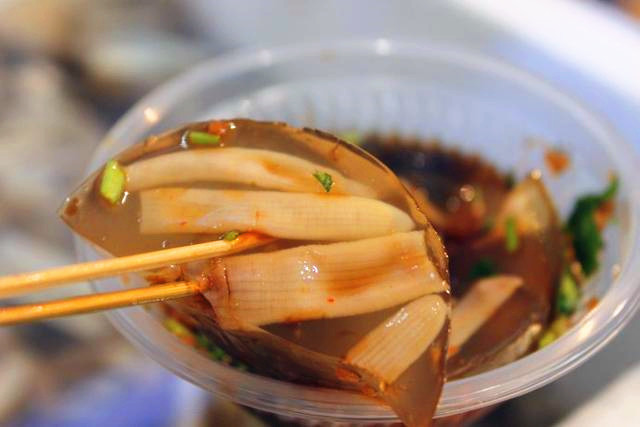
                 图 6-2-2 土笋冻 Fig. 6-2-2 frozen bamboo shoots