目录

  • 1 绪论(Introduction)
    • 1.1 中式烹调工艺概述(Overview of Chinese cooking technology)
  • 2 锅烹类技法实训(Pot cooking skills training)
    • 2.1 学习目标(Learning objectives)
    • 2.2 锅烹类技法导读(Introduction to pot cooking techniques)
    • 2.3 项目一:滑炒技法(Item 1: Slippery frying technique)
    • 2.4 项目二:爆炒技法(Item 2: Stir fry technique)
    • 2.5 项目三:清炒技法(Item 3: Clear frying technique)
    • 2.6 项目四:生炒技法(Item 4:Raw frying technique)
    • 2.7 项目五:熟炒技法(Item 5:Cooked frying technique)
    • 2.8 项目六:煸炒技法(Item 6:Stir-fry technique)
    • 2.9 项目七:贴制技法(Item 7:Paste technique)
    • 2.10 项目八:煎制技法(Item 8:Decocting technique)
    • 2.11 项目九:盐焗技法(Item 9:Salt baking technique)
    • 2.12 本章小结(Summary of this chapter)
    • 2.13 本章检测题(Test questions in this chapter)
  • 3 油烹类技法实训(Oil cooking skills training)
    • 3.1 学习目标(Learning objectives)
    • 3.2 油烹类技法导读(Introduction to oil cooking techniques)
    • 3.3 项目一:清炸技法(Item 1:Blasting technique)
    • 3.4 项目二:干炸技法(Item 2:Dry frying technique)
    • 3.5 项目三:纸包炸技法(Item 3:Paper fried technique)
    • 3.6 项目四:卷炸技法(Item 4:Roll blasting technique)
    • 3.7 项目五:碎屑料炸技法(Item 5:Chip blasting technique)
    • 3.8 项目六:泡油炒技法(Item 6:Oil soaking frying technique)
    • 3.9 项目七:红烧技法(Item 7:Braised technique)
    • 3.10 项目八:红扣技法(Item 8:Red button technique)
    • 3.11 项目九:脆熘技法(Item 9:Crispy frying technique)
    • 3.12 本章小结(Summary of this chapter)
    • 3.13 本章检测题(Test questions in this chapter)
  • 4 水烹类技法实训(Practical training of water cooking techniques)
    • 4.1 学习目标(Learning objectives)
    • 4.2 水烹类技法导读(Introduction to water cooking techniques)
    • 4.3 项目一:煮制技法(Item 1:Boiling technique)
    • 4.4 项目二:浸制技法(Item 2:Soaking technique)
    • 4.5 项目三:灼制技法(Item 3:Poaching technique)
    • 4.6 项目四:烩制技法(Item 4:Decocting technique)
    • 4.7 项目五:煲制技法(Item 5:Stewing technique)
    • 4.8 项目六:煨制技法(Item 6:Simmering technique)
    • 4.9 项目七:焖制技法(Item 7:Braiseing technique )
    • 4.10 本章小结(Summary of this chapter)
    • 4.11 本章检测题(Test questions in this chapter)
  • 5 汽烹类技法实训(Steam cooking skills training)
    • 5.1 学习目标(Learning objectives)
    • 5.2 汽烹类技法导读(Introduction to steam cooking techniques)
    • 5.3 项目一:清蒸技法(Item 1:Steaming technique)
    • 5.4 项目二:干蒸技法(Item 2:Dry steaming technique)
    • 5.5 项目三:粉蒸技法(Item 3:Dteaming with flour technique)
    • 5.6 项目四:蒸扣技法(Item 4:Bowl steaming technique)
    • 5.7 项目五:蒸瓤技法(Item 5:Stuffing steaming technique)
    • 5.8 项目六:蒸炖技法(Item 6:Steaming and Stewing technique)
    • 5.9 本章小结(Summary of this chapter)
    • 5.10 本章检测题(Test questions in this chapter)
  • 6 辐射类技法实训(Training of Radiation Cooking Techniques)
    • 6.1 学习目标(Learning objectives)
    • 6.2 辐射类技法导读(Introduction to Radiation Cooking Techniques)
    • 6.3 项目一:明炉烤技法(Item 1:Open-oven roasting technique)
    • 6.4 项目二:暗炉烤技法(Item 2:Closed-oven roasting technique)
    • 6.5 项目三:泥烤技法(Item 3:Mud roasting technique)
    • 6.6 项目四:烘烤技法(Item 4:Baking roasting technique)
    • 6.7 本章小结(Summary of this chapter)
    • 6.8 本章检测题(Test questions in this chapter)
  • 7 特殊类技法实训(Training of Special Cooking Techniques)
    • 7.1 学习目标(Learning objectives)
    • 7.2 特殊类技法导读(Introduction to special techniques Techniques)
    • 7.3 项目一:凉拌技法(Item 1:Cold mixing technique)
    • 7.4 项目二:制冻技法(Item 2:Cold jelly technique)
    • 7.5 项目三:生醉技法(Item 3:live alcohol-saturating technique)
    • 7.6 项目四:熟醉技法(Item 4:Alcohol-cooking technique)
    • 7.7 项目五:拔丝技法(Item 5:Wire drawing technique)
    • 7.8 项目六:制羹技法(Item 6:Thick soup making technique)
    • 7.9 项目七:铁扒技法(Item 7:Grilling technique)
    • 7.10 项目八:熏制技法(Item 8:Smoking technique)
    • 7.11 本章小结(Summary of this chapter)
    • 7.12 本章检测题(Test questions in this chapter)
项目四:烘烤技法(Item 4:Baking roasting technique)
  • 1 知识储备——烘烤...
  • 2 实训示例——五香...
  • 3 拓展学习资料(&nb...

知识储备——

Knowledge reserve——Baking roasting technique

技法介绍/Introduction to techniques

利用辐射热使原料逐渐干燥并成熟乃至酥脆质香的方法叫烘烤法。世界绝大多数国家中,无论是人们的主食,还是副食品,食品都占有十分重要的位置食品可以说是舶来名词,由于世界经济的一体化发展,科学技术的不断进步,烘烤技法所依靠的设备——“烤箱”也在不断的普及及优化升级,中式烹调中的烘烤技法也迎来了大发展的时期。

The method of using radiant heat to gradually dry and mature raw materials and even crisp and fragrant is called baking method. In the vast majority of countries in the world, whether people's staple food or non-staple food, baked food occupies a very important position. Baking food can be said to be an imported term. Due to the integrated development of the world economy and the continuous progress of science and technology, the equipment relied on by baking techniques - "oven" is also constantly popularized, optimized and upgraded, and the baking techniques in Chinese cooking have also ushered in a period of great development.

烤箱大都用电,也有用燃气的。烤箱的火不直接与原料接触,而是隔着一层铁板,所烤食品放在烤盘里。烤箱能用于菜肴、小吃和糕点等制作。烤箱烤制的菜肴,味美而醇香。

Most ovens use electricity and gas. The fire of the oven is not in direct contact with the raw materials, but separated by a layer of iron plate, and the baked food is placed in the baking pan. The oven can be used for making dishes, snacks and pastries. The dishes baked in the oven are delicious and mellow.

技法要求/Technical requirements

1.用于烘烤法的原料本身质干,形体不可过大,否则不易烤透。

1. The raw materials used in the baking method are dry in quality and cannot be too large, otherwise it is not easy to bake thoroughly.

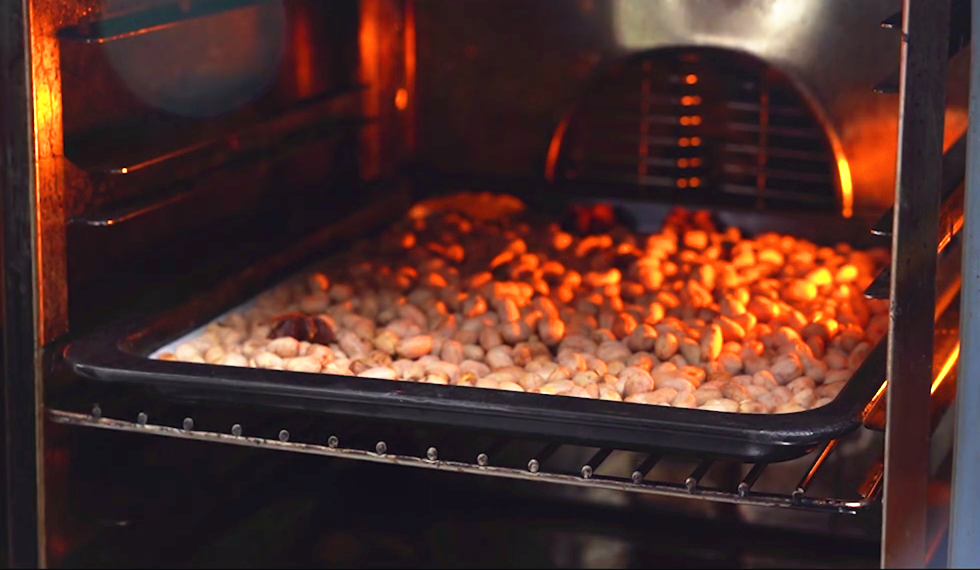
2.原料放入烤箱前需要将烤箱预热到需要的温度后方可放入烘烤原料并进行计时,烘烤加热时,要用小火慢慢加热。

2. Before the raw materials are put into the oven, the oven needs to be preheated to the required temperature before they can be put into the baking raw materials and timed. When baking and heating, it should be heated slowly with a low fire.

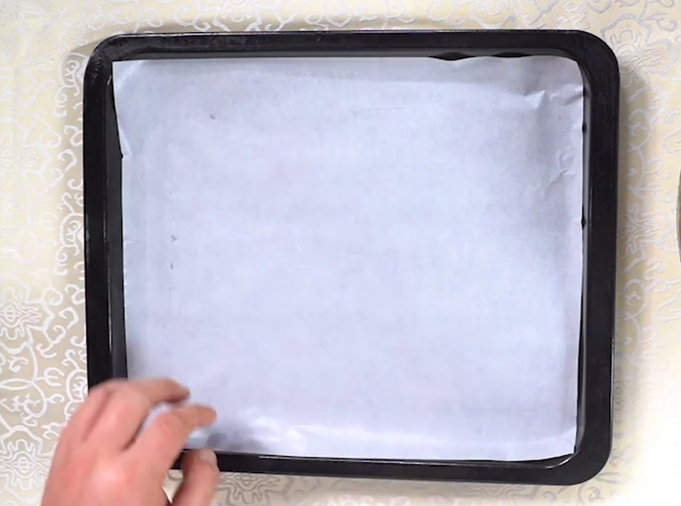
3.为防止原料粘粘在烤盘上,烤盘内应放入专用的烘焙专用纸。

3. In order to prevent the raw materials from sticking to the baking tray, special baking paper shall be placed in the baking tray.

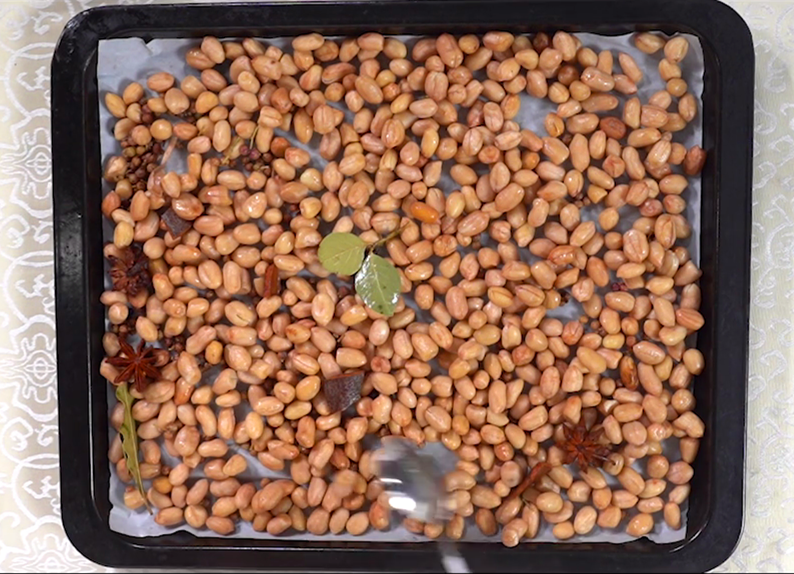
4.原料应尽量摆得平坦一些,确保每颗原料之间不相互接触,这样食物才能受热均匀,且在烘烤过程中要及时对原料进行翻面。

4. The raw materials should be placed as flat as possible to ensure that each raw material does not contact each other, so that the food can be heated evenly, and the raw materials should be turned over in time during the baking process.

5.恰当掌握火候,烘到不过火、不欠火,对于干果类原料需质香酥脆为佳,对于牛腊巴、猪肉干等需质干、有嚼劲为佳

5. Properly control the heat, and bake it until it is not too hot or under fired. It is better to have crispy quality for dried fruit raw materials, and it is better to have dry and chewy quality for dried beef and pork.

6.烘烤成熟后,需要自然放晾后再装盘,如果需要较长时间存放,需要进行真空包装或用密封效果较好的保鲜盒盛装。

6. After the baking is mature, it needs to be put in the air naturally before loading. If it needs to be stored for a long time, it needs to be vacuum packed or packed in a fresh-keeping box with good sealing effect.

代表菜品/Representative dishes

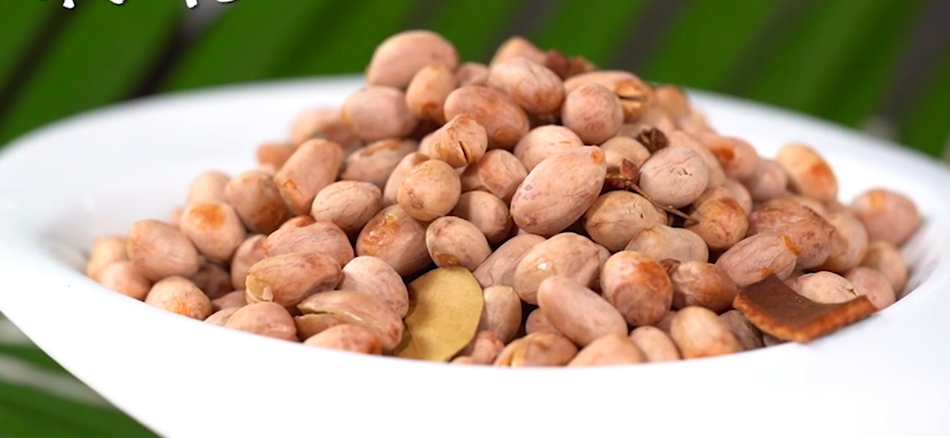
广西菜“太平牛腊巴”见图5-4-1,新疆菜“盐烘巴旦木”,上海菜“五香烘花生仁”,福建菜“猪肉干”,云南“原味烘腰果”见图5-4-2等。

Guangxi cuisine "Taiping niulaba" (see Fig. 5-4-1), Xinjiang cuisine "salt baked padanmu", Shanghai cuisine "spiced baked peanut kernel", Fujian cuisine "dried pork", Yunnan cuisine "original baked cashew nuts" (see Fig. 5-4-2), etc.
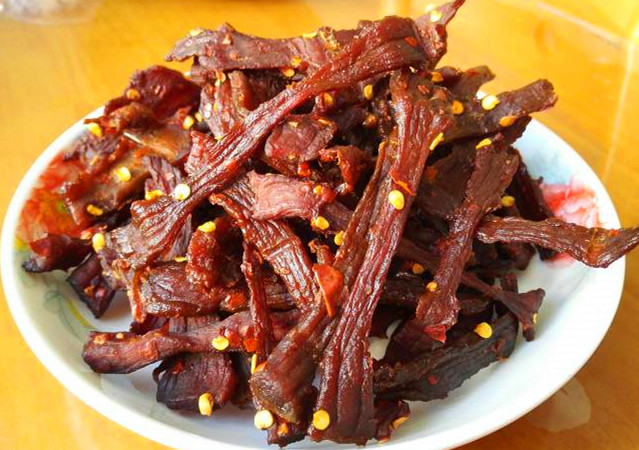
                     图 5-4-1 太平牛腊巴 Fig. 5-4-1 Taiping niulaba
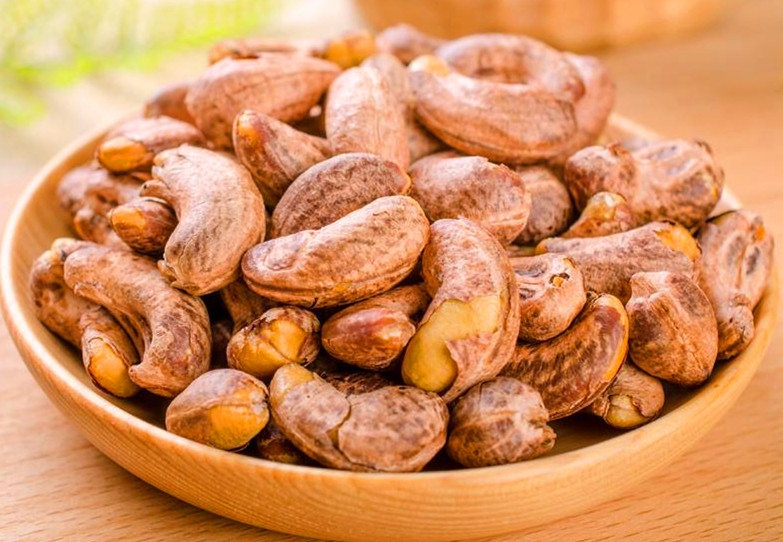
         图 5-4-2 原味烘腰果 Fig. 5-4-2 roasted cashew nuts with original flavor