目录

  • 1 绪论(Introduction)
    • 1.1 中式烹调工艺概述(Overview of Chinese cooking technology)
  • 2 锅烹类技法实训(Pot cooking skills training)
    • 2.1 学习目标(Learning objectives)
    • 2.2 锅烹类技法导读(Introduction to pot cooking techniques)
    • 2.3 项目一:滑炒技法(Item 1: Slippery frying technique)
    • 2.4 项目二:爆炒技法(Item 2: Stir fry technique)
    • 2.5 项目三:清炒技法(Item 3: Clear frying technique)
    • 2.6 项目四:生炒技法(Item 4:Raw frying technique)
    • 2.7 项目五:熟炒技法(Item 5:Cooked frying technique)
    • 2.8 项目六:煸炒技法(Item 6:Stir-fry technique)
    • 2.9 项目七:贴制技法(Item 7:Paste technique)
    • 2.10 项目八:煎制技法(Item 8:Decocting technique)
    • 2.11 项目九:盐焗技法(Item 9:Salt baking technique)
    • 2.12 本章小结(Summary of this chapter)
    • 2.13 本章检测题(Test questions in this chapter)
  • 3 油烹类技法实训(Oil cooking skills training)
    • 3.1 学习目标(Learning objectives)
    • 3.2 油烹类技法导读(Introduction to oil cooking techniques)
    • 3.3 项目一:清炸技法(Item 1:Blasting technique)
    • 3.4 项目二:干炸技法(Item 2:Dry frying technique)
    • 3.5 项目三:纸包炸技法(Item 3:Paper fried technique)
    • 3.6 项目四:卷炸技法(Item 4:Roll blasting technique)
    • 3.7 项目五:碎屑料炸技法(Item 5:Chip blasting technique)
    • 3.8 项目六:泡油炒技法(Item 6:Oil soaking frying technique)
    • 3.9 项目七:红烧技法(Item 7:Braised technique)
    • 3.10 项目八:红扣技法(Item 8:Red button technique)
    • 3.11 项目九:脆熘技法(Item 9:Crispy frying technique)
    • 3.12 本章小结(Summary of this chapter)
    • 3.13 本章检测题(Test questions in this chapter)
  • 4 水烹类技法实训(Practical training of water cooking techniques)
    • 4.1 学习目标(Learning objectives)
    • 4.2 水烹类技法导读(Introduction to water cooking techniques)
    • 4.3 项目一:煮制技法(Item 1:Boiling technique)
    • 4.4 项目二:浸制技法(Item 2:Soaking technique)
    • 4.5 项目三:灼制技法(Item 3:Poaching technique)
    • 4.6 项目四:烩制技法(Item 4:Decocting technique)
    • 4.7 项目五:煲制技法(Item 5:Stewing technique)
    • 4.8 项目六:煨制技法(Item 6:Simmering technique)
    • 4.9 项目七:焖制技法(Item 7:Braiseing technique )
    • 4.10 本章小结(Summary of this chapter)
    • 4.11 本章检测题(Test questions in this chapter)
  • 5 汽烹类技法实训(Steam cooking skills training)
    • 5.1 学习目标(Learning objectives)
    • 5.2 汽烹类技法导读(Introduction to steam cooking techniques)
    • 5.3 项目一:清蒸技法(Item 1:Steaming technique)
    • 5.4 项目二:干蒸技法(Item 2:Dry steaming technique)
    • 5.5 项目三:粉蒸技法(Item 3:Dteaming with flour technique)
    • 5.6 项目四:蒸扣技法(Item 4:Bowl steaming technique)
    • 5.7 项目五:蒸瓤技法(Item 5:Stuffing steaming technique)
    • 5.8 项目六:蒸炖技法(Item 6:Steaming and Stewing technique)
    • 5.9 本章小结(Summary of this chapter)
    • 5.10 本章检测题(Test questions in this chapter)
  • 6 辐射类技法实训(Training of Radiation Cooking Techniques)
    • 6.1 学习目标(Learning objectives)
    • 6.2 辐射类技法导读(Introduction to Radiation Cooking Techniques)
    • 6.3 项目一:明炉烤技法(Item 1:Open-oven roasting technique)
    • 6.4 项目二:暗炉烤技法(Item 2:Closed-oven roasting technique)
    • 6.5 项目三:泥烤技法(Item 3:Mud roasting technique)
    • 6.6 项目四:烘烤技法(Item 4:Baking roasting technique)
    • 6.7 本章小结(Summary of this chapter)
    • 6.8 本章检测题(Test questions in this chapter)
  • 7 特殊类技法实训(Training of Special Cooking Techniques)
    • 7.1 学习目标(Learning objectives)
    • 7.2 特殊类技法导读(Introduction to special techniques Techniques)
    • 7.3 项目一:凉拌技法(Item 1:Cold mixing technique)
    • 7.4 项目二:制冻技法(Item 2:Cold jelly technique)
    • 7.5 项目三:生醉技法(Item 3:live alcohol-saturating technique)
    • 7.6 项目四:熟醉技法(Item 4:Alcohol-cooking technique)
    • 7.7 项目五:拔丝技法(Item 5:Wire drawing technique)
    • 7.8 项目六:制羹技法(Item 6:Thick soup making technique)
    • 7.9 项目七:铁扒技法(Item 7:Grilling technique)
    • 7.10 项目八:熏制技法(Item 8:Smoking technique)
    • 7.11 本章小结(Summary of this chapter)
    • 7.12 本章检测题(Test questions in this chapter)
项目二:暗炉烤技法(Item 2:Closed-oven roasting technique)
  • 1 知识储备——暗炉...
  • 2 实训示例——挂炉...
  • 3 拓展学习资料(&nb...

知识储备——暗炉烤

Knowledge reserve——Closed-oven roasting technique

技法介绍/Introduction to techniques

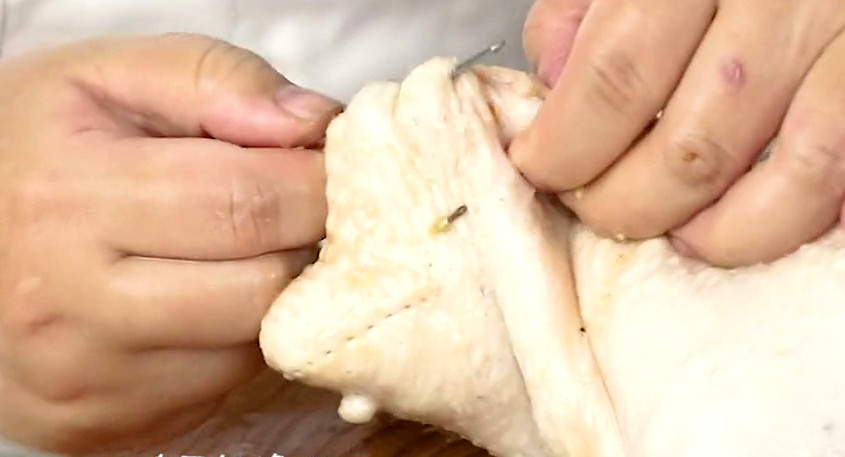
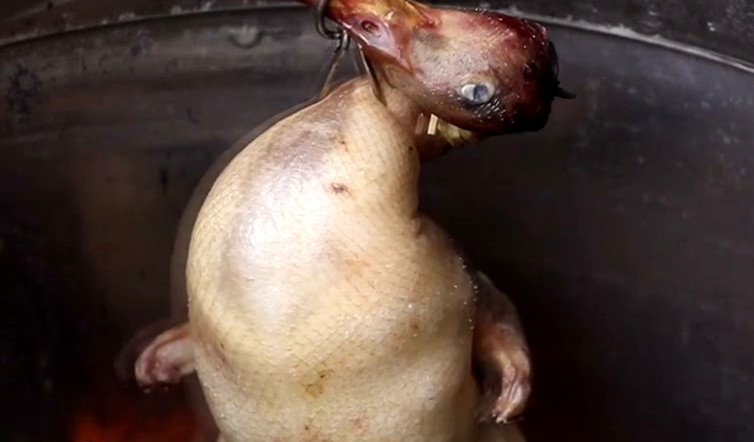
将烹饪原料经过事先加工腌制,用不锈钢上或者用不锈钢钢针串成串,也可以用铁皮盘盛装,放入封闭式的炉中,关上炉门或者盖上炉盖,让炉内的热能直接辐射使原料熟透至于外表香脆,这种加热工序叫暗炉烤法暗炉也叫挂炉。暗炉的特点是能保持炉内的高温,使食材的周围均匀受热,容易熟到内部。

The cooking raw materials are processed and pickled in advance, hooked with stainless steel hooks or strung with stainless steel needles. They can also be filled with iron plates, put them into a closed furnace, close the furnace door or cover the furnace cover, and let the heat energy in the furnace radiate directly to make the raw materials ripe and crisp. This heating process is called dark furnace baking. Hidden furnace is also called hanging furnace. The characteristic of the hidden furnace is that it can maintain the high temperature in the furnace, make the surrounding of the food materials evenly heated and easy to cook to the inside.

现在使用的挂炉有瓦缸式样挂炉,砖砌式挂炉,不锈钢式挂炉,转盘式挂炉,壤坑式挂炉,用木柴木炭燃气等提供辐射热能。

At present, the hanging furnaces used include tile cylinder hanging furnace, brick hanging furnace, stainless steel hanging furnace, rotary table hanging furnace, soil pit hanging furnace, etc., which provide radiant heat energy with firewood, charcoal, electricity, gas, etc.

技法要求/Technical requirements

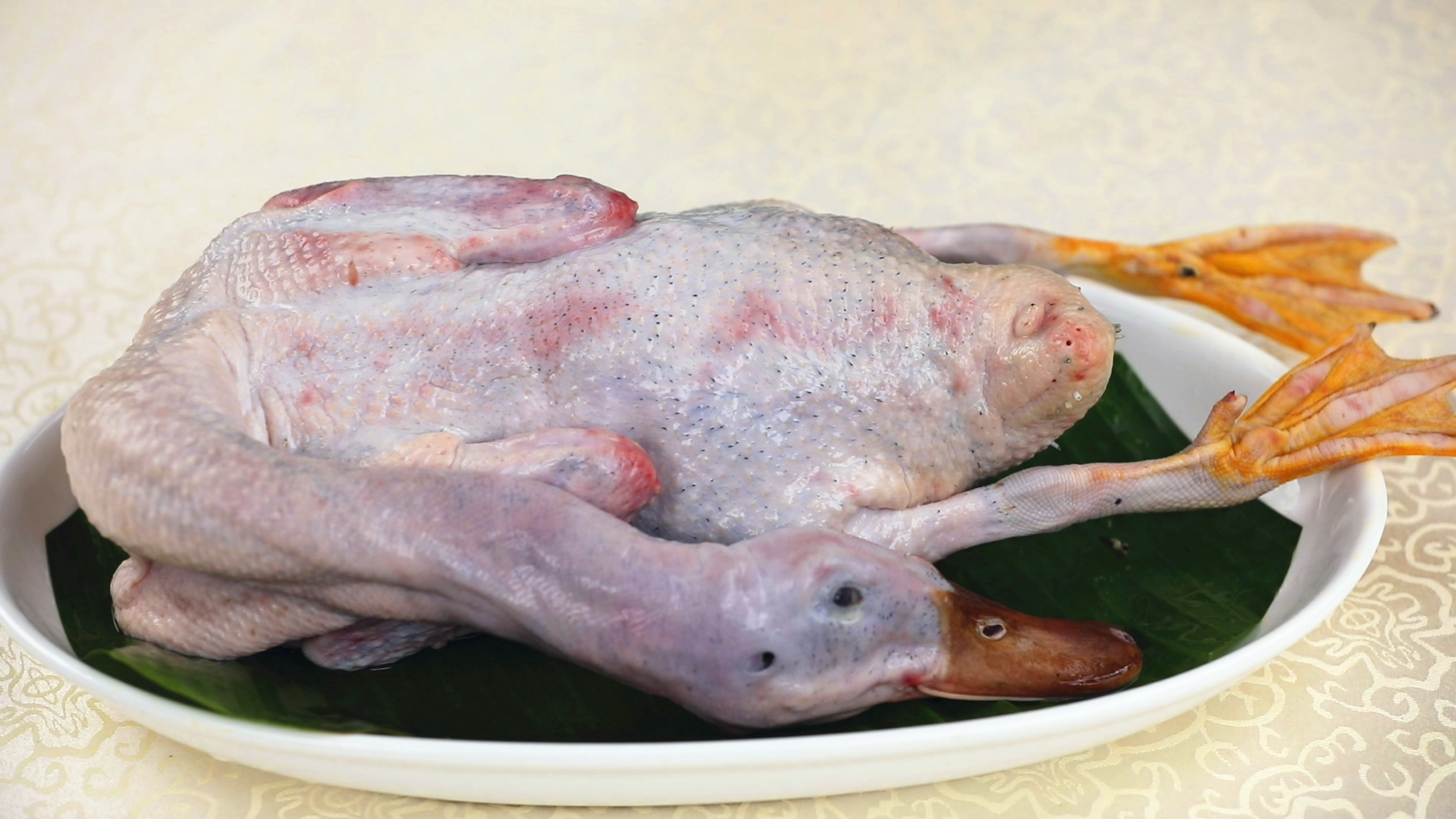
1.选料要根据成菜标准选择恰当的原料。例如:烧鹅应选用鹅龄为90天左右中小个的清远黑棕鹅为优、体重3kg左右的肥嫩仔鹅,且鹅体表面须无瘀血及伤痕;烧鸭多选用鸭龄为70天左右的本地芝麻鸭为优、体重2kg左右且鸭体表面无淤血及伤痕。

1. Select the appropriate raw materials according to the standard of finished dishes. For example, Qingyuan black brown goose, which is about 90 days old and small, should be selected as the best roast goose, and the fat and tender young goose weighing about 3kg should be selected, and the surface of the goose must be free of blood stasis and scars; The local sesame duck with a duck age of about 70 days is preferred, weighing about 2kg, and there are no congestion and scars on the surface of the duck.

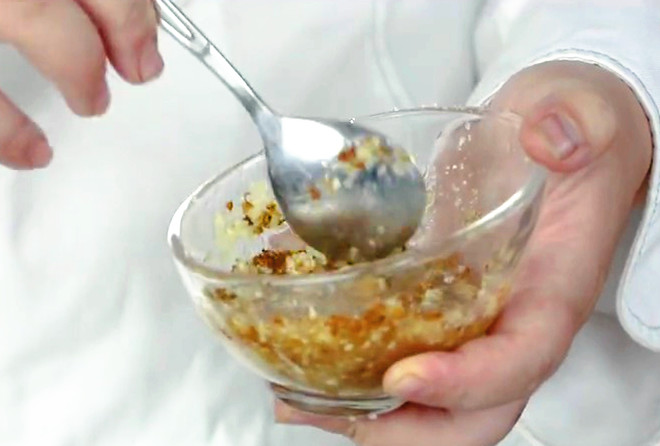
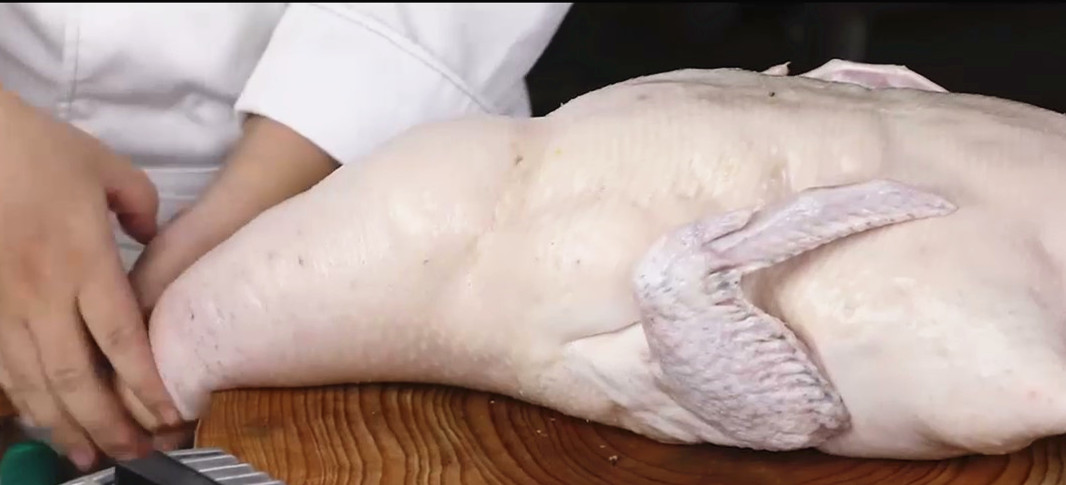
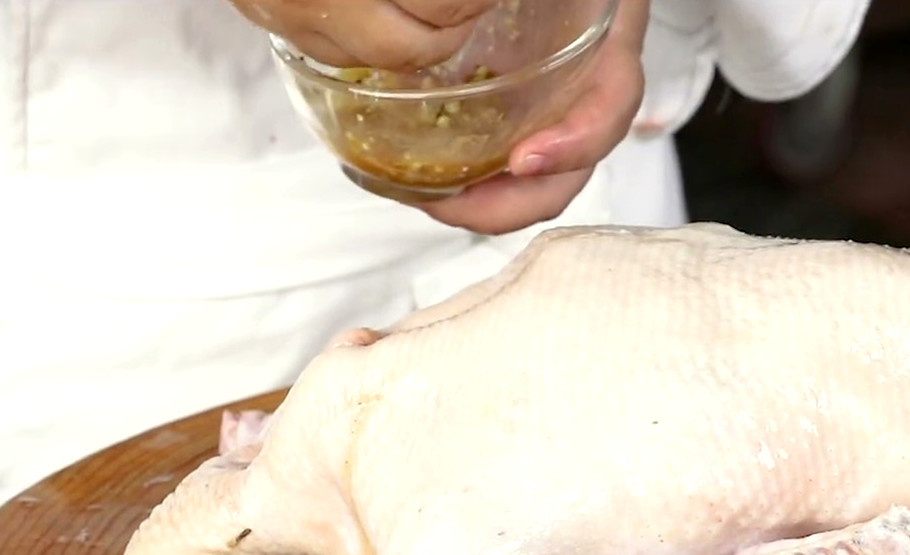
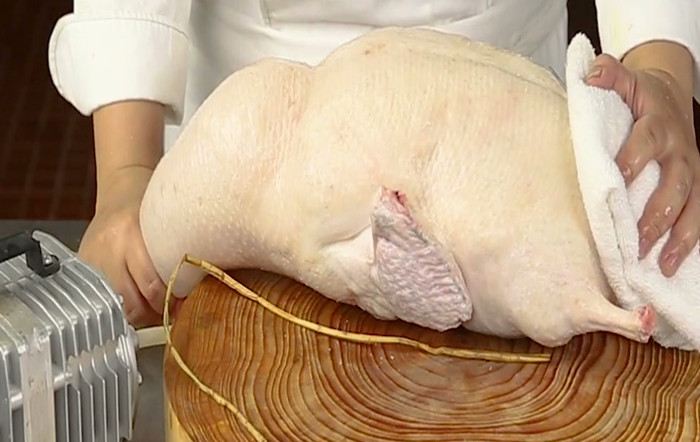
2.肉类原料烤制前应根据要求进行腌制。例如:制作烧鹅、烧鸭等采用“灌汁腌制法”,一般以味汁灌至腹腔内能流动为度,汤汁灌好后,还需将其身体平放一段时间,以使汤汁均匀地浸渍腹腔;制作叉烧、烤羊腿等采用“裹汁腌制法”,一般将各种调味料混合在一起后将主料放入腌汁中不断翻拌均匀,使之入味。

2. Meat raw materials shall be pickled as required before baking. For example, roast goose and roast duck are made by "pouring juice and pickling method", which is generally based on the degree that the flavor juice can flow in the abdominal cavity. After the soup is poured, its body needs to be placed flat for a period of time to make the soup evenly impregnate the abdominal cavity; The "dressing and pickling method" is used to make barbecued pork and roast mutton legs. Generally, all kinds of seasonings are mixed together, and then the main ingredients are put into the pickling juice and continuously stirred to make it taste.

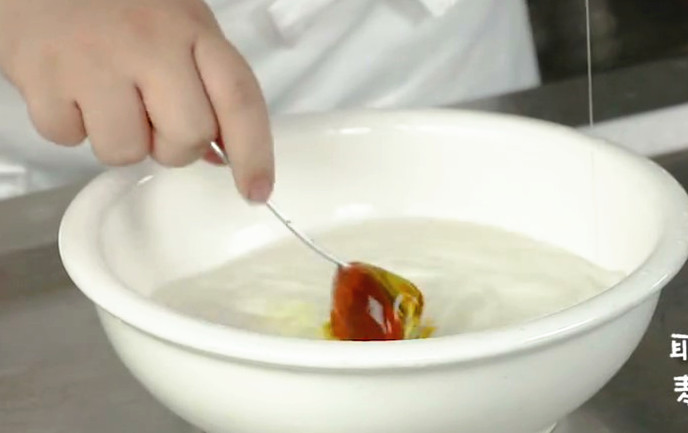
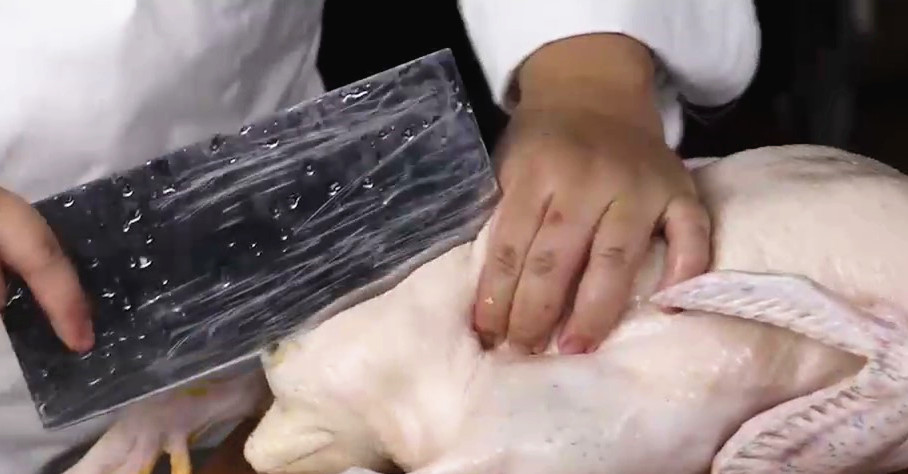
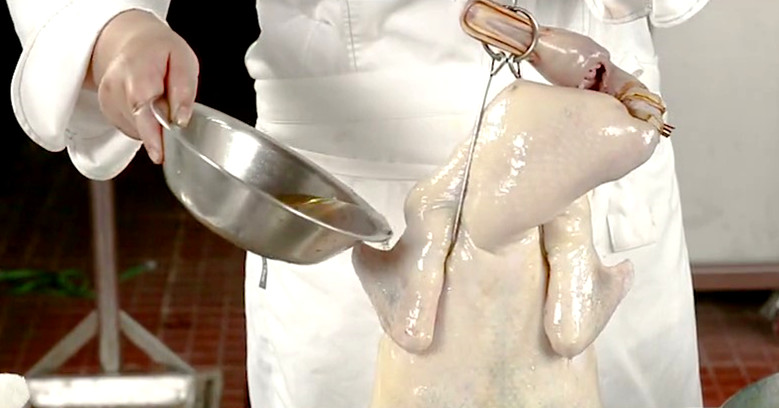
3.制作烧鸭、烧鹅时需要打气,打气以打至八成满为宜,不宜打得过满;刷脆皮水时要刷得均匀,否则烤出来后表皮色泽不一致。

3. When making roast duck and goose, it is necessary to pump up. It is appropriate to pump up to 80% full, not too full; Brush the crispy water evenly, otherwise the skin color is inconsistent after baking.

5.挂入炉中烤制时,一定要掌握火候,避免火候过高或过低而造成质量达不到标准。

5. When hanging in the oven for baking, we must master the heat to avoid the quality failing to meet the standard due to too high or too low heat.

代表菜品//Representative dishes

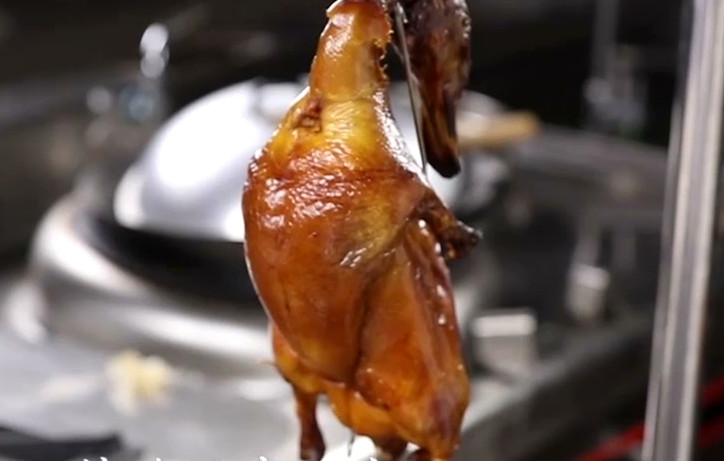
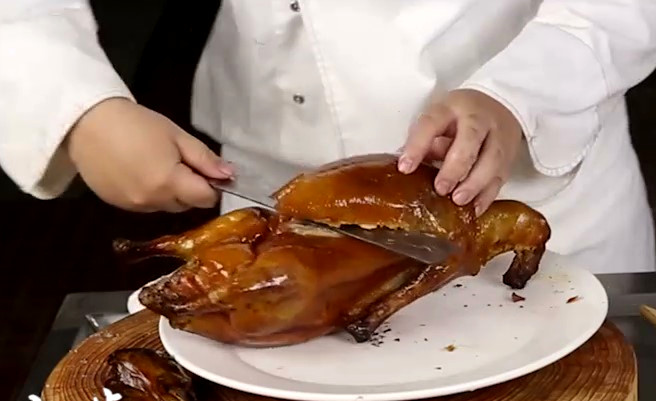
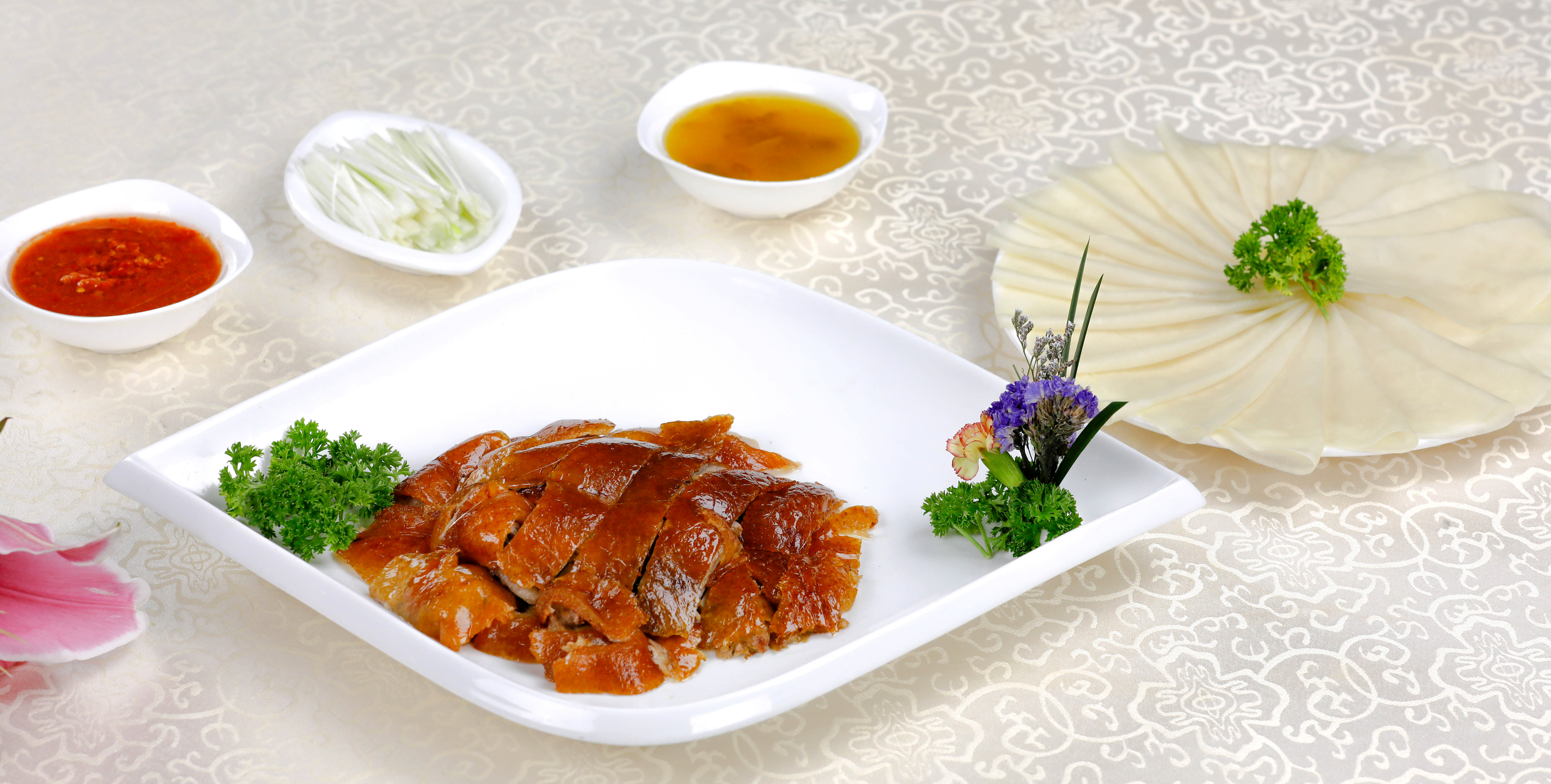
北京菜“北京烤鸭”,新疆菜“烤馕”“烤包子”见图5-2-1,广西菜“烧鸭”,广东菜“新会古井烧鹅”见图5-2-1“蜜汁叉烧”等。

Beijing cuisine "Beijing roast duck", Xinjiang cuisine "roast Nang" and "roast steamed stuffed bun" (see figure 5-2-1), Guangxi cuisine "roast duck", Guangdong cuisine "Xinhui Gujing roast goose" (see figure 5-2-1) "honey barbecue", etc.
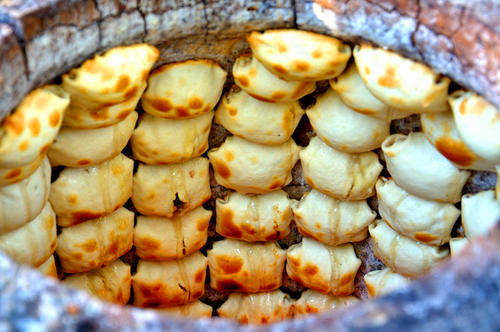
                    图 5-2-1 烤包子 Fig. 5-2-1 roasted steamed stuffed bun
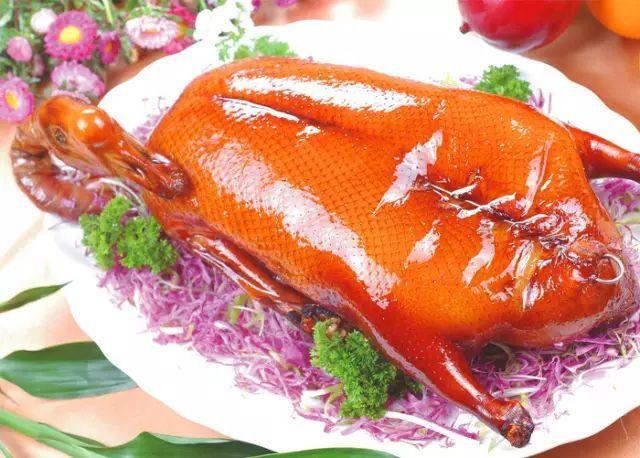
          图 5-2-2 新会古井烧鹅 Fig. 5-2-2 Xinhui Gujing roast goose