目录

  • 1 绪论(Introduction)
    • 1.1 中式烹调工艺概述(Overview of Chinese cooking technology)
  • 2 锅烹类技法实训(Pot cooking skills training)
    • 2.1 学习目标(Learning objectives)
    • 2.2 锅烹类技法导读(Introduction to pot cooking techniques)
    • 2.3 项目一:滑炒技法(Item 1: Slippery frying technique)
    • 2.4 项目二:爆炒技法(Item 2: Stir fry technique)
    • 2.5 项目三:清炒技法(Item 3: Clear frying technique)
    • 2.6 项目四:生炒技法(Item 4:Raw frying technique)
    • 2.7 项目五:熟炒技法(Item 5:Cooked frying technique)
    • 2.8 项目六:煸炒技法(Item 6:Stir-fry technique)
    • 2.9 项目七:贴制技法(Item 7:Paste technique)
    • 2.10 项目八:煎制技法(Item 8:Decocting technique)
    • 2.11 项目九:盐焗技法(Item 9:Salt baking technique)
    • 2.12 本章小结(Summary of this chapter)
    • 2.13 本章检测题(Test questions in this chapter)
  • 3 油烹类技法实训(Oil cooking skills training)
    • 3.1 学习目标(Learning objectives)
    • 3.2 油烹类技法导读(Introduction to oil cooking techniques)
    • 3.3 项目一:清炸技法(Item 1:Blasting technique)
    • 3.4 项目二:干炸技法(Item 2:Dry frying technique)
    • 3.5 项目三:纸包炸技法(Item 3:Paper fried technique)
    • 3.6 项目四:卷炸技法(Item 4:Roll blasting technique)
    • 3.7 项目五:碎屑料炸技法(Item 5:Chip blasting technique)
    • 3.8 项目六:泡油炒技法(Item 6:Oil soaking frying technique)
    • 3.9 项目七:红烧技法(Item 7:Braised technique)
    • 3.10 项目八:红扣技法(Item 8:Red button technique)
    • 3.11 项目九:脆熘技法(Item 9:Crispy frying technique)
    • 3.12 本章小结(Summary of this chapter)
    • 3.13 本章检测题(Test questions in this chapter)
  • 4 水烹类技法实训(Practical training of water cooking techniques)
    • 4.1 学习目标(Learning objectives)
    • 4.2 水烹类技法导读(Introduction to water cooking techniques)
    • 4.3 项目一:煮制技法(Item 1:Boiling technique)
    • 4.4 项目二:浸制技法(Item 2:Soaking technique)
    • 4.5 项目三:灼制技法(Item 3:Poaching technique)
    • 4.6 项目四:烩制技法(Item 4:Decocting technique)
    • 4.7 项目五:煲制技法(Item 5:Stewing technique)
    • 4.8 项目六:煨制技法(Item 6:Simmering technique)
    • 4.9 项目七:焖制技法(Item 7:Braiseing technique )
    • 4.10 本章小结(Summary of this chapter)
    • 4.11 本章检测题(Test questions in this chapter)
  • 5 汽烹类技法实训(Steam cooking skills training)
    • 5.1 学习目标(Learning objectives)
    • 5.2 汽烹类技法导读(Introduction to steam cooking techniques)
    • 5.3 项目一:清蒸技法(Item 1:Steaming technique)
    • 5.4 项目二:干蒸技法(Item 2:Dry steaming technique)
    • 5.5 项目三:粉蒸技法(Item 3:Dteaming with flour technique)
    • 5.6 项目四:蒸扣技法(Item 4:Bowl steaming technique)
    • 5.7 项目五:蒸瓤技法(Item 5:Stuffing steaming technique)
    • 5.8 项目六:蒸炖技法(Item 6:Steaming and Stewing technique)
    • 5.9 本章小结(Summary of this chapter)
    • 5.10 本章检测题(Test questions in this chapter)
  • 6 辐射类技法实训(Training of Radiation Cooking Techniques)
    • 6.1 学习目标(Learning objectives)
    • 6.2 辐射类技法导读(Introduction to Radiation Cooking Techniques)
    • 6.3 项目一:明炉烤技法(Item 1:Open-oven roasting technique)
    • 6.4 项目二:暗炉烤技法(Item 2:Closed-oven roasting technique)
    • 6.5 项目三:泥烤技法(Item 3:Mud roasting technique)
    • 6.6 项目四:烘烤技法(Item 4:Baking roasting technique)
    • 6.7 本章小结(Summary of this chapter)
    • 6.8 本章检测题(Test questions in this chapter)
  • 7 特殊类技法实训(Training of Special Cooking Techniques)
    • 7.1 学习目标(Learning objectives)
    • 7.2 特殊类技法导读(Introduction to special techniques Techniques)
    • 7.3 项目一:凉拌技法(Item 1:Cold mixing technique)
    • 7.4 项目二:制冻技法(Item 2:Cold jelly technique)
    • 7.5 项目三:生醉技法(Item 3:live alcohol-saturating technique)
    • 7.6 项目四:熟醉技法(Item 4:Alcohol-cooking technique)
    • 7.7 项目五:拔丝技法(Item 5:Wire drawing technique)
    • 7.8 项目六:制羹技法(Item 6:Thick soup making technique)
    • 7.9 项目七:铁扒技法(Item 7:Grilling technique)
    • 7.10 项目八:熏制技法(Item 8:Smoking technique)
    • 7.11 本章小结(Summary of this chapter)
    • 7.12 本章检测题(Test questions in this chapter)
项目一:明炉烤技法(Item 1:Open-oven roasting technique)
  • 1 知识储备——明炉...
  • 2 实训示例——烤麻...
  • 3 拓展学习资料(&nb...

知识储备——明炉烤

Knowledge reserve——Open-oven roasting technique

技法介绍/Introduction to techniques

将烹饪原料先腌渍入味,再用钢芊、竹芊或其他工具穿成串或者捆扎固定,放在无遮挡的明炉上,利用明炉的热能直接辐射烤至外香脆、内熟透的加热工序叫明炉烤

The cooking materials are pickled and tasted first, then threaded into strings or tied and fixed with steel Qian, bamboo Qian or other tools, and placed on an open stove without shelter. The heating process of directly radiating and baking with the heat of the open stove until it is crisp outside and ripe inside is called open stove baking.

明炉烤又称明烤、叉烧烤。明炉烤是用敞口火炉烤制食品。明炉烤有三种,一种是在炉的上面架有铁架,多用于烤制乳猪、全羊等大型主料;另一种是在炉在面放铁炙子,北京烤肉就是用这种炉子;再一种是用铁叉好原料在明炉上翻烤。明炉烤的特点、是设备简单,火候较易掌握,但火力分散,原料不易烤得匀透,需要较长的烤制时间,它对小形薄片原料的烤制,比暗炉烤收效好。

Open oven roast is also known as open roast and fork roast. Open oven baking is to bake food in an open stove. There are three kinds of open oven baking. One is that there is an iron frame on the top of the oven, which is mostly used for baking large main ingredients such as suckling pigs and whole sheep; The other is to put iron roasted seeds on the surface of the stove. This kind of stove is used for Beijing barbecue; The other is to use an iron fork to string the raw materials and bake them in an open oven. The characteristics of open oven baking are that the equipment is simple and the heat is easy to control, but the fire is scattered, and the raw materials are not easy to bake evenly, which requires a long baking time. It has a better effect on the baking of small sheet raw materials than dark oven baking.

技法要求/Technical requirements

1.燃料最好的选择木炭。烤食物的特殊风味来自于木炭高温时烧烤食物的香味,因此,选择好木炭是享受美味的基础。

1. The best choice of fuel is charcoal. The special flavor of grilled food comes from the smell of grilled food when charcoal is high temperature. Therefore, choosing charcoal is the basis for enjoying delicious food.

2.木炭的表层还未烧透时,请勿急着烤,这样容易把食物弄脏,弄黑。

2. When the surface layer of charcoal is not fully burnt, do not bake in a hurry, as it is easy to stain and blacken the food.

3.在烤食物前,先将烤架上刷一层油,以免食物粘在架上。随时用铁刷刷掉烤架上的残渣,保持烤架清洁,才不会影响到食物的风味。

3. Before baking food, brush a layer of oil on the grill to avoid food sticking to the grill. Brush off the residue on the grill with an iron brush at any time to keep the grill clean so as not to affect the flavor of the food.

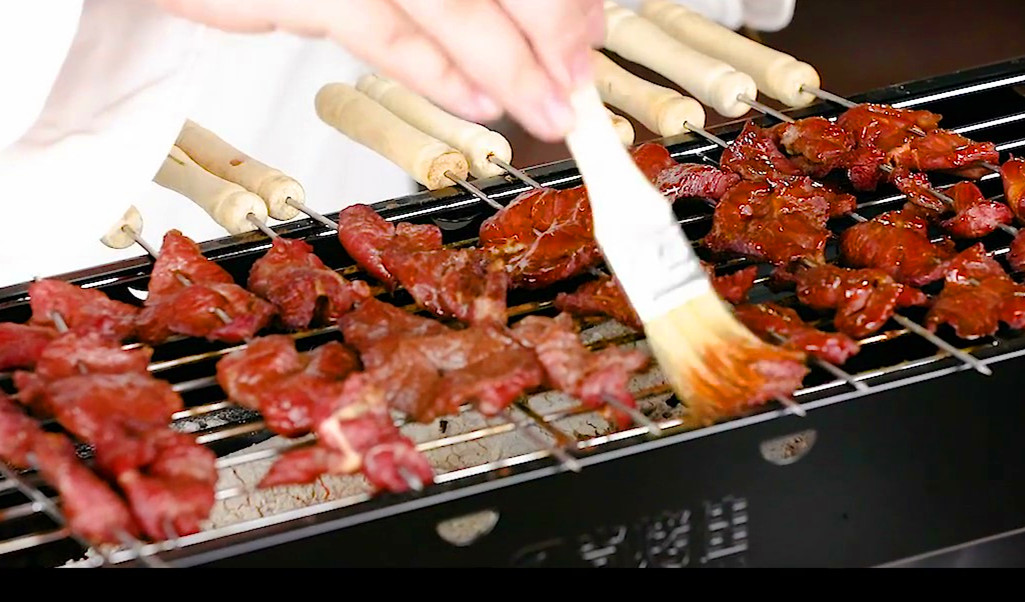
4.食物在烧烤过程中,时间越长,水分和油脂的流失越大,口感越干涩。因此在烤制过程中应在食物上适量刷些烧烤酱或食用油,可保持食物湿润度。

4. During the barbecue process, the longer the time, the greater the loss of water and oil, and the drier the taste. Therefore, in the baking process, you should brush an appropriate amount of barbecue sauce or edible oil on the food to keep the food moist.

5.食物刚上烤架,须待食物受热到一定程度才翻面,不然会破坏纤维,造成肉质变硬。

5. When the food is on the grill, it must be heated to a certain extent before turning it over, otherwise it will destroy the fiber and harden the meat.

代表菜品/Representative dishes

广西菜“明炉烤马山羊肉”,新疆菜“明炉烤肥牛”“明炉烤牛腰”,西藏菜“孜然烤羊排”见图5-1-1,广东菜“蒜茸烤生蚝”“烤麻皮乳猪”,福建菜“蒜蓉鸡蛋烤茄子”见图5-1-2,浙江菜“烤猪蹄”等。

Guangxi cuisine "roasted mashed mutton in open oven", Xinjiang cuisine "roasted fat beef in open oven" and "roasted beef waist in open oven", Tibetan cuisine "roasted lamb chop with cumin" (see figure 5-1-1), Guangdong cuisine "roasted oyster with garlic" and "roasted hemp skin suckling pig", Fujian cuisine "roasted eggplant with garlic egg" (see figure 5-1-2), Zhejiang cuisine "roasted pig's feet", etc.
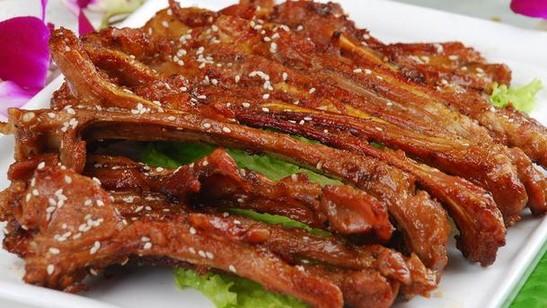
               图 5-1-1 孜然烤羊排 Fig. 5-1-1 roasted lamb chop with cumin
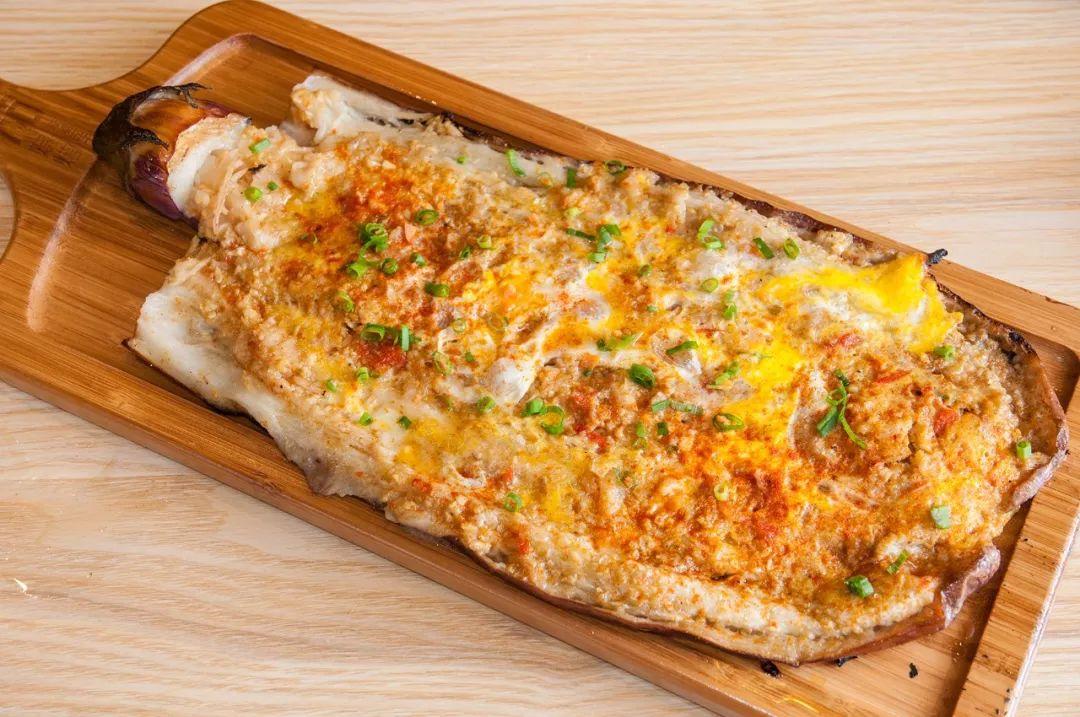
     图 5-1-2 蒜蓉鸡蛋烤茄子 Fig. 5-1-2 roasted eggplant with minced garlic and egg