-
1 知识储备——蒸瓤...
-
2 实训示例——虾胶...
-
3 拓展学习资料(&nb...
知识储备——蒸瓤
Knowledge reserve——Stuffing steaming technique
【技法介绍】/Introduction to techniques
把一种或多种配料加工成泥、茸、丁、粒等形状以后,加入调味料拌匀成馅料,再将其瓤在另一种挖空的主料内或表面,然后采用蒸汽传热的方法制熟,称为蒸瓤法。蒸瓤菜做法,民间素来处处有之,客家菜中尤为常见,八大菜系中苏菜、湘菜、粤菜等菜系中皆有蒸瓤制菜肴,各地蒸瓤菜风味皆具特色,几乎无菜不瓤、无菜不可入瓤。瓤制技法在我国周代就已有类似“瓤菜”的烹制方法。
After one or more ingredients are processed into the shape of mud, antler, dice and grains, add seasoning and mix well to form stuffing, and then put the pulp in another hollowed out main material or surface, and then cooked by steam heat transfer, which is called steaming pulp method. Steamed meat dishes have always been popular among the people, especially in Hakka dishes. Among the eight major cuisines, there are steamed meat dishes in Jiangsu cuisine, Hunan cuisine, Guangdong cuisine and other cuisines. The flavor of steamed meat dishes everywhere has its own characteristics. Almost no dish can not be eaten without meat, and no dish can not be eaten without meat. The technique of meat preparation has been similar to that of "meat dishes" in the Zhou Dynasty.
【技法要求】/Technical requirements
1.原料选用。适宜制作蒸瓤菜的主料,多是具有一定形态和体积的原料,例如整鸡、鸭、鹅、鸽、鹌鹑、海参、鱿鱼、苦瓜、西红柿、丝瓜、茄子、豆腐等;适宜制作蒸瓤菜肴的辅料,其来源较为丰富,羊、牛、猪、鸡等各部位的净肉、各种时令蔬菜、干果、鲜果等均可。
1. Selection of raw materials. The main ingredients suitable for making steamed meat dishes are mostly raw materials with certain shape and volume, such as whole chicken, duck, goose, pigeon, quail, sea cucumber, squid, balsam pear, tomato, towel gourd, eggplant, tofu, etc; It is suitable for making steamed meat dishes. Its sources are rich, including pure meat, various seasonal vegetables, dried fruits and fresh fruits of sheep, cattle, pigs, chickens and other parts.
2.刀工处理。若是整只的鸡、鸭、鹅、鸽等做主料,均需要进行整只剔骨;若是整鱼,除按常规方法刮鳞抠鳃外,内脏则应从鱼鳃或鱼嘴处搅除;若是瓜果蔬菜,先用小刀在蒂部下刻一圈,取下蒂盖部分,余下部分再用勺口挖出内瓤;如果是冬瓜、丝瓜、茄子等,则切成夹刀片即可;辅料一般加工成泥、末、粒等形状。
2. Knife handling. If the whole chicken, duck, goose and pigeon are used as the main ingredients, the whole bone needs to be removed; If the whole fish is used, the internal organs should be removed from the gills or mouth of the fish, in addition to scraping the scales and pulling the gills according to the conventional method; For melons, fruits and vegetables, first carve a circle under the pedicle with a knife, remove the part of the pedicle cover, and then dig out the inner flesh with the mouth of the spoon; If it is white gourd, towel gourd, eggplant, etc., cut it into blades; Auxiliary materials are generally processed into mud, powder, grain and other shapes.
3.瓤制成形。将调制好味的辅料填瓤入预先制成的主料内或表面,即成瓤菜生坯。瓤制方法有“夹瓤”、“整只象形瓤”和“整段瓤”三种。
3. Pulp making and shaping. The prepared flavored excipients are filled into the pulp or surface of the pre-made main material to form the pulp vegetable green body. There are three kinds of pulp making methods, including "clip pulp", "whole pictographic pulp" and "whole section pulp".
4.蒸制成菜。瓤菜生坯制好后,即可根据主料的性质采用不同的蒸汽方法,如“原汽蒸”、“放汽蒸”进行蒸制成熟,蒸好后浇上制好的味汁。
4. Steamed into vegetables. After the meat vegetable green body is prepared, different steam methods can be adopted according to the properties of the main material, such as "original steam" and "steam release" to steam and mature. After steaming, pour the prepared flavor juice.
【代表菜品】/Representative dishes
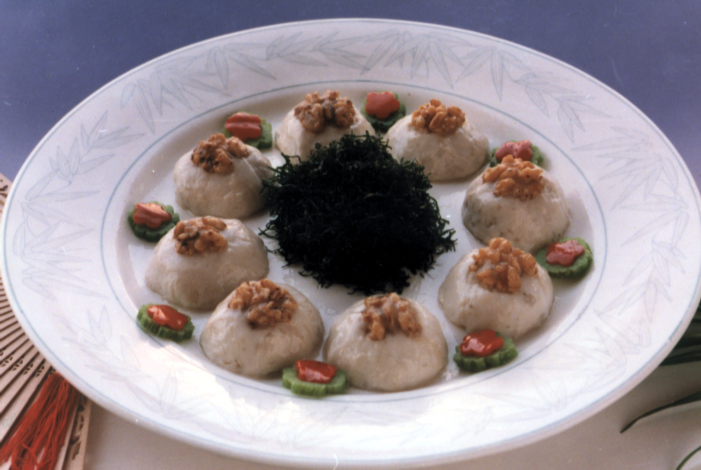
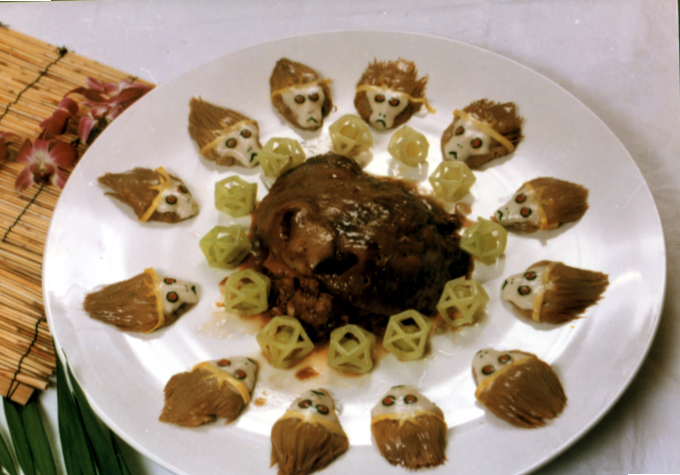
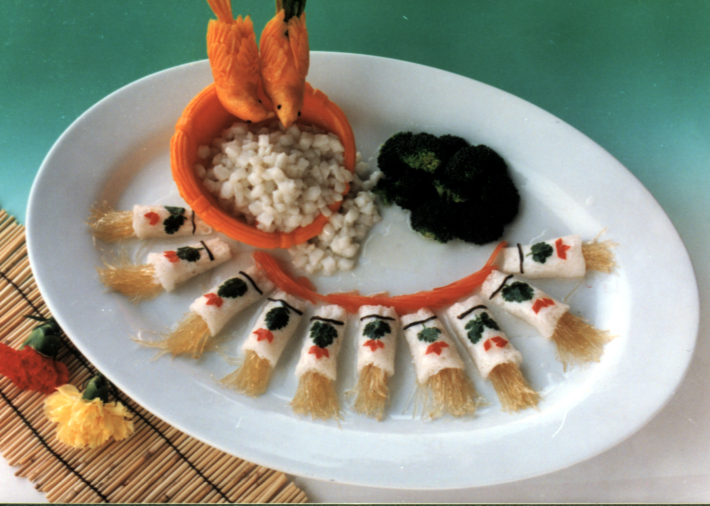
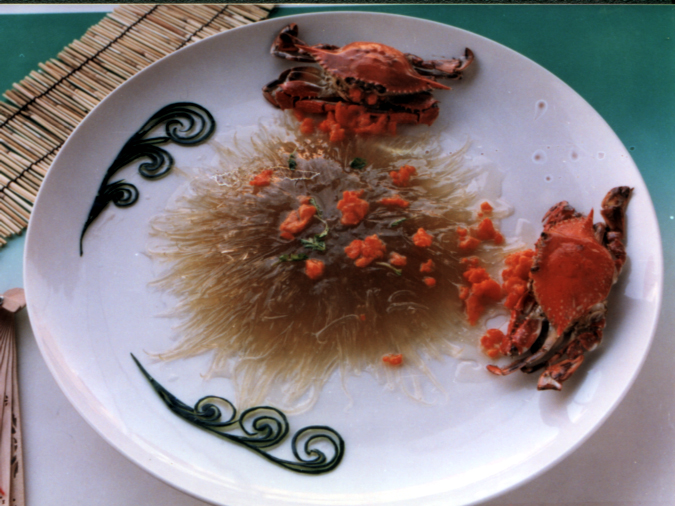
广西菜“清蒸瓤羔蟹”(见图4-5-1)“蒸瓤苦瓜”,广东菜“鸡茸瓤海参”“虾胶瓤鱼肚”,山西菜“鸡脯肉瓤蛋皮”,安徽菜“鲜肉瓤豆腐”(见图4-5-2),陕西菜“瓤活”,福建菜“蒸瓤豆腐干”“蒸瓤面筋”等。
Guangxi cuisine "steamed stuffed lamb crab" (see Figure 4-5-1) "steamed stuffed balsam pear", Guangdong cuisine "chicken stuffed sea cucumber" and "shrimp glue stuffed fish belly", Shanxi cuisine "chicken breast meat stuffed egg skin", Anhui cuisine "fresh meat stuffed tofu" (see figure 4-5-2), Shaanxi cuisine "pulp live", Fujian cuisine "steamed meat bean rotten dry" and "steamed meat gluten", etc.
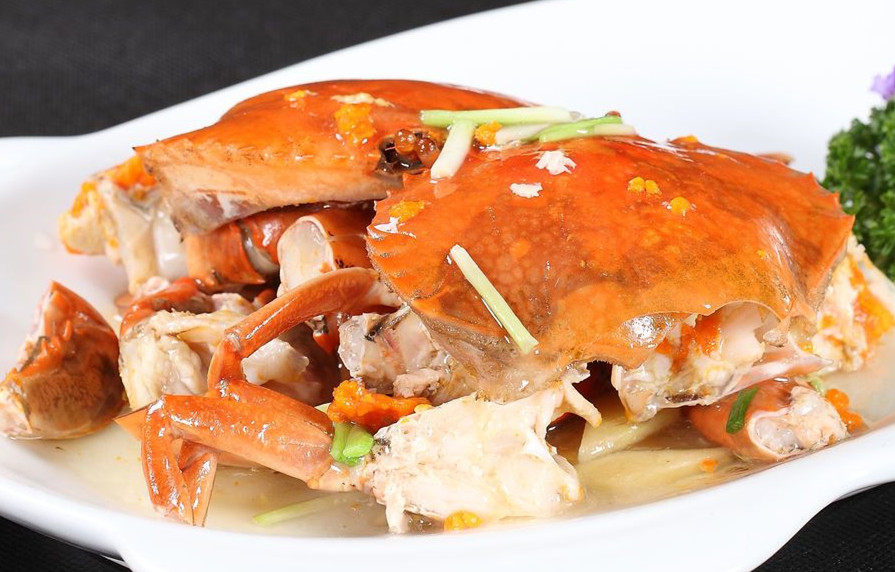
图 4-5-1 清蒸瓤羔蟹 Fig. 4-5-1 steamed stuffed lamb crab
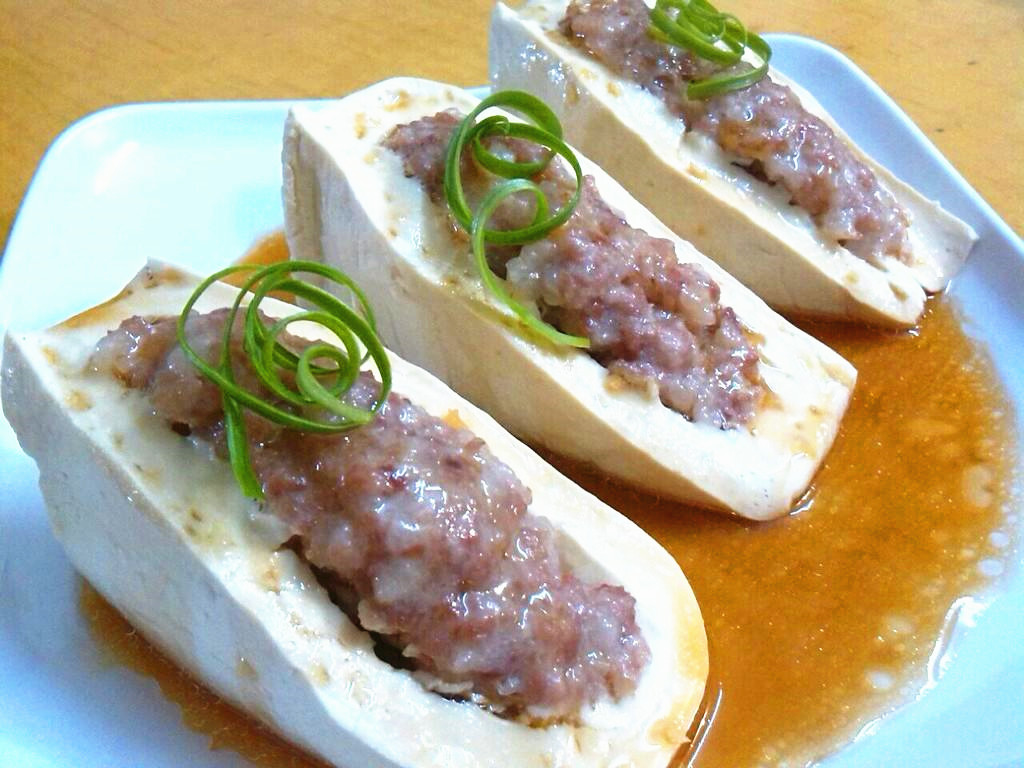
图 4-5-2 鲜肉瓤豆腐 Fig. 4-5-2 tofu with fresh meat