-
1 知识储备——蒸扣...
-
2 实训示例——芋头...
-
3 拓展学习资料(&nb...
知识储备——蒸扣
Knowledge reserve——Bowl steaming technique
【技法介绍】/Introduction to techniques
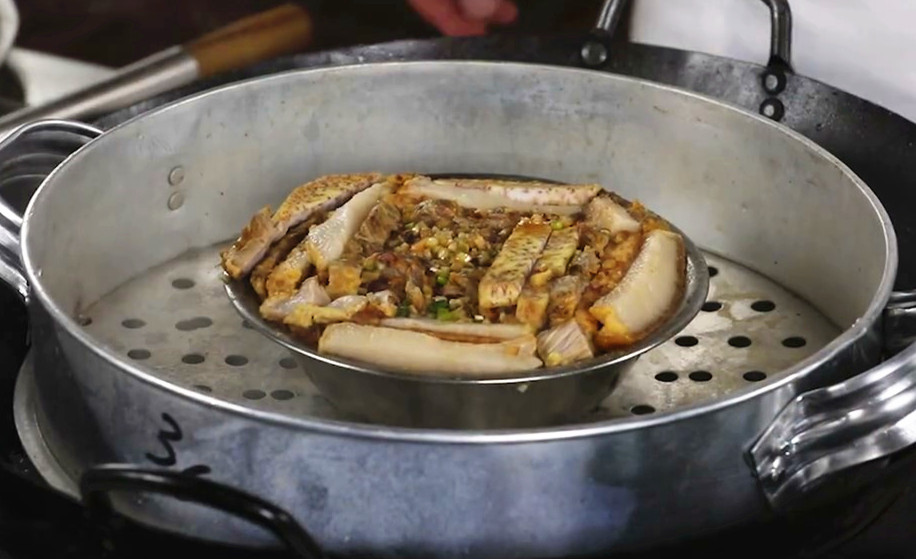
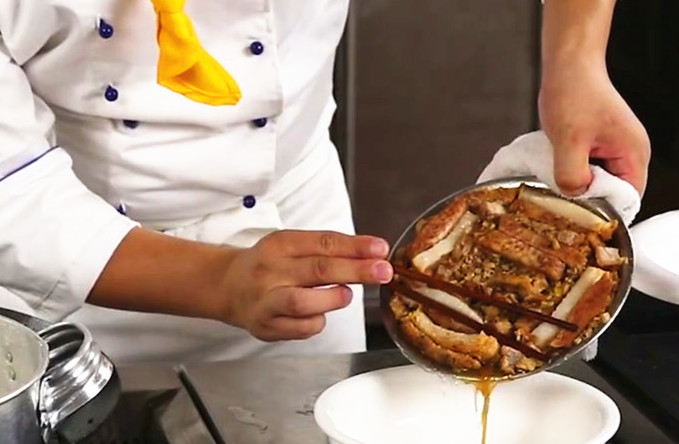
将经过初加熟处理后的主料,切形摆入扣碗中,加料头、调料及少量汤水,放入蒸笼中,用蒸汽传热至质脢、味透入,出笼沥出汤汁,翻扣入菜碟中,这种加热工序叫蒸扣法。
Cut the main ingredients after the initial ripening treatment into a buckle bowl, put the feeding head, seasoning and a small amount of soup into the steamer, heat it with steam until the quality and taste penetrate, drain the soup out of the cage, and turn it into the dish. This heating process is called steaming buckle method.
四川菜中有“三蒸九扣八大碗”,湖北菜中有“三蒸九扣十大碗,不是蒸笼不请客”,广西菜中有“全州十大碗”,河南菜中有“开封八大扣碗菜”等说法。这些民间总结很好的反映了“蒸扣”技法在中式烹调中所占有的重要作用及广泛的群众基础。
Sichuan cuisine has "eight bowls with three steams and nine buckles", Hubei cuisine has "ten bowls with three steams and nine buckles, not steamers and no treat", Guangxi cuisine has "ten bowls in the whole Prefecture", and Henan cuisine has "eight bowls in Kaifeng". These folk summaries well reflect the important role of "steaming button" technique in Chinese cooking and its broad mass base.
【技法要求】/Technical requirements
1.刀工要过硬。各种原料需要根据不同的成菜要求,使用不同的刀具,运用不同的刀法,加工成一定的形状后才能精心装碗、蒸制、翻扣,以满足食用需求和成菜有美好的形态。
1. The knife should be excellent. All kinds of raw materials need to be processed into a certain shape with different knives and different knife methods according to different requirements for cooking, so as to carefully load the bowl, steam and turn the buckle, so as to meet the food demand and have a beautiful shape.
2.需要有扎实的调味基本功。调味是蒸扣菜制作中的一道重要工序,是根据不同的原辅料、口味进行的准确、适当、相宜的调制过程,主要在加热前完成,而且要一次调准,蒸好后的蒸菜多直接翻扣于盘中食用,不好再补充味道。
2. Solid basic seasoning skills are required. Seasoning is an important process in the production of steamed vegetables. It is an accurate, appropriate and appropriate preparation process according to different raw and auxiliary materials and tastes. It is mainly completed before heating, and it should be adjusted at one time. Most steamed vegetables after steaming are directly turned over on the plate for consumption, which is not good to supplement the taste.
3.装盘很有讲究。具有一定的技术性和艺术性,按照一定的顺序和规律进行装盘的,按一定的形式将主料摆放在碗底,上面放入适量的辅料,待蒸好后再翻扣在另一盘中,这时所呈现的形状效果,才是该蒸菜最终要达到的目的。
3. It's very particular about loading. It has certain technicality and artistry. If the dish is loaded according to a certain order and law, place the main ingredients at the bottom of the bowl according to a certain form, put an appropriate amount of auxiliary ingredients on it, and then turn them on another plate after steaming. At this time, the shape effect presented is the ultimate goal of the steamed dish.
4.火候控制要恰当。蒸扣菜肴一般选用质老难熟或体大形整的原料,需要长时间才能使其变软、变酥,如果火候不到,菜肴质感也是老韧发艮,因此,需要选用中火或稍旺的火、沸水、足气、长时间蒸的方法。
4. The fire control shall be appropriate. Steaming buckle dishes generally use raw materials that are old and difficult to mature or large and complete in shape. It takes a long time to make them soft and crisp. If the heat is not reached, the texture of the dishes is also old and tough. Therefore, it is necessary to choose the method of medium fire or slightly prosperous fire, boiling water, sufficient Qi and long-term steaming.
【代表菜品】/Representative dishes
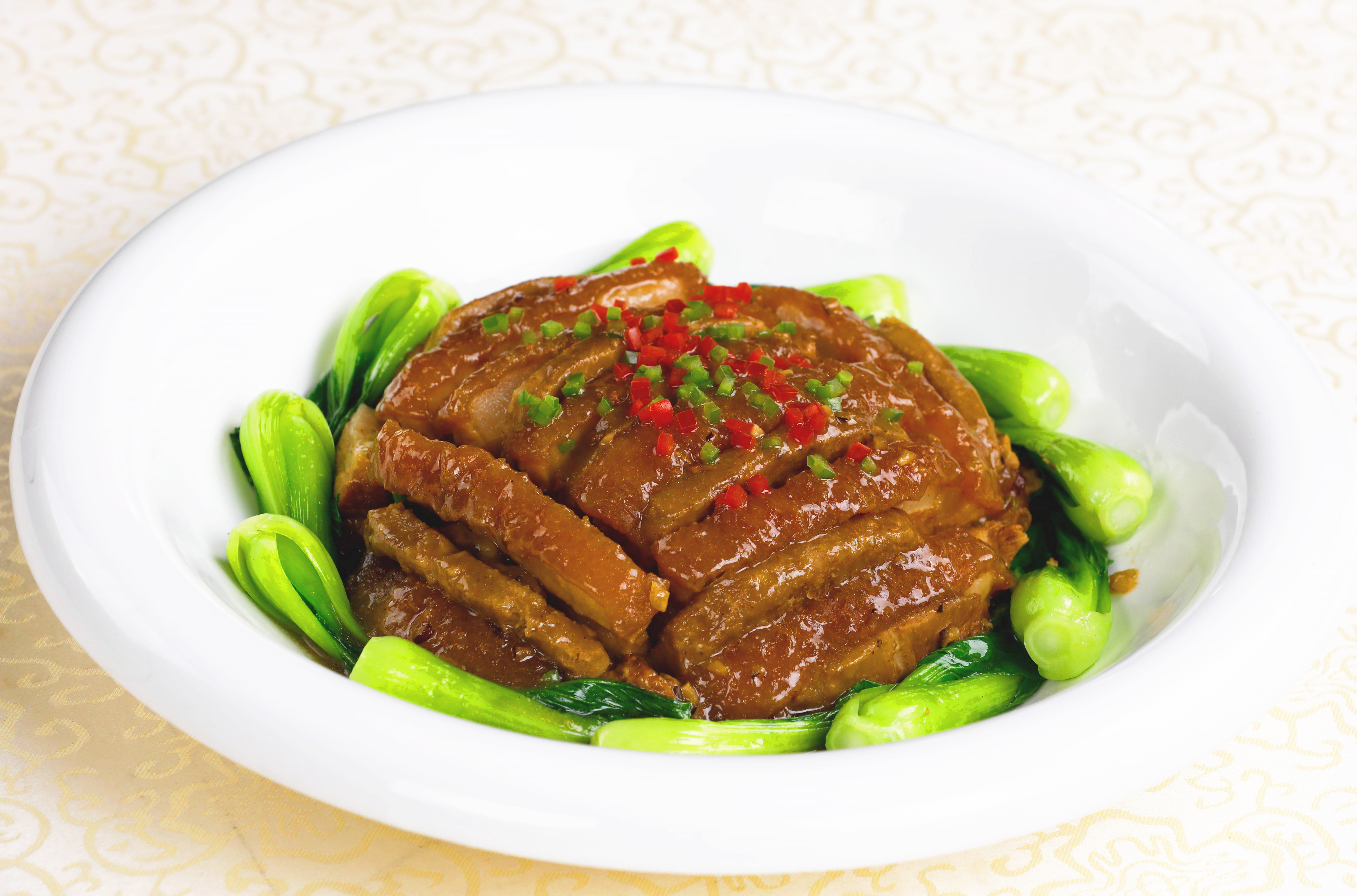
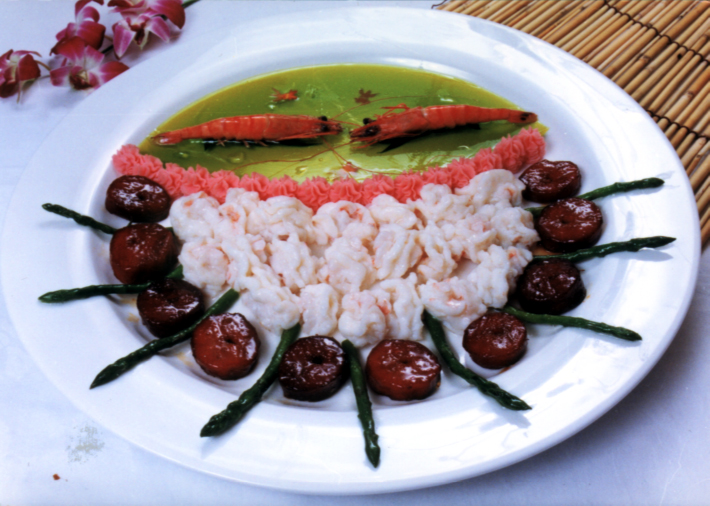
广西菜“荔浦芋头扣肉”、“环江香牛扣”,四川菜“香碗”、“夹沙肉”(见图4-4-1),河南菜“莲夹扣碗”、湖北菜“蒸扣猪肘”(见图4-4-2),广东菜“梅菜扣肉”等。
Guangxi cuisine "Lipu Taro meat clasp", "Huanjiang xiangniukou", Sichuan cuisine "fragrant bowl" and "sand meat" (see figure 4-4-1), Henan cuisine "lianjiakou bowl", Hubei cuisine "steamed pork elbow" (see Figure 4-4-2), Guangdong cuisine "plum vegetable meat clasp", etc.
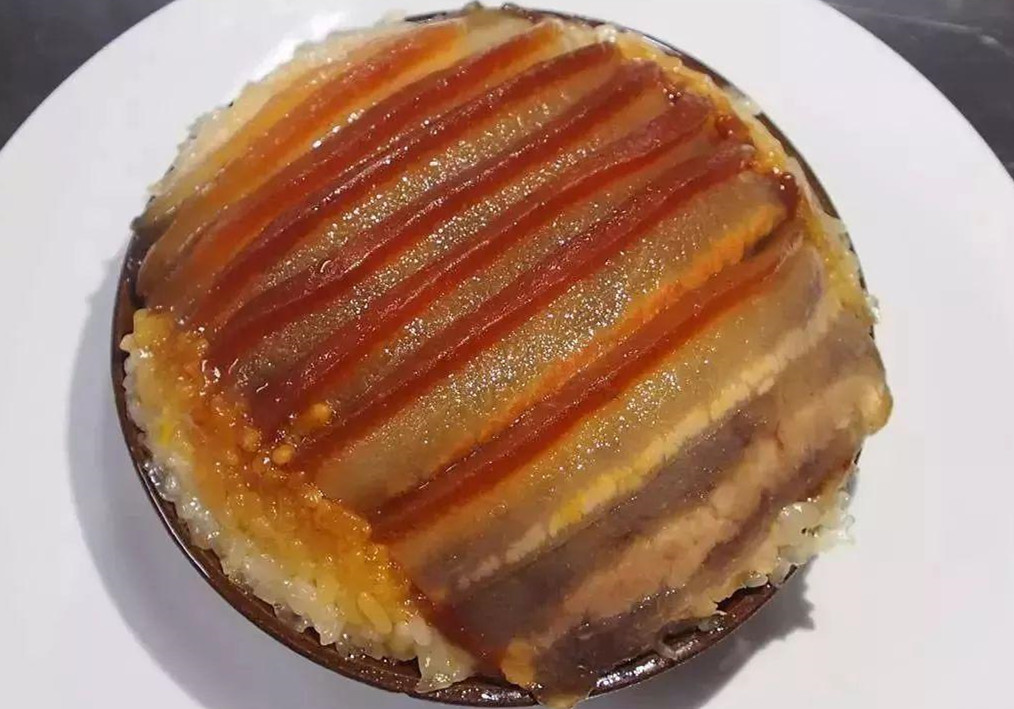
图 4-4-1 夹沙肉 Fig. 4-4-1 meat with sand
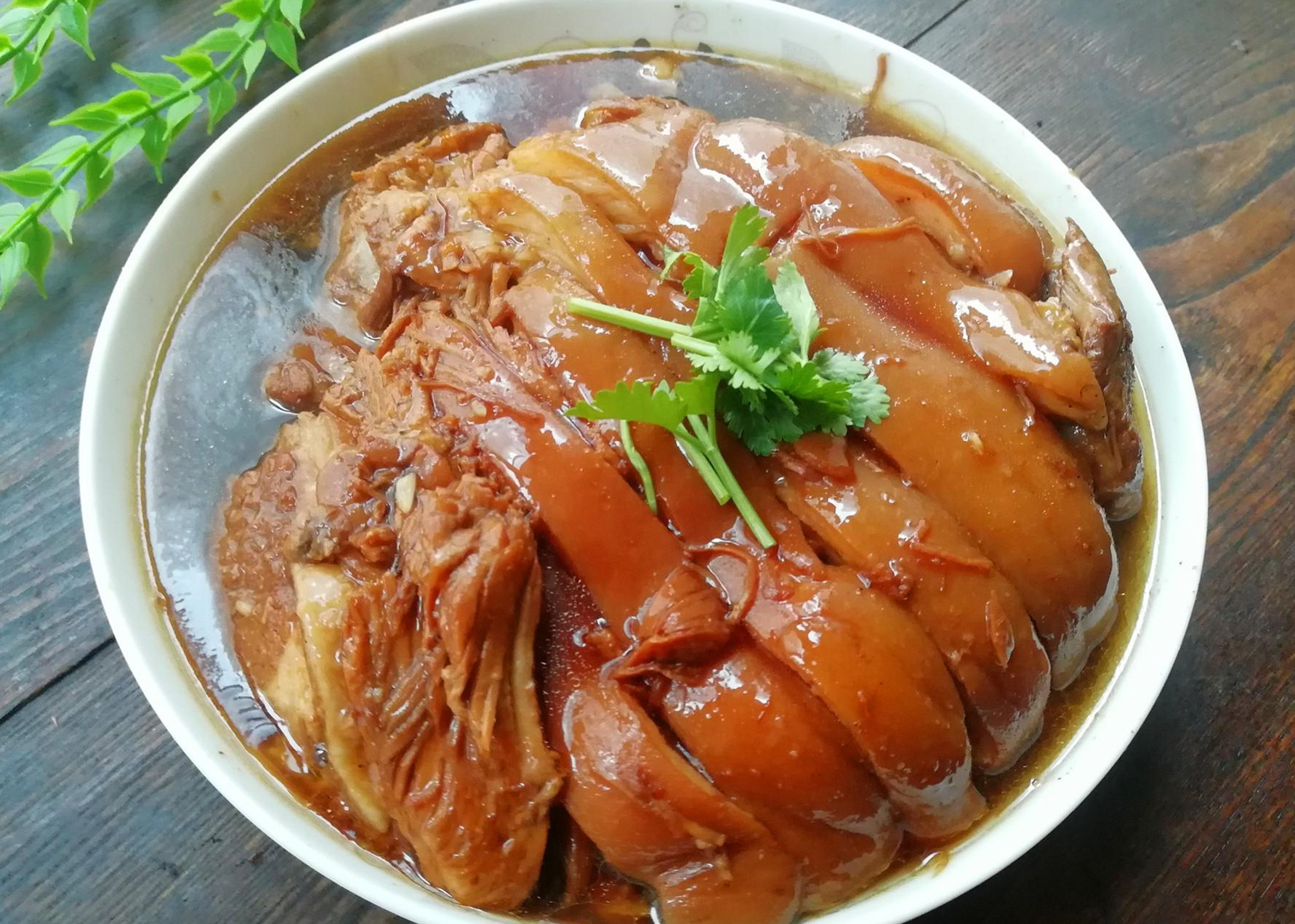
图 4-4-2 蒸扣猪肘 Fig. 4-4-2 steamed pork elbow