-
1 知识储备——烩法...
-
2 实训示例——烩五...
-
3 拓展学习资料(&nb...
知识储备——烩法
Knowledge reserve——Decocting technique
【技法介绍】/Introduction to techniques
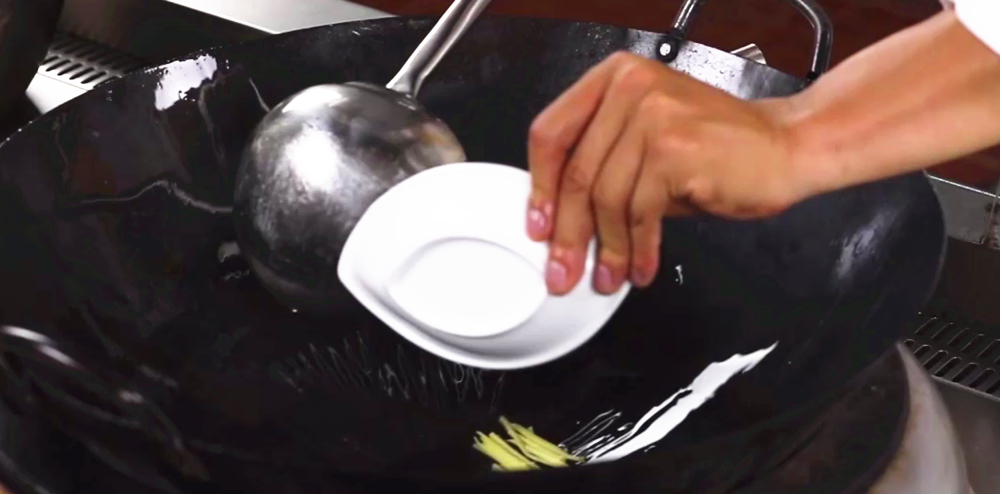
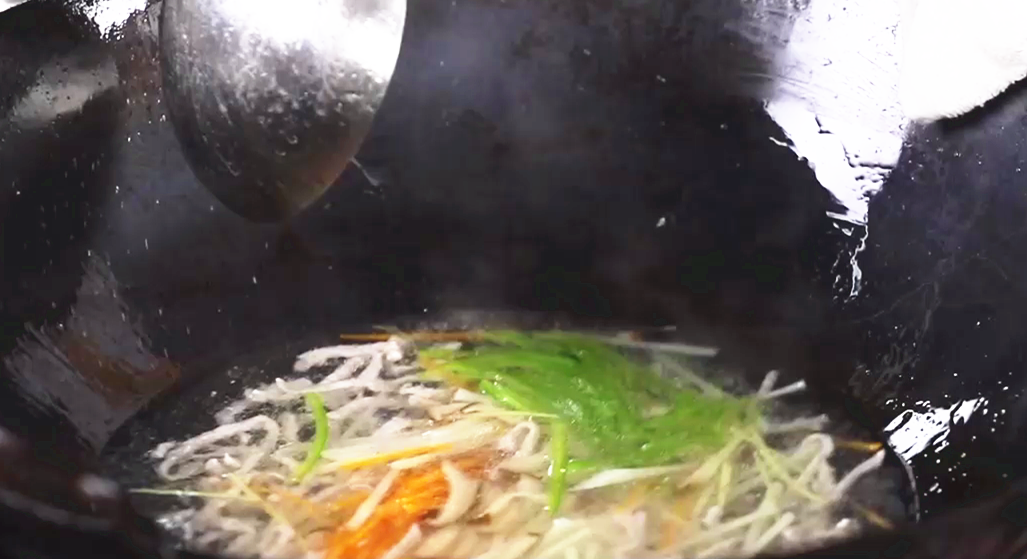
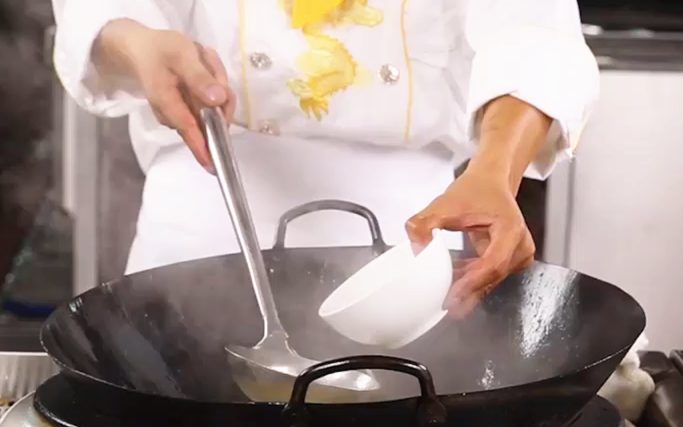
将加工成形的主料、配料放入热锅中,加入原料1.5~3倍量的汤水,加入调味料,加热熟透入味,勾稀薄芡,出锅用凹碟盛装,这种加热制法叫烩制技法。烩菜多以质地细腻和柔软的动物类原料为主,如鸡、鸭、猪腰、猪肚、鸭舌、鸡血、虾仁、海参、干贝、乌鱼蛋等。植物性原料以脆嫩柔软的植物类原料为辅,如豌豆、冬笋、冬菇、鲜口蘑、豆腐、腐竹等。
Put the processed main materials and ingredients into the hot pot, add 1.5 ~ 3 times the amount of soup, add seasoning, heat them to taste, thicken them thinly, and put them in a concave dish out of the pot. This heating method is called stewing technique. Stewed dishes are mainly made of fine and soft animal materials, such as chicken, duck, pork loin, pork belly, duck tongue, chicken blood, shrimp, sea cucumber, scallop, squid egg, etc. Plant raw materials are supplemented by crisp, tender and soft plant raw materials, such as peas, winter bamboo shoots, winter mushrooms, fresh Tricholoma, tofu, fermented bean curd, etc.
以汤汁的色泽划分,烩可以分为:
According to the color of soup, stew can be divided into:
1.红烩:以有色调料酱汁,生蚝油等,烩制成菜,具有汁稠色重,鲜香味厚的特点。
1. Red stew: it is made of colored seasoning, sauce, oyster sauce, etc. it has the characteristics of thick juice, heavy color and thick fresh flavor.
2.白烩:以无色调味品调料精盐等与高级奶白汤烩制成菜具有汤汁浓白,口味浓香等特点。例如,奶汤乌鱼蛋、白烩腐竹、蒲菜烩腐竹(见图3-4-1)等。
2. White stew: the dish is made by stewing colorless condiments, seasoning, refined salt, etc. with high-grade milk white soup, which has the characteristics of thick white soup, strong flavor and so on. For example, black carp eggs in milk soup, white braised beancurd, Pucai braised beancurd (see figure 3-4-1), etc.
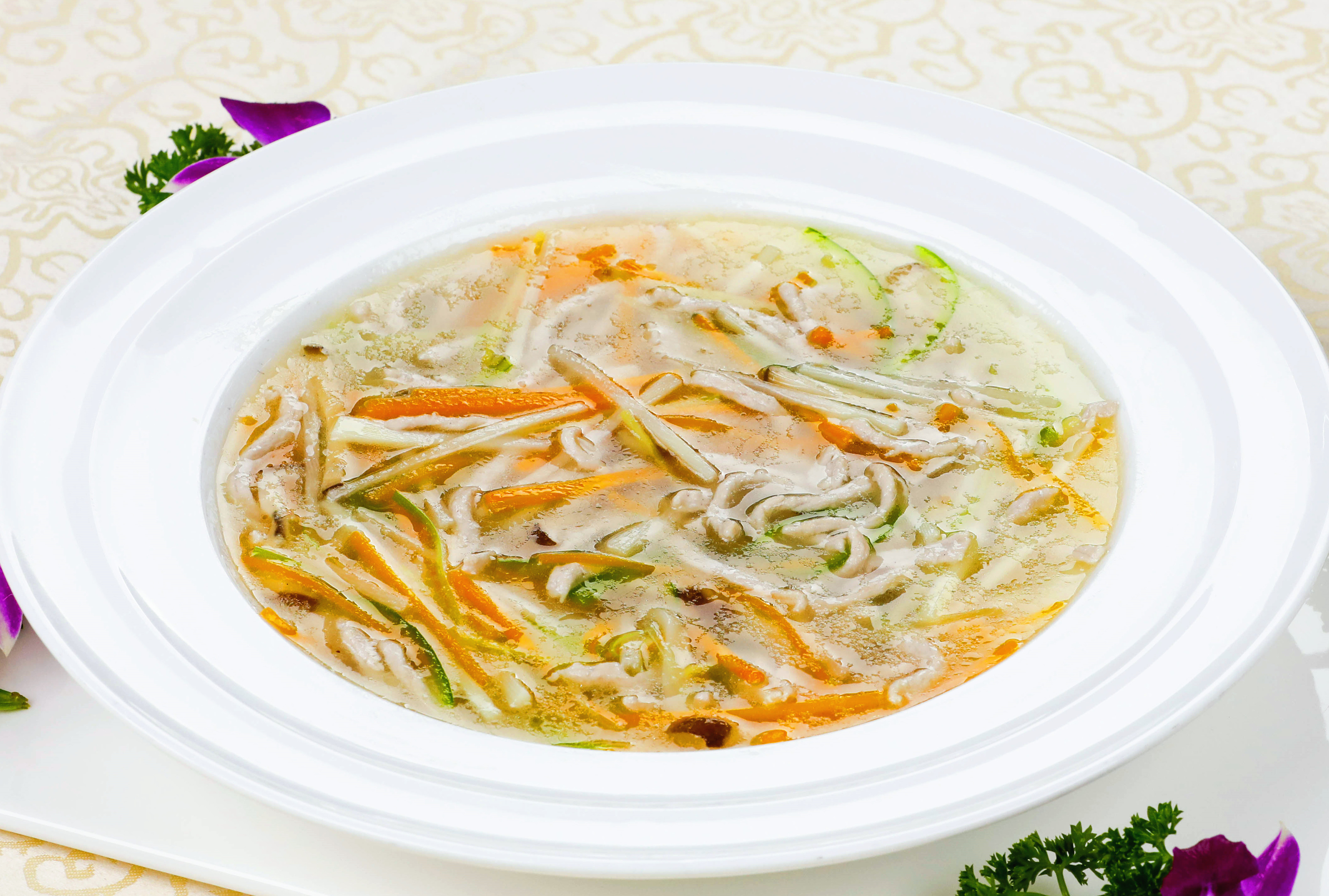
3.清烩:将锅烧热加入底油,用葱,姜炝锅,加汤,但不加有色调料,用旺火使底油随汤滚开,随即将原料下锅,出锅前撇去浮沫,成菜不勾芡,即为清烩。
3. Clear stew: heat the pot, add the bottom oil, stir fry the pot with scallion and ginger, add soup, but do not add colored seasoning, use high fire to make the bottom oil boil with the soup, then put the raw materials into the pot, skim off the floating foam before leaving the pot, and the finished dish is clear stew without thickening.
4.五彩烩:以五种(也可用多种,多色)原料本身的色彩加汤汁进行烩制成菜。
4. Multicolored stew: Stew with the color of five (or multi-color) raw materials and soup to make vegetables.
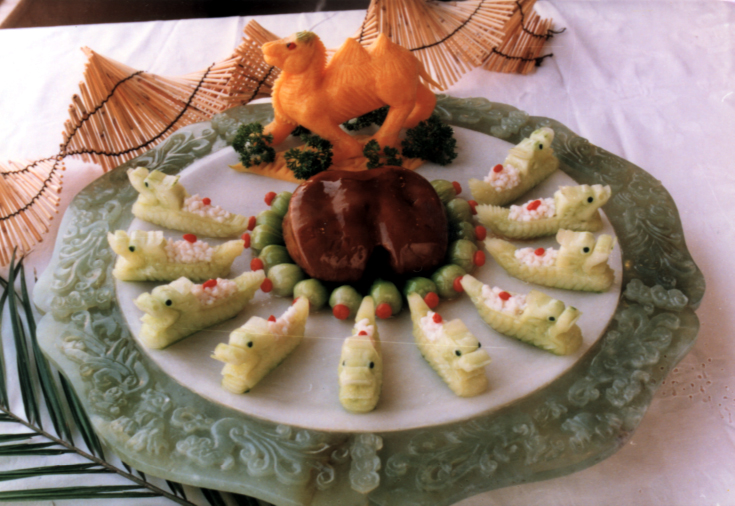
5.金汤烩:以南瓜汁调色调味,多与质地细嫩软滑的原料搭配配。例如,金汤内脂豆腐,金汤肥牛(见图3-4-2)等菜肴。其特点是色泽金黄,香味浓郁。
5. Stew in golden soup: color and flavor with pumpkin juice, which is often matched with soft and smooth raw materials. For example, fatty tofu in golden soup, fat beef in golden soup (see figure 3-4-2) and other dishes. It is characterized by golden color and strong aroma.
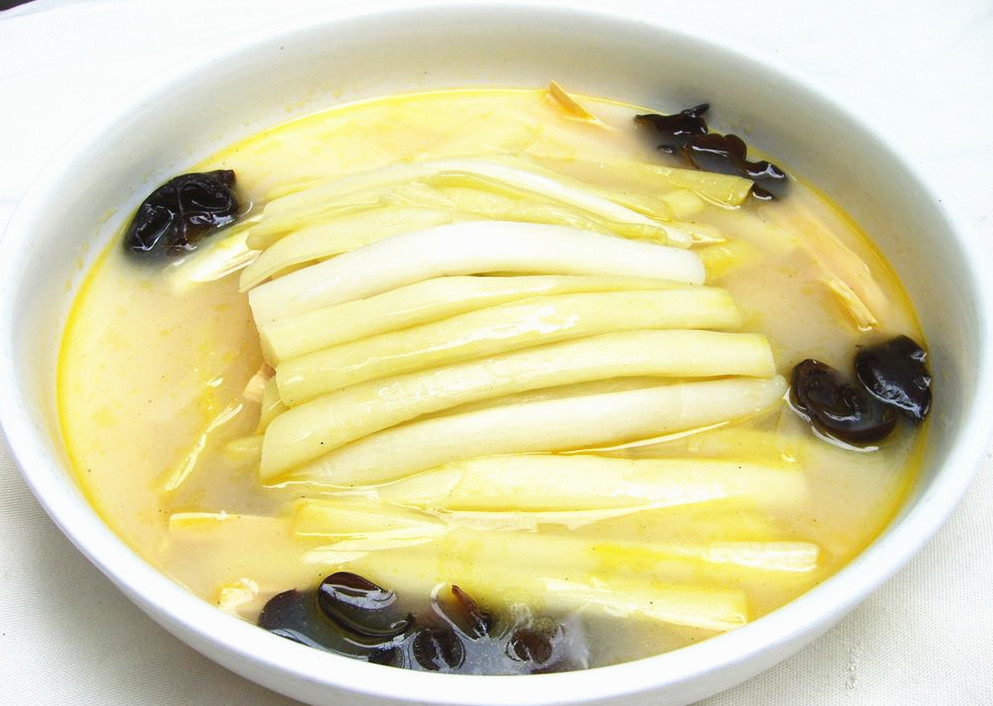
图 3-4-1 蒲菜烩肥牛 Fig. 3-4-1 braised beef with cattail
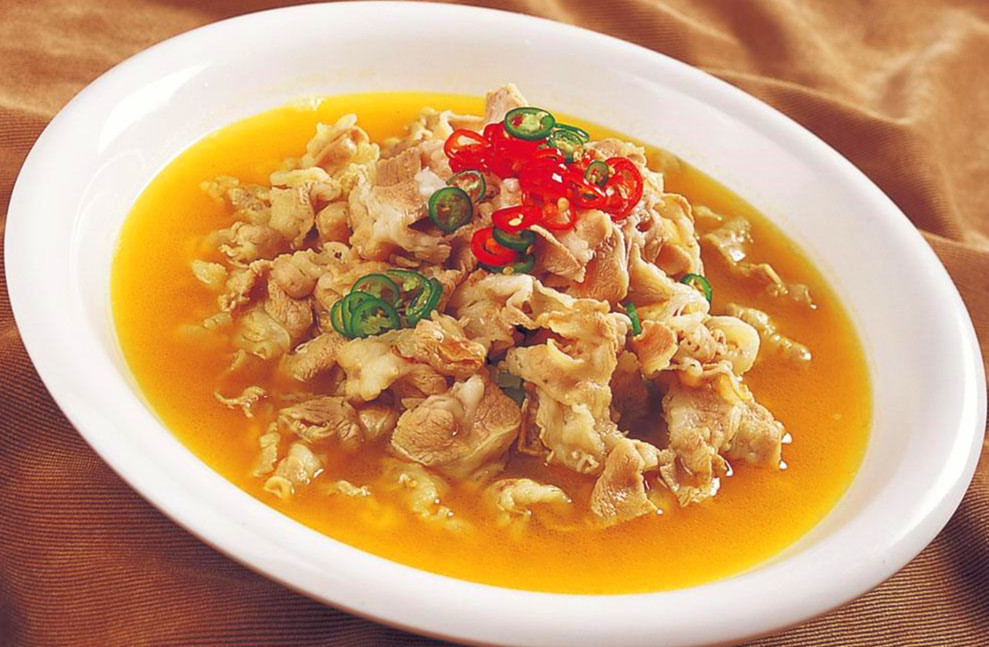
图 3-4-2 金汤肥牛 Fig. 3-4-2 fat cattle in golden soup
【技法要求】/Technical requirements
1.烩菜原料鲜嫩,酥软,不能带骨,不能带腥、膻、臊异味,以熟料半熟料或易成熟为主,要求加工的细小,薄,整齐,均匀,美观。
1. The raw materials of stewed vegetables are fresh, tender and soft, without bone, fishy, mutton and smelly smell. They are mainly clinker, semi clinker or easy to mature. The processing is required to be small, thin, neat, uniform and beautiful.
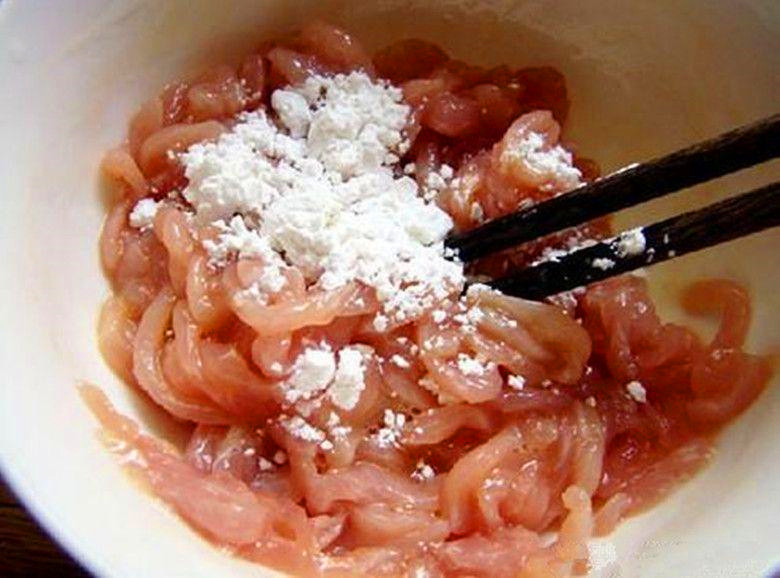
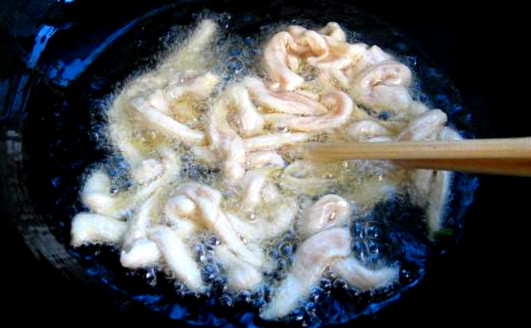
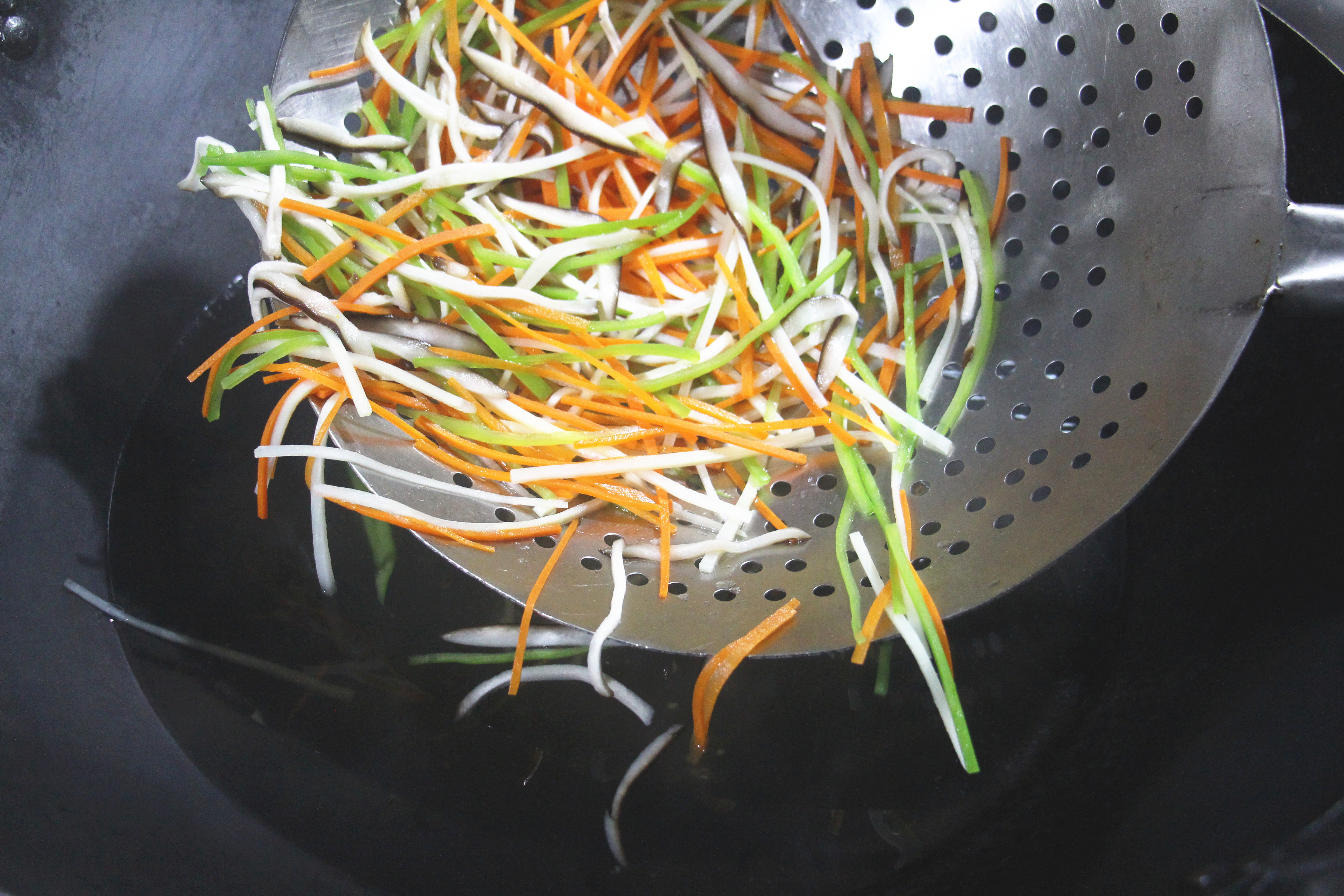
2.禽畜肉类的生料切制后,均宜上浆并经温油划熟后在烩制,植物类的生料切制后,均宜滚水烫后在烩制,熟料经加工后,可直接烩制。
2. The raw materials of poultry and livestock meat should be pasted and cooked with warm oil before stewing. The raw materials of plants should be boiled and scalded before stewing. The clinker can be directly stewed after processing.
3.烩菜原料均不宜在汤内久煮,这需要在烩制前做好初步熟处理,一般以汤滚即勾芡为宜,以保证成菜鲜嫩。
3. The raw materials of stewed vegetables should not be boiled in the soup for a long time, which requires preliminary ripening treatment before stewing. Generally, it is appropriate to thicken the soup immediately to ensure that the finished vegetables are fresh and tender.
4.烩菜汤料各半。勾芡是重要技术环节,芡要稠稀适度。略浓于“米汤”过稀会泻芡,原料浮不起来过浓,粘稠糊嘴。
4. Half stewed vegetables and half soup. Thicken is an important technical link. Thicken moderately. It is slightly thicker than "rice soup". If it is too thin, it will thicken. The raw materials can't float. If it is too thick, it will be sticky.
5.炸烧烩菜肴勾芡程序和技法略有不同。即先将调料汤煮沸,并勾芡后,再将已炸熟的 主辅原料下锅烩一下即成,这种烩制的菜肴,原料太多先经油或烫热制成后较为鲜嫩。
5. The procedures and techniques of frying, burning and stewing dishes are slightly different. That is, first boil the seasoning soup and thicken it, and then put the fried main and auxiliary raw materials into the pot to stew. This stewed dish has too many raw materials. It is made of oil or hot, and then it is more fresh and tender.
6.烩菜的美味大半在汤。所用的汤有两种,即高汤和白汤,高汤用于清咸味。汤汁清白的烩菜,白汤用于口感厚实,汤汁浓白或红色的菜。
6. Most of the delicacy of stew is in soup. There are two kinds of soup used, high soup and white soup. High soup is used for clear and salty taste. Stew with pure soup. White soup is used for dishes with thick taste and thick white or red soup.
7.突出烩菜的风味特色。需要充分考虑好主辅料的色香味质感,荤菜比例等的搭配。
7. Highlight the flavor characteristics of stewed vegetables. It is necessary to fully consider the color, flavor and texture of main and auxiliary materials and the proportion of meat dishes.
8.烩制的时间不要太长,一般在5min左右即可。
8. The stewing time should not be too long, generally about 5min.
9.有些菜肴需要大油量时,油要分几次下入,这样才能保证菜肴既不吐油又香。
9. When some dishes need a large amount of oil, the oil should be poured in several times, so as to ensure that the dishes do not spit oil and smell delicious.
【代表菜品】/Representative dishes
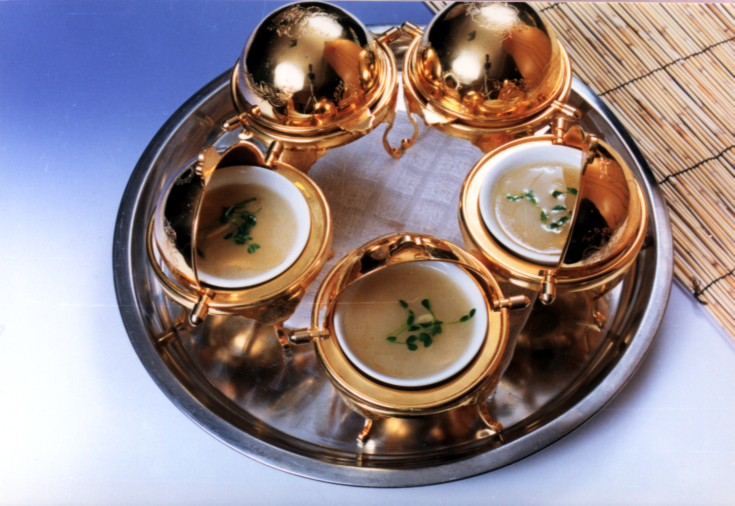
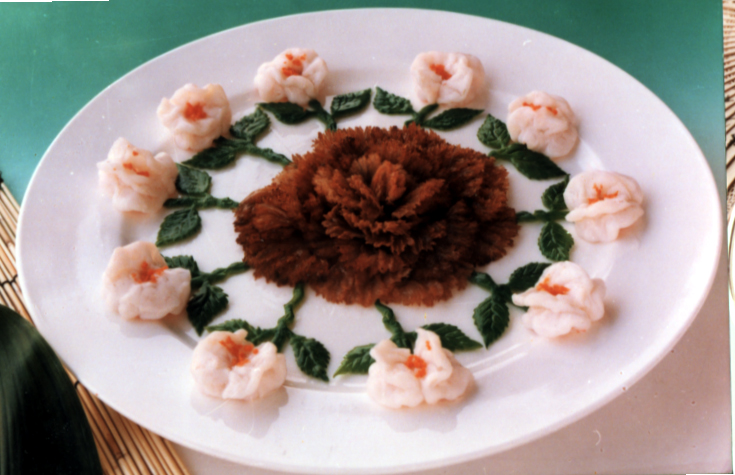
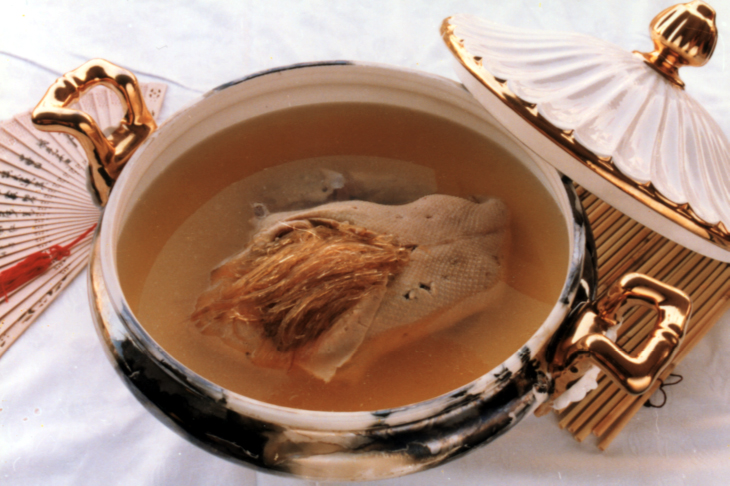
广西菜“鸡茸宴”,北京菜“烩乌鱼蛋”(见图3-4-3)、“烩鸡丝”,山东菜“烩什锦丁”,四川菜“鸡丝烩鱼肚”,浙江菜“莼菜鲈鱼烩”(见图3-4-4),天津菜“奶汤银丝”,广东菜“生拆蟹肉烩海虎翅”(见图3-4-5)等。
Guangxi cuisine "chicken antler feast", Beijing cuisine "braised black carp egg" (see figure 3-4-3), "braised chicken shreds", Shandong cuisine "braised assorted diced", Sichuan cuisine "braised fish maw with chicken shreds", Zhejiang cuisine "braised sea bass with Ulva" (see figure 3-4-4), Tianjin cuisine "silver shreds in milk soup", Guangdong cuisine "braised sea tiger wings with raw and disassembled crab meat" (see figure 3-4-5), etc. 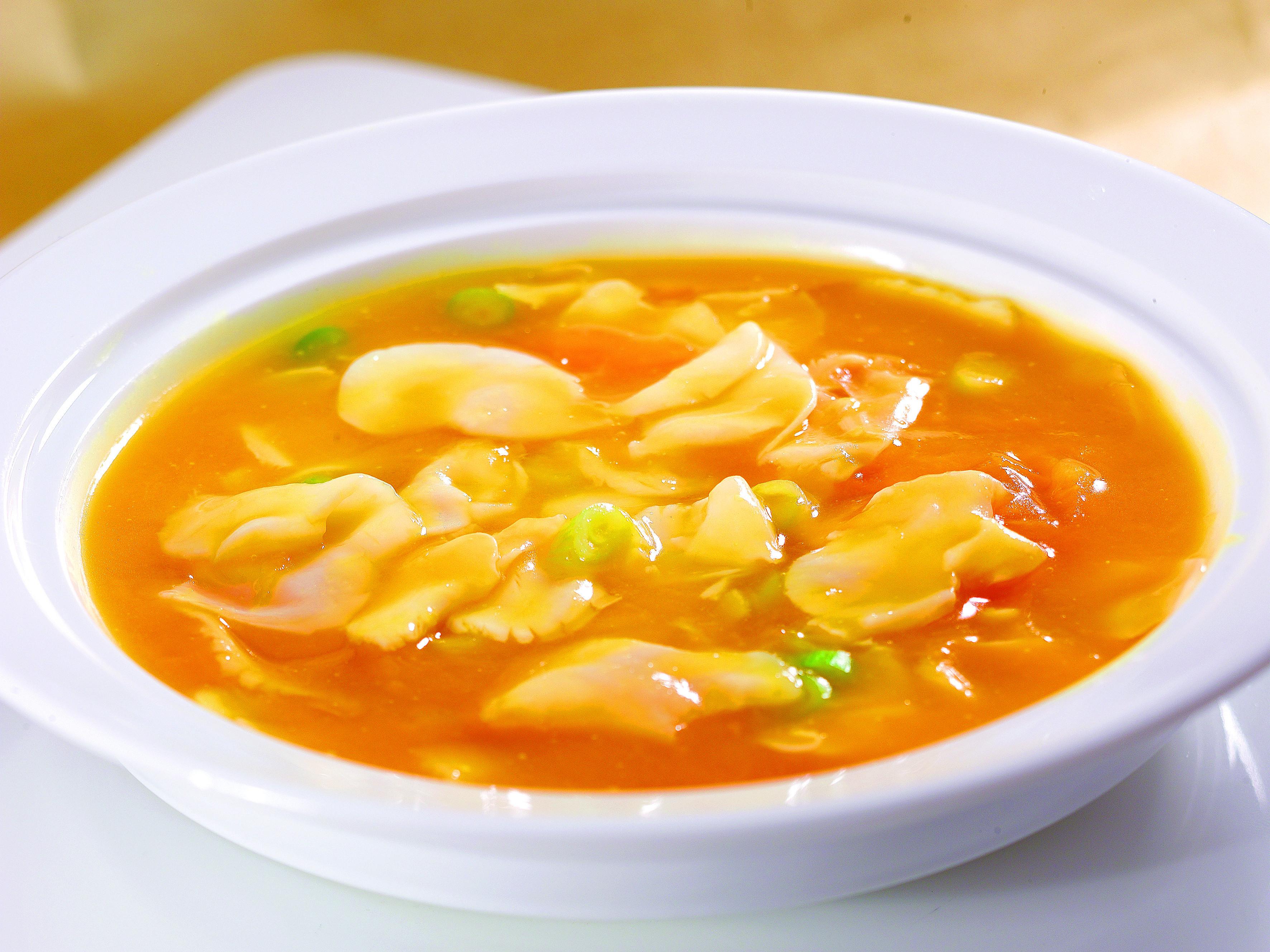
图 3-4-3 烩乌鱼蛋 Fig. 3-4-3 stewed squid eggs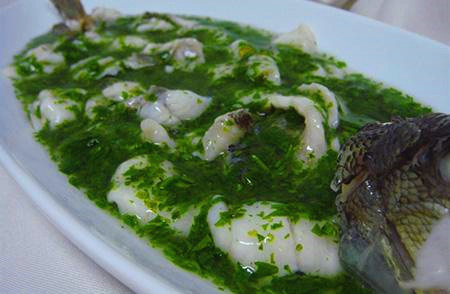
图 3-4-4 莼菜鲈鱼烩 Fig. 3-4-4 braised sea bass with Ulva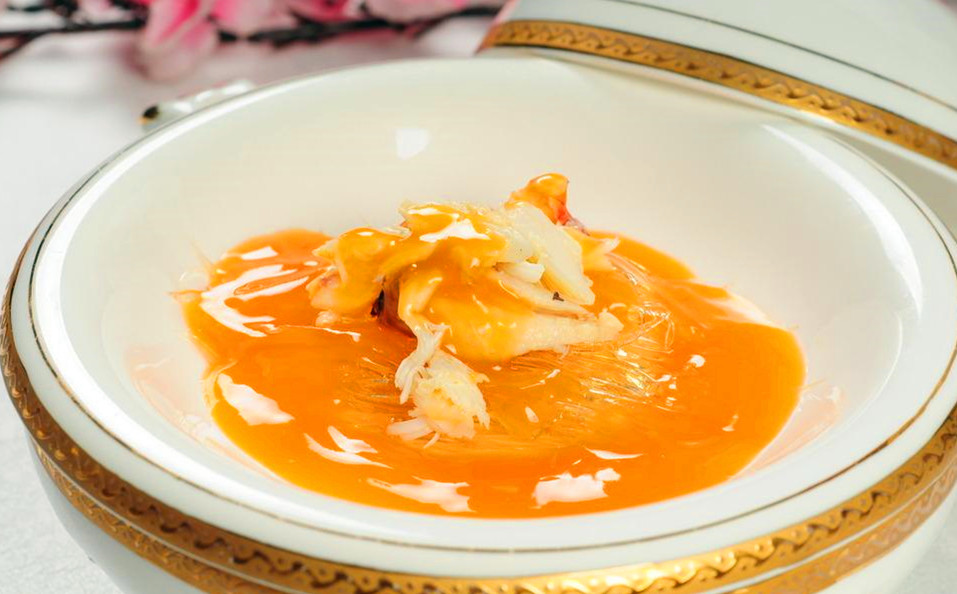
图 3-4-5 生拆蟹肉烩海虎翅 Fig. 3-4-5 braised sea tiger wings with raw and disassembled crab meat