目录

  • 1 绪论(Introduction)
    • 1.1 中式烹调工艺概述(Overview of Chinese cooking technology)
  • 2 锅烹类技法实训(Pot cooking skills training)
    • 2.1 学习目标(Learning objectives)
    • 2.2 锅烹类技法导读(Introduction to pot cooking techniques)
    • 2.3 项目一:滑炒技法(Item 1: Slippery frying technique)
    • 2.4 项目二:爆炒技法(Item 2: Stir fry technique)
    • 2.5 项目三:清炒技法(Item 3: Clear frying technique)
    • 2.6 项目四:生炒技法(Item 4:Raw frying technique)
    • 2.7 项目五:熟炒技法(Item 5:Cooked frying technique)
    • 2.8 项目六:煸炒技法(Item 6:Stir-fry technique)
    • 2.9 项目七:贴制技法(Item 7:Paste technique)
    • 2.10 项目八:煎制技法(Item 8:Decocting technique)
    • 2.11 项目九:盐焗技法(Item 9:Salt baking technique)
    • 2.12 本章小结(Summary of this chapter)
    • 2.13 本章检测题(Test questions in this chapter)
  • 3 油烹类技法实训(Oil cooking skills training)
    • 3.1 学习目标(Learning objectives)
    • 3.2 油烹类技法导读(Introduction to oil cooking techniques)
    • 3.3 项目一:清炸技法(Item 1:Blasting technique)
    • 3.4 项目二:干炸技法(Item 2:Dry frying technique)
    • 3.5 项目三:纸包炸技法(Item 3:Paper fried technique)
    • 3.6 项目四:卷炸技法(Item 4:Roll blasting technique)
    • 3.7 项目五:碎屑料炸技法(Item 5:Chip blasting technique)
    • 3.8 项目六:泡油炒技法(Item 6:Oil soaking frying technique)
    • 3.9 项目七:红烧技法(Item 7:Braised technique)
    • 3.10 项目八:红扣技法(Item 8:Red button technique)
    • 3.11 项目九:脆熘技法(Item 9:Crispy frying technique)
    • 3.12 本章小结(Summary of this chapter)
    • 3.13 本章检测题(Test questions in this chapter)
  • 4 水烹类技法实训(Practical training of water cooking techniques)
    • 4.1 学习目标(Learning objectives)
    • 4.2 水烹类技法导读(Introduction to water cooking techniques)
    • 4.3 项目一:煮制技法(Item 1:Boiling technique)
    • 4.4 项目二:浸制技法(Item 2:Soaking technique)
    • 4.5 项目三:灼制技法(Item 3:Poaching technique)
    • 4.6 项目四:烩制技法(Item 4:Decocting technique)
    • 4.7 项目五:煲制技法(Item 5:Stewing technique)
    • 4.8 项目六:煨制技法(Item 6:Simmering technique)
    • 4.9 项目七:焖制技法(Item 7:Braiseing technique )
    • 4.10 本章小结(Summary of this chapter)
    • 4.11 本章检测题(Test questions in this chapter)
  • 5 汽烹类技法实训(Steam cooking skills training)
    • 5.1 学习目标(Learning objectives)
    • 5.2 汽烹类技法导读(Introduction to steam cooking techniques)
    • 5.3 项目一:清蒸技法(Item 1:Steaming technique)
    • 5.4 项目二:干蒸技法(Item 2:Dry steaming technique)
    • 5.5 项目三:粉蒸技法(Item 3:Dteaming with flour technique)
    • 5.6 项目四:蒸扣技法(Item 4:Bowl steaming technique)
    • 5.7 项目五:蒸瓤技法(Item 5:Stuffing steaming technique)
    • 5.8 项目六:蒸炖技法(Item 6:Steaming and Stewing technique)
    • 5.9 本章小结(Summary of this chapter)
    • 5.10 本章检测题(Test questions in this chapter)
  • 6 辐射类技法实训(Training of Radiation Cooking Techniques)
    • 6.1 学习目标(Learning objectives)
    • 6.2 辐射类技法导读(Introduction to Radiation Cooking Techniques)
    • 6.3 项目一:明炉烤技法(Item 1:Open-oven roasting technique)
    • 6.4 项目二:暗炉烤技法(Item 2:Closed-oven roasting technique)
    • 6.5 项目三:泥烤技法(Item 3:Mud roasting technique)
    • 6.6 项目四:烘烤技法(Item 4:Baking roasting technique)
    • 6.7 本章小结(Summary of this chapter)
    • 6.8 本章检测题(Test questions in this chapter)
  • 7 特殊类技法实训(Training of Special Cooking Techniques)
    • 7.1 学习目标(Learning objectives)
    • 7.2 特殊类技法导读(Introduction to special techniques Techniques)
    • 7.3 项目一:凉拌技法(Item 1:Cold mixing technique)
    • 7.4 项目二:制冻技法(Item 2:Cold jelly technique)
    • 7.5 项目三:生醉技法(Item 3:live alcohol-saturating technique)
    • 7.6 项目四:熟醉技法(Item 4:Alcohol-cooking technique)
    • 7.7 项目五:拔丝技法(Item 5:Wire drawing technique)
    • 7.8 项目六:制羹技法(Item 6:Thick soup making technique)
    • 7.9 项目七:铁扒技法(Item 7:Grilling technique)
    • 7.10 项目八:熏制技法(Item 8:Smoking technique)
    • 7.11 本章小结(Summary of this chapter)
    • 7.12 本章检测题(Test questions in this chapter)
项目八:红扣技法(Item 8:Red button technique)
  • 1 知识储备——红扣...
  • 2 实训示例——红扣...
  • 3 拓展学习资料(&nb...

知识储备——红扣

Knowledge reserve——Red button technique

技法介绍/Introduction to techniques

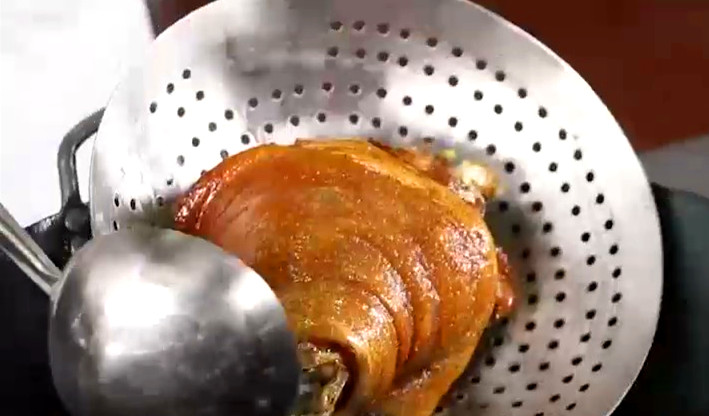
将主料先用汤水煮,捞起后趁热用酱油上色,经过油炸至外表呈红色,捞起改刀后放入扣碗,加汤水、酱油、料酒、味精、白糖等调味料,上蒸笼蒸至质脢味入透,出笼翻扣入碟中,根据菜肴的成菜特点,有些菜肴需出的汁勾芡浇淋在扣好的菜肴上面,这个加热操作工序叫红扣法。

Cook the main ingredients with soup first, then color them with soy sauce while they are hot, fry them until they look red, change the knife, put them into the buckle bowl, add soup, soy sauce, cooking wine, monosodium glutamate, sugar and other seasonings, steam them in the steamer until the quality and taste are through, take them out of the cage and turn them into the plate. According to the characteristics of the dishes, some dishes need to be thickened with decanted juice and poured on the buckle dishes, This heating process is called red button method.

红扣菜肴用料较为广泛,可制作出各种软滑,浓郁,芳香等不同风味的菜式,其菜式造型整齐,因此,菜肴具有色彩悦目,形态美观的特点。

Red button dishes use a wide range of materials, which can produce various dishes with soft, smooth, rich, aromatic and other different flavors. Their dishes have neat shapes. Therefore, the dishes have the characteristics of pleasing color and beautiful shape.

技法要求/Technical requirements

1.为使菜肴整齐美观,原料选择上需要需要用整形、大块的的原料,在进行刀工处理时需要做到整齐划一。

1. In order to make the dishes neat and beautiful, shaping and large pieces of raw materials need to be used in the selection of raw materials, and the knife processing needs to be neat and uniform.

2.调制味汁时不应太足,只需要调至7成即可。

2. When preparing flavor juice, it should not be too sufficient. It only needs to be adjusted to 70%.

3.装入扣碗中时排列需要整齐,且要突出排列的原料;同时应压紧,否则熟透后容易收缩而变形,造成形态不美观。

3. When put into the buckle bowl, the raw materials shall be arranged neatly and highlighted; Otherwise, it is easy to shrink and deform after ripening.

4.蒸好后扣入盛器中时,应把扣碗旋转,使原料和蒸碗容易分离,否则影响造型。

4. After steaming, when it is buckled into the container, the buckled bowl should be rotated to make it easy to separate the raw materials from the steaming bowl, otherwise it will affect the shape.

5.主料都要经过油炸以达到上色、丰富口感的目的,扣碗中的味汁要放有老抽、生抽、红曲米汁等进行增色。

5. The main ingredients should be fried to achieve the purpose of coloring and enriching the taste. The flavor juice in the bowl should be colored with old soy sauce, raw soy sauce and red koji rice juice.

6.蒸制时掌握火候,以根据原料的形态、大小选用适合的火力,以达到质脢、味透入的基本标准,翻扣入碟中,根据菜肴的成菜特点决定是否滗出原汁,进行勾芡浇淋。

6. Master the heat during steaming, select the appropriate firepower according to the shape and size of raw materials, so as to achieve the basic standard of quality and flavor penetration, turn it into the dish, and decide whether to decant the original juice and thicken and pour it according to the characteristics of the dishes.

代表菜品/Representative dishes

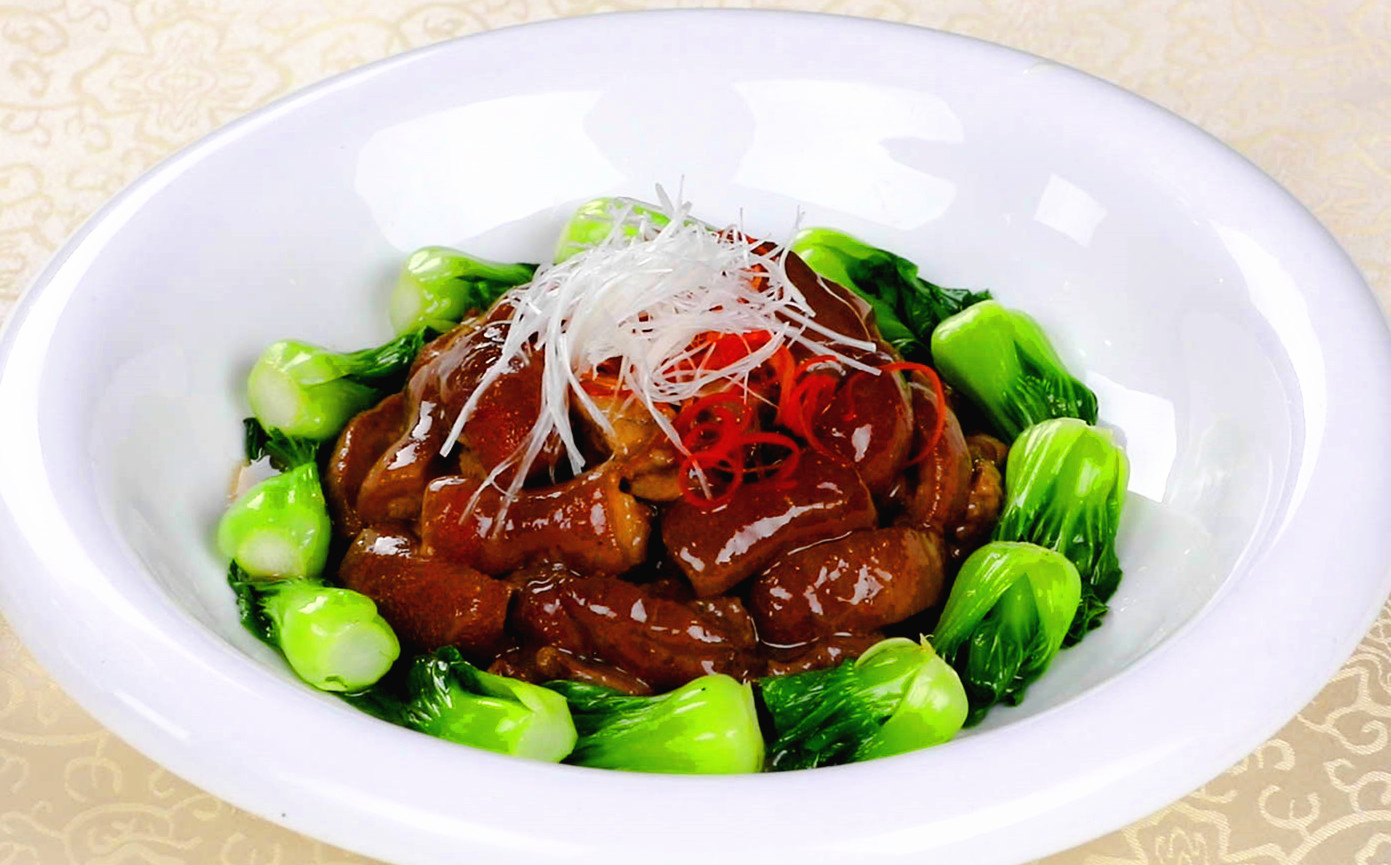
清真菜“红扣牛鼻”见图2-8-1,广东菜“梅菜扣肉”见图2-8-2,广西菜“大红扣肉”“马山女儿红羊扣”“红扣肘子”,四川菜“咸烧白”等。

Halal food "red button beef nose" (see figure 2-8-1), Guangdong food "plum dish button meat" (see figure 2-8-2), Guangxi food "big red button meat", "Mashan daughter red sheep button", "red button elbow", Sichuan food "salty and white".
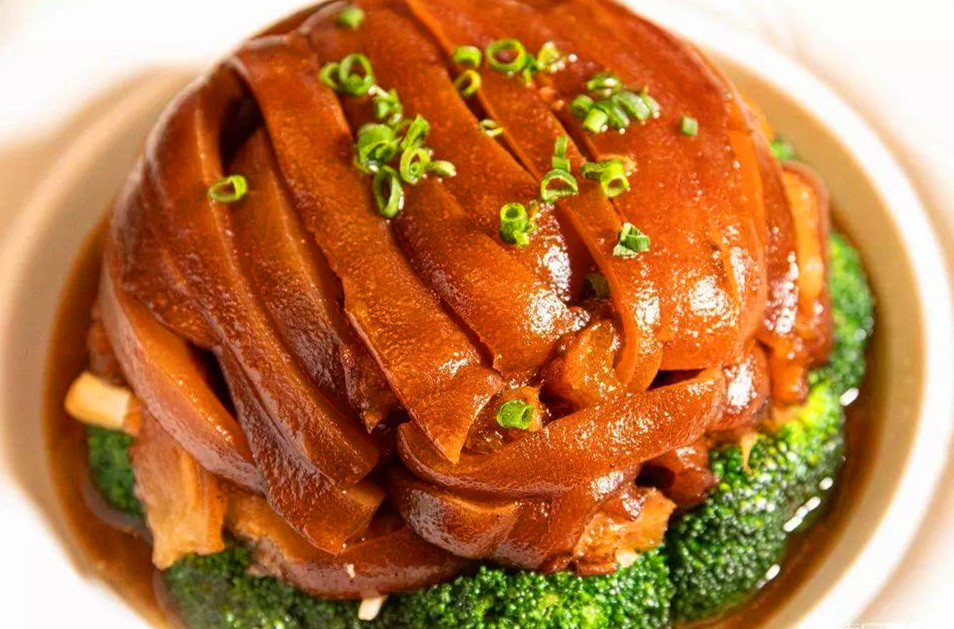
                  图 2-8-1 红扣牛鼻 Fig. 2-8-1 red button ox nose
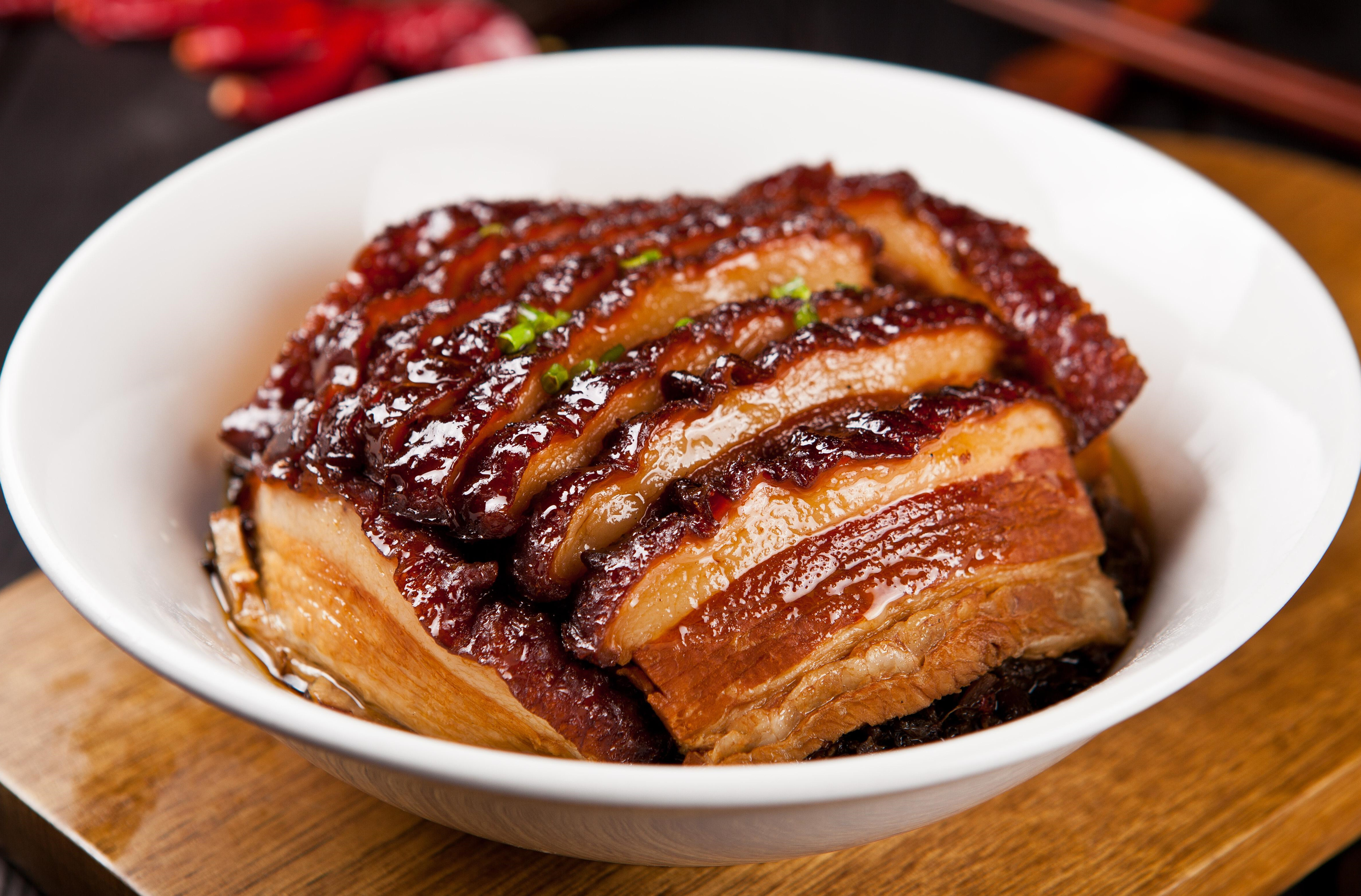
 图 2-8-2 梅菜扣肉 Fig. 2-8-2 braised pork with plum vegetables