-
1 知识储备——泡油...
-
2 实训示例——油泡...
-
3 拓展学习资料(&nb...
知识储备——泡油炒
Knowledge reserve——Oil soaking frying technique
【技法介绍】/Introduction to techniques
将一些质地新鲜爽脆的荤素类原料投入热油锅中,使原料在热油锅中划油至刚刚熟,出锅倒入笊篱中沥干油,再加配码,调料加热成熟,这种加热工序叫泡油炒法。在日常工作中,一般用于泡油炒的肉类大致可以划分为三大类型,运用不同的油温进行处理。
Put some fresh and crisp meat and vegetable raw materials into the hot oil pot, so that the raw materials can be sliced in the hot oil pot until they are just cooked, pour them out of the pot into the hedgerow, drain the oil, add the matching code, and heat the seasoning to maturity. This heating process is called oil soaking and frying. In daily work, the meat commonly used for oil frying can be roughly divided into three types and treated with different oil temperatures.
一类是肉料细小易孰、鲜嫩的原料,如鸡丝、鸡片、肉丝、肉片等,从质量的要求就是色泽洁白,口感鲜嫩,所以在泡油处理过程中,多以低油温为主,如运用中油温或高油温处理,肉类受到高温的影响,水分蒸发过快过多,容易导致肉质口感干硬。
One is the raw materials that are small, easy to be tasted, fresh and tender, such as shredded chicken, chicken slices, shredded meat, meat slices, etc. the quality requirement is that the color is white and the taste is fresh and tender. Therefore, in the process of oil soaking treatment, it is mainly low oil temperature. If medium oil temperature or high oil temperature treatment is used, the meat is affected by high temperature, and the water evaporation is too fast and too much, which is easy to lead to the dry and hard taste of meat.
二类是肉纹较粗需腌制的原料和经“水发”的干货原料,如牛肉等肉类一般在烹制前要进行腌制处理,腌制过程中肉类吸收一定的水分,原料经过澎润并重新吸收水分,恢复到其原有状态、呈现出质地柔软,这些原料在烹饪时就应该运用中油温进行泡油。
The second category is the raw materials with coarse meat grain that need to be pickled and dry goods that have been "watered". Meat such as beef should be pickled before cooking. During the curing process, the meat absorbs a certain amount of water, and the raw materials are moistened and re absorbed to return to their original state and show soft texture. These raw materials should be soaked in oil at medium oil temperature during cooking.
三类是肉料含水分多而口感要求爽脆的原料,如肚仁、虾球这类原料的共同特点就是原料内含有相当多的水分,在处理这类原料,泡油时应采用高油温去处理,这样既可通过高油温的作用使肉料表层迅速收缩紧闭、快速至熟,解决了原料本身含水分多,又要求达到口感爽脆两者之间的矛盾,因此处理这类原料采用高油温是最恰当的方怯。
The third category is the raw materials with high moisture content and crisp taste requirements, such as tripe and shrimp balls. The common feature of these raw materials is that the raw materials contain considerable moisture. When dealing with these raw materials, high oil temperature should be used to treat them when soaking oil, so that the surface of meat can shrink and close quickly and mature through the action of high oil temperature, which solves the problem of high moisture content of raw materials, It is also required to achieve the contradiction between refreshing and crisp taste. Therefore, it is the most appropriate way to deal with this kind of raw materials with high oil temperature.
【技法要求】/Technical requirements
1.掌握油温与原料数量、油量的变化。油温在烹饪过程中广泛运用,在操作上有—定的规律,但规律并不是一成不变的,泡油时原料数量的多少,也会影响到油温的高低。如果原料数量较多,油温下降的幅度较大,泡油时油温就应相应提高。另外,油量的多少也会直接影响到原料的质量,厨师在实际操作中要根据实际情况,灵活运用掌握油温。
1. Master the changes of oil temperature, raw material quantity and oil quantity. Oil temperature is widely used in the cooking process, and there are certain rules in operation, but the rules are not invariable. The amount of raw materials when soaking oil will also affect the oil temperature. If the quantity of raw materials is large and the oil temperature decreases greatly, the oil temperature should be increased accordingly when soaking oil. In addition, the amount of oil will also directly affect the quality of raw materials. Chefs should flexibly use and master the oil temperature according to the actual situation.
2.掌握油温与火力的变化。烹调菜肴时油温与火力有着直接的联系,同等数量的原料、相同油量与温度,在火力大小、炉膛温度的高低、燃料的情况不同,加温的时间长短随之改变,而油的温度选择也会不同。火力大、炉膛温度高、燃料热量大,油温上升的速度快一点,加温的时间会短—点.油温也可以适当低一点。
2. Master the changes of oil temperature and firepower. When cooking dishes, the oil temperature is directly related to the fire power. For the same amount of raw materials, the same amount of oil and temperature, the heating time will change with the fire power, furnace temperature and fuel, and the temperature selection of oil will also be different. Large firepower, high furnace temperature and large fuel heat. The oil temperature rises faster and the heating time will be shorter. The oil temperature can also be appropriately lower.
【代表菜品】/Representative dishes
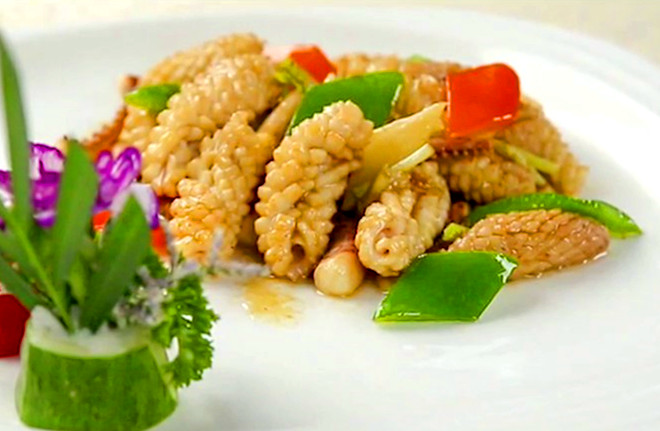
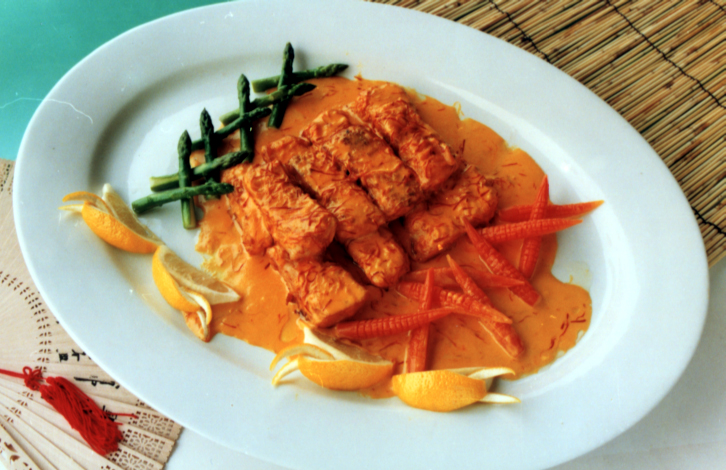
广东菜“油泡生鱼球”“油泡土鱿”,四川菜“油泡鳝段”(见图2-6-1)“泡椒猪肝”,山东菜“油泡双脆”“酱爆鸡丁”,浙江菜“龙井虾仁”“虾爆鳝”,广西菜“油泡墨鱼花”等。
Guangdong cuisine "fried raw fish ball", "fried squid", Sichuan cuisine "fried eel section" (see figure 2-6-1) "pickled pork liver", Shandong cuisine "double crispy in oil" and "fried chicken in soy sauce", Zhejiang cuisine "Longjing shrimp", "fried eel with shrimp", Guangxi cuisine "fried fish flower in oil", etc. 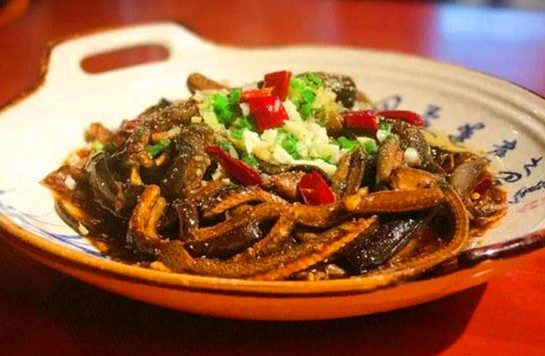 图 2-6-1 油泡鳝段 Fig. 2-6-1 oil soaked eel section