-
1 知识储备——清炸...
-
2 实训示例——清炸...
-
3 拓展学习资料(&nb...
知识储备——清炸
Knowledge reserve——Blasting technique
【技法介绍】/Introduction to techniques
对所用的原料不上浆、不挂糊、不拍粉,只是用调料腌渍入味即入热油锅中加热至酥脆,这种加热过程叫清炸。
The raw materials used are not starched, pasted or powdered, but pickled with seasoning, that is, heated in a hot oil pot until crisp. This heating process is called clear frying.
清炸是一个古老传统的炸法,成菜除有“外焦里嫩”的共同特色外,还具有耐嚼有咬劲的独特之感,越嚼越香是清炸独有的特色。原料在旺火热油中骤然受热,表面蛋白质会变性凝固收缩,并产生焦糖化反应,呈现出色泽金黄、质感香酥的效果,原料内部由生变熟并脱水,因而原料既细嫩,又有韧性。清炸的成品特点是原味浓厚、香酥略脆、鲜嫩、香咸。这是由于炸制时较高油温对于未经糊浆处理的原料直接脱水,又使纤维组织较为紧密。浓缩了原料本味,使之干香耐咀嚼,具有特殊的风味质感。
Clear frying is an ancient traditional frying method. In addition to the common characteristics of "scorching outside and tender inside", the finished dishes also have a unique feeling of chewiness and biting strength. The more chewed, the more fragrant is the unique characteristic of clear frying. When the raw material is suddenly heated in the hot oil, the surface protein will denature, solidify and shrink, and produce caramelization reaction, showing the effect of golden color and crispy texture. The interior of the raw material changes from raw to cooked and dehydrated, so the raw material is both tender and tough. The finished product of clear frying is characterized by strong original flavor, crispness, freshness and saltiness. This is due to the high oil temperature during frying, which directly dehydrates the raw materials without paste treatment, and makes the fiber tissue more compact. Concentrate the original flavor of raw materials, make it dry, chewable and have special flavor and texture.
【技法要求】/Technical requirements
1.选材上一定选择一些质地新鲜、较为脆嫩、带韧性的动物性原料。一般选用里脊、鸡鸭脯、仔鸡等。
1. In terms of material selection, some animal raw materials with fresh texture, crispness and toughness must be selected. Generally, tenderloin, preserved chicken and duck, chicks, etc. are selected.
2.将原料加工成体积较小的形状,比如块状、段状、条状都可以。加工花形原料要求形体大小均匀,刀深以翻花为度,整形原料要在原料表面均匀地剞刀一遍,或在肌肉厚处划一刀口,这样易于入味均匀,受热一致。
2. Process raw materials into smaller shapes, such as block, segment and strip. The processing of flower shaped raw materials requires uniform size, and the knife depth is based on turning flowers. The shaping raw materials should be cut evenly on the surface of the raw materials, or draw a knife edge at the thick part of the muscle, which is easy to taste evenly and heat uniformly.
3.原料用腌制的方式进行入味,着味后的原料应根据原料性质、形状的大小来确定浸渍时间。中间加入葱、姜、料酒、盐或酱油等腌渍使之入味均匀,使原料先具有基本味。
3. The raw materials shall be salted to taste. The impregnation time of the raw materials after taste shall be determined according to the nature and shape of the raw materials. Add onion, ginger, cooking wine, salt or soy sauce in the middle to make it taste evenly, so that the raw materials have the basic taste first.
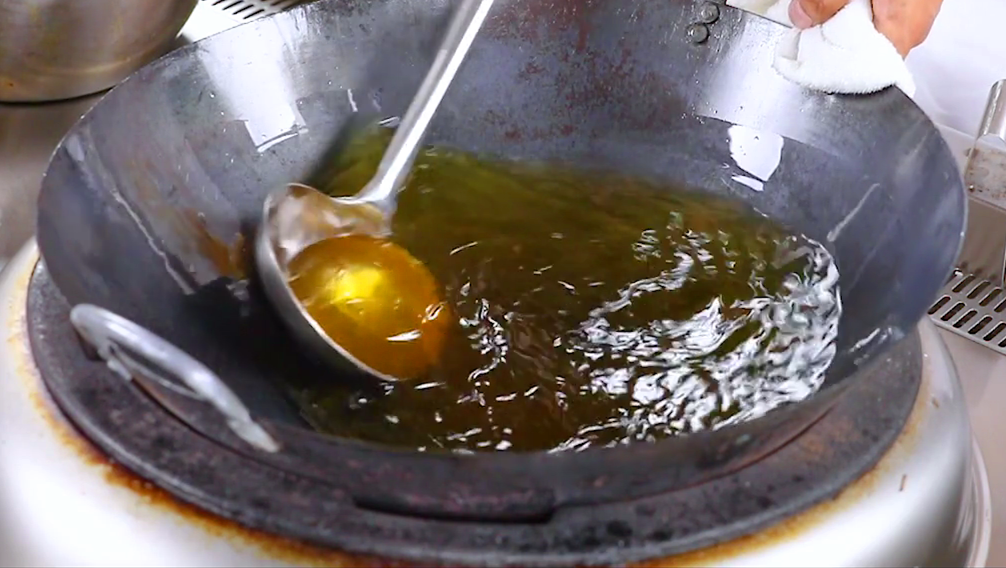
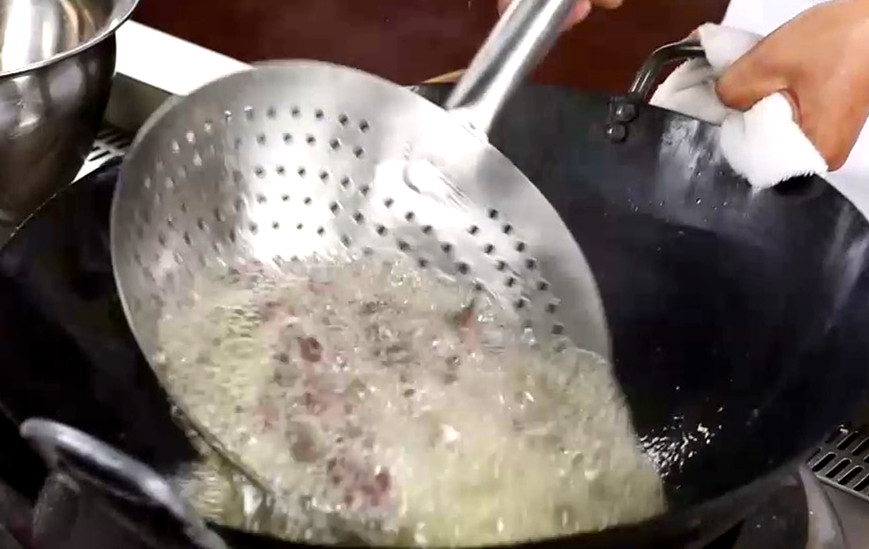
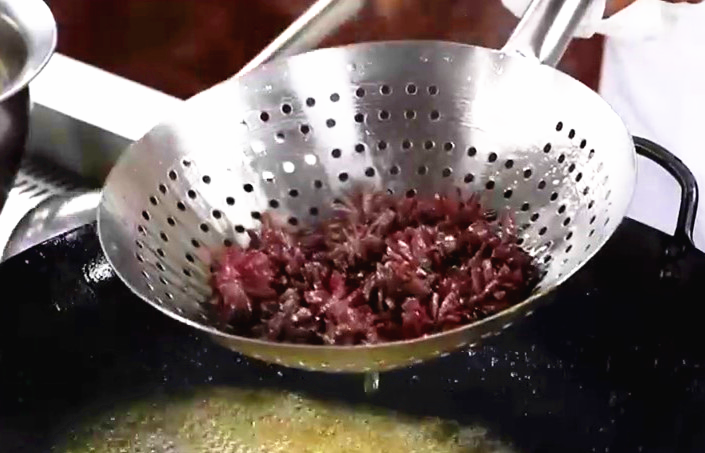
4.根据原料的质地、形状,投料数量掌握好火候,把握好原料成熟度和表层色泽质感。花形原料一般采用初炸和复炸方法,初炸用旺火五成油温炸制,翻花定形至断生。复炸用旺火七成油温炸至外酥脆捞出转盘。整形原料应用浸炸和复炸方法;浸炸选用四至五成热恒温,使其成熟后再复炸达到菜肴外酥内嫩的质感。
4. According to the texture, shape and quantity of raw materials, grasp the heat, maturity and surface color texture of raw materials. Flower shaped raw materials generally adopt the methods of initial frying and re frying. The initial frying is made with 50% oil temperature in high fire, and the flowers are turned to shape until they are broken. Re fry with high fire 70% oil temperature until crisp and remove the turntable. Dipping and re frying methods shall be used for shaping raw materials; The soaking and frying adopts 40-50% heat constant temperature to make it mature and then re fry to achieve the texture of crisp outside and tender inside.
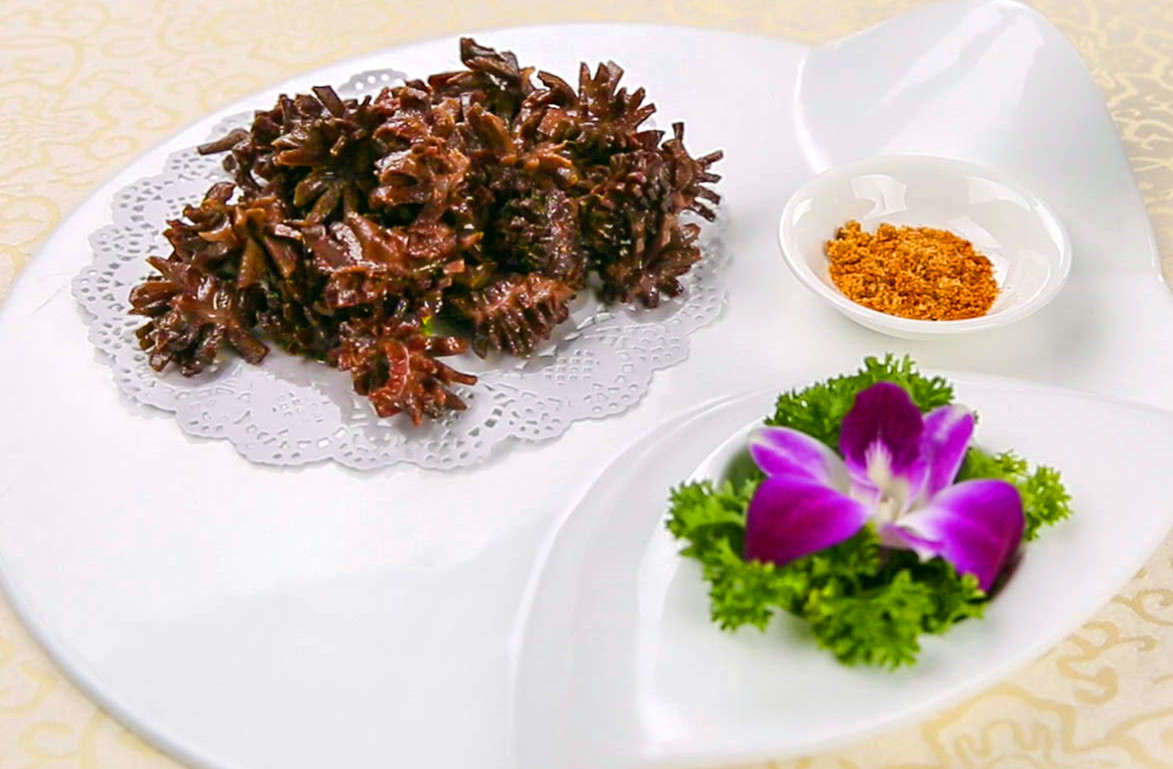
5.成菜装盘根据不同要求可配上糖醋汁,或配上辣酱油、椒盐末、甜面酱、鱼香汁等,以形成清炸菜肴的多种风味。
5. The finished dishes can be served with sweet and sour juice, or spicy soy sauce, salt and pepper powder, sweet flour sauce, fish flavor juice, etc. according to different requirements, so as to form a variety of flavors of clear fried dishes.
【代表菜品】/Representative dishes
山东菜“清炸大肠”“清炸菊花肫”,广东菜“腐乳蒜香骨”“脆皮炸乳鸽”(见图2-1-1),河南菜“炸八块”,云南“清炸竹虫”,四川菜“麻辣牛肉丁”湖南菜“油炸豆腐”“玫瑰香肉”,陕西菜“炸羊腰”,北京菜“炸鸭胗肝”“炸鸡酥络”等。
Shandong cuisine "clear fried large intestine" and "clear fried chrysanthemum gizzard", Guangdong cuisine "fermented bean curd and garlic fragrant bone" and "crispy fried pigeon" (see figure 2-1-1), Henan cuisine "fried eight pieces", Yunnan cuisine "clear fried bamboo insect", Sichuan cuisine "spicy diced beef", Hunan cuisine "fried tofu" and "rose fragrant meat", Shaanxi cuisine "fried sheep waist", Beijing cuisine "fried duck gizzard liver" and "fried chicken crispy collaterals", etc. 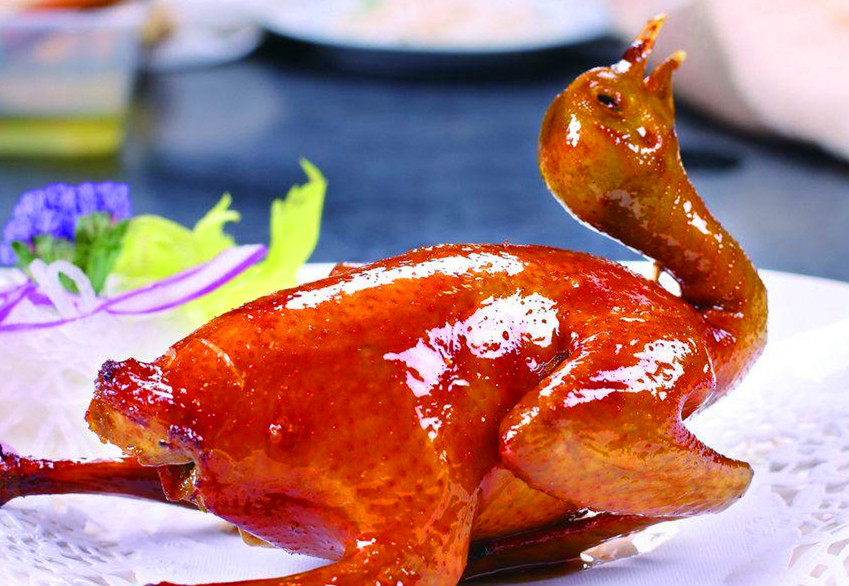
图 2-1-1 脆皮炸乳鸽 Fig. 2-1-1 crispy fried pigeon