-
1 知识储备——煎法...
-
2 实训示例——煎虾...
-
3 拓展学习资料(&nb...
知识储备——煎法
Knowledge reserve——Decocting technique
【技法介绍】/Introduction to techniques
在炒锅或者平底煎锅中放少量油,将原料铺平贴放在锅中,小火加热至表面金色,翻一面,再加热至表面金黄色,这种方法叫煎法。煎锅的原料,在煎之前一般还需要经过调味或挂糊。有的在煎熟以后不需另用调味品烹调,食时再蘸调味品。煎时要不断晃锅或用手铲翻动,使其受热均匀两面一致,多呈金黄色或表皮酥脆。成品色泽金黄、香脆酥松、软香嫩滑原汁原味,诱人食欲。
Heat a small amount of oil on the surface of the frying pan until it is golden, or turn it over a small amount of heat until the frying pan is golden. The raw materials of frying pan generally need to be seasoned or pasted before frying. Some do not need to cook with condiments after frying, and then dip in condiments when eating. When frying, keep shaking the pot or turning it with a hand shovel to make it heated evenly and consistent on both sides, mostly golden yellow or crispy skin. The finished product is golden in color, crisp and loose, soft, fragrant, tender and smooth, with original flavor and tempting appetite.
利用中小火煎制,也是多种烹饪技法的加热第一步。先将菜肴煎制一下, 能使菜肴外层蛋白质骤然凝固,形体挺实,不易破碎。粘挂浆糊的菜肴,通过煎制,使糊衣受热定型,形状整齐,形态美观。所以,烹饪技法中就有了煎与其他技法的组合产生了许多分支,有煎烹、煎蒸、煎焖、煎烧等。
It is also the first step to use a variety of heating techniques. Frying the dish first can make the protein in the outer layer of the dish solidify suddenly, and the shape is firm and not easy to break. The pasted dishes are heated and shaped by frying, and the shape is neat and beautiful. Therefore, the combination of frying and other techniques in cooking techniques has produced many branches, including frying and cooking, frying and steaming, frying and stewing, frying and burning, etc.
煎烹是煎与烹的结合,是原料经过干煎后,再烹入调味汁的一种烹调方法;煎蒸是在煎的基础上,加入适量的汤汁、调料、蒸制成熟入味的烹调方法;煎焖是在煎的基础上,加入适量的汤汁、调料,焖制加热的一种烹调方法,粤菜技法中的“湿煎”与此法相同。煎烧又名南煎,也是粤菜技法中“湿煎”的一种,是煎与烧的结合,在煎的基础上,加入适量调味料品后,上火烧制的烹调方法。
Frying and cooking is the combination of frying and cooking. It is a cooking method in which the raw materials are dry fried and then cooked into the sauce; Frying and steaming is a cooking method of adding an appropriate amount of soup, seasoning and steaming to make it mature and delicious on the basis of frying; Frying and stewing is a cooking method of adding an appropriate amount of soup and seasoning, stewing and heating on the basis of frying. The "wet frying" in Cantonese cuisine is the same as this method. Frying and burning, also known as South frying, is also a kind of "wet frying" in Cantonese cuisine. It is a combination of frying and burning. On the basis of frying, add an appropriate amount of seasoning and then burn on fire.
【技法要求】/Technical requirements
1.选用的原料要新鲜。
1. The selected raw materials should be fresh.
2.刀工处理通常为扁平形状,以便烹制。
2. The knife treatment is usually in a flat shape for cooking.
3.炙好锅,控制油量。先将锅刷洗干净,烧热后下适量的油。油量不宜多,过多不易翻勺;也不宜少,过少不易将原料煎熟。
3. Cook the pot well and control the amount of oil. First brush the pot clean, heat it up and put down an appropriate amount of oil. The amount of oil should not be too much, too much is not easy to turn the spoon; It should not be too little. Too little is not easy to fry the raw materials.
4.先煎一面,使之成型,再翻过来煎另一面,使两面成熟一致,色泽一致,一般煎制呈金黄色。在煎制原料时要不停的晃动炒锅,使原料受热均匀。
4. Fry one side first to make it into shape, and then turn it over to fry the other side to make both sides mature and consistent in color. Generally, it is golden yellow. When frying raw materials, keep shaking the frying pan to make the raw materials heated evenly.
【代表菜品】/Representative dishes
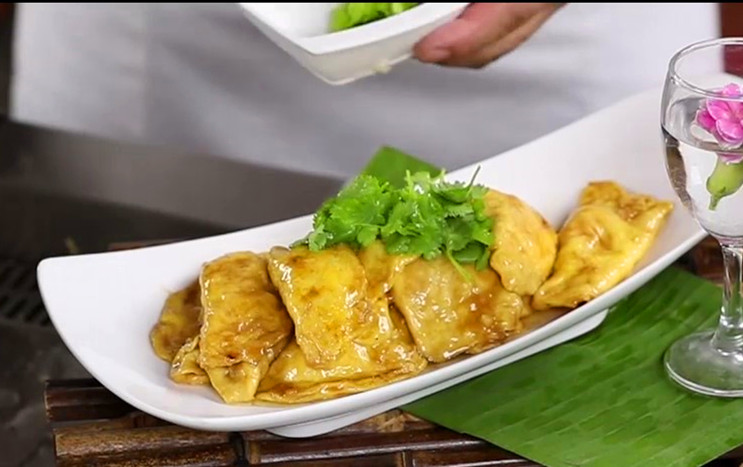
广东菜“西柠软煎鸡”(见图1-8-1)、“柠汁煎鸭脯”“煎虾仁蛋瓤”,北京菜“黄油煎鳜鱼片”“香煎素鸡肝卷”,江苏菜“干煎鳜鱼柳”,宁夏菜“煎烹羊肉”,天津菜“煎烹大明虾”,四川菜“大蒜焖鲶鱼”等。
Guangdong cuisine "West lemon soft fried chicken" (see figure 1-8-1), "lemon juice fried duck breast" and "fried shrimp egg pulp", Beijing cuisine "butter fried mandarin fish fillet" and "fragrant fried vegetarian chicken liver roll", Jiangsu cuisine "dry fried mandarin fish fillet", Ningxia cuisine "fried mutton", Tianjin cuisine "fried Daming shrimp", Sichuan cuisine "garlic braised catfish", etc.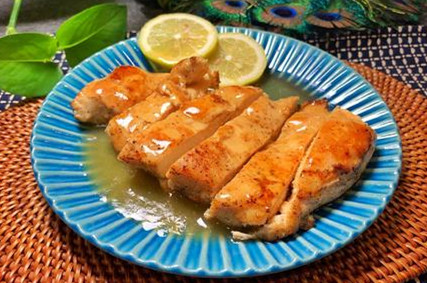
图 1-8-1 西柠软煎鸡 Fig. 1-8-1 fried chicken with West lemon