-
1 知识储备——熟炒...
-
2 实训示例——熟炒...
-
3 拓展学习资料(&nb...
知识储备——熟炒
Knowledge reserve——Cooked frying technique
【技法介绍】/Introduction to techniques
将已经制好的半成品原料再放进热锅中,加配料、调料同炒入味成菜的烹调技法,叫熟炒法。熟炒法是选用加热制熟的原料作主料,加工成片、条等形状后经过再次入锅与配料、调料同炒,使其入味成为美味佳肴,才能符合质量要求。
The cooking technique of putting the prepared semi-finished raw materials into the hot pot, adding ingredients and seasonings and frying them into delicious dishes is called cooked frying method. The cooked and fried method is to select the heated and cooked raw materials as the main material, process them into pieces, strips and other shapes, and then put them into the pot again and fry them together with the ingredients and seasonings to make them taste and become delicious dishes, so as to meet the quality requirements.
熟炒的原料一般多为禽畜类或某些水产原料,其质地柔韧,不易散碎或熟制加热后易成形。原料不经糊浆处理,成菜不勾芡或少勾芡。熟炒菜肴有油润明亮、质地软嫩、味道浓香醇厚的特点,菜肴略带油汁,食完菜肴后盘底略有一层味汁。
The raw materials of cooked frying are generally livestock or some aquatic raw materials. Their texture is flexible and not easy to break or form after heating. The raw materials are not processed by paste, and the finished vegetables are not thickened or less thickened. Cooked and fried dishes have the characteristics of oily and bright, soft and tender texture, strong flavor and mellow taste. The dishes are slightly oily, and there is a layer of flavor juice at the bottom of the plate after eating the dishes.
【技法要求】/Technical requirements
1.选用质地新鲜、柔软或带韧性、脆嫩的动植物性原料。动物性原料经焯水或汽蒸初步熟处理,根据菜肴需要达到所要的成熟度。原料块形较大、整只或带皮壳,要采用正确的熟制方法,掌握好加热时间和所用火力。
1. Select fresh, soft or tough, crisp and tender animal and plant raw materials. Animal raw materials are preliminarily cooked by blanching or steaming, and reach the required maturity according to the needs of dishes. If the raw material is large, whole or with skin, the correct cooking method shall be adopted, and the heating time and fire power shall be well controlled.
2.原料不管是改刀后熟处理,还是熟处理后改刀,其形状多为大片、大块或段等,但都要讲究刀工精细。
2. Whether the raw materials are processed after changing the knife or after changing the knife, their shapes are mostly large pieces, large pieces or segments, but they should pay attention to the fine workmanship of the knife.
3.可选用含有芳香气味的植物性原料作配料,如蒜苗、葱、姜及油菜、芹菜等绿色蔬菜,且根据菜肴原料的形状加工成相胁调的形状。调味料滋味应较醇厚并有相应的稠度。
3. Plant raw materials with aromatic smell can be selected as ingredients, such as garlic seedlings, green onions, ginger, rape, celery and other green vegetables, and processed into a threatening shape according to the shape of dish raw materials. The flavor of seasoning should be mellow and have corresponding consistency.
4.菜肴的烹制一般要用旺火或中火,即炝祸后投入主料迅速翻拌,适时投入配料、调料,保持滑锅。要用手勺配合,要求配料成熟一致。保持相应的质地。菜肴成菜一般不勾芡,某些菜肴的特殊性要求可适当勾芡汁。
4. Dishes should be cooked with high or medium fire, that is, after being cooked in soy sauce, the main ingredients should be quickly mixed, and the ingredients and seasonings should be input in time to keep the pan slippery. Hand spoon shall be used for matching, and the ingredients shall be mature and consistent. Maintain the corresponding texture. Dishes are generally not thickened. The particularity of some dishes requires that the juice can be thickened appropriately.
【代表菜品】/Representative dishes
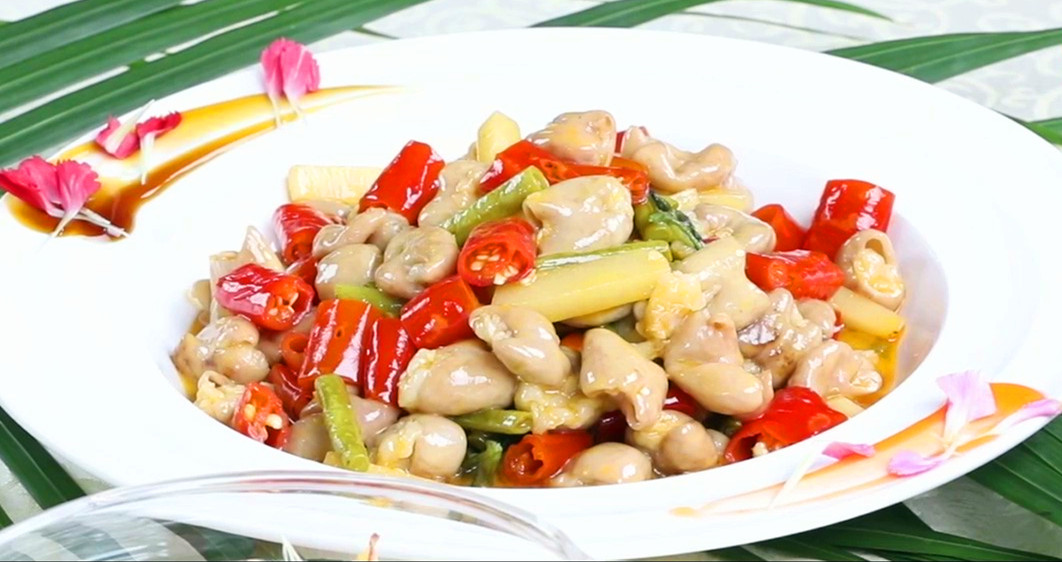
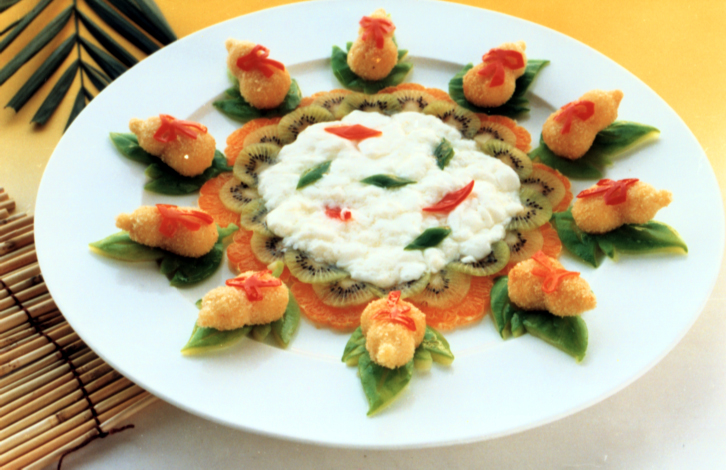
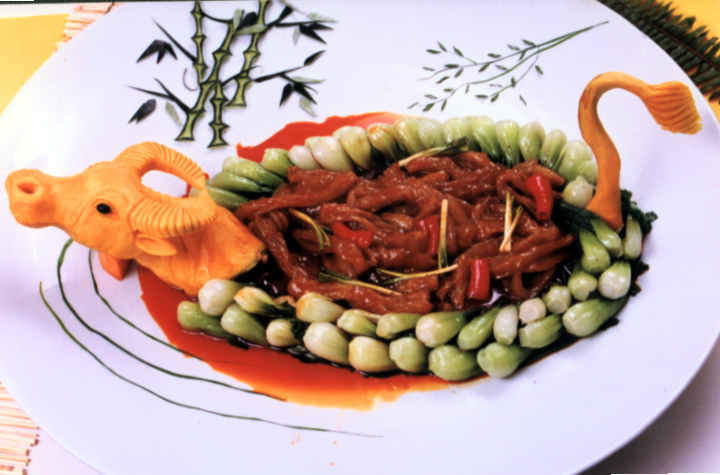
山东菜“赛螃蟹”(见图1-5-1),广东菜“蚝油鸭掌”,四川菜“回锅肉”(见图1-5-2),福建菜“红糟肉”,广西菜“发财猪手”,云南菜“椒盐蚕蛹”等。
Shandong cuisine "match crab" (see figure 1-5-1), Guangdong cuisine "duck's paw in oyster sauce", Sichuan cuisine "double cooked meat" (see figure 1-5-2), Fujian cuisine "red distiller's grains meat", Guangxi cuisine "get rich pig's hand", Yunnan cuisine "pepper and salt silkworm chrysalis", etc.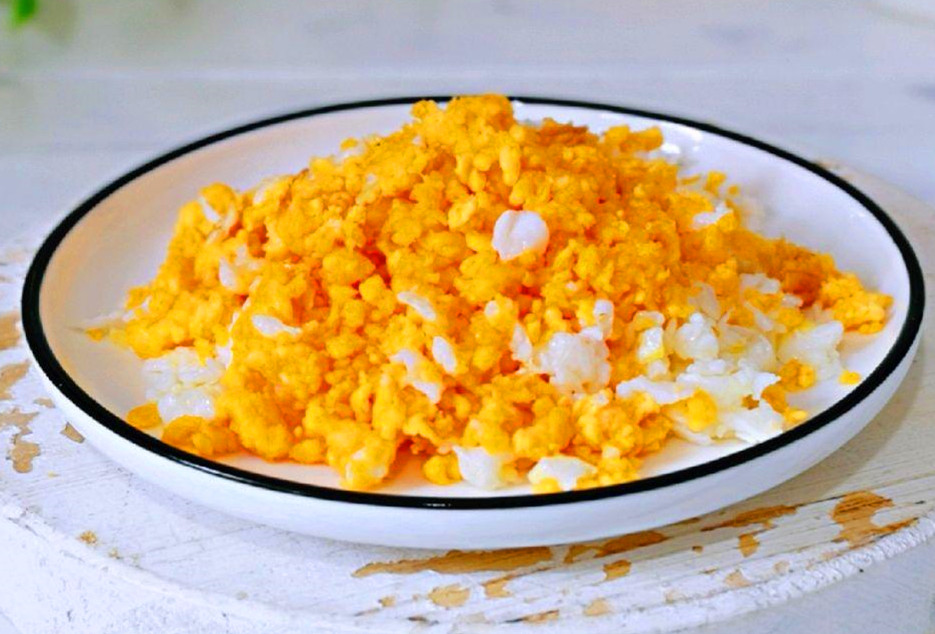
图 1-5-1 赛螃蟹 Fig. 1-5-1 crab race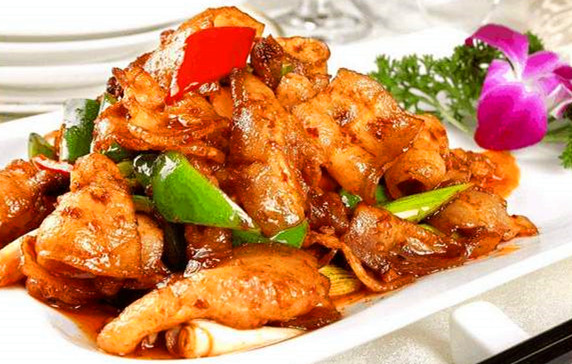
图 1-5-2 回锅肉 Fig. 1-5-2 double cooked pork