
Lead-in
Look at the photos and read the captions. Then discuss the questions.
1. What ancient sites are shown in these photos? What do you know about each of them?
2. Which of these ancient peoples or places do you find most interesting? Why?
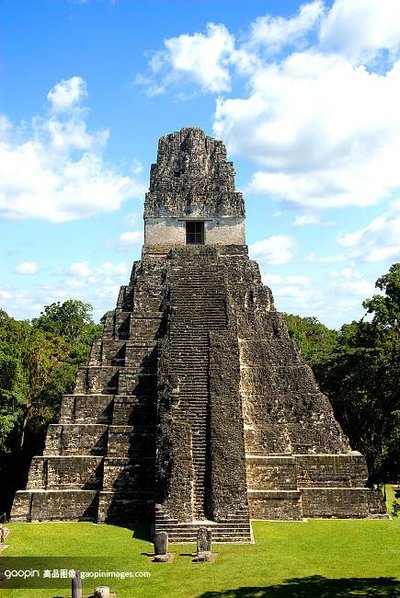
A. The Mayans
The Temple of the Great Jaguar at Tikal, a historical site in modern-day Guatemala, was part of the ancient Mayan civilization. Tikal was a very large city with several tall pyramids.
Many other cities were built by the Mayans—not only in Guatemala, but also in modern-day Mexico, Honduras, and Belize.
B. The Egyptians
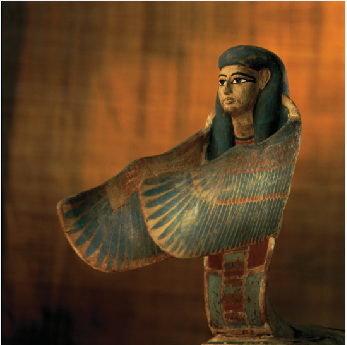
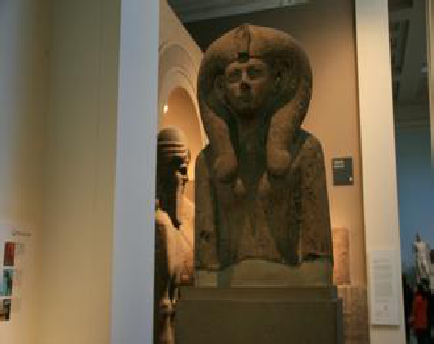
The ancient Egyptians lived mostly along the Nile River in north Africa in what is now Egypt. This wooden statue was found in the tomb of Amenhotep II, the 7th pharaoh, or king of the 18th dynasty of Egypt.
C. The Incas
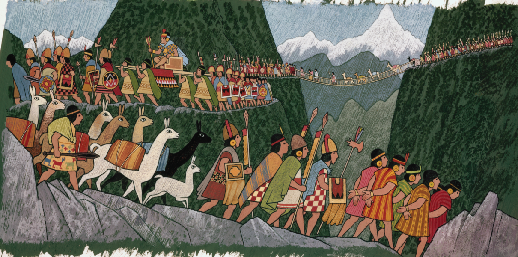
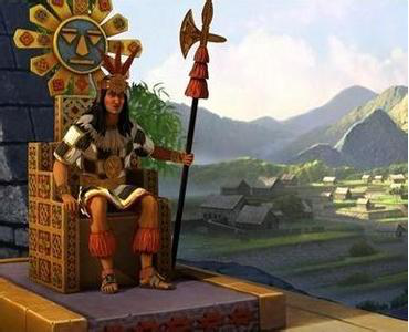
The center of the Inca culture was the Cuzco region of Peru. One of the most famous Inca sites is Machu Picchu. According to archaeologists, Machu Picchu was built for an Inca emperor named Pachacuti. This illustration shows an Inca emperor and his army.
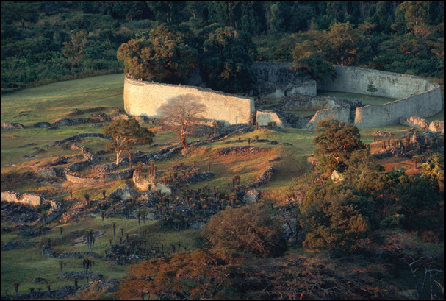
D. Great Zimbabwe was the royal palace of the Zimbabwean king and the capital of the Kingdom of Zimbabwe (A.D. 1100–A.D. 1450). The site's enormous stone walls are one of its most interesting features.
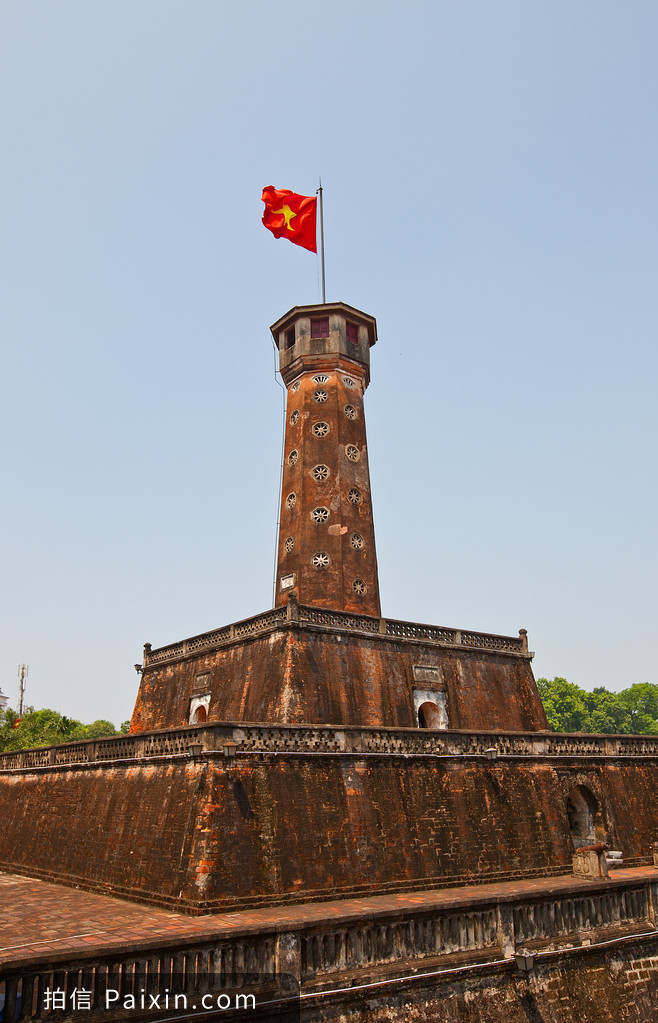
E. The Thang Long Citadel in Hanoi, Vietnam was a cultural center for the Thang Long Imperial City. Citadel means "a safe place for royalty". The 1,300-year-old site was uncovered in 2002 and became a UNESCO World Heritage site in 2010.
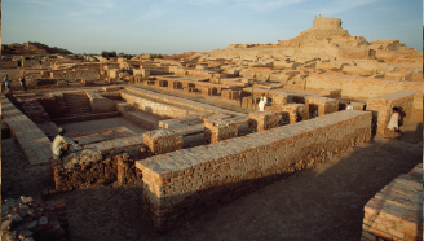
F. The city of Mohenjo-daro was built by the Indus Valley civilization around 4,500 years ago in what is now Pakistan. At that time, some 40,000 people lived in Mohenjo-daro.
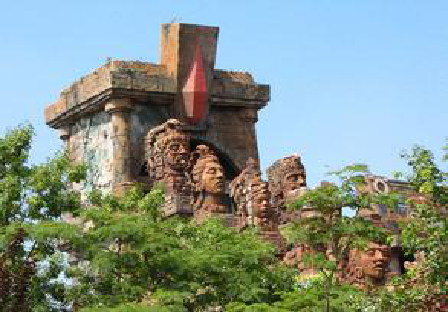
G. The temples, pyramids, and palace of Palenque, Chiapas, Mexico


1. The Temple of the Great Jaguar: an archaeological site in Guatemala. It is a stepped pyramid structure which was built as a holy site for the Mayan people who lived in the region before the Europeans came. 大美洲豹神庙
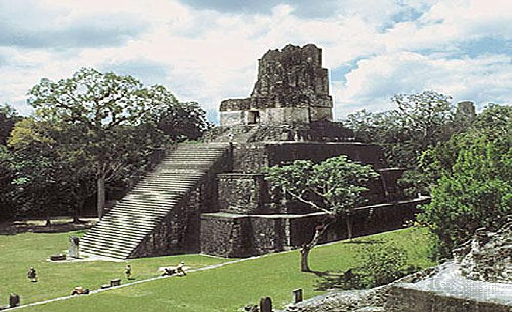
2. Mayan civilization: a civilization which dominated a region extending from southern Mexico into the Honduras. It declined rapidly when Spanish conquerors arrived in the 16th century in the region. 马雅文明
3. The Incas: South American Indians who, at the time of the Spanish conquest in 1532, ruled an empire that extended along the Pacific coast and Andean ( 安第斯山脉的) highlands 印加人

4. Machu Picchu: an ancient Inca ruin in Peru. It was built in the 15th century and abandoned about 100 years later. It was never destroyed by the Spanish, as it wasn’t rediscovered until 1911. It was designated a UNESCO World Heritage site in 1983. 马丘比丘

5. Pachacuti (1438–1471): an Inca Emperor. During his reign, he expanded his small kingdom into the Inca Empire which eventually ruled a large area of western South America. 帕查库提
6. Amenhotep II: a king of ancient Egypt, who ruled around 3,400 years ago. He is famous for having ruled Egypt during one of its most prosperous periods. 阿孟霍特普二世
7. The Thang Long Citadel: an imperial citadel in Vietnam. It was built in the 11th century on the site of an older Chinese fortress. The name "Thang Long" was the original name of the modern city of Hanoi. 升龙城堡
8. Indus Valley civilization: an ancient civilization which arose in the region of the Indus River. It extended from the region of modern Pakistan into parts of what are now Afghanistan and India. Mohenjo-daro in present-day Pakistan was its largest city. 印度河流域文明
9. Palenque: a group of ruins in Mexico, which is a prime example of a Mayan sanctuary of the classical period. Established between the 3rd and the 5th centuries, it is an incomparable achievement of Mayan art in the heart of a tropical jungle. It is a medium-sized site, much smaller than such huge sites as Tikal or Copan, but it contains some of the finest architecture, sculpture, roof comb and bas-relief carvings that the Mayas produced. 帕伦克遗址
Task 1

In this task, you'll hear how the states in the US got their names.
A. Fill in the following chart.
| Names of the States | Meanings |
|---|---|
| Illinois | |
| Connecticut | |
| Hawaii |
B. Decide whether the following statements are true (T) or false (F) according to the tape.
1) American Indian languages are the largest group of languages from which the states got their
names. [ ]
2) The names of Florida and Georgia were taken from Spanish. [ ]
3) Hampshire may be the name of a place in England. [ ]
Task 2
* Salisbury Plain: 索尔兹伯里平原,位于英格兰南部
* Stonehenge: 巨石阵(英国南部索尔兹伯里附近的一处史前建筑遗址)
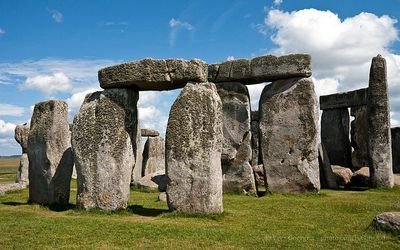
In this task, you'll hear a story of Stonehenge, the mysterious circle of stones in England.
A. Answer the following questions.
1) When was the circle of stones put up at Stonehenge?
_________________________________________________________________________
2) How heavy were some of the stones?
__________________________________
3) How might the stones have been transported to Stonehenge?
__________________________________________________________________________
4) How were the stones moved and placed in position?
__________________________________
B.Fill in the blanks with what you hear on the tape.
There are many theories about the purpose of the stones. Stonehenge was certainly a
_______________. The stones have been arranged in a particular way to mark _______ and _______
at certain times during the year. This may have been a place of _______ of the sun and also an
_______. One interesting theory suggests that the stones were some kind of _______ which was
used to predict ________ of the sun and moon.

